
Last Updated on September 10, 2026 by Daniel Globe
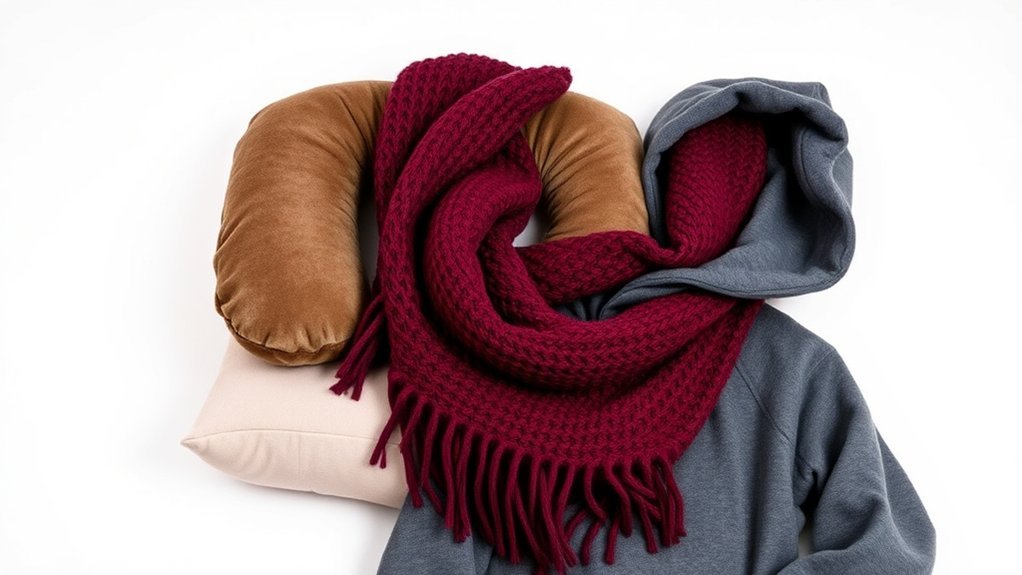
A clean hoodie and lightweight scarf can double as a simple travel pillow when you do not want to carry a separate neck pillow. The key is to remove hard objects, create an even roll, secure it with the hood, and adjust the thickness so your head stays comfortable rather than being pushed forward. Your scarf can add softness, warmth, or side support, but it should never cover your nose or mouth.
Quick Answer
Lay your hoodie flat, empty the pockets, fold the sleeves inward, fold the sides toward the center, and roll it loosely from the bottom. Pull the hood over the roll to hold it together. Add a rolled scarf inside or around one side only when you need more softness or support.
Key Takeaways
- Use a clean, dry hoodie made from soft fabric, and remove everything from its pockets.
- Roll the hoodie evenly and secure it by stretching the hood over the finished roll.
- Adjust the amount of fabric so the pillow does not force your head sharply forward or sideways.
- Use a scarf for softness, warmth, or light control, but keep it away from your nose and mouth.
- Compression cubes may reduce bulk, but they do not reduce the weight of your luggage.
At a Glance
| Time Required | About 3 to 5 minutes |
| Difficulty | Easy |
| Tools Needed | A clean hoodie, a scarf, and a flat surface |
| Cost | $0 if you already own the clothing |
Disclosure: As an Amazon Associate I earn from qualifying purchases. Some links on this page are affiliate links, at no extra cost to you.
How to Fold Your Hoodie for a Travel Pillow

A medium-weight hoodie usually works better than a very thin shirt or a stiff, bulky jacket. Soft fleece, sweatshirt fabric, or brushed cotton can create a smoother surface. Both pullover and zip-up hoodies work, although you should position a zipper so it does not press against your neck or cheek.
- Empty every pocket. Remove keys, coins, earbuds, chargers, pens, and other hard objects. Check any hidden inside pocket as well.
- Lay the hoodie flat. Place it with the back facing upward. Zip a zip-up hoodie fully so the two sides stay even.
- Straighten the hood and cords. Loosen tight drawstrings and tuck their hard ends inside so they cannot press against your skin.
- Fold in the sleeves. Cross each sleeve over the back of the hoodie. Spread bulky cuffs flat rather than stacking them in one spot.
- Fold the sides toward the center. Create a long rectangle roughly as wide as the hood opening.
- Roll from the bottom. Roll toward the neckline with light, even pressure. A loose roll feels softer, while a tighter roll feels firmer.
- Secure it with the hood. Pull the hood over the completed roll like a cover. Tuck in loose fabric without stretching the seams excessively.
- Test the shape. Place it against the seat and lean back. Remove or redistribute fabric if it pushes your chin toward your chest or bends your head sharply to one side.
Warning: Keep hard objects, tight cords, and bulky zipper pulls away from your neck. On an aircraft, keep your seat belt accessible and fastened as directed, keep loose items out of the aisle, and follow all cabin-crew instructions. Never use this setup while driving.
A homemade hoodie pillow is a comfort aid, not a medical device. Pillow height and shape can affect how your neck rests, and research has not identified one pillow design that works best for everyone. Adjust the roll until your head feels stable and close to a natural position rather than forcing it into an uncomfortable angle. A recent systematic review of pillows and chronic neck pain found limited and inconsistent evidence, so avoid claims that a clothing roll will prevent or treat pain.
Best Ways to Use Your Scarf for Travel Comfort
A scarf can make the hoodie pillow softer and more adjustable. Choose one that is clean, breathable, and free from large pins, metal decorations, or rough seams.
- Add softness: Fold the scarf into a flat strip and place it between your neck and the hoodie roll.
- Fill a low spot: Roll a small section of the scarf and tuck it into one side of the hood when your head tends to lean in that direction.
- Create light side support: Drape the scarf around the outside of the pillow and bring the ends loosely across your upper chest. Do not knot it tightly around your neck.
- Use it as a shawl: Spread a larger scarf over your shoulders when the cabin feels cool.
- Reduce light carefully: Fold the scarf loosely over the eyes only while you are seated and resting. Keep your nose and mouth completely uncovered.
Note: An ordinary scarf may reduce a little light, but it does not provide meaningful noise protection. Use properly fitted earplugs or suitable noise-reducing headphones when you need a quieter environment.
A short scarf can still work as padding. Fold it into a small rectangle and place it inside the hood rather than trying to wrap it around your neck. Never use safety pins, sharp clips, or a tight knot close to your throat.
Easy Packing Tips After You Fold Your Hoodie and Scarf
Decide whether you need the hoodie pillow during the journey or only after arrival. That choice determines whether it belongs near the top of your bag or deeper inside a packing cube.
Efficient Packing Techniques
- Place the hoodie pillow at the top of your personal item when you plan to use it on the plane, train, or bus.
- Keep the scarf inside the hood so the two items stay together.
- Use the rolled hoodie to fill a wide gap rather than forcing it into a narrow corner.
- Keep damp, dirty, or heavily scented clothing in a separate laundry bag.
- Check your airline’s size and item limits before attaching the roll to the outside of a bag.
The FAA advises travelers to secure carry-on belongings and avoid loose straps or items that could fall, block movement, or create a tripping hazard. Review the FAA carry-on baggage guidance before flying with an unusually full personal item.
Maximizing Space Usage
Rolling a hoodie changes its shape, but it does not automatically make the fabric occupy less total volume. You gain the most space when the finished roll fills an unused gap or when a compression cube presses air out of bulky fabric.
- Group soft items such as hoodies, scarves, sleepwear, and socks.
- Place dense or heavy items near the wheels or bottom of a suitcase.
- Use the scarf to fill the center of the hoodie roll instead of packing it separately.
- Close compression zippers slowly so fabric does not catch in the teeth.
- Recheck the bag’s weight after compressing it because a smaller-looking bag can still be overweight.
Pro Tip: Make the hoodie pillow before leaving home and test it against a chair for several minutes. It is easier to adjust the sleeve placement, zipper, and firmness at home than in a crowded cabin.
Maximize Space in Your Luggage With Packing Tips
A simple packing system can save more space than repeatedly rolling and unrolling individual garments. Use these steps to keep the bag compact and easy to search:
- Separate by purpose. Group sleepwear, daily outfits, underwear, and outer layers instead of mixing everything together.
- Roll suitable clothing. T-shirts, casual trousers, and soft hoodies often roll well. Fold structured clothing when rolling would create deep creases.
- Fill gaps deliberately. Place socks, scarves, or other soft items inside shoes or between larger packed items.
- Keep journey items accessible. Put medication, travel documents, a charging cable, and your hoodie pillow where you can reach them without unpacking the entire bag.
- Use a checklist. A list reduces duplicate clothing and unnecessary “just in case” items.
Do not pack the hoodie pillow so tightly that it becomes difficult to remove before boarding. If a crew member asks you to stow it for takeoff, landing, or turbulence, place it fully under the seat or in an approved storage area.
Benefits of Using Compression Packing Cubes for Travel
Compression packing cubes can organize clothing and press excess air from soft, bulky items. The amount of space saved varies by the cube design and the garments inside it. A thick fleece hoodie may compress noticeably, while denim or tightly folded clothing may change very little.
The main benefits include:
- Keeping related clothing together
- Reducing loose fabric inside the suitcase
- Making it easier to move clothing between bags
- Separating clean items from worn clothing
- Helping soft garments fit into a more regular shape
Compression changes the volume of your clothing, not its weight. A smaller-looking suitcase can still exceed an airline’s weight limit.
Avoid overfilling a compression cube until its seams bow or its zipper is difficult to close. Excess force can damage the cube, crease clothing, or create a hard bundle that is uncomfortable to use as a pillow.
More Travel Comfort Tips Using Your Hoodie and Scarf
The best setup depends on your seat, body size, clothing thickness, and preferred resting position. Make small adjustments rather than assuming one fold will work for the entire trip.
Hoodie as Travel Pillow
Start with the rolled hoodie behind your upper shoulders rather than wedging a thick bundle directly behind the middle of your neck. If the roll pushes your head forward, flatten it or move it slightly lower. If your head falls to one side, move a small amount of fabric to that side instead of making the entire pillow thicker.
Harvard Health advises supporting the neck near a neutral position. Although its guidance is not specific to air travel, the same practical principle applies: support should not force the neck into an extreme angle.
Stop using the pillow if it causes increasing pain, tingling, numbness, dizziness, or a headache. Travelers recovering from a neck injury or operation should follow their clinician’s advice about suitable support.
Scarf for Neck Support
Use the scarf to make small adjustments rather than tightening it around your entire neck. A folded section can fill the gap between your shoulder and the side of your head when you lean against a window-side seat. Keep the fabric loose enough to remove immediately and keep all knots away from the front of your throat.
On a bus, train, or car, use the hoodie pillow only as a passenger. It must not interfere with the vehicle’s seat belt, head restraint, or your ability to exit quickly.
Layering for Extra Warmth
Your hoodie and scarf can also serve as removable layers:
- Wear the hoodie under a coat. This traps air between layers and lets you remove one layer when the cabin becomes warm.
- Cover the neck opening. Tuck the scarf loosely inside the hoodie to reduce drafts without restricting breathing.
- Use the hood when awake. Pull it up for warmth, but keep your hearing and vision clear when walking through stations, boarding areas, or streets.
- Choose fabric for the conditions. A thick fleece or wool-blend layer may feel warmer than a thin cotton hoodie, while a lighter fabric may be more comfortable in a warm cabin.
Comfort accessories should not keep you motionless for the entire journey. For trips lasting more than four hours, the CDC recommends moving your legs frequently and walking about every one to two hours when it is safe and permitted. Follow the seat-belt sign and crew instructions before leaving your seat.
Note: The FAA recommends keeping your seat belt fastened because turbulence can happen unexpectedly. Place the hoodie pillow so it does not cover the buckle or prevent the belt from sitting low and secure across your hips.
Frequently Asked Questions
Can I use any type of hoodie for this method?
Most hoodies work, but a clean, medium-weight hoodie with a roomy hood is easiest to secure. Avoid garments with large decorations, studs, stiff seams, or bulky zipper pulls where your head will rest. A very thin hoodie may need a scarf or T-shirt inside it for more shape.
What if my scarf is too short?
Fold a short scarf into a small pad and place it inside the hood or between the hoodie and your shoulder. It does not need to wrap around your neck. You can also use a clean T-shirt, soft socks, or a small piece of fleece as extra filling.
How do I keep my hoodie clean while traveling?
Use a clean scarf as a washable cover between your skin and the hoodie. Store the pillow in a clean packing cube or cloth bag when you are not using it. After the trip, follow the garment’s care label and let it dry completely before folding it again.
Can this method work with other clothing items?
Yes. A soft sweater, fleece jacket, lightweight puffer, or several clean T-shirts can form a similar roll. You will need a hood, scarf, pillowcase, or soft drawstring pouch to keep loose clothing together. Remove hard fasteners and test the finished shape before using it.
Is this technique suitable for long-haul flights?
It can be a useful lightweight option if the roll fits your body and seat. Keep your seat belt fastened and accessible, follow crew instructions, and move your legs regularly. Stop using the roll if it causes pain, numbness, pressure, or an awkward head position.
What should I do if the hoodie pillow keeps unrolling?
Make the roll slightly narrower, fold the sleeves more evenly, and pull more of the hood over the bundle. If the hood is too small, wrap the scarf around the outside and tuck its ends under the roll. Avoid tight knots, pins, or hard clips near your neck.
Conclusion
A hoodie and scarf can create a practical travel pillow without adding another bulky item to your bag. Empty the pockets, make an even roll, secure it with the hood, and test the thickness before your trip. Use the scarf only for gentle padding, warmth, or light control, and keep your airway clear. During a flight, keep the pillow away from the aisle, leave your seat belt accessible, follow crew instructions, and adjust or remove the roll whenever it becomes uncomfortable.
Sources
- Federal Aviation Administration: Turbulence Safety — supports seat-belt and cabin-crew safety guidance.
- Federal Aviation Administration: Carry-On Baggage Tips — supports advice about securing bags, straps, and loose carry-on items.
- Centers for Disease Control and Prevention: Blood Clot Risk and Travel — supports movement guidance for long-distance trips.
- PubMed: 2025 Systematic Review of Pillows and Chronic Neck Pain — supports cautious wording about pillow benefits and limitations.
- PubMed: Pillow Design, Neck Symptoms, and Spinal Alignment — supports guidance about pillow shape and height.
- Harvard Health Publishing: Neck Support and Neutral Position — supports general neck-positioning guidance.
