
Last Updated on August 26, 2026 by Daniel Globe
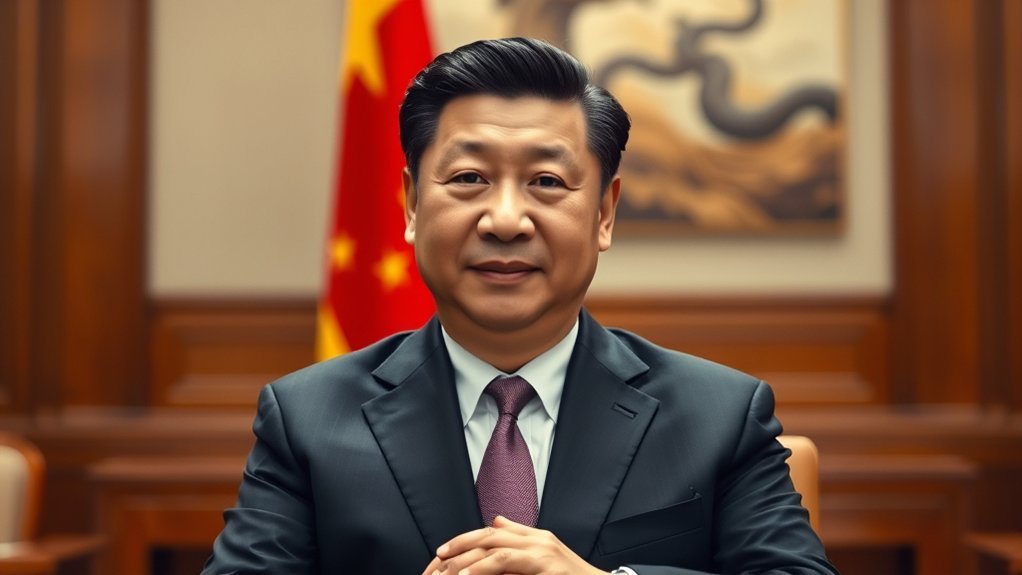
Xi Jinping, born in Beijing in June 1953, is China’s top political leader and one of the most consequential figures in contemporary world politics. As of August 2026, he serves as general secretary of the Communist Party of China (CPC), president of the People’s Republic of China, and chairman of the Central Military Commission. His rise from a “sent-down youth” during the Cultural Revolution to China’s highest Party, state, and military offices helps explain both his political durability and the highly centralized governing system associated with his era.
Quick Answer
Xi Jinping is China’s top political leader, holding the country’s leading Party, state, and military posts. Since becoming CPC general secretary in 2012, he has strengthened centralized Party leadership, expanded anti-corruption and national-security campaigns, promoted military modernization and technological self-reliance, and pursued a more ambitious global role for China.
Key Takeaways
- Xi rose from local and provincial Party posts to become CPC general secretary in 2012 and Chinese president in 2013.
- His tenure has concentrated decision-making around the CPC leadership and elevated Xi Jinping Thought as a central ideological framework.
- The 2018 constitutional amendment removed the previous two-consecutive-term limit for China’s president and vice president; Xi began a third presidential term in 2023.
- His domestic agenda combines anti-corruption, national security, industrial and technological policy, common prosperity, tighter political control, and renewed support for private business after earlier regulatory crackdowns.
- Abroad, Xi has expanded the Belt and Road Initiative, accelerated military modernization, maintained pressure on Taiwan, and managed an increasingly competitive relationship with the United States.
Who Is Xi Jinping?
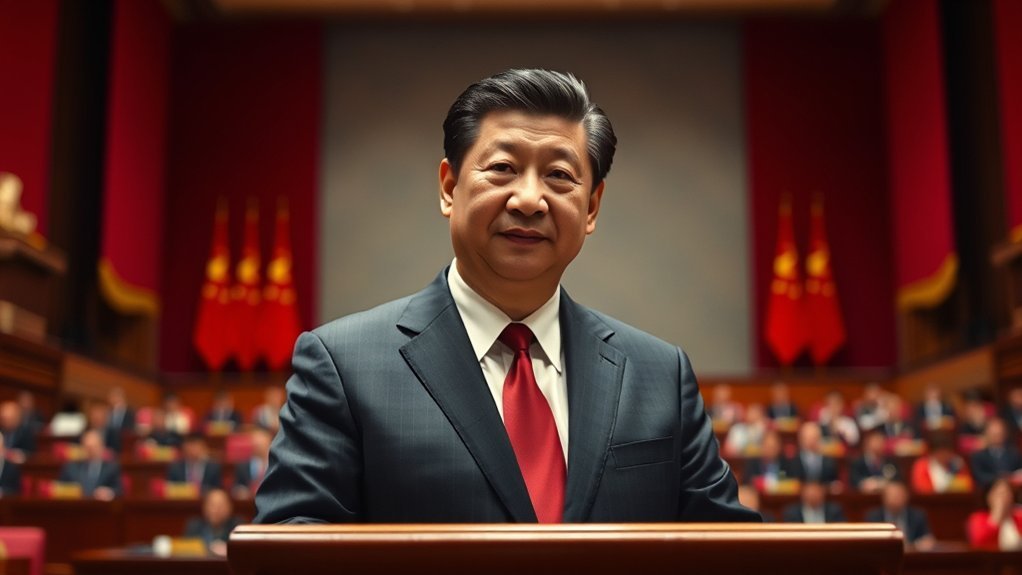
Xi Jinping is the general secretary of the Communist Party of China, president of the People’s Republic of China, and chairman of both the Party and state Central Military Commissions. A Chinese government report from August 2026 continued to identify him in all three leadership roles.
The titles are not interchangeable. The presidency is China’s state head-of-state position, while the CPC general secretary leads the ruling Communist Party. Holding the Party leadership and Central Military Commission chairmanship alongside the presidency concentrates the country’s highest political and military authority in the same person.
Xi joined the CPC in 1974, entered national leadership after decades in local and provincial posts, became CPC general secretary in November 2012, and became president in March 2013. He secured another term as Party general secretary in October 2022 and was elected to a third presidential term in March 2023.
Note: The office of president alone does not explain Xi’s power. His authority also comes from leading the Communist Party and chairing the Central Military Commission, which oversees China’s armed forces.
Xi Jinping’s Early Life and Education
Xi was born in Beijing in June 1953 into a prominent revolutionary family. His father, Xi Zhongxun, was a senior Communist revolutionary and government official. Political upheaval during the Cultural Revolution disrupted the family’s privileged position and shaped Xi’s adolescence.
In 1969, Xi was sent to Liangjiahe village in Shaanxi Province as part of the broader movement that relocated millions of urban youths to rural areas. Chinese official accounts say he lived there until 1975, performing farm and manual work before eventually becoming a local Party branch secretary.
Revolutionary Family Background
Xi’s family background gave him an early connection to the Communist Party elite, but it also exposed him directly to the political reversals of the Mao era. His later career combined this revolutionary lineage with decades of lower-level administrative work.
| Milestone | Significance |
|---|---|
| June 1953 | Born in Beijing into the family of senior revolutionary Xi Zhongxun |
| 1969–1975 | Lived and worked in Liangjiahe village in Shaanxi |
| 1974 | Joined the Communist Party of China |
| 1975–1979 | Studied chemical engineering at Tsinghua University |
| 1979–1982 | Worked in the General Office of the Central Military Commission as secretary to defense official Geng Biao |
Xi later completed an in-service graduate program at Tsinghua University in Marxist theory and ideological and political education and received a Doctor of Law degree, according to his official biography.
Rural Reeducation Years
Xi’s years in Liangjiahe became a major part of his later political biography. He has described performing farm work, hauling materials, and living under difficult rural conditions. He joined the CPC in 1974 and became a local Party branch secretary before leaving for university in 1975.
Those years are frequently presented in Chinese official accounts as evidence that Xi experienced grassroots hardship before entering elite politics. They also took place within the coercive political environment of the Cultural Revolution, when the state directed large numbers of urban youths to rural communities.
How Xi Jinping Rose Through the CCP
Xi’s rise was gradual rather than sudden. After his early military-administrative work in Beijing, he moved to Zhengding County in Hebei Province in 1982, first serving as deputy county Party chief and then county Party chief. He subsequently built a long provincial career in coastal China.
| Period | Role | Why It Mattered |
|---|---|---|
| 1982–1985 | Deputy Party chief, then Party chief, Zhengding County | Built grassroots administrative experience |
| 1985–2002 | Multiple leadership posts in Fujian, eventually governor | Managed local government and economic development in a major coastal province |
| 2002–2007 | Senior provincial leadership in Zhejiang | Raised his national profile in one of China’s most dynamic private-sector economies |
| 2007 | Shanghai Party secretary; joined Politburo Standing Committee | Moved into the CPC’s top national leadership |
| 2008 | Vice president of China | Positioned him as a likely successor to Hu Jintao |
| 2012–2013 | CPC general secretary, CMC chairman, then president | Completed his ascent to China’s top Party, military, and state posts |
How Xi Jinping Consolidated Power
After becoming CPC general secretary in 2012, Xi strengthened centralized Party leadership and expanded the Party’s role across government, the economy, security, ideology, and the military. One of his earliest and most consequential initiatives was a sweeping anti-corruption campaign that targeted officials at every level.
The campaign has punished genuine corruption on a vast scale while also having major political effects: it strengthened discipline within the Party, removed powerful officials, and reinforced the authority of the central leadership. Motives in individual cases can be difficult to establish from public information, so it is more accurate to describe both the governance and political consequences than to reduce the campaign to either reform or a purge alone.
Official figures show the anti-corruption campaign remains extremely large: Chinese discipline and supervision agencies reported more than one million cases filed in 2025 and disciplinary or administrative penalties for 983,000 individuals.
Xi also increased the prominence of his own ideological framework. “Xi Jinping Thought on Socialism with Chinese Characteristics for a New Era” was written into the CPC Constitution in 2017 and added to China’s Constitution in 2018.
The same 2018 constitutional amendment changed Article 79 by deleting the previous rule that the president and vice president could serve no more than two consecutive terms. The current Constitution of the People’s Republic of China states that their terms correspond to the term of the National People’s Congress without the former two-term cap.
Note: Removing the presidential term limit did not itself create Xi’s third term as CPC general secretary. The Party general-secretary position and the Party CMC chairmanship were not governed by the presidency’s former constitutional two-term rule. Xi began a third Party leadership term in 2022 and a third presidential term in 2023.
Outside analysts commonly describe Xi’s tenure as a move away from the stronger collective-leadership norms that developed after Mao Zedong. Chinese official documents instead frame the changes as strengthening the CPC Central Committee’s centralized and unified leadership. Both descriptions point to the same institutional trend: more important decisions now flow through Party bodies centered on the top leadership.
Xi Jinping Thought and Governing Principles
Xi Jinping Thought is not a single policy. It is a broad governing framework that links Communist Party leadership, national rejuvenation, economic modernization, technological self-reliance, national security, military strength, environmental policy, and a larger international role for China.
- Party leadership: The CPC is presented as the central organizing force of political, economic, social, and military life.
- National rejuvenation: Xi repeatedly links policy goals to restoring China’s strength, prosperity, and international influence.
- High-quality development: Economic policy increasingly emphasizes advanced manufacturing, innovation, strategic technologies, productivity, and domestic resilience rather than growth at any cost.
- Common prosperity: The government says development should reduce excessive disparities and spread economic gains more broadly, while rejecting simple equalization of income.
- Security: National security is treated broadly, covering military, political, economic, technological, food, energy, data, and ideological security.
By 2026, official economic planning continued to emphasize technological self-reliance, domestic demand, high-quality growth, reform, opening, and common prosperity rather than a retreat from markets altogether.
Xi Jinping’s Domestic Policies and Crackdowns
Xi’s domestic record combines stricter Party control with ambitious economic and social-policy goals. His administration has pursued anti-corruption, poverty reduction, industrial upgrading, technological self-reliance, environmental objectives, tighter ideological supervision, stronger national-security enforcement, and a larger Party role in public and private institutions.
Anti-Corruption and Party Discipline
The anti-corruption campaign began soon after Xi took office and has continued rather than winding down. In 2025 alone, Chinese authorities reported more than one million disciplinary and supervision cases and 983,000 disciplinary or administrative penalties. The campaign has also reached the People’s Liberation Army and senior officials in finance, energy, state-owned enterprises, education, sports, and other sectors.
Xi’s leadership has also reinforced the CPC’s Eight-Point Regulation on official conduct, targeting practices such as excessive formalities, bureaucratism, waste, and extravagance.
Economic Policy, Technology, and the Private Sector
Beginning around 2020–2021, major technology, tutoring, property, finance, and platform companies faced a wave of regulatory tightening. Those measures increased state oversight of data, competition, capital expansion, education, and financial risk and contributed to concerns among private entrepreneurs.
That period should not be treated as the final word on Xi’s private-sector policy. China later moved to reassure private firms, culminating in the country’s first fundamental Private Sector Promotion Law, which took effect on May 20, 2025. The law addresses fair competition, financing, innovation, regulatory practices, services, and protection of legal rights. Regulators continued implementing support measures in 2026.
The result is a mixed model: the private sector remains important to employment, innovation, and growth, but it operates within a political system that gives the Communist Party and state wide authority over strategic priorities and regulatory boundaries.
Xinjiang, Security, and Human Rights
Xinjiang is one of the most contested parts of Xi’s domestic record. In a 2022 assessment, the Office of the UN High Commissioner for Human Rights concluded that serious human-rights violations had been committed in the region and said the extent of arbitrary and discriminatory detention of Uyghurs and other predominantly Muslim groups might constitute international crimes, particularly crimes against humanity.
The Chinese government rejects that characterization. Its official position describes its policies as lawful counterterrorism and deradicalization measures intended to prevent violence, provide vocational training, and protect social stability and citizens’ rights.
Important context: Claims about Xinjiang are politically disputed. A reliable summary should distinguish documented findings by international bodies from the Chinese government’s own explanation rather than presenting either side’s interpretation as uncontested.
Hong Kong and National Security
Under Xi, Beijing’s approach to Hong Kong shifted sharply toward national-security enforcement after the large-scale protests of 2019. The National People’s Congress Standing Committee adopted the Hong Kong National Security Law in June 2020, establishing offenses involving secession, subversion, terrorism, and collusion with foreign or external forces.
Hong Kong then enacted additional local security legislation under Basic Law Article 23. The Safeguarding National Security Ordinance took effect on March 23, 2024. Hong Kong authorities say the framework protects national security while safeguarding lawful rights and the “one country, two systems” arrangement. The laws have nevertheless become central to international debate over the balance between security, political opposition, press freedom, and civil liberties in Hong Kong.
Xi Jinping and the Chinese Military
Xi’s chairmanship of the Central Military Commission is a core part of his authority. Since 2012, he has overseen major reforms of the People’s Liberation Army, including command restructuring, modernization, investment in advanced missiles, naval forces, aerospace, cyber capabilities, unmanned systems, and efforts to make the military more capable of joint operations.
Military anti-corruption has also remained a significant theme. Investigations have reached senior commanders and defense officials, showing that the wider anti-graft campaign extends into the armed forces as well as the civilian Party-state system.
The military modernization program is closely connected to Xi’s broader goals of protecting China’s sovereignty claims, deterring outside military pressure, and developing a force capable of operating farther from the Chinese mainland.
Xi Jinping’s Foreign Policy and Global Reach
Xi’s foreign policy combines economic diplomacy, multilateral initiatives, military modernization, territorial claims, and a strong emphasis on sovereignty. China under Xi has sought a larger role in shaping international institutions while also competing more directly with the United States in technology, trade, military power, and geopolitical influence.
Belt and Road Expansion
Xi launched what became the Belt and Road Initiative in 2013. It supports infrastructure, trade, transport, energy, digital, and financial links across multiple regions. At the third Belt and Road Forum in 2023, Xi said that more than 150 countries and over 30 international organizations had signed Belt and Road cooperation documents.
- Major projects include railways, roads, ports, power systems, pipelines, and digital infrastructure.
- The initiative has expanded from Eurasia into Africa, Latin America, the Middle East, and other regions.
- China presents the BRI as a platform for connectivity, trade, development, and international cooperation.
- Its economic effects vary widely by country and project.
A World Bank study of Belt and Road transport corridors found that improved infrastructure could reduce travel time, expand trade and investment, and raise incomes. The same research warned that benefits depend on reforms involving debt sustainability, transparency, procurement, corruption risks, and environmental and social safeguards.
That makes the BRI neither simply a development giveaway nor automatically a “debt trap.” Its results depend heavily on project quality, financing terms, local governance, economic returns, and each participating country’s debt position.
Hardline Diplomatic Stance
Xi has also presided over a more assertive approach to territorial and security disputes. China has expanded military and coast-guard activity in disputed maritime areas, increased military pressure around Taiwan, and treated technological competition and supply-chain resilience as national-security concerns.
| Arena | Policy Under Xi | Main Effect |
|---|---|---|
| South China Sea | Stronger patrols, military infrastructure, and continued sovereignty claims | Recurring disputes with neighboring claimants and greater U.S. involvement |
| Taiwan | Pressure, military exercises, opposition to formal independence, and a stated goal of reunification | Higher cross-Strait military and political tension |
| United States | Competition alongside periodic high-level diplomacy | Persistent friction over trade, technology, Taiwan, security, and global influence |
| Global South | BRI projects, development finance, trade, and diplomatic outreach | Broader Chinese economic and political relationships across Africa, Asia, Latin America, and the Middle East |
Xi Jinping and Taiwan
Beijing considers Taiwan part of China, while Taiwan has its own elected government, military, currency, and institutions. Under Xi, China has repeatedly stated that it prefers peaceful reunification but will not renounce the use of force.
China’s 2022 Taiwan white paper says Beijing will make its “utmost efforts” toward peaceful reunification while reserving the option of taking other measures against what it describes as separatism or external interference.
This distinction matters. Saying that Xi has simply chosen either peace or war over Taiwan would be inaccurate: Beijing officially advocates peaceful reunification while simultaneously maintaining military options and using military pressure as part of its strategy.
U.S.-China Rivalry
Relations between China and the United States have become more competitive during Xi’s tenure. The rivalry now spans tariffs and trade, semiconductor and artificial-intelligence policy, military strategy in the Indo-Pacific, Taiwan, cybersecurity, critical minerals, investment controls, and competing diplomatic initiatives.
At the same time, competition has not eliminated diplomacy. Chinese and U.S. leaders continue to maintain channels for high-level talks because both governments have incentives to prevent economic and military disputes from escalating uncontrollably.
Frequently Asked Questions
What are some facts about Xi Jinping?
Xi Jinping was born in Beijing in June 1953, spent several years in rural Shaanxi during the Cultural Revolution, joined the CPC in 1974, studied at Tsinghua University, and spent decades in local and provincial leadership. He became CPC general secretary in 2012, president in 2013, and remains China’s top Party, state, and military leader as of August 2026.
What makes Xi Jinping so powerful?
Xi simultaneously leads the Communist Party, holds the state presidency, and chairs the Central Military Commission. His tenure has also strengthened centralized Party leadership, expanded Party commissions and disciplinary mechanisms, elevated Xi Jinping Thought, and placed close allies in senior leadership positions.
What are the main principles associated with Xi Jinping?
Major themes include Communist Party leadership, national rejuvenation, high-quality economic development, technological self-reliance, common prosperity, national security, military modernization, ecological development, and a larger role for China in global affairs.
Has Xi Jinping studied in the USA?
No. Xi’s university education was at Tsinghua University in China. His official biography lists undergraduate study and a later in-service graduate program at Tsinghua; it does not list study at an American university.
When did Xi Jinping begin his third term?
Xi began another term as CPC general secretary in October 2022. He was then elected to a third term as president of China in March 2023. Those are separate offices with separate selection processes.
Does China’s president still have a two-term limit?
No. China’s 2018 constitutional amendment deleted the provision that had limited the president and vice president to two consecutive terms. The Constitution now states that those offices have the same term as the National People’s Congress without the former two-term restriction.
Conclusion
Xi Jinping’s importance comes from more than the length of his tenure. He has reshaped how political authority is organized in China, strengthened the Communist Party’s role across institutions, sustained a vast anti-corruption campaign, promoted technological and military modernization, and tied domestic policy to a broader project of national rejuvenation.
His record is also deeply contested. Chinese official narratives emphasize stability, development, poverty reduction, national strength, and disciplined governance, while critics focus on political centralization, limits on dissent, human-rights concerns, and greater international tension. Understanding Xi therefore requires separating verifiable events from competing interpretations of what those events mean.
As of 2026, Xi remains at the center of China’s political system. The country’s economic performance, technological ambitions, military modernization, Taiwan policy, internal security approach, and relations with the United States and other major powers will continue to shape how his era is ultimately judged.
Sources
- The State Council of the People’s Republic of China — August 2026 Xi Jinping report — confirms Xi’s current Party, state, and military leadership roles.
- National People’s Congress — Constitution of the People’s Republic of China — supports the current constitutional rules governing the presidency.
- UN Office of the High Commissioner for Human Rights — Xinjiang assessment — supports the summary of UN findings regarding human-rights concerns in Xinjiang.
- Hong Kong Security Bureau — Safeguarding National Security Ordinance — confirms that the Article 23 ordinance took effect on March 23, 2024.
- The State Council of the People’s Republic of China — Third Belt and Road Forum speech — supports the official count of countries and organizations that had signed BRI cooperation documents.
- World Bank — Belt and Road Economics — supports the discussion of potential trade and investment benefits as well as debt, transparency, environmental, social, and governance risks.
