
Last Updated on July 25, 2026 by Daniel Globe
Fener is best explored slowly and on foot, but a good walk needs more than a list of landmarks. Start near the Golden Horn, visit the Ecumenical Patriarchate and its Church of St. George, climb toward the red-brick Fener Greek High School and St. Mary of the Mongols, then work back through the historic streets toward the waterfront. The route is compact but hilly, so allow time for steep lanes, photographs, and stops along the way.
Quick Answer
A good self-guided Fener walking tour starts at the Ecumenical Patriarchate and its Church of St. George, climbs past the red-brick Fener Greek High School to St. Mary of the Mongols, then returns through historic streets to the Golden Horn. Allow about 2.5–4 hours, wear grippy shoes, and verify worship-site access before visiting.
Key Takeaways
- The Ecumenical Patriarchate and the Patriarchal Church of St. George are part of the same complex, so treat them as one major stop.
- The current Church of St. George is a three-aisled basilica with a layered post-Byzantine history, not a surviving Byzantine domed church.
- The red-brick Fener Greek High School dates from 1881–1883; enjoy it primarily as an exterior architectural stop unless access has been specifically arranged.
- St. Mary of the Mongols, also called Panagia Mouchliotissa or Kanlı Kilise, is the important Byzantine-era Orthodox church to look for uphill in Fener.
- Fener sits on the Golden Horn, and its name is historically associated with a lantern or lighthouse; there is not a standard 19th-century “Fener Lighthouse” attraction on this walking route.
At a Glance
| Time Required | About 2.5–4 hours, depending on access, photo stops, and café breaks |
| Difficulty | Moderate; expect hills, stairs, uneven paving, and narrow streets |
| Tools Needed | Comfortable shoes, phone or map, water, and modest clothing suitable for active places of worship |
| Cost | Public streets and exterior views are free; transit, food, guided tours, donations, and any site charges are extra and can change |
Disclosure: As an Amazon Associate I earn from qualifying purchases. Some links on this page are affiliate links, at no extra cost to you.
Historical Overview of Fener
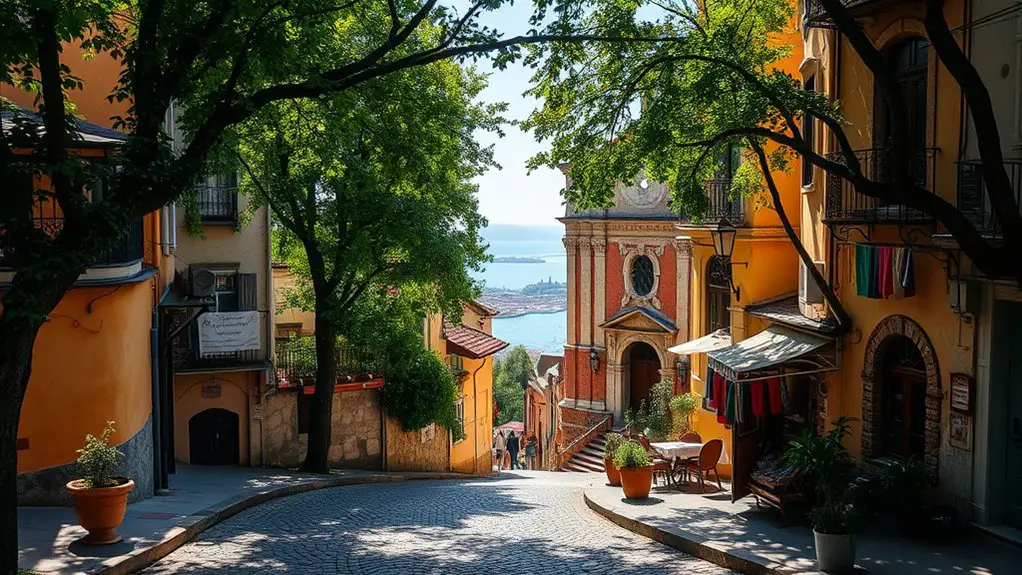
Fener, also known historically as Phanar, sits on the southern shore of Istanbul’s Golden Horn within the Fatih district. Its name is generally connected to the Greek word phanarion, meaning a lantern or lighthouse. Fatih Municipality’s history of the area also connects the district’s name with a historical light or lighthouse near the Golden Horn.
Fener became especially important to Istanbul’s Greek Orthodox community during the Ottoman period. The Ecumenical Patriarchate eventually established its seat here around the beginning of the 17th century, making the neighborhood one of the most important centers of Eastern Orthodox Christianity.
The surrounding streets preserve layers of Byzantine, Ottoman, Greek Orthodox, and later Istanbul history. Churches, schools, mosques, commercial streets, and residential buildings sit within a dense urban fabric rather than a single preserved “museum district.” That is part of what makes the walk interesting: Fener is still a lived-in neighborhood.
Fener’s story is best understood through layers: an old Golden Horn settlement, an Ottoman-era center of Greek Orthodox life, and a modern residential neighborhood that still contains major religious and educational landmarks.
One useful distinction is that the wider Historic Peninsula has internationally recognized heritage, but you should not casually describe the whole Fener neighborhood itself as one of UNESCO’s four inscribed component areas. UNESCO identifies the four components as the Sultanahmet Archaeological Park, Süleymaniye, Zeyrek, and the Land Walls area.
How to Get to Fener and Start the Walk
The easiest public-transport starting point for most visitors is the Fener stop on the T5 Eminönü–Alibeyköy tram line. The line runs along the Golden Horn and connects Fener directly with Eminönü as well as Balat, Ayvansaray, Eyüpsultan, and other stops. Check Metro Istanbul’s current T5 information before traveling.
You can also arrive by water. Fener Pier appears on current municipal Golden Horn ferry routes. Because ferry departures can change by day and season, use the Şehir Hatları timetable on the day of your visit rather than relying on an old schedule.
Pro Tip: Arrive by T5 or ferry and begin near the waterfront. Visit the Patriarchate first, climb to the high school and St. Mary of the Mongols while your legs are fresh, then work downhill through the residential streets toward the Golden Horn.
Starting Point: Ecumenical Patriarchate and Church of St. George
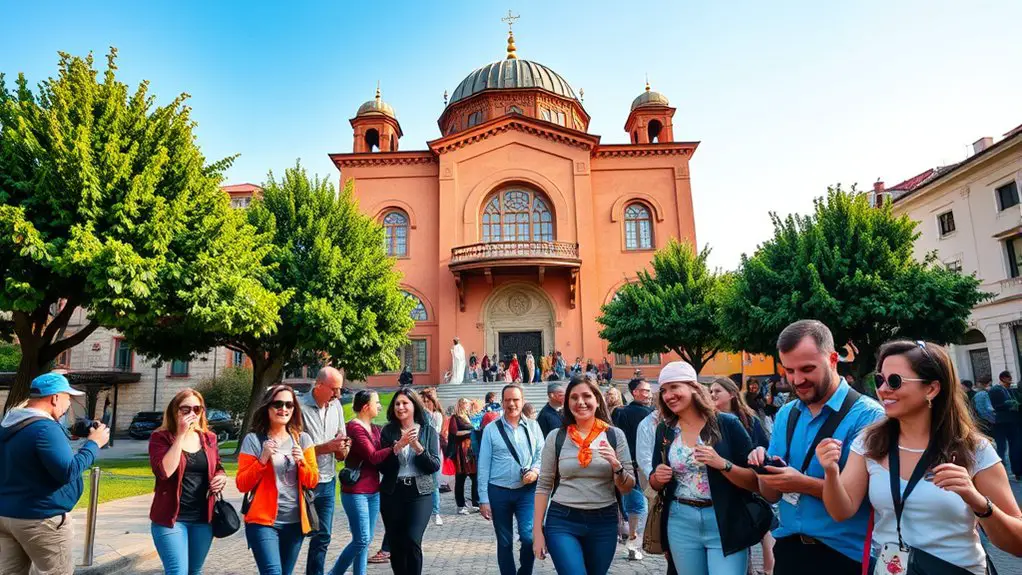
Begin the historical part of the walk at the Ecumenical Patriarchate of Constantinople, commonly called the Fener Rum Patrikhanesi in Turkish. The important point for visitors is that the Patriarchal Church of St. George is inside this complex; it is not a separate landmark somewhere else in the neighborhood.
The Patriarchate remains an active religious institution rather than a museum. Its official address is in Fener, and services, church business, security measures, and religious observances can affect visitor access. Check the Ecumenical Patriarchate’s official website for current information when access matters to your plans.
Note: “Fener Rum Patrikhanesi,” the Ecumenical Patriarchate at the Phanar, and the Patriarchal Church of St. George are closely connected names for the same first-stop complex. Do not budget time for them as two distant attractions.
Historical Importance and Role
According to the Ecumenical Patriarchate’s official history, St. George is the fifth church in Constantinople to have housed the Patriarchate since the 15th century. The site had previously been associated with an Orthodox convent before becoming the Patriarchal center around the turn of the 17th century.
The building reflects repeated repair rather than one untouched architectural period. Patriarch Timothy II refurbished it in 1614, it was rebuilt after a fire in 1720, and it was repaired again in 1836. Those changes are essential to understanding why the present church should not simply be labeled “Byzantine architecture.”
Today the Patriarchate remains the center of the Ecumenical Patriarchate of Constantinople and an active place of prayer, administration, ceremony, and Orthodox Christian life.
Architectural Features and Design
The present Church of St. George follows a traditional three-aisled basilica plan with a vestibule, nave, and altar area. Its restrained exterior contrasts with the much richer interior.
Inside, important features include a carved and gilded iconostasis, historic icons, a patriarchal throne, liturgical furnishings, and relics associated with major early Christian figures. The official church history also records important mosaic icons transferred from earlier Patriarchal churches.
A dome existed during one stage of the church’s history, but it was later removed. Describing the current church as a surviving Byzantine domed building is therefore misleading.
Religious Significance Today
St. George is not preserved simply as a historical monument. It remains a functioning Patriarchal church where liturgies and major Orthodox observances take place.
Visitors should behave as they would in any active sacred space: speak quietly, follow posted clothing and photography rules, avoid interrupting services, and obey staff or security instructions.
Warning: Access to active churches can change for liturgies, religious holidays, security, restoration, or private events. Do not rely on an old blog’s opening hours, and never attempt to enter a closed or restricted area.
Exploring the Streets and Architectural Gems
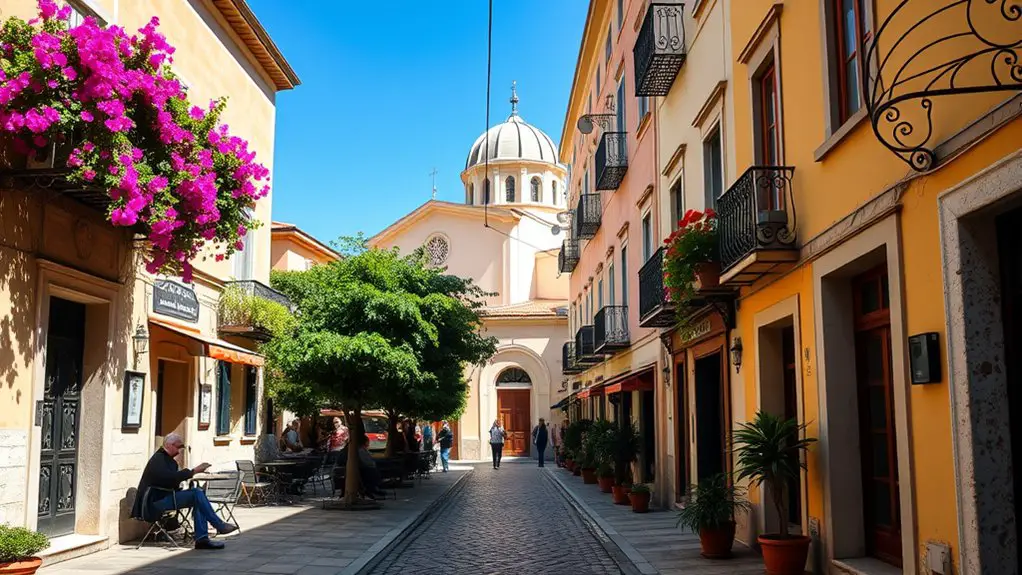
After leaving the Patriarchate, turn uphill into Fener’s compact street network. This is where the walk shifts from a major religious landmark to the neighborhood itself.
You will encounter narrow streets, stepped passages, bay windows, brick and rendered façades, small businesses, cafés, repaired houses, and buildings showing very different levels of preservation. Rather than assuming every picturesque house is “Ottoman” or centuries old, look for the broader late-Ottoman and modern urban layers that give the neighborhood its character.
Street art and brightly painted façades add contemporary color, while older masonry, timber details, shutters, balconies, and irregular street lines reveal the neighborhood’s older fabric.
The most rewarding part of a Fener walk is the contrast between monumental institutions and ordinary residential streets only a few minutes apart.
Discovering the Old Houses and Local Life
Fener’s residential streets deserve time, but they should be approached as a neighborhood rather than an outdoor film set. Many attractive doors, balconies, façades, and stairways belong to people’s homes.
Historic Residences
Look for projecting bay windows, narrow frontages, timber elements, masonry lower floors, decorative brickwork, and buildings adapted to steep plots. Some structures have been carefully restored, while others show repairs, alterations, or age.
These houses help explain how Fener developed as a dense urban neighborhood, but avoid assigning a precise age, owner, or architectural style to an individual property unless it is documented.
Traditional Neighborhood Streets
The sloping lanes between the Patriarchate and the upper part of Fener are among the best places to walk without a rigid checklist. Allow yourself short detours, but keep a map available because parallel streets and stairways can make the route less obvious than it first appears.
The neighborhood remains active throughout the day. You may pass small shops, repair businesses, cafés, homes, schools, religious buildings, and residents carrying out normal routines.
Daily Local Activities
Instead of searching for a staged idea of “traditional life,” pay attention to the ordinary details: deliveries, neighbors talking, children going to school, shopkeepers opening or closing businesses, and residents using streets that visitors also photograph.
This is one of the best ways to experience Fener respectfully. Keep doorways clear, do not photograph people at close range without permission, and remember that colorful façades may still be private homes.
The Fener Greek High School and Educational Heritage
The Fener Greek High School, also known in English as the Phanar Greek Orthodox College or Great School of the Nation, is one of the neighborhood’s most recognizable buildings. Its elevated position and red-brick exterior make it visible from many lower streets.
The present structure dates from 1881–1883. The Aga Khan Visual Archive at MIT identifies the architect as Konstantinos Dimadis and records brick and stone as major construction materials.
Its elaborate red-brick elevations, arched windows, towers, and castle-like silhouette make it very different from the smaller residential buildings nearby. This visual contrast is one reason it dominates photographs of upper Fener.
Treat the school primarily as an exterior viewing stop. It is an educational institution, not a conventional public museum, and visitors should never assume they can enter classrooms, courtyards, or other school areas without express permission.
Church of St. Mary of the Mongols (Panagia Mouchliotissa)
Near the upper streets of Fener is the Church of St. Mary of the Mongols, known in Greek as Panagia Mouchliotissa and in Turkish as Kanlı Kilise. This is the historically important Fener church that should replace vague references to a “Panagia Rum Orthodox Monastery.”
The site is associated with a Byzantine convent and with Maria Palaiologina, daughter of Emperor Michael VIII Palaiologos, who returned to Constantinople after marriage into the Mongol Ilkhanate and became closely associated with the convent in the late 13th century.
Specialist Byzantine scholarship describes Panagia Mouchliotissa as an exceptional survival because it continued in Orthodox Christian use rather than being converted into a mosque. The structure has nevertheless been altered repeatedly over the centuries, so what you see today is not an untouched 13th-century building.
The church stands behind walls in a residential area, and access is less predictable than at a purpose-built tourist attraction. Enjoy the exterior and surroundings if it is closed, and enter only when visitor access is clearly permitted.
For deeper architectural background, see the academic treatment of Panagia Mouchliotissa in Byzantine Monuments of Istanbul from Cambridge University Press.
The Golden Horn Waterfront and the Story Behind Fener’s Name
From the upper streets, work your way back toward the Golden Horn. This is the correct body of water beside Fener; the neighborhood is not on the Bosphorus shoreline.
The name Fener is historically associated with a lantern, beacon, or lighthouse on this part of the Golden Horn. That history is worth knowing, but it should not be confused with a surviving 19th-century tourist lighthouse that you can visit here today.
In other words, there is no need to search the waterfront for the “Fener Lighthouse” described in some generic travel copy. Do not confuse Fener with Fenerbahçe Lighthouse in Kadıköy or Rumeli Feneri near the Black Sea end of the Bosphorus.
The waterfront itself is still a worthwhile finish. It gives you open views across the Golden Horn and an easy connection back to the T5 tram or Fener ferry services.
Optional Extension: Bulgarian St. Stephen Iron Church
If you have another 20–40 minutes, continue along the Golden Horn toward the Bulgarian St. Stephen Church, commonly called the Bulgarian Iron Church. It sits near the Fener–Balat walking area and is one of the most distinctive religious buildings along the Golden Horn.
The current church opened in the late 19th century and is famous for its prefabricated iron construction. Istanbul’s Provincial Directorate of Culture and Tourism includes Sveti Stefan among the city’s notable active churches.
This extension also helps explain why Fener and Balat are so often combined in walking tours. They are adjoining neighborhoods with intertwined routes, but they are not simply two names for the same place.
Visiting Local Cafés and Traditional Eateries
Fener and nearby Balat have plenty of places to pause, ranging from simple tea and coffee stops to newer cafés and casual restaurants. A break is especially welcome after climbing the upper streets.
Rather than chasing an unnamed “must-visit” café, choose according to what you actually want. Turkish coffee or tea makes an easy short stop; pastries and desserts work well for a quick break; and a longer meal can include meze, grilled dishes, soups, or seafood depending on the restaurant.
Menus, prices, ownership, and opening hours change more quickly than monuments do, so check the current menu before ordering and avoid treating an old recommendation as permanent.
Note: The most photogenic cafés are not necessarily the most traditional, and the most traditional businesses are not necessarily designed for tourists. Both can be enjoyable; choose based on atmosphere, menu, and current reviews rather than appearance alone.
Tips for a Memorable Walking Experience
Wear Comfortable Shoes
A good pair of walking shoes makes a real difference in Fener. The neighborhood includes slopes, uneven paving, curbs, stairs, and surfaces that can become slippery when wet.
- Choose shoes with reliable grip rather than smooth soles.
- Wear something already broken in.
- Carry water in warm weather.
- Allow extra time instead of rushing steep sections.
Plan Your Route
A simple route keeps the walk efficient:
- Arrive at Fener by T5 tram or municipal ferry.
- Visit the Ecumenical Patriarchate and Church of St. George as one combined stop.
- Climb into the historic residential streets toward the upper neighborhood.
- View the Fener Greek High School from the surrounding public streets.
- Continue to St. Mary of the Mongols and respect any access restrictions.
- Wander downhill through Fener’s residential streets, stopping for coffee or food as desired.
- Return to the Golden Horn waterfront or extend the walk toward the Bulgarian St. Stephen Church and Balat.
This order keeps the steepest climb earlier in the walk and makes the final portion easier.
Respect Active Places of Worship
Churches in Fener are not simply historical exhibits. Dress modestly, silence your phone, do not use flash where photography is restricted, and step aside during services rather than circulating through worshippers.
Feast days and major church events can make a visit more meaningful, but they can also change normal visitor access. Check current information before making a special trip around a particular service.
Mobility and Accessibility
Public transport is easier than the historic street network. Metro Istanbul states that T5 stations are designed for low-floor operation and accessible station entry, but that does not make the whole Fener route step-free.
The neighborhood contains steep inclines, irregular paving, stairs, narrow sidewalks, and busy road crossings. Visitors using wheelchairs, walkers, or other mobility aids may need to shorten the route, remain closer to the waterfront, or arrange transport between upper and lower sights.
Photography and Residential Etiquette
Fener is highly photogenic, but it is also residential. Photograph façades from public streets without blocking traffic or entrances. Ask before taking close portraits of residents, shopkeepers, worshippers, or children.
Avoid leaning on doors, entering courtyards, moving residents’ belongings, or using private stairs purely to stage a photograph.
Frequently Asked Questions
Are there guided walking tours available in Fener?
Yes. Fener is commonly included in guided Fener-and-Balat walks, especially tours focused on Ottoman history, Greek Orthodox heritage, religious architecture, and neighborhood photography. A guide can add context and may know current access conditions, but a self-guided visit is also practical with a mapped route.
What is the best time of year to visit Fener?
Spring and autumn are usually the most comfortable seasons for a long walking route because temperatures are generally milder than in midsummer. Summer can still be enjoyable if you start earlier, carry water, and take breaks. In winter, bring shoes with good grip for wet paving.
Is Fener suitable for visitors with mobility challenges?
Only partly. The T5 tram provides an accessible way to reach the waterfront area, but many of Fener’s most interesting streets are steep, uneven, or reached by steps. A shortened waterfront route is easier than the full uphill walk, and some visitors may prefer to use a taxi or other transport between elevations.
Are there local festivals or events in Fener?
Active churches and community institutions hold religious services, feast-day observances, and occasional cultural events throughout the year. Schedules vary, so check the relevant church or institution directly rather than assuming a regular public festival will be taking place during your visit.
Can I access the churches and historical sites outside visiting hours?
No. Respect closed gates, security instructions, worship schedules, and private property. Some sites may permit pre-arranged visits, but that must be confirmed with the institution itself. Never enter a restricted area simply because a door or gate is open.
How long does a self-guided Fener walking tour take?
Allow roughly 2.5–4 hours for the Patriarchate, upper-Fener landmarks, residential streets, photographs, and a short café stop. You can spend less time on a quick landmark walk or extend the route into Balat for a half day.
Is Fener the same neighborhood as Balat?
No. Fener and Balat are adjoining historic neighborhoods along the Golden Horn and are often combined into one walking route. Fener is especially associated with Greek Orthodox institutions such as the Ecumenical Patriarchate, while Balat has its own distinct religious, commercial, and residential history.
Is there a Fener Lighthouse to visit?
The neighborhood’s name is historically linked to a lantern, beacon, or lighthouse on the Golden Horn, but a surviving 19th-century “Fener Lighthouse” is not a standard present-day attraction on this route. Do not confuse Fener with Fenerbahçe Lighthouse in Kadıköy or Rumeli Feneri farther north.
Conclusion
A Fener walking tour is most rewarding when you follow the neighborhood’s real geography and history rather than chasing generic photo stops. Begin at the Ecumenical Patriarchate and St. George, climb to the Greek High School and St. Mary of the Mongols, explore the residential streets respectfully, and finish beside the Golden Horn. With comfortable shoes, realistic access expectations, and time to wander, the route reveals one of Istanbul’s most historically layered neighborhoods without turning it into a checklist.
Sources
- Ecumenical Patriarchate — A Brief History of the Temple of St. George — backs the church’s history, basilica plan, dates, icons, furnishings, and relics.
- Fatih Municipality — Fatih in History — supports the history and name-origin context of Fener and its Golden Horn location.
- MIT Aga Khan Visual Archive — Fener Greek High School — identifies the present building’s 1881–1883 date, architect Konstantinos Dimadis, and materials.
- Cambridge University Press — Byzantine Monuments of Istanbul — academic reference for Panagia Mouchliotissa and other surviving Byzantine monuments.
- Metro Istanbul — T5 Eminönü–Alibeyköy Tram Line — supports current Fener tram access and line information.
- Şehir Hatları — Golden Horn Ferry Line — supports current municipal ferry service through Fener.
