
Last Updated on July 25, 2026 by Daniel Globe
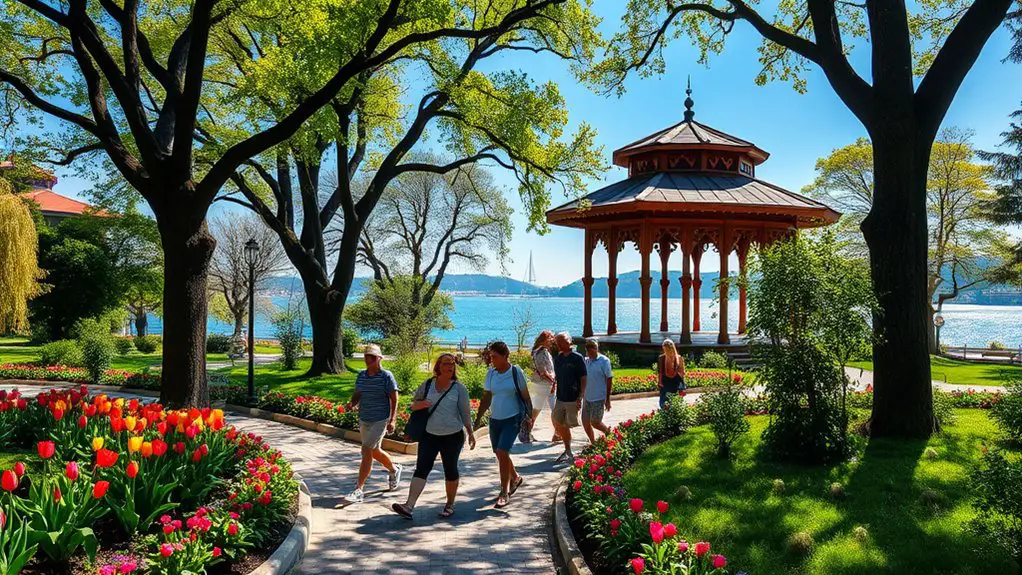
Emirgan is best explored as a half-day walking route that combines the Bosphorus waterfront, a historic mosque, the Sakıp Sabancı Museum, and the wooded slopes of Emirgan Park. The route is compact, but the park is hilly, so comfortable shoes and an early start will make the experience far more enjoyable.
Quick Answer
Start at Emirgan Pier and Hamid-i Evvel Mosque, continue to the Sakıp Sabancı Museum, then climb into Emirgan Park to see its ponds and Yellow, Pink, and White pavilions. Allow three to five hours. Visit early, especially in April, because the park is steep and tulip-season crowds build quickly.
Key Takeaways
- The most practical route runs from Emirgan Pier to Hamid-i Evvel Mosque, the Sakıp Sabancı Museum, and Emirgan Park.
- Emirgan Park rises sharply above the waterfront, so expect slopes, steps, and a moderate amount of climbing.
- April is the main tulip season, but bloom timing and special events vary with the weather and annual program.
- Bus service is more dependable than ferry service; confirm the latest IETT and Şehir Hatları schedules before leaving.
At a Glance
| Time Required | 3–5 hours, or longer with a full museum visit and lunch |
| Difficulty | Moderate because of steep park roads, steps, and uneven sections |
| Tools Needed | Comfortable shoes, water, weather protection, Istanbulkart, and a phone map |
| Cost | The outdoor walk and park are free; allow extra for transport, museum admission, food, and drinks |
Disclosure: As an Amazon Associate I earn from qualifying purchases. Some links on this page are affiliate links, at no extra cost to you.
Overview of Emirgan
Emirgan is a Bosphorus neighborhood in Istanbul’s Sarıyer district. Its waterfront sits below a wooded hillside occupied by Emirgan Grove, also known as Emirgan Park or Emirgan Korusu.
The area works well for a self-guided walk because its main sights form a natural sequence. Near the pier, you can see the waterfront, Hamid-i Evvel Mosque, and the exterior of Şerifler Yalısı. A short walk north leads to the Sakıp Sabancı Museum, while the park entrance opens onto paths that climb toward ponds, gardens, and three historic pavilions.
Emirgan’s appeal comes from contrast: a lively Bosphorus shore below and a quiet, wooded hillside only a few minutes away.
The route is especially colorful in spring, but Emirgan remains worth visiting throughout the year. Summer offers deep shade, autumn brings warm foliage, and winter is often quieter than the crowded tulip season.
Getting to Emirgan
Emirgan does not have its own metro station, so most visitors arrive by a waterfront bus, a bus connection from the M2 metro, a limited ferry service, taxi, or car.
Public Transport Options
The official IETT Emirgan stop page currently lists routes including 22, 22RE, 25E, 40, 40T, 42T, 59RH, and EL2. Individual journeys, route variants, and stop directions can change, so check the official IETT Emirgan page on the day of travel.
| Option | Best For | Planning Note |
|---|---|---|
| Waterfront buses | Travel from Kabataş, Beşiktaş, Taksim, or other Bosphorus neighborhoods | Routes such as 22, 25E, 40, and 40T serve the coastal corridor, but route variants should be checked live. |
| M2 metro plus EL2 | Visitors starting near an M2 station | Travel to 4.Levent and connect with the EL2 service toward Emirgan. |
| Şehir Hatları ferry | A scenic arrival when the schedule fits | Emirgan service is limited and seasonal. Check the official timetable rather than assuming a direct ferry operates. |
Note: Ferry service at Emirgan is less frequent than service at major piers such as Beşiktaş, Üsküdar, or Eminönü. Build your plan around a ferry only after confirming the exact day’s departures.
Driving and Parking
The Bosphorus coast road offers attractive views, but traffic can be slow on weekends and exceptionally busy during the April tulip season. Paid parking is available in the area, although spaces and access roads can fill early.
For a smoother visit, arrive near opening time, avoid the middle of a sunny weekend, or use public transport. Parking higher on the hillside may reduce part of the climb, but it can also place you farther from the waterfront and museum portion of the route.
Warning: The road beside the Bosphorus carries fast and heavy traffic. Use marked crossings, keep children close, and avoid stepping into the road for photographs.
Nearby Landmarks on the Route
The most relevant landmarks for an Emirgan walking tour are close enough to connect without crossing Istanbul:
- Emirgan Pier and waterfront: A convenient orientation point with views toward Kanlıca and the Asian shore.
- Şerifler Yalısı: A historic waterfront mansion best appreciated from public exterior viewpoints.
- Hamid-i Evvel Mosque: The local mosque associated with Emirgan’s historic center.
- Sakıp Sabancı Museum: A major art museum housed around the Atlı Köşk estate.
- Emirgan Park: The hillside grove containing ponds, gardens, paths, and the Yellow, Pink, and White pavilions.
- İstinye waterfront: An optional northward extension for visitors who want a longer coastal walk.
Küçük Mecidiye Mosque, Istanbul Modern, the Rahmi M. Koç Museum, and Beykoz Konakları should not be treated as stops on this neighborhood walk. They are in other parts of Istanbul or across the Bosphorus.
Emirgan Walking Tour Route
A practical route covers roughly 3–5 kilometers, depending on how many park paths you explore. The distance is manageable, but the elevation makes the walk feel longer than a flat waterfront route.
Stop 1: Emirgan Pier and the Bosphorus Waterfront
Begin at Emirgan Pier or the nearby bus stops. Take a few minutes to look across the Bosphorus toward Kanlıca and the wooded hills of the Asian side.
The shore is a good place to orient yourself before entering the steeper part of the neighborhood. Morning light is often softer for photographs, while late afternoon can produce warm reflections on the water.
Stop 2: Hamid-i Evvel Mosque
Near the waterfront stands Hamid-i Evvel Mosque, also known as Emirgan Mosque. The official Istanbul walking route notes that Sultan Abdülhamid I commissioned it in 1781 in memory of his children Mehmed and Hümaşah Hatun.
View the exterior quietly and enter only when appropriate. Remove your shoes, wear modest clothing, keep voices low, and avoid sightseeing during congregational prayer when possible.
Stop 3: Sakıp Sabancı Museum
Continue north along the Bosphorus to the Sakıp Sabancı Museum. Its collections, temporary exhibitions, garden, sculpture displays, and panoramic setting can justify a visit of 60–120 minutes.
At the time of this July 2026 update, the museum lists opening hours of 10:00–18:00 from Tuesday through Sunday, with last entry at 17:30. It is closed on Mondays, and the museum currently offers free admission on Tuesdays. Check the official visitor page before traveling because hours and ticket policies may change.
Note: On Mondays, reverse the emphasis of the tour: spend more time in the park, along the waterfront, and in Emirgan’s cafés instead of planning around the museum.
Stop 4: Emirgan Park
Enter Emirgan Park after the museum portion of your walk. The park spreads across a hillside, so routes divide into lower paths, internal roads, stairways, garden terraces, and upper viewpoints.
A useful sequence is:
- Explore the lower gardens and one of the decorative ponds.
- Climb gradually toward the Yellow Pavilion.
- Continue through the central park toward the Pink Pavilion.
- Visit the upper areas around the White Pavilion and Bosphorus viewpoints.
- Return by a different internal road to avoid retracing every step.
Pro Tip: Enter the park early and climb to the upper viewpoints before the busiest hours. You can then descend more slowly through the gardens and stop for food or tea near the end of the route.
Optional Extension: İstinye Waterfront
After leaving Emirgan Park, continue north toward İstinye if you still have time and energy. This extension adds a flatter waterfront section and provides a change from the wooded park slopes.
You can finish in İstinye and return by bus, or continue farther toward Yeniköy for a longer Bosphorus walk. Check the return route before extending the walk, especially in the evening.
Emirgan Park: A Natural Oasis
Emirgan Grove covers about 47 hectares on ridges and slopes above the Bosphorus. Its combination of mature trees, decorative ponds, flower beds, open lawns, and historic structures makes it one of the most varied green spaces in the district.
The park is not a flat botanical garden. Some roads rise sharply, and shortcuts may include steps or uneven ground. Take breaks, especially in warm weather, and choose the broad internal roads when you want a gentler surface.
Picnic and seating areas provide places to rest, although weekends can be busy. Keep food secured, dispose of waste properly, and avoid damaging planted beds while searching for photographs.
The lower areas feel connected to the neighborhood and museum, while the upper paths provide more expansive views. A full loop offers a better sense of the park than a quick visit to the entrance flower beds.
The Tulip Festival: A Burst of Color
Emirgan Park is one of Istanbul’s best-known places for spring tulips. Large displays normally appear during April, but the strongest bloom period depends on winter temperatures, spring rain, sunlight, and the planting schedule.
Do not assume every bed will peak on the same day. Early varieties may flower while later beds are still closed, and warm weather can shorten the display.
The park itself is the main attraction during tulip season. Ceremonies, exhibitions, performances, or other activities may be announced in individual years, but they should not be treated as guaranteed festival features. Check current İBB tulip-season information before planning around a special program.
For a calmer experience:
- Arrive on a weekday morning.
- Enter before large tour groups and weekend visitors.
- Photograph the busiest lower beds first.
- Explore the upper park after the entrance area becomes crowded.
- Avoid stepping into flower beds, even when other visitors do so.
Historic Mansions and Architecture
Emirgan’s most important park buildings are three 19th-century pavilions constructed during the period when the grove belonged to Khedive Ismail Pasha of Egypt. They are identified by their exterior colors: the Yellow Pavilion, Pink Pavilion, and White Pavilion.
Architectural Styles Overview
Rather than describing Emirgan as a general mixture of Byzantine, Ottoman, and modern architecture, focus on the features you can actually observe. The pavilions have distinct rooflines, balconies, window arrangements, timber details, and decorative treatments.
The surrounding neighborhood also includes waterfront mansions, late Ottoman religious architecture, newer residences, and institutional buildings. This produces variety, but not every structure is open to the public.
Notable Historic Pavilions
- Yellow Pavilion: One of the most recognizable structures in the park, with a prominent elevated setting and detailed timber exterior.
- Pink Pavilion: A softer-colored historic building surrounded by mature planting and landscaped park areas.
- White Pavilion: Located higher in the grove and useful as a reference point when exploring the upper paths.
The use of individual pavilions can change because of dining operations, private functions, maintenance, or restoration. Admire the exteriors even when interior access is unavailable.
Preservation Efforts Today
The grove is both a recreational landscape and a protected historic environment. Tree care, building restoration, path maintenance, storm cleanup, and visitor management all affect how the site is preserved.
Visitors can help by remaining on established paths, avoiding flower beds, respecting closed areas, not attaching objects to trees, and carrying waste to the appropriate bins.
Local Cafés and Dining Options
Emirgan offers several natural places for a food break: cafés around the waterfront square, dining facilities associated with park pavilions, and the restaurant at the Sakıp Sabancı Museum.
A traditional Turkish breakfast can be a good start before the climb, with items such as eggs, cheese, olives, tomatoes, bread, and tea. For a faster stop, choose simit, a pastry, or Turkish coffee.
Inside the park, opening hours and access at the pavilions can vary. Avoid building a tight itinerary around a particular dining room unless you have checked its current operation.
The museum’s official visitor information also lists a restaurant with Bosphorus views. Museum admission, restaurant access, and reservations may be handled separately, so confirm the current arrangement before your visit.
If tulip-season crowds make central Emirgan busy, delay lunch until İstinye or Yeniköy, where you can continue along the coast and choose from additional cafés.
Cultural Attractions and Museums
The Sakıp Sabancı Museum is the primary museum on this walking route. It combines indoor collections and temporary exhibitions with an outdoor garden containing sculpture, architectural fragments, fountains, and Bosphorus views.
Other cultural elements in the immediate area include:
- Hamid-i Evvel Mosque: A living religious building and an important part of Emirgan’s historic waterfront.
- The three park pavilions: Historic structures that illustrate the grove’s 19th-century development.
- Şerifler Yalısı exterior: A reminder of the residential architecture that once lined much of the Bosphorus.
- Seasonal tulip exhibitions or displays: Programs may appear during spring but vary from year to year.
Istanbul Modern is in Karaköy, and the Rahmi M. Koç Museum is in Hasköy on the Golden Horn. Both can be worthwhile, but they belong in separate itineraries rather than an Emirgan walking tour.
Scenic Spots for Photography
Emirgan provides a mix of water, architecture, flowers, and wooded scenery. Use the route’s changing elevation to create variety instead of photographing every subject from eye level.
| Location | Best Subject | Photography Tip |
|---|---|---|
| Emirgan Pier | Ferries, shoreline, and Asian-side hills | Use railings or trees as foreground framing without blocking pedestrians. |
| Hamid-i Evvel Mosque | Late Ottoman religious architecture | Photograph respectfully from public space and avoid worshippers. |
| Museum garden | Sculpture, historic estate, and Bosphorus | Check the museum’s photography rules for exhibitions and artworks. |
| Lower park gardens | Tulips, ponds, reflections, and close details | Use a low angle from the path rather than entering planted beds. |
| Historic pavilions | Timber details, balconies, and color contrasts | Include surrounding trees to show the buildings’ park setting. |
| Upper park viewpoints | Elevated Bosphorus scenes | Late-afternoon side light can add depth, but confirm your return route before dusk. |
Accessibility, Terrain, and Safety
The waterfront portion of the route is comparatively level, but Emirgan Park occupies a steep hillside. Paved internal roads can be easier than stairway shortcuts, although long gradients remain.
Wheelchair users, visitors with limited mobility, and families with heavy strollers may prefer a shorter park visit or a vehicle drop-off near an upper entrance. Conditions vary by gate, construction work, weather, and crowd levels, so do not assume every viewpoint will be step-free.
After rain, fallen leaves, stone surfaces, and sloping paths can become slippery. In summer, carry water and take shaded breaks. During tulip season, keep bags secure and agree on a meeting point if your group becomes separated.
Solo visitors generally use the park and waterfront without difficulty during normal visiting hours. Stay on active paths, avoid isolated sections after dark, and use the same awareness you would in any large city.
Tips for Your Walking Tour
- Start early: Morning offers lighter traffic, cooler temperatures, and fewer visitors in the most photographed areas.
- Check the museum calendar: The Sakıp Sabancı Museum is normally closed on Mondays and may adjust hours for holidays or events.
- Verify transport: Use the official IETT and Şehir Hatları pages instead of relying on an old screenshot or blog route.
- Wear supportive shoes: The park’s gradients matter more than the total walking distance.
- Carry water: Do not depend on every pavilion or kiosk being open.
- Respect religious spaces: Dress modestly, speak quietly, and avoid interrupting prayer.
- Protect the gardens: Stay out of tulip beds and avoid moving barriers for photographs.
- Keep the route flexible: Shorten the park loop in bad weather or extend north to İstinye when conditions are good.
Frequently Asked Questions
What is the best time to visit Emirgan?
April is best for tulips, although exact bloom timing depends on the weather. May and early autumn offer comfortable walking conditions with fewer flower-season crowds. Visit on a weekday morning for the quietest experience.
How long does an Emirgan walking tour take?
Allow three to five hours for the waterfront, mosque, museum area, and a useful loop through Emirgan Park. Add more time for a full museum visit, a long meal, or an extension to İstinye or Yeniköy.
Are there restrooms in Emirgan Park?
Restroom facilities are available in and around the park, including facilities associated with some visitor and dining areas. Exact locations and opening conditions can change, so use an available facility near the lower park before beginning a long uphill loop.
Is Emirgan safe for solo travelers?
Emirgan is commonly visited by solo travelers. Visit during active hours, remain aware near traffic, protect valuables in crowds, and avoid quiet park sections after dark.
Can I bring my dog to Emirgan Park?
Dogs are often seen in the park, but posted rules and access conditions can change. Keep your dog controlled and leashed, carry waste bags, and follow instructions from park staff. Museums, restaurants, and individual pavilions may apply separate pet policies.
Are guided tours available in Emirgan?
The Sakıp Sabancı Museum publishes information about guided museum and group tours. Private licensed guides may also include Emirgan in a wider Bosphorus itinerary. Municipal nature walks and park programs are occasional rather than guaranteed daily services.
Is Emirgan Park wheelchair accessible?
Some internal roads are paved, but the park is built on steep slopes and not every viewpoint or shortcut is step-free. A shorter route or upper-gate drop-off may be more practical for visitors with limited mobility.
Is an Emirgan walking tour free?
Walking along the waterfront and exploring the public park does not require a tour ticket. Budget separately for public transport, parking, museum admission, food, drinks, and any paid guided experience.
Sources
- Istanbul Governor’s Office: Emirgan–Yeniköy Walking Route — local route, Hamid-i Evvel Mosque, museum, park, and pavilions.
- Sarıyer District Governor’s Office: Emirgan Grove — grove size, history, and the three historic pavilions.
- Istanbul Metropolitan Municipality: Tulip Season in Istanbul — Emirgan’s role in the April tulip season.
- IETT: Emirgan Stop and Bus Routes — current public-bus connections serving Emirgan.
- Şehir Hatları Timetables — current and seasonal ferry schedules.
- Sakıp Sabancı Museum Visitor Information — opening days, hours, admission information, transport, and guided tours.
Conclusion
An Emirgan walking tour works best when you keep the geography simple: begin beside the Bosphorus, visit Hamid-i Evvel Mosque and the Sakıp Sabancı Museum, then devote the rest of your time to Emirgan Park’s gardens, ponds, wooded slopes, and three historic pavilions.
Start early, prepare for a climb, and treat ferries, museum hours, pavilion access, and special events as details to confirm rather than guarantees. With that preparation, Emirgan offers one of Istanbul’s most satisfying combinations of waterfront scenery, art, architecture, and green space.
