
Last Updated on July 25, 2026 by Daniel Globe
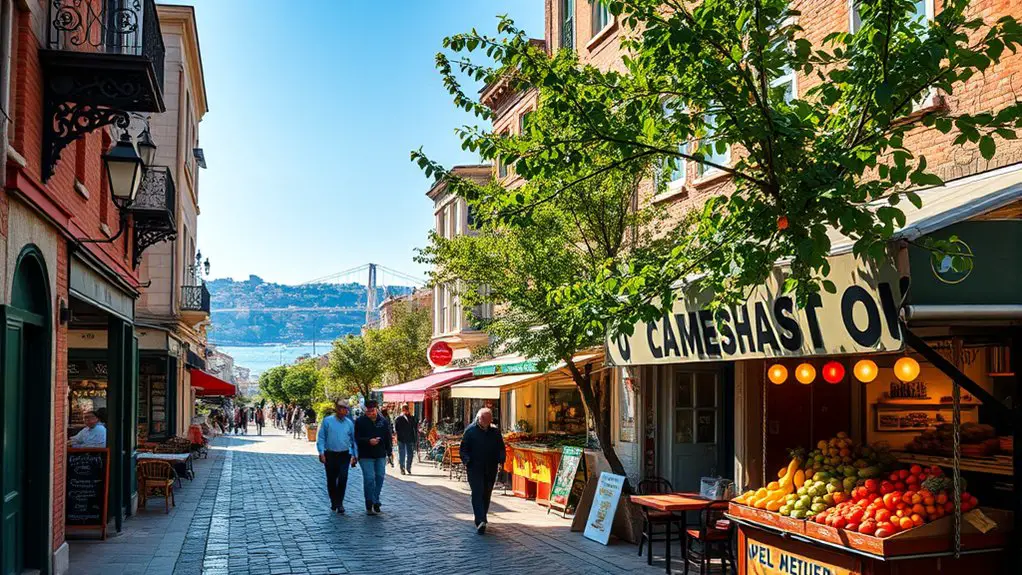
Beşiktaş is one of Istanbul’s best districts to explore on foot, but its waterfront attractions, crowded market streets, and hillside parks require a little planning. This self-guided Beşiktaş walking tour begins at Dolmabahçe Palace, passes the Naval Museum and Sinan Paşa Mosque, continues through Beşiktaş Çarşı and Akaretler, and finishes at Yıldız Park or Ortaköy.
Quick Answer
Allow four to six hours for a Beşiktaş walking tour covering Dolmabahçe Palace, the Naval Museum, Sinan Paşa Mosque, Beşiktaş Market, Akaretler, Yıldız Park, and Çırağan Palace. A shorter waterfront-and-market route takes about two to three hours, while visiting palace interiors and continuing to Ortaköy can fill most of a day.
Key Takeaways
- Start at Dolmabahçe Palace and move north so the main waterfront landmarks fall into a logical walking order.
- The historic mosque beside Beşiktaş Square is Sinan Paşa Mosque, not simply “Beşiktaş Mosque.”
- Use Beşiktaş Çarşı for a food break before climbing toward Akaretler and Yıldız Park.
- The waterfront sections are relatively easy, but Yıldız Park and nearby streets include steep uphill stretches.
- Ferries and buses serve central Beşiktaş; the T1 tram stops at Kabataş, south of the main square.
At a Glance
| Time Required | 2–3 hours for the express route; 4–6 hours for the main route; most of a day with palace interiors and Ortaköy |
| Difficulty | Moderate; mostly paved, with crowded sidewalks and a notable uphill section toward Akaretler and Yıldız Park |
| Tools Needed | Comfortable shoes, water, a charged phone or offline map, sun or rain protection, and modest clothing for mosque entry |
| Cost | The walk and exterior sightseeing are free; palace and museum admission, food, and public transport cost extra |
Disclosure: As an Amazon Associate I earn from qualifying purchases. Some links on this page are affiliate links, at no extra cost to you.
Beşiktaş Walking Tour Route and Must-See Landmarks
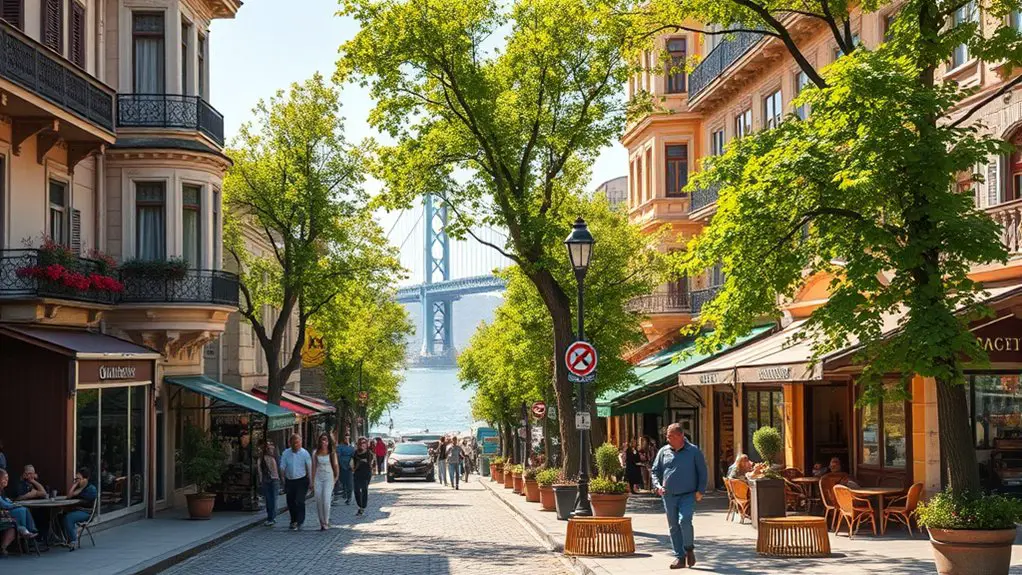
The most efficient route runs from south to north. Begin near Dolmabahçe Palace, walk toward Beşiktaş Square, explore the market and Akaretler, and then decide whether to climb into Yıldız Park or continue along the Bosphorus toward Çırağan Palace and Ortaköy.
Note: Museum hours, admission prices, last-entry times, restoration work, and public-transport schedules can change. Check the linked official pages on the morning of your walk rather than relying on an old screenshot or travel post.
Stop 1: Dolmabahçe Palace
Start at Dolmabahçe Palace on the southern edge of the district. Built during the 19th century, the palace became an important residence of the late Ottoman sultans and combines several European-influenced decorative styles with an Ottoman palace layout.
You can admire the clock tower, monumental gates, waterfront setting, and exterior architecture without committing to a long interior visit. Entering the palace adds substantial time, especially when ticket lines or security checks are busy. Set aside roughly 90 minutes to two hours if the interior is a priority.
Dolmabahçe is normally closed on Mondays, but holidays, ceremonies, restoration work, and ticket rules can affect access. Confirm the current details on the official National Palaces website before building the rest of your day around an interior tour.
Pro Tip: Visit the palace interior first thing in the morning, then begin the neighborhood walk. Reversing the order can leave you at the ticket office close to the final admission time.
Stop 2: Naval Museum and Barbarossa Square
Continue north along the waterfront toward the İstanbul Naval Museum. Its displays include historic vessels, maritime objects, and material connected with Ottoman and Turkish naval history.
The museum’s official listing provides current opening hours, last-entry information, ticket details, restrooms, elevators, and accessibility facilities. An efficient visit can take about an hour, while visitors interested in the historical imperial caiques and maritime collections may want longer.
Outside, pause around Barbarossa Square and the Tomb of Barbarossa Hayreddin Paşa. This area connects the waterfront, ferry piers, museum, mosque, and market, making it one of the most useful orientation points on the route.
Stop 3: Sinan Paşa Mosque
The mosque beside Beşiktaş Square is Sinan Paşa Mosque. It is a historic Ottoman mosque associated with architect Mimar Sinan and should not be described simply as “Beşiktaş Mosque” or as a modern-style building.
Non-worshippers may usually enter outside congregational prayer times when the mosque is open. Remove your shoes, dress modestly, speak quietly, keep phones silent, and avoid photographing people while they pray. A lightweight scarf or extra layer can be useful for respectful entry.
The central Beşiktaş route brings three different views of the district together within a short walk: imperial history at Dolmabahçe, maritime history at the Naval Museum, and classical Ottoman architecture at Sinan Paşa Mosque.
Stop 4: Beşiktaş Square and Çarşı
From the mosque, enter the busy streets of Beşiktaş Çarşı. This is the route’s best place to experience daily neighborhood life, browse small shops, see the fish market area, and stop for lunch or a snack.
The lanes can become crowded around meal times, weekends, ferry arrivals, and football events. Walk slowly, keep bags closed, and use marked crossings when moving between the square, market, and bus stops.
Stop 5: Akaretler Row Houses
Walk uphill from the market toward Akaretler. The historic row houses now contain restaurants, cafes, shops, offices, and changing exhibition spaces. The area provides a clear contrast with the waterfront: the streets feel more residential and architectural, while the climb offers a transition toward the greener Yıldız section.
Temporary galleries, murals, displays, and retail tenants change over time. Treat them as discoveries rather than guaranteed permanent attractions.
Stop 6: Yıldız Park
Yıldız Park is not a secret pocket park. It is one of Istanbul’s major public green spaces and was once connected with the imperial gardens of Yıldız Palace.
The park offers wooded paths, landscaped areas, pavilions, and places to rest, but it also adds hills and considerable walking time. Allow at least 45 to 90 minutes for a relaxed visit. Visitors who are tired, short on time, or avoiding steep paths can skip the interior and continue along the waterfront instead.
Stop 7: Çırağan Palace and Optional Ortaköy Finish
Descend toward Çırağan Street and the Bosphorus. Çırağan Palace now operates as a hotel, so most walkers experience it from the street and waterfront-facing surroundings unless they have a dining reservation, event booking, or hotel access.
For a longer finish, continue north toward Ortaköy. The district remains within Beşiktaş and adds a lively waterfront square, views of the Bosphorus Bridge, food stalls, small shops, and the 19th-century Ortaköy Mosque. The extension is especially appealing near sunset, although the square can be extremely busy on weekends.
Choose a Short or Full Beşiktaş Itinerary
| Route | Recommended Stops | Approximate Time |
|---|---|---|
| Express Highlights | Dolmabahçe exterior, Naval Museum exterior or short visit, Sinan Paşa Mosque, Beşiktaş Square, and Çarşı | 2–3 hours |
| Half-Day Route | Express route plus a food stop, Akaretler, and either Yıldız Park or Çırağan Palace | 4–6 hours |
| Extended Route | Palace or museum interiors, market lunch, Akaretler, Yıldız Park, Çırağan Palace, and Ortaköy | 6–8 hours |
Hidden Gems and Quieter Stops
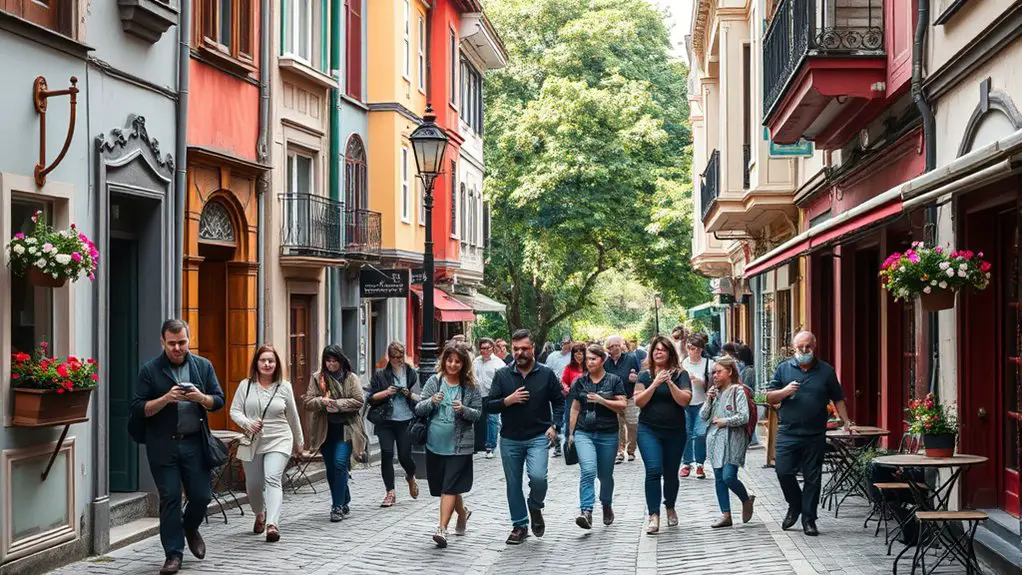
Beşiktaş’s quieter discoveries are found between its major attractions rather than at a single secret location. Side streets, small parks, historic building rows, independent shops, and changing artwork reward visitors who leave enough time to wander.
| Quiet Green Stops | Creative and Architectural Stops |
|---|---|
| Yıldız Park for long wooded paths and former imperial-garden scenery | Akaretler for historic row houses and changing exhibitions |
| Ortaköy waterfront park for a short Bosphorus break | Beşiktaş Çarşı side streets for changing shutters, murals, record shops, and independent retailers |
| Maçka Democracy Park as an optional detour northwest of the core waterfront route | Ortaköy lanes for craft stalls, small galleries, and temporary cultural displays |
Street art and temporary exhibitions can disappear, move, or be painted over. Enjoy what is present during your visit rather than planning the route around one specific mural or gallery listing.
Local Food and Drink Stops
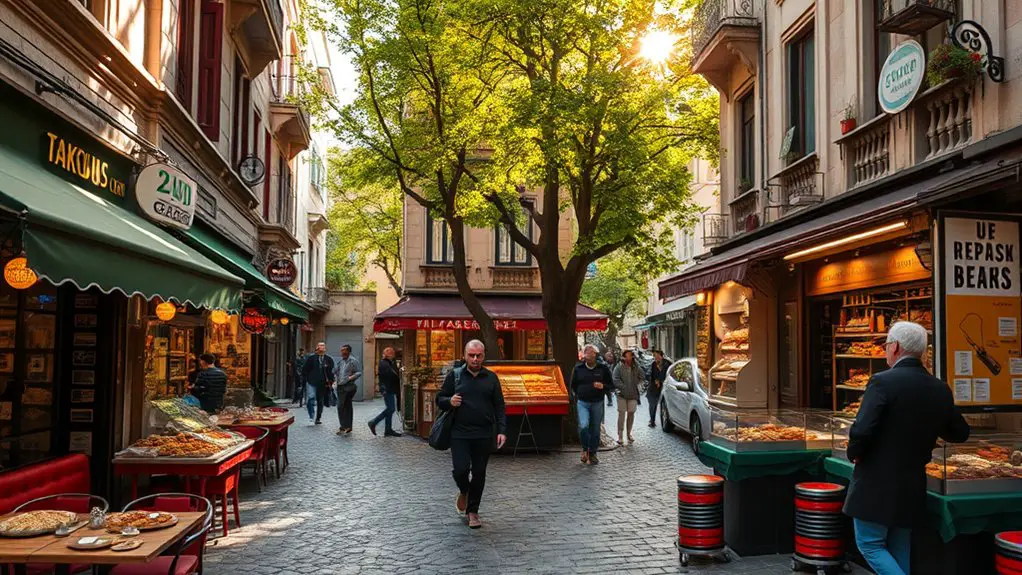
Plan your main food break in Beşiktaş Çarşı. Its compact streets have bakeries, breakfast restaurants, döner counters, fish sellers, cafes, dessert shops, and casual places serving Turkish home-style dishes.
Quick Snacks
- Simit: A sesame-coated bread ring that works well as a light breakfast or walking snack.
- Börek: Flaky pastry commonly filled with cheese, spinach, potatoes, or minced meat.
- Döner: Sliced roasted meat served in bread, a wrap, or on a plate.
- Midye dolma: Stuffed mussels sold by some street vendors; choose a busy, clean-looking seller and eat them promptly.
A Longer Break
For a slower meal, explore the breakfast streets behind the main market or choose a lokanta serving prepared dishes. Turkish tea is the most common everyday drink, while Turkish coffee pairs well with baklava or another small dessert.
The market area also sells fresh fruit and local ingredients, although individual stalls and opening patterns change. Avoid building the route around one restaurant unless you have confirmed that it is still operating and accepts walk-ins.
Pro Tip: Eat before climbing toward Akaretler and Yıldız Park. Food choices become more spread out after you leave the central market streets, and the uphill section is more comfortable after a water break.
Cultural Experiences Along the Route
Beşiktaş combines imperial, maritime, religious, commercial, and contemporary culture within a relatively compact district. The palace and museum preserve formal history, while the mosque, ferry piers, market, cafes, and neighborhood streets show how the area functions today.
Akaretler and Ortaköy regularly host exhibitions, markets, performances, and cultural events, but these are not guaranteed year-round. Check current listings from Beşiktaş Municipality, individual venues, or event organizers shortly before your visit.
Architecture is one of the route’s strongest cultural themes. Dolmabahçe and Çırağan reflect the palace-building period of the 19th century, Sinan Paşa Mosque represents an earlier Ottoman tradition, and Akaretler shows a different form of historic urban housing.
Tips for Navigating Beşiktaş
Arriving by Ferry
Ferries are often the most enjoyable way to reach central Beşiktaş from Istanbul’s Asian side. The official Şehir Hatları Kadıköy–Beşiktaş timetable lists current departures, but weekday, weekend, holiday, and late-night service patterns can differ.
Arriving by Tram or Funicular
The T1 tram terminates at Kabataş. From there, walk north toward Dolmabahçe Palace or use a bus for central Beşiktaş. The tram does not continue through Beşiktaş Square.
The F1 funicular also connects Taksim with Kabataş, making Kabataş a convenient starting point for the south-to-north route.
Using Buses
Numerous buses stop around Beşiktaş Square, Barbaros Boulevard, Akaretler, Yıldız, and Ortaköy. Traffic can make short bus journeys slower than walking, particularly during commuting hours, football events, demonstrations, or road closures.
Maps and Directions
Save the major stops to an offline map before leaving. A phone map is usually more useful than a printed street map because construction, closures, bus stops, and pedestrian access can change.
Warning: Traffic is heavy around Dolmabahçe Street, Beşiktaş Square, Barbaros Boulevard, and Çırağan Street. Use marked crossings, watch for turning vehicles and motorcycles, and do not follow a navigation app across an unsafe or closed roadway.
Accessibility and Comfort
The waterfront portion from Dolmabahçe toward Beşiktaş Square is the easiest section, although crowds, curb changes, construction, and uneven paving can still create obstacles.
The Naval Museum’s official listing identifies elevators and accessibility facilities. Conditions at historic buildings, mosque entrances, parks, and temporary construction areas can vary, so travelers with specific access needs should contact individual venues before visiting.
Yıldız Park is the most demanding part of the route because of its slopes and long internal paths. A reduced-mobility itinerary can remain near the waterfront, market, museum, and palace exteriors, then use a bus or taxi for Ortaköy rather than climbing through the park.
In warm weather, begin early, carry water, and schedule indoor stops during the hottest part of the day. In wet weather, palace entrances, polished stone, park paths, and steep streets may become slippery.
Restrooms and Practical Stops
The Naval Museum lists restrooms and baby-care facilities among its visitor amenities. Restrooms may also be available to ticketed visitors at major attractions, while cafes and restaurants may reserve their facilities for customers.
Look for signs marked “WC” and carry a small amount of local currency in case a staffed public facility charges a fee. Do not assume every park entrance or ferry stop has an open restroom.
Frequently Asked Questions
What is the best time of year for a Beşiktaş walking tour?
Spring and autumn usually offer the most comfortable walking conditions. Summer can be hot and crowded, so start early and plan indoor breaks. Winter is quieter but wetter, and exposed sections beside the Bosphorus can feel cold and windy.
Are guided walking tours available in Beşiktaş?
Local guides and tour platforms often offer private, historical, food-focused, and Bosphorus neighborhood tours. Availability changes, so compare the current route, group size, language, cancellation policy, and whether museum admission is included before booking.
Is Beşiktaş suitable for solo travelers?
Beşiktaş is a busy residential, commercial, and visitor district, and many people explore it alone. Use normal city precautions: keep valuables secure in crowds, use well-lit main streets after dark, monitor your route, and take extra care around traffic and major events.
Where can I find restrooms during the walk?
The İstanbul Naval Museum lists restrooms among its visitor facilities. Ticketed attractions, cafes, restaurants, and some staffed public facilities may also have toilets, but access and fees vary. Look for signs marked “WC.”
How long does a Beşiktaş walking tour take?
A highlights route takes about two to three hours without long interior visits. Allow four to six hours for the market, Akaretler, and Yıldız Park. Visiting Dolmabahçe Palace and the Naval Museum before continuing to Ortaköy can fill six to eight hours.
Can I complete the route without paying admission?
Yes. You can see palace exteriors, the waterfront, Barbarossa Square, Sinan Paşa Mosque when open, Beşiktaş Çarşı, Akaretler, Yıldız Park, and Ortaköy without buying museum admission. Food and public transport remain additional expenses.
Is the Beşiktaş walking route wheelchair accessible?
The flatter waterfront section is the most practical option, and the Naval Museum lists accessibility facilities and elevators. Yıldız Park, steep side streets, curb changes, and some historic entrances may be difficult. Contact individual attractions and use buses or taxis to bypass uphill sections.
Conclusion
A well-planned Beşiktaş walking tour reveals much more than a list of landmarks. You can move from the imperial setting of Dolmabahçe Palace to the Naval Museum, Sinan Paşa Mosque, busy market lanes, historic Akaretler, wooded Yıldız Park, and the Bosphorus waterfront in a single connected route.
Choose the shorter version when time or mobility is limited, and reserve the full route for a day when you can pause for Turkish tea, browse independent shops and record stores, and enjoy the district without rushing. Check official schedules before leaving, wear dependable shoes, and let your energy level determine whether you finish at Yıldız Park or continue to Ortaköy.
Sources
- National Palaces — Dolmabahçe Palace — current visitor, admission, and palace information
- Turkish Museums — İstanbul Naval Museum — opening pattern, last entry, facilities, accessibility, and collection information
- İBB Cultural Heritage — Sinan Paşa Mosque — architectural identity and historical description
- Beşiktaş Municipality — Yıldız Park — park history, location, and former imperial-garden context
- Metro İstanbul — T1 Kabataş–Bağcılar Tram Line — Kabataş terminus and transfer information
- Şehir Hatları — Kadıköy–Beşiktaş Ferry — current ferry timetable and day-specific departures
