

Last Updated on July 25, 2026 by Daniel Globe
Motels and hotels both give travelers a place to sleep, but they are designed a little differently. Motels developed around automobile travel and often emphasize easy parking and direct room access, while hotels more often use interior corridors and provide a wider range of shared services. Today, though, the line between the two is not always clear.
Quick Answer
The main difference between a motel and a hotel is usually the property layout and service level. Motels traditionally cater to motorists, with convenient parking and rooms often reached from outside. Hotels more commonly use interior hallways and may offer more services, such as restaurants, gyms, meeting rooms, or concierge assistance.
Key Takeaways
- Motels traditionally focus on motorists, easy parking, and convenient overnight stays.
- Hotel rooms are more often reached through interior corridors, while motel rooms are often reached from an outdoor walkway or parking area.
- Hotels tend to offer more shared amenities and services, but individual properties vary widely.
- Motels are often budget-oriented, but a motel is not automatically cheaper than a hotel for the same dates.
- Neither the word “hotel” nor “motel” guarantees a particular quality, safety level, or amenity package.
- Compare the total price, parking, reviews, room access, cancellation terms, and amenities before booking.
Motel vs. Hotel: Main Differences at a Glance
| Feature | Motel | Hotel |
| Room access | Often from an outdoor walkway or parking area | Often from an interior hallway |
| Parking | Frequently close to guest rooms and convenient for drivers | May use a surface lot, garage, valet service, or off-site parking |
| Typical amenities | Usually a simpler set of services | May include restaurants, gyms, meeting rooms, lounges, or concierge service |
| Common location | Roadside, highway, suburban, or small-town locations are common | Cities, airports, resorts, business districts, highways, and tourist areas |
| Price | Often budget-focused, but not always cheaper | Ranges from economy to luxury |
| Best suited to | Road trips, overnight stops, and travelers prioritizing parking and simplicity | Travelers wanting more on-site services, central locations, or business facilities |
Note: These are common patterns, not strict rules. Modern hotels and motels can overlap in layout, price, size, and amenities, so check the individual property rather than relying only on its name.
Location, Layout, and Parking
Location has always been closely tied to the motel concept. Motels grew out of automobile travel, especially as motor courts and roadside lodging expanded along major U.S. highways. The National Park Service describes motor courts and motels as successors to early auto camps and tourist accommodations created for people traveling by car.
That history explains why many traditional motels sit near highways or major roads and place parking close to guest rooms. Rooms may open directly onto an outdoor walkway, courtyard, or parking area, which can make unloading luggage simple during a road trip.
Hotels developed in a wider variety of settings. You can find them downtown, near airports, next to convention centers, at resorts, in suburban areas, and along highways. Larger hotels commonly place guestrooms along interior corridors reached through a lobby, elevator, or stairwell.
The difference is less rigid than it once was. Some properties marketed as motels now have interior corridors, while some hotels and resorts use exterior entrances. Building height is also not a reliable test. A motel can have multiple floors, and a hotel can be a small one-story property.
Amenities and Services
Motels generally focus on the essentials: a private room, bathroom, parking, Wi-Fi, climate control, and basic guest services. Depending on the property, you may also find breakfast, a swimming pool, vending machines, laundry facilities, a microwave, or a mini-fridge.
Hotels span a much wider range. An economy hotel may offer little more than a motel, while a full-service hotel can include an on-site restaurant, bar, fitness center, room service, meeting space, business facilities, luggage storage, concierge assistance, or a spa.
That makes the individual amenity list more important than the label. A well-equipped motel may provide more of what you need than a basic hotel, especially when free parking, an in-room refrigerator, or easy vehicle access matters more than a lobby or restaurant.
Pro Tip: Check the property-level amenity list before booking. Breakfast, parking, pools, pet access, housekeeping, elevators, and front-desk hours can vary even between properties operating under the same brand.
Pricing and Rates
Motels are often associated with lower prices because many use simpler buildings and offer fewer labor-intensive services. That does not mean a motel will always be cheaper. A renovated motel in a popular tourist area can cost more than a limited-service hotel nearby, and rates for both types change with season, location, events, and demand.
The best comparison is the total price for your exact dates, not the advertised nightly rate alone. Look at parking charges, mandatory property or destination fees, pet charges, breakfast, cancellation rules, and optional services before deciding which stay offers better value.
For U.S. bookings, price displays also changed in 2025. Under the Federal Trade Commission’s Rule on Unfair or Deceptive Fees, which took effect May 12, 2025, businesses advertising covered short-term lodging must display the total price upfront when they quote a price. That total generally must include mandatory fees the seller knows about and can calculate in advance. Government charges such as taxes and optional add-ons can be handled separately under the rule.
Note: A lower nightly rate does not automatically mean a lower final bill. Compare the final booking total and what is included at each property.
Products Worth Considering

PROTECTIVE HINGED COVER: Features a hinged, hard cover that protects the keys and display when stored, making this handheld calculator durable and easy to carry safely....
Length of Stay
| Stay Type | Motel | Hotel |
| One-night road stop | Often very convenient | Also widely available |
| Weekend trip | Suitable when location and basic amenities meet your needs | Suitable, with more service options at some properties |
| Extended stay | Possible at some properties | Common at dedicated extended-stay properties, especially those with kitchen facilities |
Motels have traditionally been associated with short road-trip stops, but there is no fixed rule saying a motel stay must last only one or two nights. Hotels also serve overnight guests as well as travelers staying for several days or longer.
For a longer stay, the property itself matters more than its label. Look for a kitchenette, refrigerator, laundry facilities, housekeeping schedule, workspace, parking arrangement, and discounted weekly rates. Dedicated extended-stay hotels are designed around these needs, but some motels can also accommodate longer bookings.
The FTC likewise does not set a specific number of nights that automatically defines “short-term lodging” under its fee rule; the circumstances of the stay matter.
Target Audience: Who Should Choose Each?
A motel can be a practical choice for drivers who want convenient parking, straightforward accommodations, and quick access to their vehicle. That makes motels especially useful for road trips, overnight stops, work crews, travelers carrying bulky gear, or anyone who does not need extensive shared facilities.
A hotel may be a better fit for business trips, city breaks, family vacations, conferences, or travelers who want more on-site services. A central hotel can also reduce the need for a car if restaurants, attractions, offices, or public transportation are within walking distance.
Families should compare room size, breakfast, pools, cribs, connecting rooms, laundry, and parking. Business travelers may care more about reliable Wi-Fi, a desk, meeting rooms, early breakfast, and convenient transportation. Solo travelers may place greater emphasis on location, staffed reception, reviews, and building access.
Products Worth Considering

Hotel and Resort Guest Parking Permit Card Pass


Ownership and Management

Hotels and motels can be independently owned, franchised, or managed by larger hospitality companies. Ownership alone does not tell you whether a property will be clean, quiet, well maintained, or well managed.
A large brand may provide standardized reservation systems, loyalty programs, or minimum operating standards, while an independent motel or hotel may offer more local character and personal service. However, the guest experience can still vary from one location to another.
For that reason, check recent property-specific reviews rather than judging the stay only by the chain name or by whether the property calls itself a hotel or motel.
Branding and Marketing: Why the Name Is Not a Quality Rating
The words “hotel” and “motel” describe traditional lodging formats, but they are not simple quality ratings. A motel can be newly renovated and expensive, while a property using “hotel” in its name may be basic and inexpensive.
The U.S. Census Bureau even groups hotels and motels together under NAICS industry 721110, which covers establishments primarily providing short-term lodging. That does not make every property identical, but it shows why travelers should not treat the two labels as rigid tiers of quality.
The word motel itself comes from “motor” and “hotel,” reflecting the format’s connection with automobile travelers. National Park Service histories of Route 66 describe how auto camps and cabin camps evolved into motor courts and motels as car travel expanded.
Accessibility
Accessibility should be checked at the individual property level rather than assumed from the words hotel or motel. In the United States, hotels and motels are generally places of public accommodation covered by Title III of the Americans with Disabilities Act, subject to the law’s applicable provisions and exceptions.
If you need an accessible room, confirm the specific features you require when booking. Depending on your needs, that may include an accessible entrance, appropriate bathroom features, visual notification devices, accessible parking, elevator access, or an accessible route to common facilities.
U.S. Department of Justice guidance also addresses lodging reservations so travelers with disabilities can obtain information about and reserve accessible accommodations.
Overall Experience: How to Choose Between a Motel and a Hotel
The better choice depends on what matters most for your trip. Instead of choosing from the label alone, compare the exact properties available for your dates.
- Choose a motel when: easy vehicle access, convenient parking, a simple overnight stay, or a lower-cost option is your priority.
- Choose a hotel when: you want more shared amenities, interior common areas, business facilities, dining, or a central city location.
- Check total cost: compare the complete booking price, parking, optional extras, and cancellation terms.
- Check room access: confirm whether rooms open to an interior corridor, outdoor walkway, or parking area if that matters to you.
- Check recent reviews: focus on cleanliness, noise, property condition, service, and the surrounding location.
- Check practical amenities: verify Wi-Fi, breakfast, parking, pool access, pet policies, laundry, refrigerator, and front-desk hours.
- Check accessibility: confirm specific accessible-room and common-area features before arrival when needed.
A motel can be the better option for a straightforward road-trip stop, while a hotel can be more convenient when you want additional services or a central location. The strongest booking decision comes from comparing the actual properties rather than assuming one category is automatically better.
Once your accommodation is sorted, other practical travel gear may also matter. Travelers who need a portable computer can see this guide to lightweight laptops for travel.
Products Worth Considering
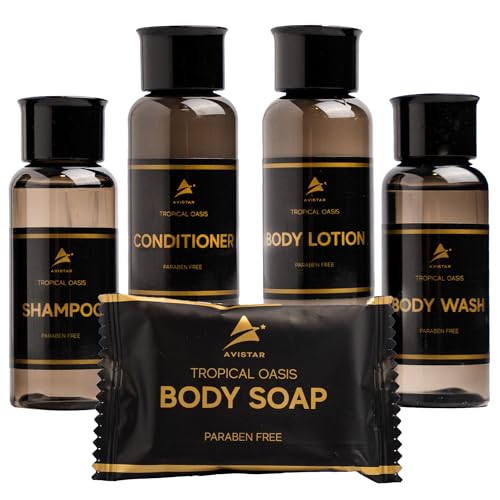
IDEAL FOR VACATION RENTALS & HOSPITALITY SERVICES: Enhance guest satisfaction with our hotel toiletries bulk set for guests, perfect for hotels, Hotel essentials for hosts, and VRBO properties. This bulk travel size toiletries set includes everything needed: hotel shampoo, conditioner, body soap, lotion, and hotel soap bars, ensuring your guests enjoy a premium experience from check-in to check-out.

CLEAN & SAFE - Bergman Kelly hotel bulk amenities provide luxurious, cleaning protection for your hygienic bathing needs

IDEAL FOR VACATION RENTALS & HOSPITALITY SERVICES: Enhance guest satisfaction with our hotel toiletries bulk set for guests, perfect for hotels, Vacation essentials for hosts, and VRBO properties. This bulk travel size toiletries set includes everything needed: hotel shampoo, conditioner, body soap, lotion, and hotel soap bars, ensuring your guests enjoy a premium experience from check-in to check-out.
Sources
- Federal Trade Commission — Rule on Unfair or Deceptive Fees FAQ — current U.S. short-term lodging total-price requirements.
- U.S. Census Bureau — NAICS 721110 — federal industry classification covering hotels and motels.
- U.S. Department of Justice, ADA.gov — Guide for Places of Lodging — ADA coverage and lodging accessibility obligations.
- U.S. Department of Justice — ADA Title III Regulations — requirements affecting public accommodations and lodging reservations.
- National Park Service — Route 66 Postwar Years — development of auto camps, motor courts, and motels.
Frequently Asked Questions
What is the difference between a motel and a hotel?
A motel traditionally serves motorists and often has rooms reached from an outdoor walkway or parking area. A hotel more commonly has rooms accessed through interior corridors and may offer more shared amenities and services. These are general patterns rather than strict rules.
What amenities are typically offered at a motel?
A motel commonly provides a private room and bathroom, parking, Wi-Fi, and basic guest services. Some also offer breakfast, pools, vending machines, laundry, refrigerators, or microwaves. Amenities vary by property.
What amenities are typically offered at a hotel?
Hotels range from basic limited-service properties to full-service and luxury accommodations. Depending on the property, amenities can include restaurants, breakfast, fitness centers, pools, business facilities, meeting rooms, room service, lounges, concierge assistance, or spas.
What is the typical length of stay at a motel versus a hotel?
Motels have traditionally been popular for overnight road-trip stops, but there is no fixed maximum stay. Hotels also serve one-night guests and longer stays. For extended trips, compare kitchen facilities, laundry, housekeeping, workspace, parking, and weekly-rate options rather than relying on the property label.
What is the price difference between a motel and a hotel?
Motels are often positioned as simpler or budget-oriented lodging, but they are not always cheaper. Location, travel dates, local events, demand, parking charges, property condition, and amenities all affect price. Compare the total booking cost for the same dates.
Are motel rooms always accessed from outside?
No. Outdoor room access is a traditional motel feature, but modern properties do not follow one universal layout. Some motels use interior corridors, and some hotels or resorts use exterior entrances.
Are motels always cheaper than hotels?
No. Motels often use a simpler service model, which can result in lower rates, but prices depend on the individual property, location, season, and demand. A popular or renovated motel can cost more than a nearby economy hotel.
Is a hotel automatically better or safer than a motel?
No. The label alone does not establish quality or safety. Check recent reviews, property condition, room-access design, surrounding location, lighting, staffing, parking, and the amenities that matter to you before booking.
