

Last Updated on July 28, 2026 by Daniel Globe
Planning a trip to Japan with a DUI on your record can be stressful, but the key issue is not simply whether the letters “DUI” appear in your criminal history. Japan’s immigration law looks at the conviction, the sentence imposed, and certain categories of offenses. Understanding those rules before you book can help you avoid relying on rumors or anecdotal border experiences.
Quick Answer
Yes, many people with a DUI can travel to Japan, but the sentence matters. Japan’s immigration law generally bars a person convicted and sentenced to imprisonment for one year or more; certain drug convictions have a separate rule. A fine-only or shorter non-drug DUI is not automatically barred. Always answer Japan’s criminal-conviction questions truthfully.
Key Takeaways
- Japan’s Immigration Control and Refugee Recognition Act includes a landing-denial ground for a person convicted and sentenced to imprisonment for one year or more.
- A fine-only or shorter non-drug DUI does not automatically fall within that one-year imprisonment ground, although other immigration rules can still apply.
- Certain drug-control convictions are covered by a separate provision and should not be analyzed using only the one-year rule.
- Japan’s foreign-entry record asks about criminal convictions, and the standard visa application also asks about convictions and sentences.
- A Japanese visa does not guarantee entry. The final landing decision is made during immigration examination in Japan.
- If you are still on probation or supervised release, your domestic travel restrictions may prevent international travel even when Japan’s rules would otherwise allow it.
Note: This article provides general information based on official rules and forms reviewed as of July 28, 2026. It is not legal or immigration advice. If your sentence was close to one year, involved drugs, serious injury, death, multiple charges, or an unusual disposition, contact the relevant Japanese embassy or consulate or a qualified Japanese immigration lawyer before traveling.
Japan’s Legal Rule for Criminal Convictions
The most important rule is found in Article 5 of Japan’s Immigration Control and Refugee Recognition Act. It lists categories of foreign nationals who can be denied permission to land in Japan.
The One-Year Sentence Threshold
One of those categories covers a person who has been convicted of violating a law in Japan or another country and has been sentenced to imprisonment for one year or more, or an equivalent penalty. The law contains an exception for political offenses.
This makes the sentence imposed much more important than simply asking whether the conviction was labeled a misdemeanor, felony, DUI, DWI, OWI, or another local term.
For example, a non-drug DUI that resulted only in a fine, license suspension, community service, or a jail sentence below the one-year threshold does not automatically fall within this particular Article 5 ground. A DUI resulting in a sentence of one year or more is a much more serious immigration issue.
Warning: Do not use the amount of time you actually spent in jail as a substitute for the sentence imposed by the court. If the judgment says one year or more, or the sentence was suspended, obtain case-specific advice before traveling. Japan’s visa application specifically tells applicants to disclose a relevant sentence even when its execution was suspended.
Drug-Related Convictions Are Different
Article 5 also contains a separate ground covering convictions under laws relating to controlled drugs such as narcotics, marijuana, opium, stimulants, or psychotropic substances. That provision is not limited to a one-year sentence.
An ordinary alcohol-related DUI should therefore not be casually treated the same way as a drug-control conviction. At the same time, someone whose case involved illegal drugs should not assume the ordinary DUI analysis applies simply because the charge also involved impaired driving. The exact statute of conviction matters.
Repeat DUIs, Accidents, and Serious Cases
There is no official formula saying that an older DUI is automatically safe or that a recent DUI is automatically refused. The first question should be whether the conviction falls within a statutory landing-denial category.
Repeat DUIs and cases involving injury or death can still be more problematic because they may produce more serious charges and longer sentences. That can move a case across the one-year threshold or create additional legal issues.
What You Must Disclose at Japanese Immigration

Foreign nationals entering Japan undergo landing examination. The current Disembarkation Card for Foreigners asks whether the traveler has any history of being convicted of a crime, including convictions outside Japan.
Arrival information can also be submitted electronically through Visit Japan Web. Using an electronic form instead of the paper card does not change the underlying need to answer the immigration questions accurately.
Visa-Free Tourism vs. Applying for a Visa
Whether you need a visa depends on your passport, purpose of travel, and length of stay. Japan currently has short-stay visa-exemption arrangements with numerous countries and regions. For example, U.S. passport holders are currently included in the Ministry of Foreign Affairs visa-exemption list, with a normal landing period of up to 90 days for a temporary visit.
Visa exemption does not mean exemption from Japan’s criminal-history or landing requirements. A visa-exempt traveler must still satisfy the conditions for landing.
Do not base your answer on assumptions about whether Japan can access a particular criminal database. The safe approach is to read the exact question and answer it truthfully.
What a Japanese Visa Application Asks
Japan’s standard visa application form asks several separate criminal-history questions, including whether the applicant has ever been convicted of a crime or offense and whether the applicant has ever been sentenced to imprisonment for one year or more.
The form also states that, for the applicable sentence questions, an applicant should answer “Yes” even when the sentence was suspended. Applicants who answer yes are instructed to provide relevant details.
Pro Tip: Before an expensive trip, contact the Japanese embassy or consulate responsible for your place of residence and provide the exact offense, date of conviction, and sentence imposed. Ask what documentation they want to review. Do not rely on anonymous travel reports or assume another person’s DUI produced the same legal result as yours.
Obtaining a Visa With a DUI
If your nationality or travel purpose requires a Japanese visa, a DUI does not mean you should hide the conviction or guess how it will be treated. The application itself asks about criminal convictions and sentences.
The Ministry of Foreign Affairs states that visa issuance requires the applicant not to fall within the landing-denial categories in Article 5. A consulate can also request additional documents when necessary.
| DUI Situation | Japan Entry Issue | Practical Next Step |
| Fine-only non-drug DUI | Does not automatically meet Article 5’s one-year imprisonment ground. | Disclose the conviction when the form asks and keep the court disposition available. |
| Non-drug DUI with imprisonment below one year | Below the express Article 5 one-year threshold, assuming no other inadmissibility ground applies. | Confirm the exact sentence and bring the judgment or certified disposition. |
| Sentence of one year or more | Potentially falls directly within Article 5’s criminal-sentence landing-denial ground. | Contact the Japanese embassy or consulate and obtain qualified immigration advice before booking nonrefundable travel. |
| Drug-related conviction | A separate Article 5 provision may apply without using the ordinary one-year threshold. | Get case-specific advice based on the precise offense of conviction. |
Useful documentation can include a certified court disposition, the judgment showing the sentence, and records showing that probation, treatment, community service, fines, or other court requirements were completed.
A police clearance or “Certificate of Conduct” is not a universal requirement for every traveler with a DUI. Submit one when the relevant embassy, consulate, immigration authority, or visa instructions specifically request it rather than assuming it is always necessary.
Most importantly, receiving a visa is not the same as receiving permission to enter Japan. The Ministry of Foreign Affairs explains that a visa is only one requirement for a landing application; immigration authorities make the landing decision when the traveler seeks entry.
Products Worth Considering

STYLISH AND ATTRACTIVE: This leather envelope folder surface made by PU leather which waterproof and easy to take in hand or in your backpack. Bright color envelope folder has a sleek fashion design style that's a great decorative compliment in your office or home.

[High quality] The waterproof document holder is made of soft, nice-textured PU leather with meticulous sewing. The leather file folder for documents is durable to store paper documents for a long time without getting damp or crease.

STYLISH AND PORTABLE DESIGN: This leather envelope folder surface made by PU leather which waterproof and easy to take in hand or in your backpack. Bright color envelope folder has a sleek fashion design style that's a great decorative compliment in your office or home. It seems simple but elegant and professional.
Arrests Without Conviction, Dismissals, and Diversion
An arrest is not automatically the same thing as a conviction. Japan’s current foreign-entry record asks about a history of being convicted of a crime, and the standard visa application likewise asks about convictions and sentences.
If a DUI charge was dismissed with no conviction, that is different from a DUI conviction. However, diversion, deferred adjudication, conditional discharge, suspended adjudication, expungement, sealing, and similar procedures vary widely between legal systems. The label used in your home jurisdiction may not make the answer obvious.
Carry the official court disposition showing exactly how the case ended. If you are unsure whether the disposition legally counts as a conviction for the Japanese form, obtain case-specific guidance rather than guessing.
Dealing With Probation and Other Travel Restrictions
Japan’s entry rules are only one part of the trip. A court or supervision condition in your home country can independently prevent you from leaving.
For example, U.S. federal probation and supervised-release guidance provides that a person subject to the standard travel condition must obtain permission before leaving the authorized judicial district, and international travel can require additional court approval. State probation rules and individual court orders can differ.
A DUI does not create one universal rule for travel to Japan. The exact conviction, sentence, and any continuing court restrictions determine which problems actually need to be solved before departure.
Travel insurance is a separate issue. Policy wording varies, particularly for claims involving intoxication, illegal conduct, or incidents occurring while impaired. Read the exclusions in the policy you are considering rather than assuming that a past DUI either voids or has no effect on coverage.
Tips for Traveling to Japan With a DUI

Products Worth Considering
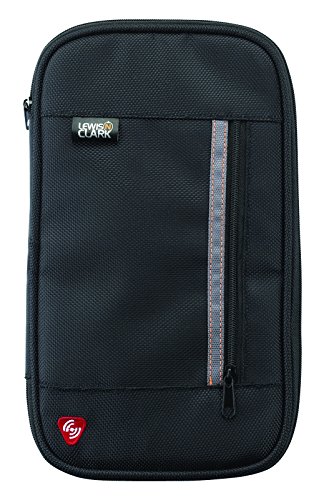
RFID BLOCKING TECHNOLOGY: RFID lined wallet pouch protects and against BLOCKS UNWANTED SCANS, ensuring that your cards and personal information remain private and confidential

High Quality Leather Craftsmanship: Handmade with soft Italian Napa Leather, which has a smooth, soft and luxurious feeling in your hand. Around with reinforced stitching, it will not tear or become loose, making it both handsome and reliable for long-term use.
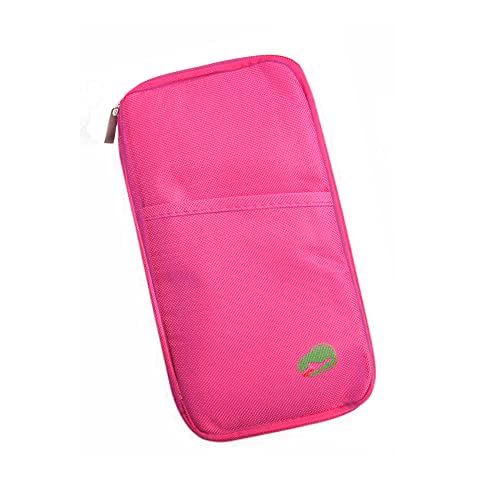
Perfect for Holding Passport, Cell phone, Credit Cards, Tickets
Confirm the Exact Sentence Before You Book
Get a copy of the final court disposition or judgment and identify the exact offense and sentence imposed. Do not rely only on your memory of how much jail time you served or whether friends called the offense a misdemeanor.
Pay particular attention to:
- Whether there was a criminal conviction.
- The exact length of any imprisonment or custodial sentence.
- Whether the sentence was suspended.
- Whether the conviction involved a controlled-drug law.
- Whether injury, death, or additional criminal charges were part of the case.
- Whether probation, parole, or supervised release is still active.
Answer Japan’s Immigration Questions Truthfully
When Japan’s immigration or visa form asks whether you have been convicted of a crime, answer according to the actual legal record. Do not answer “No” simply because the offense was old, minor, later sealed, or unlikely to appear in a database.
Warning: Never base a false answer on an assumption that Japanese immigration cannot see your record. An inaccurate immigration declaration can create a separate problem and make an already manageable case much harder to explain.
Bring Documents That Explain the Case
If you have to disclose a DUI, carry records that let an officer or consular official understand the case without relying on your memory. A certified disposition or judgment showing the offense and sentence is usually more useful than a general character reference.
Proof that you completed probation, treatment, fines, community service, or other court requirements can also help clarify the current status of the case when relevant.
Contact the Japanese Authorities for Borderline Cases
The Embassy of Japan in the United States currently states that whether a person with a criminal record can enter Japan depends on the criminal charge and directs travelers without a prior Japanese immigration order to contact the embassy.
For travelers living elsewhere, contact the Japanese embassy or consulate with jurisdiction over your residence. Give them the precise conviction and sentence rather than asking only, “Can I enter Japan with a DUI?”
Legal Considerations for Traveling With a DUI
Japan does not decide admissibility simply by comparing the name of a foreign offense with the word “DUI.” The legal outcome of the case matters. Two travelers who both say they have a DUI may have very different immigration situations because one received only a fine while the other received a sentence of one year or more.
The same caution applies to suspended sentences. Japan’s standard visa application expressly instructs applicants to answer yes to relevant sentence questions when the sentence was suspended, so a suspended sentence should not be treated as though it never existed.
A person with a drug-related conviction, an aggravated DUI, a serious-injury case, multiple connected charges, or an unusual deferred or expunged disposition should obtain individualized guidance. Those facts can take the case beyond the straightforward fine-only DUI scenario.
Once in Japan, follow Japanese law carefully. A past criminal history does not excuse a visitor from immigration conditions, traffic laws, or other local legal requirements.
Resources for Assistance and Support
For official immigration rules, start with Japan’s Immigration Services Agency and Ministry of Foreign Affairs rather than travel forums or anecdotal border reports.
For a case-specific question, the Japanese embassy or consulate responsible for your area can explain current visa-document requirements. A lawyer familiar with Japanese immigration law is appropriate when the sentence may reach an Article 5 threshold or the disposition is legally complicated.
If you are still under court supervision, separately check the travel conditions imposed by your court, probation officer, parole authority, or supervising agency before purchasing nonrefundable tickets.
Frequently Asked Questions
Can you travel to Japan with a DUI?
Possibly. A DUI does not create a universal ban by itself. The key criminal-history rule covers a person convicted and sentenced to imprisonment for one year or more, while certain drug convictions are covered separately. A fine-only or shorter non-drug DUI does not automatically fall within the one-year imprisonment ground.
Will Japan deny entry for one DUI?
Not simply because there is one DUI. The conviction and sentence must be examined. A non-drug DUI with no one-year sentence is different from a DUI carrying a sentence of one year or more or a case involving separate drug-control offenses.
Do I have to disclose a DUI when entering Japan?
Japan’s foreign-entry record asks whether you have a history of being convicted of a crime, including a conviction outside Japan. If your DUI resulted in a criminal conviction, answer the conviction question truthfully.
What happens if my DUI sentence was one year or longer?
A conviction carrying imprisonment for one year or more can fall within Article 5’s landing-denial provisions. Do not book nonrefundable travel based only on general internet advice; contact the appropriate Japanese embassy or consulate and consider obtaining qualified Japanese immigration advice.
Does a suspended one-year sentence still matter?
Yes, it should not be ignored. Japan’s standard visa application specifically tells applicants to answer yes to applicable sentence questions even when the sentence was suspended. Get case-specific guidance if the suspended sentence was one year or more.
What if I was arrested for DUI but never convicted?
The current Japanese entry and standard visa forms reviewed here ask about convictions rather than merely being arrested. If the charge was dismissed, obtain the final court disposition. Diversion, deferred adjudication, expungement, and similar outcomes can be legally complicated, so get advice if you are unsure whether your disposition counts as a conviction.
Can I obtain a Japanese visa with a DUI?
A DUI does not automatically prevent every visa application, but Japan’s visa form requires criminal-history disclosure and visa issuance criteria include the Article 5 landing rules. The consulate may request additional details or records. A visa, even when issued, does not guarantee permission to land in Japan.
What documents should I bring if I have a DUI?
Useful documents include the final court disposition or judgment showing the charge and sentence, plus proof that probation, fines, treatment, community service, or other requirements were completed when relevant. A police clearance certificate should be obtained when the applicable Japanese authority specifically requests one.
Sources
- Japanese Law Translation: Immigration Control and Refugee Recognition Act — Article 5 criminal-conviction and landing-denial provisions.
- Immigration Services Agency of Japan: Disembarkation Card for Foreigner — current criminal-conviction question for foreign entrants.
- Ministry of Foreign Affairs of Japan: Visa Application Form to Enter Japan — criminal-conviction, one-year sentence, drug-offense, and suspended-sentence disclosure questions.
- Ministry of Foreign Affairs of Japan: Exemption of Visa for Short-Term Stay — current list of visa-exempt countries and normal periods of stay.
- Ministry of Foreign Affairs of Japan: Visas and Landing Permission — explains that possessing a visa does not guarantee permission to enter Japan.
- U.S. Courts: Leaving the Judicial District — federal probation and supervised-release travel restrictions and international-travel approval.
