
Last Updated on July 25, 2026 by Caleb Warren
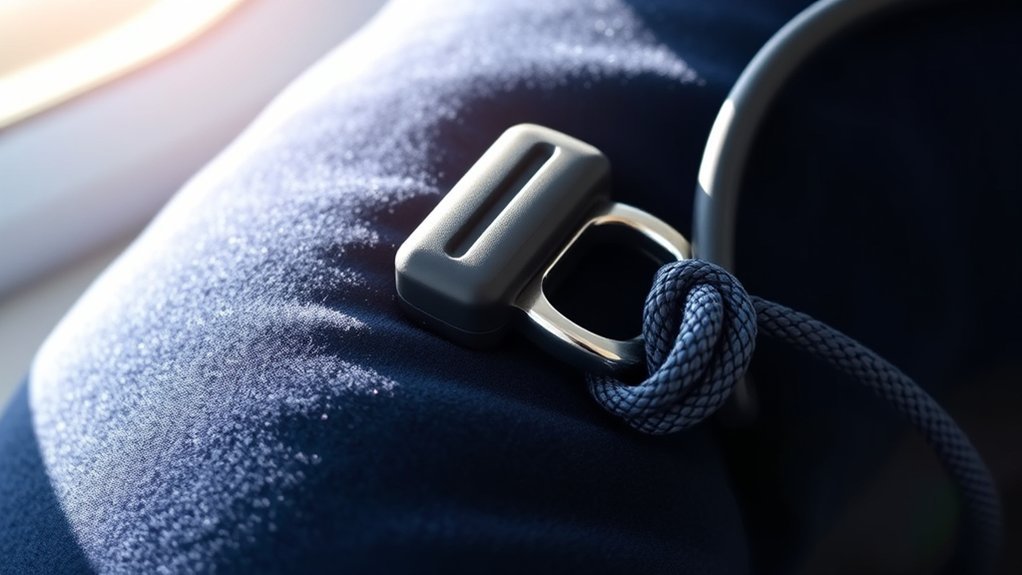
The adjustable toggle and cord lock on travel pillows let you customize the fit for maximum comfort and neck support. By simply tightening or loosening the cord, you can prevent discomfort and the “bobblehead” effect—where your head falls forward or sideways uncontrollably—especially during long journeys. This user-friendly feature accommodates different sleeping positions, ensuring your head and neck stay secure and relaxed. Whether you are traveling by plane, train, or car, understanding how to operate and maintain this mechanism elevates your rest and travel experience.
Quick Answer
A travel pillow’s adjustable toggle and cord lock use a spring-loaded barrel clamp on a braided cord to cinch the pillow ends tightly under your chin. Pressing the toggle releases internal spring tension, allowing you to slide the lock along the cord to customize neck support, stabilize your posture, and prevent lateral or forward head drops during travel.
Key Takeaways
- Prevents Head Drops: Cinching the cord lock stabilizes the pillow gap under your chin, eliminating the lateral and forward “bobblehead” motion.
- Simple Mechanical Operation: Internal stainless steel springs clamp down on nylon cords to hold tension without slipping.
- Adaptable Postures: Fits back sleepers, side-leaners, and forward nappers across airplane, car, and office environments.
- Maintenance & Care: Hand-wash memory foam covers and air-dry toggles to keep internal springs rust-free and smooth.
At a Glance
| Adjustment Time | Under 10 seconds |
| Skill Level | Beginner / Easy |
| Primary Components | Barrel toggle casing, internal stainless spring, nylon cord |
| Ergonomic Goal | Neutral cervical spine alignment during upright rest |
Disclosure: As an Amazon Associate I earn from qualifying purchases. Some links on this page are affiliate links, at no extra cost to you.
Understanding the Travel Pillow Adjustable Toggle and Cord Lock
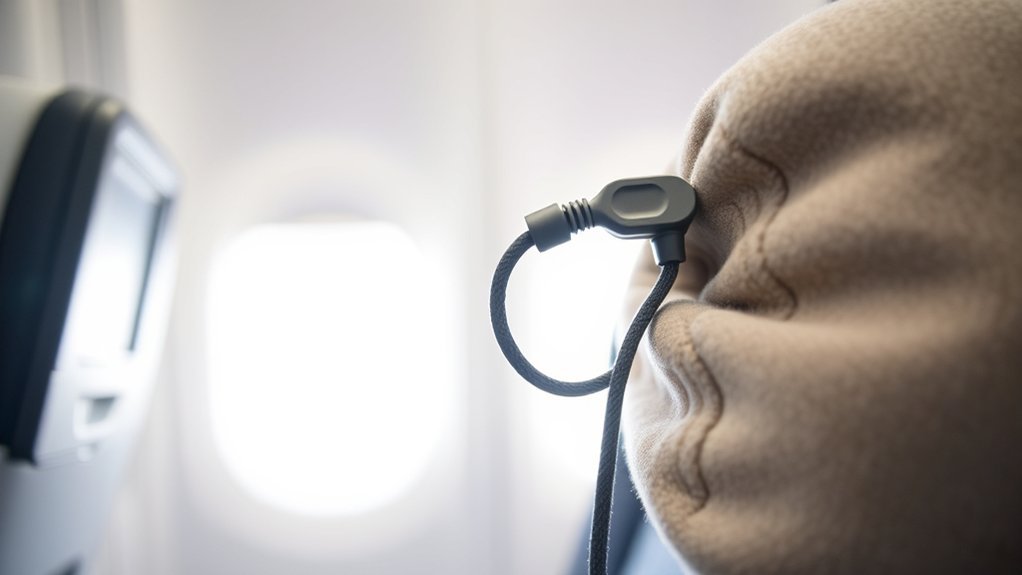
When you’re on the go, having a travel pillow with an adjustable toggle and cord lock makes a critical difference in ergonomic support. This design features a mechanical barrel lock housing an internal spring. By depressing the spring button on the toggle, you relieve friction on the braided drawcord, allowing you to easily adjust the tightness around your neck and lower jaw.
Releasing the button forces the internal mechanism to pinch the cord firmly in place, securing the pillow lobes against your chin and neck. This prevents unwanted movement and provides essential lateral support for your head, maintaining neutral cervical spine alignment regardless of your sleeping position.
Step-by-Step: How to Adjust Your Travel Pillow for Custom Comfort
Properly setting up your cord lock ensures that the pillow supports your head’s full weight (~10 to 11 lbs) without slipping during turbulence or vehicle turns.
- Position the Pillow: Wrap the travel pillow around the back of your neck, bringing the two front lobes together under your chin.
- Depress the Toggle Button: Firmly press and hold the spring-loaded plunger on the cord lock toggle using your thumb and forefinger.
- Cinch to Desired Tension: Slide the toggle up along the dual cords toward your throat until the pillow lobes touch securely under your jawline.
- Release to Lock: Let go of the toggle button. Test the lock by giving the pillow a gentle downward tug to ensure the spring grips the cord securely.
Pro Tip: For forward-head leaners or chin-droppers, rotate the pillow 180 degrees so the cord lock and joined lobes sit under the back of your neck or directly under your side cheek. This creates a solid resting shelf for your chin in cramped economy seats.
Adjusting Your Travel Pillow for Ultimate Comfort
Achieving rest while traveling upright requires precise adjustments tailored to your sleeping posture:
- Upright / Back Sleepers: Cinch the toggle until the front ends meet tightly. This bridges the gap beneath your chin and stops the painful forward neck jerk when falling into deeper sleep stages.
- Side Sleepers: Slightly loosen the toggle so the pillow can shift laterally. Position the bulkier side lobe against your window or seat headrest to support the neck’s lateral flexion.
- Tray-Table Nappers: Tighten the toggle fully to convert the U-shaped pillow into a firm, elevated ring on top of your airplane tray table.
Common Travel Pillow Problems and Their Solutions
Travelers frequently encounter support issues on long hauls. Applying simple toggle adjustments remedies most design limitations:
- Problem: The Pillow Spreads Apart Under Head Weight.
Solution: The cord lock spring may be worn or under-tightened. Push the toggle tight against the fabric lobes and tie a simple slip knot directly below the toggle to prevent slippage. - Problem: Feeling Choked or Overly Restricted.
Solution: Press the toggle button and ease the cord out by 0.5 inches. The pillow should cradle the lower mandible rather than pressing against the trachea. - Problem: Head Tipping Sideways (“Bobblehead Effect”).
Solution: Cinch the toggle tighter to compress high-density memory foam against your neck, creating a rigid lateral collar.
Warning: Cords, drawstrings, and small toggle components present strangulation and choking hazards for infants and young children. According to safety guidelines established by the U.S. Consumer Product Safety Commission (CPSC), drawstrings should never be placed loosely around children’s necks. Ensure children under age 3 do not handle detachable cord locks unattended.
Benefits of Using the Adjustable Toggle and Cord Lock During Travel
Incorporating a mechanical cord lock enhances ergonomic stability compared to basic open-front neck pillows. Proper alignment reduces stress on cervical vertebrae and surrounding trapezius muscles.
| Benefit | Ergonomic Mechanism & Description |
|---|---|
| Personalized Fit | Micro-adjusts ring diameter to match exact neck circumferences ranging from 12 to 19 inches. |
| Reduced Neck Strain | Holds cervical spine neutral, preventing extreme lateral tilting over extended travel periods. |
| Enhanced Stability | Locks memory foam ends together under heavy pressure, benefiting side and forward sleepers. |
| Quick Adjustments | Spring button allows single-handed release and tightening without unbuckling belts or Velcro. |
| Improved Sleep Continuity | Prevents sudden arousal caused by myoclonic jerks when head slips off unfastened cushions. |
Innovative Applications and Materials of the Adjustable Toggle
Modern travel pillow manufacturers utilize heavy-duty Polyoxymethylene (POM) engineered plastics for toggle outer casings. POM offers high rigidity, low friction, and excellent dimensional stability across varying cabin temperatures.
Inside the barrel, a non-corrosive stainless steel coil spring maintains constant force against high-tenacity braided nylon cords. This combination withstands repeated tensioning without stripping or slipping. Some advanced designs feature quick-release magnetic breakaway clips behind the toggle to ensure the cord detaches safely under sudden high tension in vehicular environments.
Real-Life Benefits From User Experiences With the Adjustable Travel Pillow
User feedback from frequent travelers highlights how cord-locking systems adapt to diverse real-world conditions beyond long-haul flights.
Enhanced Sleep Quality
Sleep studies published on upright rest show that maintaining head stability directly correlates with prolonged slow-wave sleep. Frequent flyers report fewer awakenings from cervical muscle fatigue when cinching their travel pillow toggles snugly, leading to better alertness upon arrival at their destination.
Versatile Travel Applications
Beyond airplane cabins, travelers utilize toggle-equipped pillows on commuter trains, long bus journeys, and high-backed office chairs. Adjusting the cord tension allows users to transition effortlessly between high-density support for nap sessions and loose neck cushioning for reading or watching in-flight entertainment.
Frequently Asked Questions
Can the adjustable toggle break or wear out over time?
Yes. Over prolonged use, the internal steel spring can lose elasticity or the plastic teeth inside the barrel can wear down. If the toggle stops gripping, you can buy inexpensive dual-hole cord lock replacements online and thread them onto your pillow cords.
Is the adjustable cord lock safe for children?
Cord locks should be used with caution around young children. Long drawstrings pose a strangulation risk for toddlers under 3, and small plastic toggle caps can become choking hazards if detached. Always supervise children and choose breakaway clip options when possible.
How do I clean the travel pillow with the toggle?
Unzip and remove the fabric cover before washing. Hand-wash or machine-wash the cover on a gentle cycle with mild detergent. If washing the entire pillow, rinse the plastic toggle thoroughly with clean water to prevent soapy buildup inside the spring chamber, then line dry completely.
What materials are used in the adjustable toggle and cord lock?
Toggles are typically constructed from high-grade Polyoxymethylene (POM) plastic or lightweight aluminum alloy casing. The internal mechanism relies on a stainless steel spring, while the cord is usually made from woven, abrasion-resistant nylon or polyester.
Are there size limitations for different neck sizes?
Most cord lock systems are designed to accommodate neck circumferences from 12 to 19 inches. Because you can slide the toggle to any point along the cord length, it accommodates a much wider variety of body types than fixed-position snap buttons.
Conclusion
Mastering your travel pillow’s adjustable toggle and cord lock elevates simple cushioning into personalized ergonomic support. By taking a few seconds to adjust the cord tension before resting, you align your cervical spine, stabilize your head posture, and eliminate the restless “bobblehead” effect during travel. Pay attention to safety around young children and properly care for your pillow’s spring components to ensure reliable comfort on every journey.
Sources
- U.S. Consumer Product Safety Commission (CPSC) — Guidelines and safety hazards for drawstrings and small mechanical components.
- Sleep Foundation — Ergonomic standards for upright travel sleep and cervical posture support.
- National Center for Biotechnology Information (NCBI) — Biomechanical evaluation of cervical spine stabilization and neck pain prevention.

