Last Updated on July 27, 2026 by Daniel Globe
Trail running shoes can be an excellent alternative to traditional hiking boots for many day hikes, fast hikes, and even some long-distance trips. Their lighter weight, flexible construction, breathable uppers, and trail-specific traction can make walking feel quicker and less bulky. The tradeoff is that most trail runners provide less ankle coverage, less protection, and usually less durability than sturdy hiking or backpacking boots.
Quick Answer
Yes, trail running shoes can be used for hiking. They work especially well for day hikes, maintained trails, warm weather, lighter packs, and hikers who value agility and breathability. Hiking boots are usually the better choice for heavy loads, very rough terrain, cold conditions, deep mud or snow, and trips where added protection matters more than low weight.
Key Takeaways
- Trail running shoes are generally lighter, more flexible, and more breathable than traditional hiking boots.
- Choose the shoe for your terrain: outsole grip, lug depth, rock protection, cushioning, and fit matter more than the label on the box.
- Trail runners are often a strong choice for light-to-moderate terrain and lighter packs, while boots offer more protection for rough terrain, heavy loads, cold weather, and demanding backcountry travel.
- A trail runner should feel comfortable and secure when you try it on. You should not need a long boot-style break-in period.
- Switch gradually if your new shoes have a much lower heel-to-toe drop or substantially less cushioning than your current footwear.
Disclosure: As an Amazon Associate I earn from qualifying purchases. Some links on this page are affiliate links, at no extra cost to you.
Can You Use Trail Running Shoes for Hiking?
For many hikers, the answer is yes. Trail running shoes are built for off-road movement, so they commonly provide features that ordinary road-running shoes lack, including trail-specific rubber, deeper lugs, reinforced uppers, toe protection, and, on some models, rock plates.
Current REI hiking-footwear guidance describes trail-running shoes as lighter and more flexible than hiking shoes and generally best suited to faster movement on light-to-moderate terrain. Fastpackers and many long-distance hikers also choose them because reducing bulk on the feet can make sustained walking more comfortable.
That does not mean a trail runner is automatically better than a hiking boot. Footwear should match the terrain, weather, pack weight, trip length, and your own feet. A well-fitting hiking boot is more useful than a poorly fitting trail runner, and the reverse is also true.
For hiking, the best trail shoe is the one that fits securely and matches the terrain, load, and conditions—not simply the lightest shoe on the shelf.
Key Features of Trail Running Shoes for Hiking
Trail running shoes are designed to move efficiently over dirt, rock, roots, gravel, mud, and other uneven surfaces. Their construction varies considerably, so it helps to evaluate the individual parts of the shoe rather than assuming every trail runner performs the same way.
Trail-Specific Outsoles
The outsole is the rubber layer that contacts the ground. Trail-running shoes typically use lugs to bite into loose terrain. Deeper and more widely spaced lugs are useful in mud and soft soil, while shorter lugs can feel smoother and more predictable on hard-packed trails and mixed road-to-trail routes.
Rubber compound matters as well. Some shoes emphasize durability, while others use softer or tackier compounds to improve grip on rock. No outsole is slip-proof, particularly on wet roots, algae-covered rock, loose scree, ice, or slick clay.
Rock Protection and Toe Guards
Some trail runners include a flexible rock plate or protective layer between the foot and outsole. This reduces the sharp sensation of stepping on pointed stones. Reinforced toe caps and overlays can also protect the upper from rocks, roots, and trail debris.
Protection varies widely. Light-trail shoes may have very little structure, while rugged-trail models can approach hiking shoes in underfoot protection.
Cushioned, Flexible Midsoles
Trail runners usually use foam midsoles to absorb impact and provide comfort. Some are soft and highly cushioned; others are firmer and closer to the ground for increased trail feel and control.
More cushioning is not automatically better. Tall, soft midsoles may feel comfortable over long distances but can feel less precise to some hikers on uneven ground. Lower or firmer shoes may feel stable and responsive but provide less isolation from rocks.
Breathable Uppers
Many non-waterproof trail runners use mesh or woven synthetic uppers that allow heat and moisture to escape more readily than heavy leather boots. This can be valuable during warm-weather hiking.
Breathability helps with moisture management, but it does not guarantee blister-free feet. Fit, socks, friction, foot moisture, lacing, and hiking duration all influence hot spots and blisters.
Heel-to-Toe Drop
Heel-to-toe drop is the difference in height between the heel and forefoot. Trail runners range from zero-drop designs to models with moderate or higher drops.
According to REI’s trail-running shoe guide, different drops work with different biomechanics, and there is no single ideal foot-strike pattern for everyone. A large change from your usual footwear deserves a gradual transition.
Benefits of Using Trail Running Shoes for Hiking
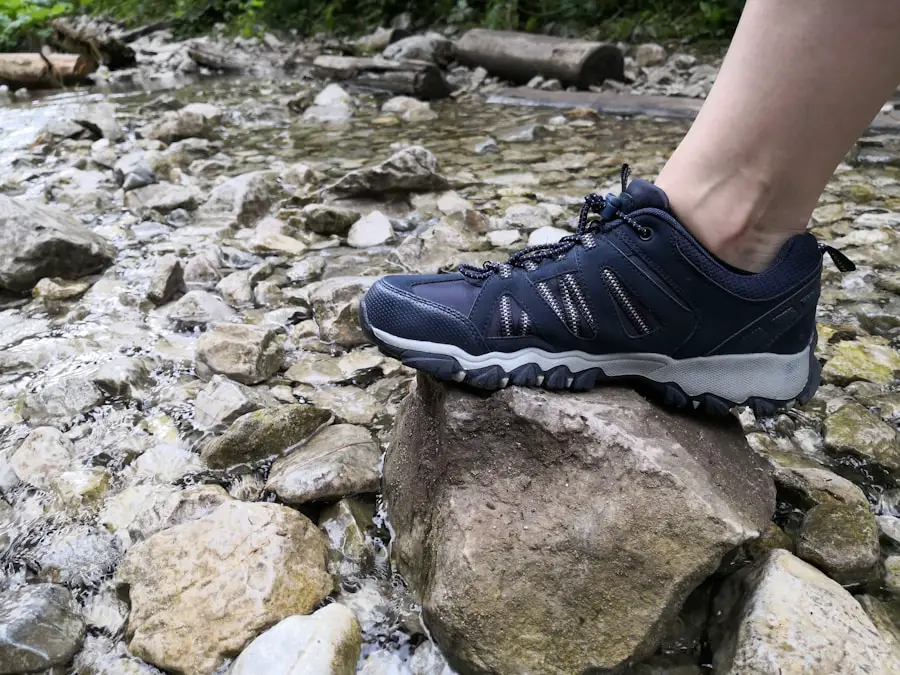
One of the biggest attractions of trail running shoes is reduced bulk. A lighter shoe can feel more agile when stepping over roots, changing direction, or covering long stretches of maintained trail.
The flexible construction also allows the foot to adapt quickly to changes in terrain. Hikers who prefer a responsive feel may enjoy this more than the stiffness of a traditional backpacking boot.
Breathability is another advantage. Mesh and synthetic uppers can be more comfortable in hot weather and often dry more readily than thick leather footwear after normal perspiration or light wetting.
Trail running shoes also come in an unusually broad range of designs. You can choose minimal cushioning, high cushioning, zero drop, moderate drop, deep mud lugs, rock-focused traction, waterproof membranes, wide toe boxes, and everything in between. That makes it possible to choose footwear closely matched to a particular trail and foot shape.
Pro Tip: Do not buy a trail runner just because it is lighter than your boots. First check heel security, toe room, outsole grip, underfoot protection, and how stable the shoe feels while walking downhill.
Considerations When Choosing Trail Running Shoes for Hiking
| Consideration | What to Look For |
| Fit | A secure heel and midfoot with enough toe space for swelling and downhill movement. The shoe should feel snug, never painfully tight. |
| Traction | Choose lug depth and rubber for your usual terrain. Deep lugs suit mud and loose soil; moderate lugs are more versatile on hard-packed trails. |
| Protection | Rock plates, toe guards, reinforced sidewalls, and thicker outsoles become more useful as terrain gets rougher. |
| Stability and Cushioning | Look for secure heel hold, a stable platform, and enough cushioning for the terrain and distance rather than expecting boot-like ankle support from a low-cut shoe. |
| Heel-to-Toe Drop | A drop close to what you already wear usually requires less adaptation. Transition more gradually when making a large change. |
| Waterproofing | A waterproof membrane can help in cold rain, wet grass, or shallow mud, while a non-waterproof mesh shoe is usually more breathable in warm conditions. |
| Pack and Distance | Light packs and fast day hikes favor trail runners. As load, trip duration, and terrain difficulty increase, additional structure and protection may become more useful. |
| Durability | Inspect outsole rubber, upper reinforcement, toe protection, and exposed midsole foam if you regularly hike abrasive rock or rough off-trail terrain. |
Get the Fit Right First
Fit is more important than brand reputation. Current running-shoe fitting guidance from REI recommends about a thumb’s width of space between the longest toe and the front of the shoe, with a snug but not tight fit at the heel and midfoot.
Try both shoes and size for the larger foot. Wear the socks and any orthotics or insoles you normally hike in. Feet also tend to swell during the day and during long outings, so fitting later in the day can reveal problems that are easy to miss in the morning.
Walk down an incline if possible. Your toes should not repeatedly hit the front of the shoe, and your heel should not lift excessively.
Match the Shoe to the Terrain
A smooth woodland trail does not demand the same outsole as steep mud, loose gravel, or sharp mountain rock. For maintained trails, moderate lugs and flexible cushioning may be enough. Technical terrain can justify deeper lugs, a firmer platform, a rock plate, and more reinforced uppers.
Think About Weather, Not Just Waterproofing
Waterproof trail runners can be useful in cold, wet weather, but a membrane is not always an advantage. In warm conditions, many hikers prefer a breathable non-waterproof shoe. For repeated stream crossings where water can enter over the collar, quick drainage and drying may matter more than keeping shallow water out.
Trail Running Shoes vs. Traditional Hiking Boots
| Factor | Trail Running Shoes | Traditional Hiking Boots |
|---|---|---|
| Weight | Usually lighter | Usually heavier |
| Flexibility | Usually more flexible and responsive | Often stiffer, especially backpacking boots |
| Breathability | Often higher in non-waterproof models | Often warmer and less breathable |
| Protection | Varies from minimal to substantial | Typically greater around the foot and ankle |
| Heavy Packs | Often better with lighter loads | Stiffer backpacking boots can provide a more supportive platform under heavy loads |
| Durability | Typically wears faster | Usually built for greater abrasion resistance and longevity |
| Best Use | Fast hiking, day hikes, lighter packs, warm conditions, many maintained trails | Heavy loads, rugged terrain, cold weather, rough off-trail travel, demanding backcountry trips |
Traditional hiking boots are commonly built with stiffer midsoles, thicker uppers, taller collars, and more material between the foot and trail. That makes them attractive when protection and load-bearing stability matter more than agility.
Trail running shoes take the opposite approach. Their lower weight and flexibility can make quick foot placement easier, but they usually expose the foot and ankle to more trail debris and impact.
Traction cannot be judged by footwear category alone. A rugged trail runner with a high-quality outsole may grip better than a poorly designed boot, while a light-trail runner may have much less bite than a dedicated backpacking boot.
Warning: Trail running shoes are not substitutes for mountaineering boots, insulated winter boots, or footwear specifically required for crampons. Snow, ice, severe cold, and alpine terrain can require specialized footwear and traction equipment.
When Trail Running Shoes Are a Good Choice—and When Boots Make More Sense
Trail Running Shoes Often Work Well For
- Day hikes with a light pack.
- Maintained dirt and forest trails.
- Fast hiking and long-mileage walking where low weight is valued.
- Warm-weather hiking where breathability matters.
- Hikers who already feel stable and comfortable in low-cut footwear.
- Many thru-hiking and fastpacking situations when the user accepts the durability tradeoff.
Consider Hiking or Backpacking Boots For
- Heavy backpacks and multi-day loads where you prefer a stiffer platform.
- Rough off-trail travel through sharp rock, brush, and debris.
- Cold, snowy, or persistently wet environments where warmth and coverage are priorities.
- Trips where foot and ankle protection matter more than speed.
- Terrain that repeatedly exposes the sides and top of the foot to impacts.
- Situations requiring compatible winter traction or mountaineering equipment.
Tips for Transitioning from Hiking Boots to Trail Running Shoes
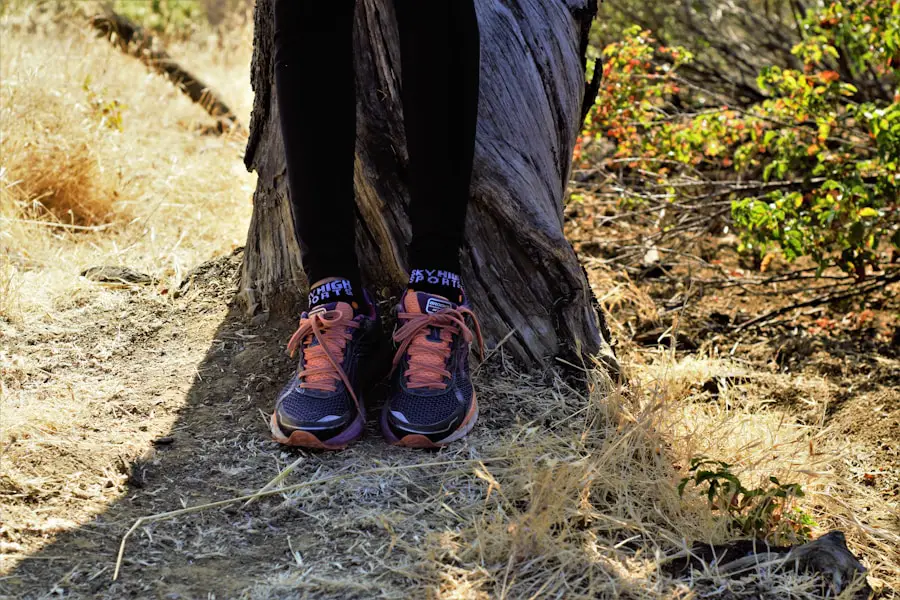
Moving from hiking boots to trail running shoes usually does not require a traditional “break-in” period. A trail runner should feel comfortable when you first try it on. What may require adaptation is the change in cushioning, stiffness, heel-to-toe drop, and underfoot feel.
- Start on a familiar short trail. Test the shoes where you know the terrain and can easily turn around if a hot spot develops.
- Keep your normal walking pattern. Do not force yourself to land on the forefoot or midfoot just because you changed shoes.
- Increase distance gradually. This is especially important if the new shoe is much lower-drop or more minimalist than your usual footwear.
- Check downhill fit. Your toes should not repeatedly strike the front of the shoe.
- Watch for heel movement and hot spots. Adjust lacing or try another model if the foot slides inside the shoe.
- Wear moisture-managing hiking or running socks. Avoid relying on shoe breathability alone to manage friction and sweat.
- Bring your usual insoles or orthotics when fitting. Do not add aftermarket support unless it improves fit or has been recommended for your needs.
A systematic review of transitions to minimalist footwear found that studies generally used progressive exposure rather than an immediate full switch. That distinction is important for very low-drop and minimalist trail shoes. The review is available through PubMed.
Note: There is no universally ideal foot-strike pattern. If a new shoe causes persistent foot, calf, Achilles, knee, or other pain, reduce use and reconsider the fit or shoe design rather than forcing yourself to adapt through pain.
Popular Brands and Models of Trail Running Shoes for Hiking
Trail-running models change frequently, so compare the current version rather than assuming an older version has the same fit, drop, cushioning, or outsole. As of July 2026, these are useful examples of how different designs serve different hikers.
Salomon Speedcross 6
The Salomon Speedcross 6 emphasizes soft-ground traction. Salomon lists it for mud and mixed terrain, with 5 mm lugs, a 10 mm drop, and an 11-ounce listed men’s shoe weight. Its deep, widely spaced lugs make it particularly relevant for loose soil and muddy hiking rather than smooth pavement-heavy routes.
Altra Lone Peak 9 and Lone Peak 9+
The Altra Lone Peak 9 is specifically listed by Altra for trail running, hiking, and thru-hiking. It uses a 0 mm heel-to-toe drop, a 25 mm stack height, and Altra’s Original FootShape fit. The Lone Peak 9+ adds a Vibram Megagrip outsole for hikers who want a different traction package.
Because the Lone Peak is zero-drop, hikers coming from footwear with a much higher heel should give their legs time to adjust instead of immediately using it for their longest trip.
Merrell Trail Glove 7
The Merrell Trail Glove 7 is a much more minimalist option. Merrell lists a 0 mm drop, 14 mm stack height, 2.5 mm lugs, and a trail rating aimed at moderate terrain. Its low stack and minimal construction make it a specialized choice for hikers who already prefer close ground feel rather than a direct substitute for a cushioned hiking boot.
HOKA Speedgoat 7
The current HOKA Speedgoat 7 is designed for technical trail use and combines a cushioned platform with Vibram Megagrip traction. It represents the opposite end of the trail-running spectrum from minimalist models such as the Trail Glove: more cushioning and protection while still retaining a trail-running-shoe format.
These models illustrate why “trail running shoe” is a broad category. A deep-lug mud shoe, zero-drop thru-hiking favorite, minimalist shoe, and highly cushioned technical-trail shoe can all carry the same basic label while feeling completely different underfoot.
How to Know When Trail Running Shoes Need Replacing
Trail runners generally sacrifice some longevity to reduce weight. There is no exact replacement mileage that applies to every hiker because abrasive rock, mud, body weight, gait, storage, and construction all affect wear.
Inspect your shoes regularly and consider replacement when you notice:
- Lugs worn smooth enough to noticeably reduce traction.
- Outsole rubber separating from the midsole.
- Holes or tears that compromise foot containment.
- A compressed or uneven midsole that no longer feels stable.
- A stretched heel or upper that allows the foot to slide.
- New discomfort that appears after the shoe has accumulated significant wear and disappears in a newer pair.
REI uses roughly 500 miles as a broad lifespan benchmark for trail-running shoes in its current hiking-footwear comparison, but treat mileage as a reminder to inspect the shoe rather than an automatic expiration point.
Is Using Trail Running Shoes for Hiking a Practical Choice?
Trail running shoes are a practical hiking choice when their advantages match the trip. They can provide excellent comfort, traction, flexibility, and breathability while allowing faster, lighter movement than many traditional boots.
They are especially attractive for day hikers, fast hikers, and hikers carrying lighter loads on maintained or moderately rugged trails. The best models still provide trail-specific rubber, secure fit, and enough underfoot protection for the environment.
Boots remain valuable when durability, warmth, coverage, stiffness, and protection take priority. Neither category is automatically safer or better for every person. The right choice depends on the terrain, pack, weather, distance, shoe construction, and most importantly, how securely and comfortably the footwear fits your feet.
Related travel gear: If you also travel with golf equipment, the existing guide to hard case golf travel bags covers protective cases for transporting clubs.
Frequently Asked Questions
What are trail running shoes?
Trail running shoes are athletic shoes designed for off-road surfaces. Compared with road-running shoes, they commonly use trail-specific outsoles, more pronounced lugs, reinforced uppers, toe protection, and sometimes rock plates to improve traction and protection on dirt, gravel, mud, roots, and rock.
Can trail running shoes be used for hiking?
Yes. Trail running shoes can work very well for day hiking, fast hiking, maintained trails, warm weather, and trips with lighter packs. Choose a model with enough traction, protection, cushioning, and stability for the terrain you expect.
What are the advantages of using trail running shoes for hiking?
Typical advantages include lower weight, greater flexibility, good trail traction, less bulk, and better breathability in non-waterproof models. Many hikers also like the responsive feel when moving quickly over changing terrain.
Are there limitations to using trail running shoes for hiking?
Yes. Most trail runners provide less ankle coverage, less upper protection, and usually less durability than sturdy hiking or backpacking boots. They may be less suitable for heavy loads, rough off-trail travel, deep snow, severe cold, mountaineering, or conditions requiring specialized winter footwear.
What should I consider when using trail running shoes for hiking?
Consider fit, toe room, heel hold, terrain, lug design, rock protection, cushioning, heel-to-toe drop, weather, trip distance, and pack weight. Wear hiking or running socks that manage moisture and test the shoes on a shorter outing before relying on them for a demanding trip.
Can I use trail running shoes for backpacking?
Some backpackers use trail runners successfully, particularly with lighter packs and when they are already comfortable in low-cut footwear. As pack weight and terrain difficulty increase, a stiffer hiking or backpacking boot may provide better protection and a more supportive platform.
Should trail running shoes be waterproof for hiking?
Not necessarily. Waterproof models can be useful in cold rain, wet grass, and shallow mud. Non-waterproof mesh models are usually more breathable and may be preferable in hot conditions or on routes with frequent water crossings where water is likely to enter over the collar.
Sources
- REI — How to Choose Hiking Boots and Shoes — current guidance on footwear type, terrain, protection, fit, and hiking use.
- REI — Trail-Running Shoes Buying Guide — outsole, rock protection, heel-to-toe drop, fit, and trail-shoe selection.
- PubMed — Transitioning to Minimal Footwear: A Systematic Review — evidence supporting progressive adaptation when changing substantially toward minimalist footwear.
- Salomon — Speedcross 6 — official terrain, lug, drop, weight, and construction specifications.
- Altra — Lone Peak 9 — official hiking use, drop, stack, fit, outsole, and construction specifications.
- HOKA — Speedgoat 7 — current technical-trail model and traction/cushioning information.