
Last Updated on July 27, 2026 by Daniel Globe
Sultanahmet is one of the easiest parts of Istanbul to explore on foot because many of the city’s best-known Byzantine and Ottoman landmarks sit within a compact part of the Historic Peninsula. A good Sultanahmet walking tour can take you from the Blue Mosque and ancient Hippodrome to Hagia Sophia, Topkapı Palace and the Grand Bazaar, with time for Turkish food and quieter streets along the way.
Quick Answer
For a first Sultanahmet walking tour, start at the Hippodrome and Blue Mosque, cross Sultanahmet Square to Hagia Sophia, add the Basilica Cistern if open, continue to Topkapı Palace, then finish toward Beyazıt and the Grand Bazaar. Allow 4–6 hours for the core sights or most of a day if you tour Topkapı Palace inside.
Key Takeaways
- Begin around Sultanahmet Square and the Hippodrome, then visit the Blue Mosque outside its prayer closures.
- Hagia Sophia’s tourist route is no longer simply free admission; cultural visitors use a separate ticketed gallery route, and major restoration work is active in 2026.
- The Basilica Cistern and Topkapı Palace are major additions to a complete Sultanahmet itinerary, but both require extra time and current-status checks.
- The Grand Bazaar is farther west around Beyazıt rather than directly beside Hagia Sophia, so it works best as the final major stop.
- Wear comfortable shoes, carry water, dress appropriately for mosque visits, and check prayer times and attraction notices before setting out.
At a Glance
| Time Required | About 4–6 hours for the core route; 7–9 hours if you tour Topkapı Palace, stop for a meal and spend time shopping. |
| Difficulty | Easy to moderate. Distances are manageable, but queues, crowds, stone paving and long periods on your feet add up. |
| Tools Needed | Comfortable walking shoes, phone or map, reusable water bottle, sunscreen in warm weather and modest clothing suitable for mosques. |
| Cost | Public squares and the Blue Mosque are free. Hagia Sophia tourist access and Topkapı Palace are ticketed. Admission prices can change, so check official pages before your visit. |
Disclosure: As an Amazon Associate I earn from qualifying purchases. Some links on this page are affiliate links, at no extra cost to you.
Must-See Sights in Sultanahmet
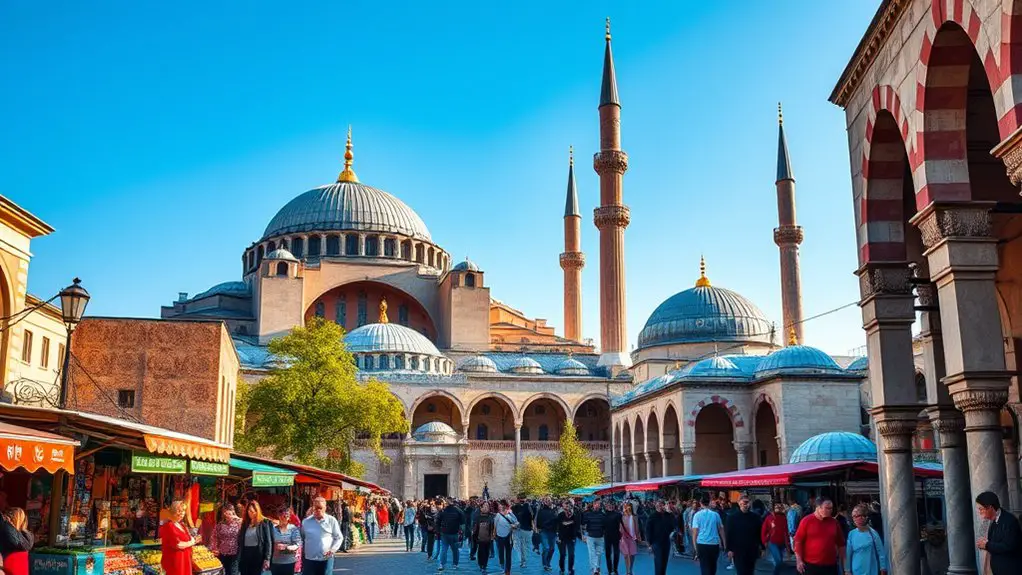
Sultanahmet brings some of Istanbul’s most important Byzantine and Ottoman monuments into a remarkably compact area. The district is part of Istanbul’s UNESCO-listed historic zones, where palaces, mosques, churches, cisterns and public monuments record centuries of political and religious change.
The Blue Mosque and Hagia Sophia face each other across Sultanahmet Square, while the monuments of the former Hippodrome sit just to the west. Topkapı Palace begins a short walk to the northeast, and the Grand Bazaar lies farther west toward Beyazıt.
The most useful way to explore Sultanahmet is not as a checklist of separate attractions, but as one walk through the Byzantine and Ottoman layers of Istanbul’s Historic Peninsula.
Best Sultanahmet Walking Route
- Sultanahmet Square and the Hippodrome: Begin around the former Byzantine Hippodrome. Look for the Egyptian Obelisk, Serpent Column, Walled Obelisk and German Fountain before entering the Blue Mosque.
- Blue Mosque: Visit during a tourist-access window between prayers. Allow time to remove your shoes, follow the dress rules and look closely at the İznik tile decoration.
- Hagia Sophia: Cross the square to Hagia Sophia. Foreign cultural visitors use the separate tourist gallery route rather than simply walking into the main prayer floor as in the old museum era.
- Basilica Cistern: The entrance is only a short walk away. Check its current status before going; the official visitor page currently carries a temporary-closure notice.
- Topkapı Palace: Continue toward the palace if you have at least another two to three hours. Its courtyards, Harem and collections can easily turn a half-day walk into a full-day itinerary.
- Grand Bazaar: Finish by heading west toward Beyazıt and the covered Grand Bazaar. It is not directly in the central Sultanahmet square, so save some energy for this final stretch.
Pro Tip: If you have only half a day, concentrate on the Hippodrome, Blue Mosque, Hagia Sophia and one additional paid attraction. Trying to tour Topkapı Palace properly and shop in the Grand Bazaar in the same short morning usually makes the day feel rushed.
The Grand Bazaar adds a very different atmosphere to the monumental core. Its covered lanes are filled with jewelry, textiles, ceramics, leather goods, lamps, sweets and souvenirs. Give yourself time to browse, compare prices and walk away from a sale when you are unsure; there is no need to buy from the first shop you enter.
The History Behind Hagia Sophia
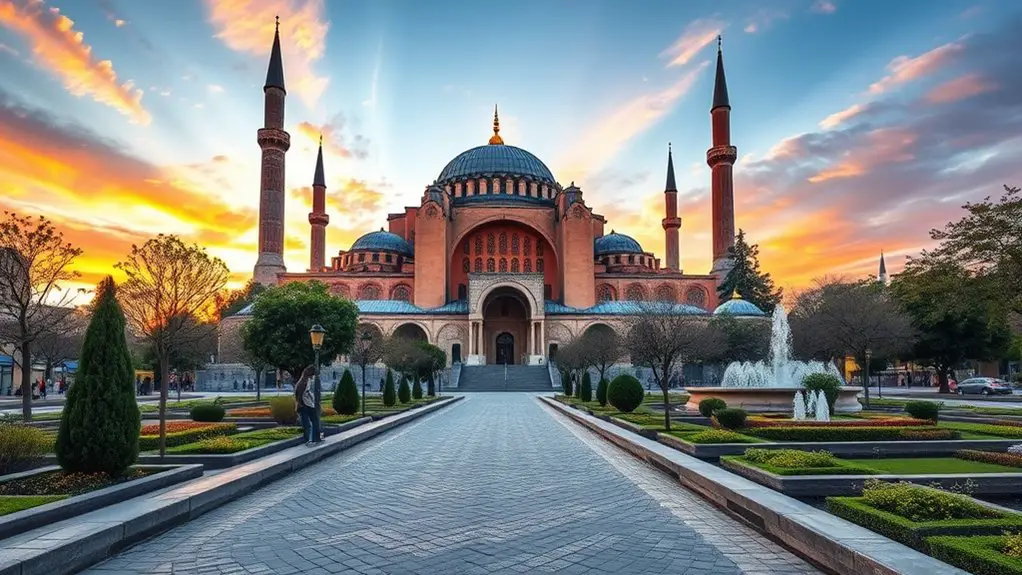
The present Hagia Sophia was built under Emperor Justinian I after the earlier church on the site was destroyed during the Nika Revolt. Designed by Anthemius of Tralles and Isidore of Miletus, the new church was completed and opened in 537. Its vast dome became one of the defining achievements of Byzantine architecture. The Türkiye Ministry of Culture and Tourism documents both its sixth-century construction and its later Ottoman history.
After the Ottoman conquest of Constantinople in 1453, Hagia Sophia became a mosque. Ottoman additions over the following centuries included minarets, calligraphy and structural reinforcement, while many Byzantine mosaics remained part of the building’s layered interior.
Completed in 537, the present Hagia Sophia has served successively as a church, mosque, museum and mosque again—leaving Byzantine and Ottoman features visible within the same monument.
Hagia Sophia became a museum in the twentieth century and returned to mosque use in 2020. Tourist access changed again in January 2024, when a separate gallery route was introduced for cultural visitors. The Ministry’s visitor-management announcement explains the separation between worship access and tourist gallery access.
Note: Hagia Sophia is undergoing major conservation and structural-strengthening work in 2026. The Ministry of Culture and Tourism says the large restoration program remains active, so scaffolding, protective coverings or altered sightlines may affect what you see.
Exploring the Blue Mosque
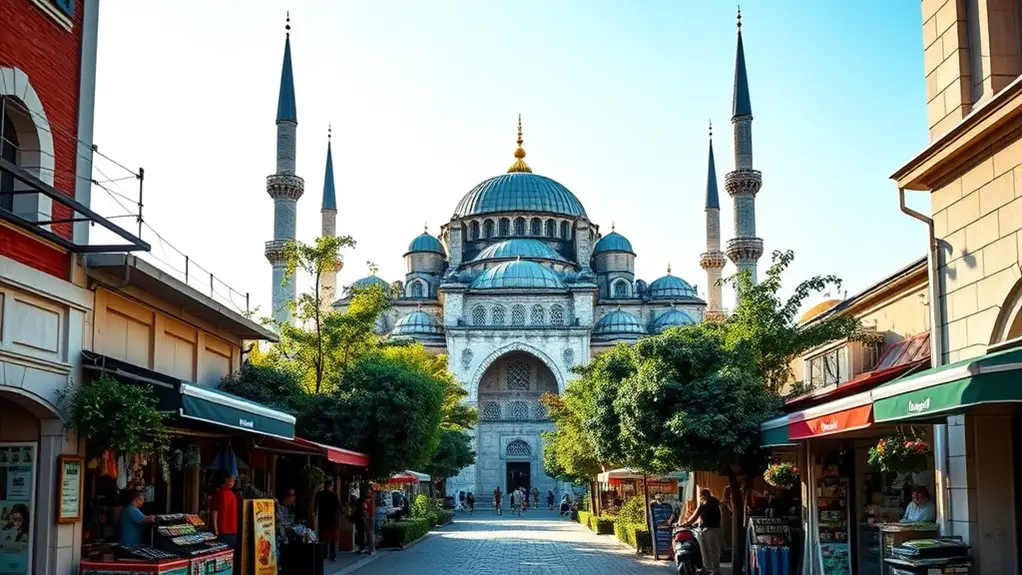
The Blue Mosque, formally the Sultan Ahmed Mosque, was built for Sultan Ahmed I between 1609 and 1616. Its cascading domes and six minarets make it one of the most recognizable buildings in Istanbul.
Inside, the decoration is dominated by İznik tiles, calligraphy and daylight entering through 260 windows. The windows originally included elaborate colored glass; the mosque’s own historical account notes that much of that early glass was later broken and replaced. The nickname “Blue Mosque” comes from the blue tones that dominate its interior tile decoration rather than from the exterior stonework.
The mosque is still an active place of worship, so sightseeing is organized around prayer. According to the official Blue Mosque visitor guide, tourist visiting hours are generally 08:30–19:00 from April through September and 08:30–17:00 from October through March, with last entry 30 minutes before closing. Tourist visits pause around the noon and afternoon prayers, and Friday tourist visiting begins at 14:30.
Warning: Do not plan a mosque visit around “watching a prayer session.” Give worshippers space, remain quiet, follow staff directions and stay within designated visitor areas. Prayer times change through the year, so check the day’s Istanbul prayer schedule before leaving.
Visitors should dress modestly and remove their shoes before entering the prayer hall. The mosque provides loan garments for visitors whose clothing does not meet its requirements. Keep your voice low, avoid blocking worshippers and treat photography as secondary to the religious setting.
Current Entry Fees and Visitor Rules
Ticket prices and access arrangements in Istanbul change more often than the monuments themselves. Use these details as planning guidance and check the linked official pages immediately before your visit.
| Attraction | What to Know |
|---|---|
| Blue Mosque | Free to visit, but tourist access pauses around prayers and begins at 14:30 on Fridays. |
| Hagia Sophia | Foreign cultural visitors use a separate ticketed gallery route. Do not rely on older guides that call ordinary tourist entry free. |
| Topkapı Palace | The official National Palaces page lists the foreign visitor combined ticket at 2,750 TL as of July 2026. The palace is closed on Tuesdays. Recheck before buying because prices can change. |
| Basilica Cistern | The official visitor-information page currently displays a temporary-closure notice. Check its status on the day you plan to visit. |
Hidden Gems and Local Eateries
Once you step away from the busiest paths between Hagia Sophia and the Blue Mosque, Sultanahmet becomes easier to explore at a slower pace. The Arasta Bazaar beside the Blue Mosque is smaller and less confusing than the Grand Bazaar, while Soğukçeşme Street near the Hagia Sophia–Topkapı side of the neighborhood offers a quieter change of pace.
Instead of expecting a traditional fresh-produce market around every corner, look for small bakeries, lokantas, tea shops and dessert counters. Turkish tea, simit, börek, köfte, baklava and lokum are easy foods to fit between sightseeing stops.
The historic Pudding Shop, also known as Lale Restaurant, remains on Divan Yolu and is especially interesting for its connection with the overland “hippie trail” of the 1960s and 1970s. Nearby, Tarihi Sultanahmet Köftecisi Selim Usta is a long-running option for the district’s well-known grilled köfte.
You do not need to turn the food stops into a checklist. A tea or pastry break is often more valuable halfway through the walk than squeezing another attraction into an already crowded afternoon.
Tips for Your Walking Tour
Start early when possible, especially if you want to enter several major attractions. Sultanahmet is compact, but security lines, prayer closures and ticket queues can turn a short distance on the map into a much longer stop.
The T1 Kabataş–Bağcılar tram stops at Sultanahmet and is the most useful rail connection for reaching the historic core. The same line also serves Gülhane and Beyazıt-Kapalıçarşı, making it useful when your feet need a break.
Here are some practical items and safety habits to keep in mind:
| Walking Essentials | Safety Tips | Additional Items |
|---|---|---|
| Comfortable Shoes | Stay aware of your surroundings | Power bank |
| Reusable Water Bottle | Use a map or GPS app | Sunscreen |
| Lightweight Backpack | Avoid displaying valuables | Snacks |
| Modest Mosque Clothing | Respect barriers and worship areas | Light scarf or cover-up |
Pro Tip: Check the official Diyanet Istanbul prayer times before your walk. Prayer times change daily, so a route that works perfectly one month may need a different order later in the year.
Summer afternoons can feel tiring on exposed stone squares, so carry water and take shade breaks. Spring and fall are generally more comfortable for long walks. In any season, check the forecast before leaving because rain can make stone paving slippery.
Frequently Asked Questions
What is the best time of year to visit Sultanahmet?
Spring, especially April and May, and early fall, particularly September and October, are popular because temperatures are generally more comfortable for walking. Summer brings longer days but more heat and heavy sightseeing crowds. Winter is quieter but cooler and wetter.
Are there entry fees for the main Sultanahmet attractions?
Yes. The Blue Mosque is free, but Hagia Sophia’s tourist gallery is ticketed. Topkapı Palace is also paid; its official page lists a 2,750 TL combined foreign visitor ticket as of July 2026. Prices and access arrangements change, so verify official information immediately before visiting.
Is public transportation available in Sultanahmet?
Yes. The T1 Kabataş–Bağcılar tram stops at Sultanahmet and also serves nearby Gülhane and Beyazıt-Kapalıçarşı. An Istanbulkart is useful for public transportation around the wider city, while most attractions within the central Sultanahmet route are easiest to reach on foot.
Where can I find restrooms during the walking tour?
Use visitor facilities at major ticketed attractions when available, or ask at a cafe or restaurant where you are already buying food or drinks. The Pudding Shop and Tarihi Sultanahmet Köftecisi are both centrally located examples, but restroom access at any private business is at the venue’s discretion.
Are guided tours available in Sultanahmet?
Yes. Private and small-group walking tours are widely available, and a licensed guide can be especially useful if you want deeper explanations of the Byzantine Hippodrome, Hagia Sophia, Topkapı Palace and Ottoman mosque architecture. Audio guides and official interpretation at individual attractions are another option for independent travelers.
How long does a Sultanahmet walking tour take?
Allow roughly 4–6 hours for Sultanahmet Square, the Blue Mosque, Hagia Sophia and one additional attraction. A full visit to Topkapı Palace plus lunch and the Grand Bazaar can extend the itinerary to 7–9 hours.
What should I wear to the Blue Mosque and Hagia Sophia?
Wear modest clothing that covers the areas required by mosque rules and be prepared to remove your shoes before entering designated prayer spaces. Follow posted instructions and staff guidance. The Blue Mosque provides loan garments for visitors whose clothing does not meet its requirements.
Conclusion
A Sultanahmet walking tour works best when you leave room for the neighborhood’s contrasts: Byzantine monuments beside Ottoman mosques, busy markets a few streets from quiet courtyards, and active places of worship inside some of the world’s most visited historic buildings. Start with the Hippodrome and Blue Mosque, continue through Hagia Sophia and the nearby sights, then decide whether your energy is better spent inside Topkapı Palace or browsing toward the Grand Bazaar. Checking current access rules before you leave will save more time than trying to squeeze every landmark into one rushed day.
Sources
- Türkiye Ministry of Culture and Tourism — Hagia Sophia Visitor Management — tourist gallery access and the separation of tourist and worship routes.
- Türkiye Ministry of Culture and Tourism — Hagia Sophia Restoration — current conservation and strengthening work.
- Sultanahmet Camii Visitor Guide — Blue Mosque visitor hours, prayer closures and free admission.
- National Palaces — Topkapı Palace — official opening information and current ticket prices.
- Metro Istanbul — T1 Kabataş–Bağcılar Tram — official Sultanahmet and Beyazıt-Kapalıçarşı station information.
- Basilica Cistern Official Visitor Information — current visitor status, operating information and notices.
