
Last Updated on July 27, 2026 by Daniel Globe
Good hiking socks do more than add padding inside your boots. They help manage sweat, limit rubbing, protect your skin from the footwear cuff, and keep your feet comfortable as temperatures and trail conditions change. The best pair is not simply the thickest or the one with the highest percentage of Merino wool. It is the pair that fits your feet and footwear without bunching, slipping, or making your shoes too tight.
Quick Answer
Choose hiking socks that fit snugly, rise above your footwear cuff, manage moisture, and provide enough cushioning without making your shoes tight. Merino wool blends work well across many temperatures, while synthetic blends usually dry quickly. Most importantly, keep your socks reasonably dry and change damp pairs during long hiking days.
Key Takeaways
- Fit and moisture management matter at least as much as whether a sock is mainly wool or synthetic.
- Choose a sock tall enough to prevent your boot or shoe cuff from rubbing directly against your skin.
- More cushioning adds padding and warmth, but too much bulk can make otherwise well-fitting footwear too tight.
- Merino wool is comfortable across a broad temperature range and resists odor, while many synthetic fibers dry quickly and improve durability.
- For long hiking days, carrying a dry spare pair can be more useful than obsessing over a single “perfect” fiber blend.
In a 2022 study of 203 long-distance hikers, finishing the day in wet socks was associated with about 1.94 times the risk of foot blisters, while the proportion of natural versus synthetic fibers was not associated with blister occurrence.
That finding is a useful reminder that hiking socks work as part of a complete footwear system. A good sock cannot compensate for boots that slide at the heel, crush the toes, or create repeated pressure points. Likewise, an expensive Merino sock can still cause trouble if it is the wrong size or stays soaked for hours.
Disclosure: As an Amazon Associate I earn from qualifying purchases. Some links on this page are affiliate links, at no extra cost to you.
Choosing the Right Material: Wool, Synthetic, or a Blend?
Most modern hiking socks combine several fibers because no single material does everything perfectly. The blend affects drying speed, warmth, feel, durability, stretch, and odor retention.
| Material | Strengths | Considerations |
| Merino wool | Soft feel, moisture-vapor management, insulation, broad temperature comfort, odor resistance | Often costs more and may dry more slowly than lightweight synthetic designs |
| Polyester / polypropylene | Fast drying, moisture transfer, low weight | Comfort, warmth, and odor retention vary by construction |
| Nylon | Adds abrasion resistance and durability | Usually used as part of a blend rather than for comfort alone |
| Elastane / spandex | Helps the sock hold its shape and stay snug | Normally makes up only a small percentage of the sock |
Merino Wool Hiking Socks
Merino wool is popular because its fine fibers are softer than old-fashioned coarse wool and can manage moisture vapor while providing insulation. It is also naturally odor resistant, which can be useful when the same pair must be worn for extended periods.
It is better to describe wool as odor resistant rather than simply “antimicrobial.” Research on untreated wool shows that it should not automatically be considered a bacteria-killing textile. For more detail, see the published research on untreated wool and antibacterial testing.
Synthetic Hiking Socks
Polyester, polypropylene, nylon, acrylic, and elastane are used in different combinations. Lightweight synthetic socks can dry quickly, making them attractive in hot weather, humid environments, or trips where socks must be rinsed and dried overnight.
Nylon commonly appears in hiking-sock blends to strengthen high-wear areas, while elastic fibers help the heel and arch stay in place. The performance of a synthetic sock depends on the complete knit and construction, not merely the fiber name on the label.
What About Cotton?
For sustained hiking, 100% cotton is usually a poor choice because it absorbs sweat and dries slowly. That can leave the foot environment damp for longer. However, it is too simplistic to say that cotton by itself causes blisters. Friction, moisture, sock construction, footwear fit, walking distance, and individual susceptibility all contribute.
Note: Do not choose a hiking sock by fiber percentage alone. A well-fitting blended sock that stays relatively dry may perform better for you than a poorly fitting sock made from a supposedly superior material.
Choose the Right Hiking Sock Height
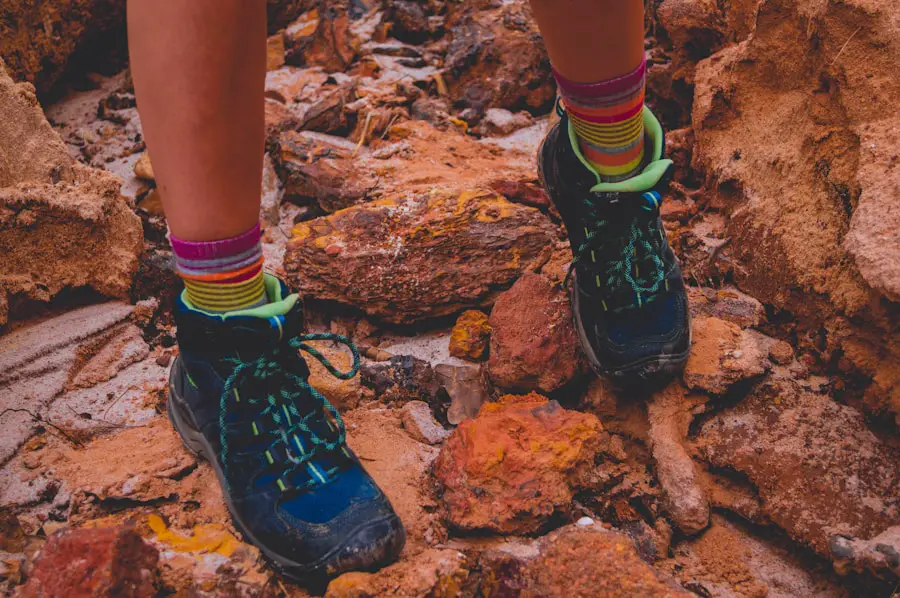
Sock height is easy to overlook, but it determines whether your skin rubs against the upper edge of your hiking footwear. A practical rule is to choose a sock that extends above the boot or shoe cuff.
- No-show socks: Best suited to low-cut trail shoes when the shoe collar does not rub your skin.
- Ankle socks: Work well with many low hiking shoes and some low-cut boots.
- Crew socks: A versatile choice for traditional hiking boots because they cover the ankle and extend above most boot cuffs.
- Higher socks: Useful with tall mountaineering footwear, in cold conditions, or where additional lower-leg coverage is desirable.
Current REI hiking-sock guidance similarly recommends matching sock height to the footwear cuff to reduce direct abrasion.
Cushioning and Support: Preventing Hotspots Without Making Boots Too Tight
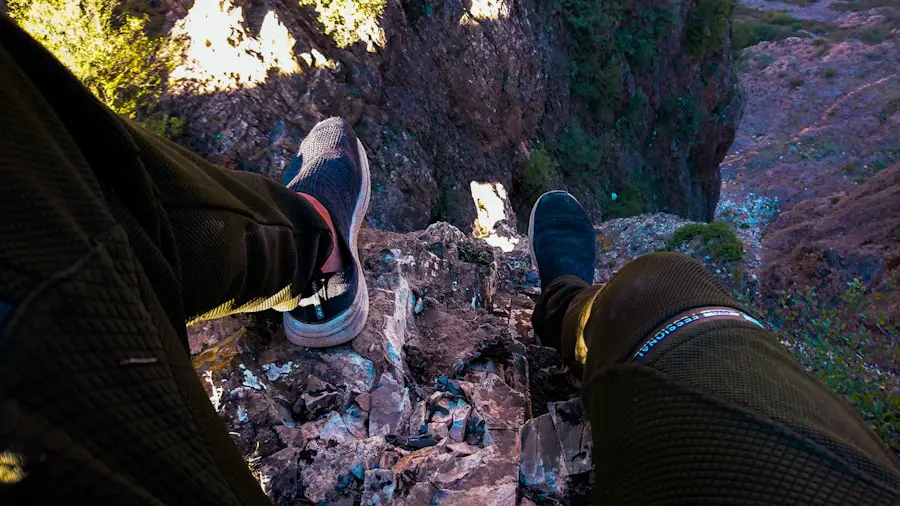
Hiking socks range from very thin designs to heavily cushioned mountaineering socks. More cushioning can soften pressure under the heel and forefoot, but thicker is not automatically better.
A heavily padded sock takes up more space inside the shoe. If your hiking boots already fit closely, adding a thick sock can squeeze the toes, increase pressure, and make the footwear less comfortable.
- Minimal or ultralight cushioning: Useful in hot weather or snug, low-volume footwear.
- Light cushioning: A good choice for warm-weather day hiking and many trail shoes.
- Medium cushioning: Often works well for general hiking and backpacking in moderate conditions.
- Heavy cushioning: Best reserved for footwear with enough interior volume and for colder or more demanding conditions.
Many hiking socks also have elasticized arch bands or denser knitting around the midfoot. These features can help the sock stay in position and reduce wrinkles. They should not be viewed as a substitute for supportive, properly fitted footwear or an appropriate insole.
Pro Tip: Try the exact sock thickness you plan to hike in while wearing your hiking shoes or boots. A sock can fit your foot perfectly yet still be too bulky for the footwear.
Moisture Management: Keep Dampness Under Control
| Moisture Feature | Why It Helps |
| Moisture-moving fibers | Help move or disperse perspiration instead of leaving concentrated damp spots against the skin. |
| Breathable knit zones | Can improve ventilation where the footwear itself allows moisture vapor to escape. |
| Dry spare pair | Lets you replace a sweat-soaked or rain-soaked pair during a long day. |
| Quick-drying construction | Makes washing and drying easier on multiday trips. |
Your feet can produce substantial perspiration during a hard climb. If that moisture remains in the footwear system, skin can become softer and more vulnerable to repeated shear.
The Wilderness Medical Society recommends proper footwear and maintaining a dry foot environment, including a wicking sock system, as part of friction-blister prevention.
More recently, researchers studying long-distance hikers found that those whose socks were wet at the end of the day had a significantly higher blister risk. The study also found no relationship between blister occurrence and whether the socks contained a higher proportion of natural or synthetic fibers. See the 2022 hiker sock-composition study.
Pro Tip: On long hiking days, carry a dry pair in a waterproof bag. If your socks become saturated with sweat or water, changing them can be more useful than simply pushing on in the same damp pair.
Do Liner Socks Help Prevent Blisters?
A liner sock is a thin sock worn underneath a thicker hiking sock. Traditional hiking systems used liners to move moisture and create some sliding between the two sock layers instead of directly against the skin.
Research and wilderness guidance suggest that some double-sock systems can reduce blister problems, but liners are not mandatory for every hiker. Modern hiking socks already combine moisture management, cushioning, and close-fitting construction, so many people are comfortable with a single pair.
Consider experimenting with a liner if you regularly develop hotspots despite correctly fitted footwear, or if you already know a two-layer system works for your feet. Always test the combination before a long trip because two sock layers also take up additional shoe volume.
Temperature Regulation: Match the Sock to the Weather
Sock warmth comes from both the fibers and the amount of material around the foot. A thick sock is generally warmer than a thin one, regardless of whether it is wool or synthetic.
Cold-Weather Hiking
Merino-rich midweight or heavyweight socks are popular in cold conditions because wool manages moisture vapor while providing insulation. The important detail is that your boots still need enough room for your toes to move. Compressing thick insulation inside a tight boot reduces comfort and may impair circulation.
Warm-Weather Hiking
In warm weather, prioritize fit, moisture handling, and a thickness that does not trap more heat than necessary. Lightweight Merino blends and lightweight synthetic socks can both work well.
A very thin sock is not automatically cooler if it allows the foot to slide excessively. Likewise, a medium-cushion sock may be comfortable in warm conditions when the footwear has enough volume and ventilation.
Warning: Socks or boots should not cause persistent numbness, tingling, unusual discoloration, or severe pressure. Stop and adjust your footwear rather than assuming these symptoms are normal on a long hike.
Waterproof Hiking Socks: When They Make Sense
Waterproof socks use a membrane between fabric layers to block outside water while allowing some moisture vapor to escape. They can be useful in persistent rain, wet vegetation, mud, or situations where non-waterproof shoes are repeatedly exposed to external moisture.
They are not magic. Breathability is still limited by temperature, humidity, exertion, and the rest of the footwear system. Water can also enter over the cuff if the sock is submerged deeply enough or water runs down the leg.
For an example of how membrane waterproof socks are constructed, see the Sealskinz waterproof-sock guidance.
Durability and Longevity: What Makes a Hiking Sock Last?
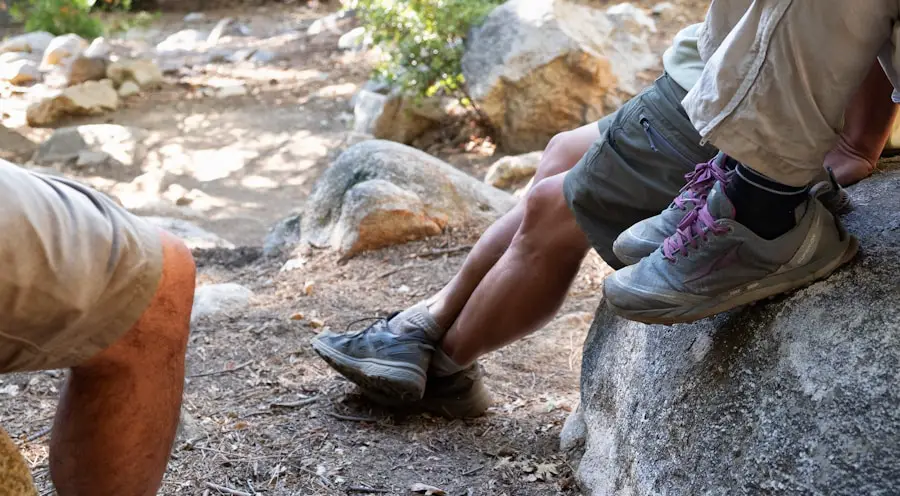
Hiking socks experience repeated abrasion against your footwear, especially at the heel, forefoot, and toes. Reinforcement in these zones can extend useful life, particularly when nylon or another durable fiber is incorporated into the knit.
Durability also depends on fit. A sock that constantly slides, wrinkles, or rubs against a loose heel counter may wear faster than one that stays in place.
When Should You Replace Hiking Socks?
Consider retiring a pair from demanding hikes when you notice:
- Thin or nearly transparent fabric at the heel or ball of the foot
- Holes or exposed elastic fibers
- Cushioning that has become permanently flattened
- A heel pocket that no longer stays aligned
- Elastic that allows the sock to slide or bunch repeatedly
- Seams or repairs that create uncomfortable pressure points
A worn sock may still be fine for casual use even after it is no longer dependable for a long trail day.
Proper Fit: Avoid Bunching, Slipping, and Chafing
A hiking sock should feel snug without squeezing. Too much loose fabric can wrinkle under the toes or heel, while an undersized sock can stretch excessively, slide out of position, or create pressure.
Use This Quick Fit Check
- Check the heel pocket. The shaped heel of the sock should sit directly over your heel rather than riding up the Achilles or underneath the foot.
- Look at the toes. There should be no folds or excess fabric bunching in front of your toes.
- Check the cuff. It should stay up without painfully digging into your leg.
- Put on your hiking footwear. Confirm that the sock does not make the toe box or midfoot noticeably tighter.
- Walk around. Pay attention to heel movement, seams, wrinkles, and early hotspots.
Manufacturer sizing charts are useful, but foot size is more important than assuming your normal shoe size always translates directly to the correct sock size.
Seams, Toe Socks, and Hotspot-Prone Feet
Flat or low-profile toe seams can reduce a potential rubbing point, especially in snug footwear. Some hikers who frequently develop between-toe blisters prefer individual toe socks because the fabric separates adjacent toes.
No sock design guarantees blister prevention. If the heel repeatedly lifts inside the shoe or the toes are compressed together, correcting the footwear fit is usually more important than adding increasingly complicated sock combinations.
Hiking Socks for Different Types of Terrain
Terrain matters, but the footwear and weather usually determine sock choice more directly than the trail surface alone.
- Easy day hikes and maintained trails: Light or medium cushioning is usually enough if it matches your footwear volume.
- Rocky routes and long backpacking days: Medium cushioning can add comfort under the heel and forefoot, provided the boot still fits correctly.
- Hot, dry trails: Consider lightweight socks with strong moisture management and enough cushioning to prevent excessive movement.
- Cold or snowy terrain: Use warmer socks with boots sized to accommodate them without toe compression.
- Wet and muddy conditions: Carrying a dry spare pair is valuable. Waterproof membrane socks may also be useful in specific conditions.
Research involving hikers has also shown that trail conditions, distance, and wet socks can influence blister risk. This is another reason not to treat the sock’s fiber label as the only factor that matters.
How Many Hiking Socks Should You Carry?
For a short day hike in stable conditions, one properly fitted pair may be enough, though a dry spare is cheap insurance when rain, creek crossings, or heavy sweating are likely.
For multiday hiking, carrying at least two usable pairs makes moisture management easier. One pair can be worn while another dries. Depending on trip length and conditions, hikers may carry additional pairs or thin liners so they can rotate clean, dry fabric against the skin.
How to Wash and Care for Hiking Socks
Always follow the care label because fiber blends differ. As a general rule, avoid assuming every hiking sock can tolerate high heat, harsh bleach, or fabric softener.
For Merino products, manufacturer guidance commonly recommends gentle washing, mild detergent, and lower drying temperatures. Smartwool, for example, advises checking each garment label, turning socks inside out, using mild soap, and avoiding bleach and fabric softener. See its Merino wool sock care guidance.
Dry socks completely before storing them. Damp storage encourages unpleasant odors and can shorten the useful life of the fabric.
Common Hiking Sock Mistakes
- Buying the thickest sock available: Extra cushioning is not useful if it makes your footwear too tight.
- Choosing by material alone: Fit, moisture, construction, and footwear interaction matter too.
- Wearing a sock below the boot cuff: This can leave bare skin rubbing directly against the footwear.
- Ignoring wrinkles: Bunched fabric creates avoidable pressure and friction points.
- Keeping soaked socks on all day: Change to a dry pair when practical.
- Testing a new sock system on a major hike: Try new socks, liners, and footwear together on shorter walks first.
How to Choose Hiking Socks in Five Steps
- Start with your footwear. Note the cuff height and how much room the shoe or boot has around your foot.
- Choose the sock height. Keep the cuff above the footwear to prevent direct skin rubbing.
- Select cushioning. Balance padding and warmth against the available space inside the shoe.
- Choose the material blend. Prioritize the combination of drying speed, temperature comfort, durability, feel, and odor control that suits your trip.
- Test the complete system. Walk in the exact socks and footwear before committing to a long hike.
Choosing hiking socks becomes much easier once you stop searching for one universally “best” material. A good pair fits cleanly, works with the available volume inside your footwear, provides the right amount of cushioning for the conditions, and helps you manage moisture over the course of the day.
If you’re planning a hiking trip, socks are only one part of a comfortable gear system. For another packing-related resource, see this article on 5 Must-Have Minimalist Travel Backpacks for Spring Adventures 2025.
Love travel? Join Our Facebook Community For More Tips.
Frequently Asked Questions
What are hiking socks?
Hiking socks are socks designed for walking and hiking footwear. They typically use moisture-managing fibers, a shaped heel, elastic for a secure fit, and strategic cushioning or reinforcement in high-wear areas.
What features should hiking socks have?
Useful features include a snug fit, a height that extends above your footwear cuff, moisture management, appropriate cushioning, reinforced heel and toe areas, low-profile seams, and elastic that prevents bunching or slipping.
Why are hiking socks important?
They create the layer between your skin and your hiking footwear. A properly fitted pair can help manage moisture, reduce wrinkles and rubbing, provide cushioning, and improve temperature comfort. Socks are only one part of blister prevention; footwear fit and keeping feet reasonably dry are also important.
How do hiking socks differ from regular socks?
Hiking socks are generally built to handle sustained activity. They often use wool or performance-synthetic blends, shaped heels, elastic retention zones, reinforced high-wear areas, and targeted cushioning. Everyday cotton socks usually absorb more liquid moisture and dry more slowly.
What should I look for when choosing hiking socks?
Start with height, cushioning, fit, and material. The sock should extend above your footwear cuff, fit without wrinkles, provide enough cushioning without crowding the shoe, and use fibers that suit the expected temperature and moisture conditions.
Are Merino wool socks better than synthetic hiking socks?
Not universally. Merino is valued for temperature comfort, moisture-vapor management, softness, and odor resistance. Synthetic socks can be lighter and quick drying. Research in hikers suggests that keeping socks from remaining wet may matter more for blister risk than whether the fibers are predominantly natural or synthetic.
Should I wear liner socks when hiking?
Liners are optional. Some hikers find that a thin liner under a hiking sock helps manage moisture and friction, while others do well with one modern hiking sock. Test a liner system with your footwear because the extra layer takes up space.
How many pairs of hiking socks should I carry?
A single pair may be adequate for a short, dry day hike, although a spare is useful when wet conditions are possible. For multiday hiking, carrying at least two usable pairs allows you to rotate them and put dry socks against your skin while the other pair dries.
Sources
- PubMed — The influence of sock composition on the appearance of foot blisters in hikers — supports the discussion of wet socks, fiber composition, and blister risk.
- Wilderness Medical Society — Practice Guidelines for Basic Wound Management in the Austere Environment — supports the recommendation for proper footwear, a dry foot environment, and wicking sock systems.
- REI Expert Advice — How to Choose Hiking Socks — supports guidance on sock height, cushioning, materials, and fit.
- PMC — Antibacterial Properties of Non-Modified Wool — supports the distinction between wool’s odor resistance and claims of direct antibacterial activity.
- Smartwool — Merino Wool Washing & Care Guidelines — supports Merino sock care recommendations.
- Sealskinz — Waterproof Product FAQ — supports the explanation of waterproof membrane sock construction and cuff limitations.

