
Last Updated on July 27, 2026 by Daniel Globe
Snakes are a normal part of many hiking environments, and most encounters do not lead to bites. The safest approach is simple: know what species live in the area, stay where you can see the trail, watch where you put your hands and feet, wear sensible footwear, and give every snake plenty of room. Good preparation matters even more in areas with venomous species.
Quick Answer
To avoid snakes while hiking, stay on open trails, watch every step, avoid reaching into brush or rock crevices, wear closed-toe footwear and long pants, and use a light after dark. If you see a snake, stop, back away slowly, and give it enough room to leave on its own.
Key Takeaways
- Most snakes prefer to avoid people, but they may defend themselves if stepped on, handled, cornered, or surprised.
- Stay on established trails and never put a hand or foot somewhere you cannot clearly see.
- Wear closed-toe hiking footwear and long pants; use purpose-designed snake-resistant boots or puncture-resistant gaiters when conditions justify extra protection.
- A hiking stick can help you check areas with poor visibility, but it is not a substitute for watching the trail.
- If a wild snake bites you and it may be venomous, call 911 or local emergency services immediately and minimize movement.
At a Glance
| Time Required | About 5–10 minutes of preparation before the hike, plus ongoing awareness on the trail |
| Difficulty | Easy; the main requirement is consistent trail awareness |
| Tools Needed | Closed-toe hiking footwear, long pants, optional hiking stick or trekking pole, and a flashlight or headlamp after dark |
| Cost | No special purchase is normally required if you already own standard hiking gear; specialized snake-resistant PPE is optional for higher-risk environments |
Disclosure: As an Amazon Associate I earn from qualifying purchases. Some links on this page are affiliate links, at no extra cost to you.
Understand When and Where Snakes May Be Active
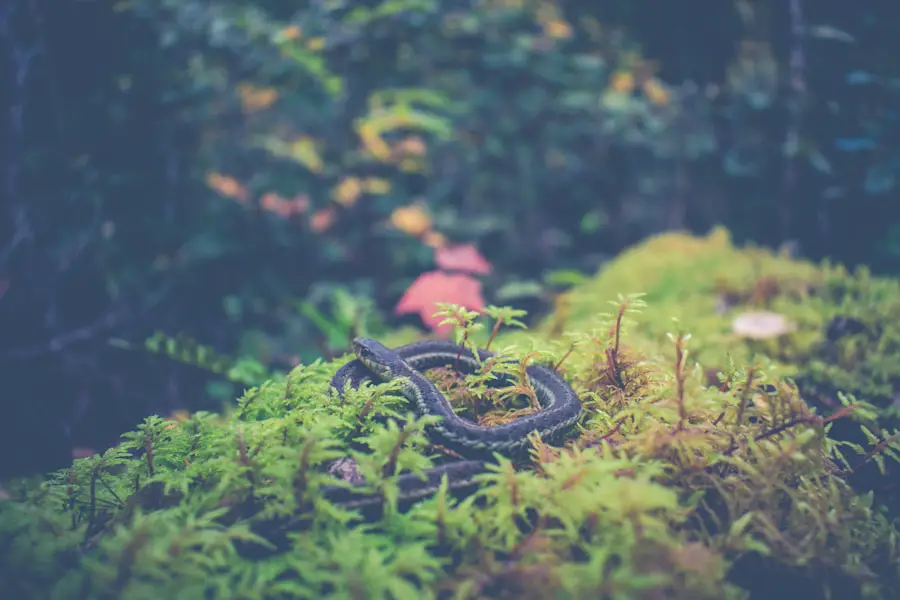
Snakes are ectothermic reptiles, so environmental temperature strongly affects their activity. On cool days, a snake may move into sunlight or onto a warm rock to raise its body temperature. In very hot weather, it may retreat into shade, vegetation, burrows, rock crevices, or other cooler areas.
There is no universal rule that snakes are always most active in the early morning or late afternoon. Activity varies by species, season, weather, elevation, and region. In hot climates, some species become more active in the evening or at night, while snakes may bask during cooler daylight hours.
Likely hiding or resting areas include tall grass, dense brush, rock piles, crevices, fallen logs, leaf litter, holes, and places that provide shade or cover. Some species also live around streams, lakes, marshes, and other wet areas, but habitat varies widely by species.
Most snakes would rather avoid a confrontation than waste energy defending themselves. Problems are more likely when a snake is stepped on, cornered, handled, or surprised at close range. Give any snake enough room to escape rather than trying to move it yourself.
CDC/NIOSH estimates that 7,000–8,000 people are bitten by venomous snakes in the United States each year, while about five die. Prompt medical care is one reason fatalities remain relatively uncommon.
Prepare Before Hiking in Snake Country
Before starting the hike, check the park, wildlife agency, or land manager’s website for information about local venomous snakes and current wildlife conditions. Knowing which species occur in the area is more useful than trying to identify an unfamiliar snake at close range after you encounter it.
For remote hikes, tell someone where you are going and when you expect to return. Keep your phone or emergency communication device accessible rather than buried at the bottom of your pack. A snakebite is time-sensitive, so knowing your trail name, nearest landmark, and approximate location can help emergency responders.
Note: Do not rely on head shape, pupil shape, color, or another single visual feature to decide whether an unfamiliar snake is harmless. Identification guides can be useful before a hike, but never move closer to a snake simply to identify it.
Choosing the Right Footwear
Selecting appropriate footwear is a basic part of snake safety while hiking. Closed-toe hiking shoes or boots protect exposed skin and also help with sharp rocks, thorns, and rough trail surfaces. Over-the-ankle boots and long pants provide more coverage than sandals or shorts.
Ordinary hiking boots, however, should not automatically be considered snake-proof. In locations with a high occupational or recreational risk of venomous snake encounters, the CDC recommends considering purpose-designed snake-proof boots or puncture-proof gaiters.
Protective gaiters cover the lower leg and can provide another barrier when they are specifically designed for puncture resistance. Standard fabric gaiters are useful for keeping dirt, seeds, and debris out of footwear but should not be assumed to stop snake fangs.
Whatever footwear you choose, make sure it fits well and has enough traction and support for the terrain. A painful blister, unstable boot, or slippery sole can create its own safety problem on a remote trail.
Staying on Designated Trails
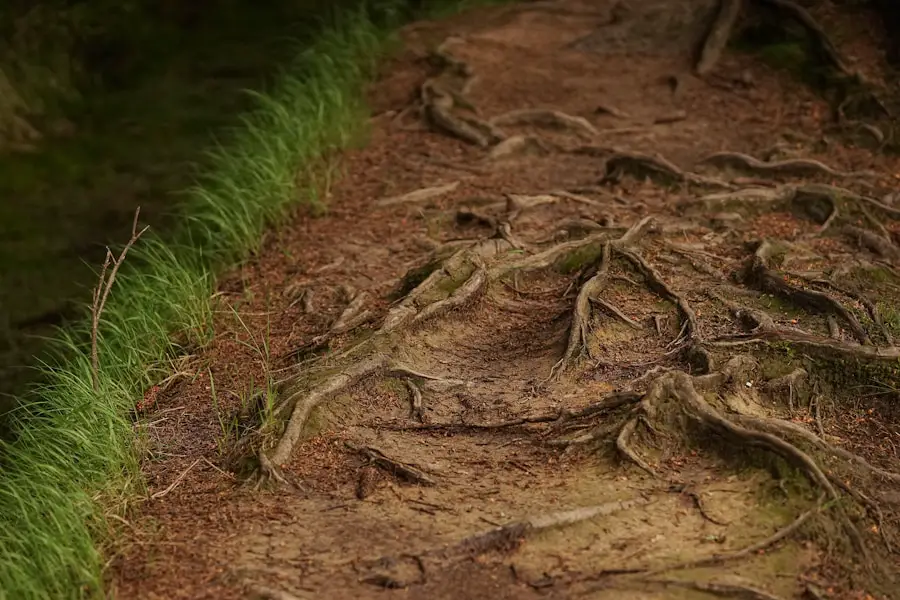
Staying on designated trails is one of the simplest ways to reduce surprise wildlife encounters. Open trails usually provide better visibility than tall grass, thick brush, or dense ground cover, making it easier to see where you are about to place your feet.
National Park Service trail guidance also emphasizes staying on established routes to protect surrounding plants and wildlife habitat. In areas with rattlesnakes, individual NPS units similarly advise visitors to remain on marked paths and avoid dense vegetation.
Do not assume that a maintained trail is snake-free. Snakes may cross a path or use its warm, open surface for basking. Keep watching several steps ahead rather than looking only at the scenery or your phone.
Using a Hiking Stick
| Benefit of Using a Hiking Stick | Evidence-Based Context |
| Reduced Impact on Joints | A pole can help distribute some effort during hiking, but the amount varies with technique, terrain, and the individual. A universal 25% reduction should not be assumed. |
| Improved Stability | A stick can provide another contact point on uneven terrain, but there is no single fall-reduction percentage that applies to every hiker. |
| Increased Endurance | Some hikers find poles more comfortable over long distances, but they should not be used as a reason to hike beyond personal limits. |
| Calorie Burn | Energy use can change when poles involve the upper body, but calorie burn is not a meaningful snake-safety benefit and should not guide your choice of equipment. |
A hiking stick or trekking pole can be useful in areas where vegetation or terrain makes it difficult to see the ground. MedlinePlus advises tapping ahead with a walking stick before entering an area where you cannot see your feet. The vibration and disturbance may give a nearby snake an opportunity to move away.
Use the pole as an extension of your awareness, not as a tool for poking or moving a snake. If you discover a snake, back away and leave it alone.
A hiking stick can also improve balance on loose rock, mud, steep grades, or uneven surfaces. Better footing gives you more time to look ahead instead of concentrating only on staying upright.
Pro Tip: Use a pole to check vegetation or the far side of an obstacle only when necessary. Never use it to provoke, pin, chase, or pick up a snake.
Being Mindful of Surroundings
Situational awareness is one of the most important snake-safety habits. Look several feet ahead and scan both the trail surface and its edges. Snakes can blend extremely well with leaves, gravel, branches, and rock.
Use extra care around logs, boulders, rock ledges, holes, thick vegetation, wood piles, and other places that hide the ground. The safest rule is simple: never place your hand or foot somewhere you cannot see first.
A current University of Illinois snake-safety guide recommends that hikers avoid blindly stepping over large logs or rocks. Step onto the obstacle first, look at the ground on the far side, and then step down when it is clear.
- Do not reach into holes, rock cracks, brush, or spaces beneath logs.
- Look before sitting on rocks, logs, or the ground.
- Avoid walking through tall grass when an open trail is available.
- Do not turn over rocks or logs with bare hands.
- Slow down in sections where you cannot clearly see the next step.
Listen as well as look, but do not depend on hearing a warning. A rattlesnake may rattle when threatened, but not every rattlesnake gives an audible warning before an encounter.
Use Extra Care After Dark
Some snakes become more active at night, particularly when daytime temperatures are very hot. Darkness also makes it much easier for a hiker to step near an animal that would have been obvious in daylight.
Carry a flashlight or headlamp and illuminate the ground several steps ahead. Avoid blindly crossing brush, stepping between rocks, or putting your hands on dark ledges. The National Park Service recommends using a light after dusk in snake habitat.
Knowing First Aid for Snake Bites
A bite from a venomous or possibly venomous snake is a medical emergency. If a wild snake bites you and you cannot confidently rule out a venomous species, call 911 or the local emergency number immediately. Do not wait to see whether symptoms develop.
Warning: Do not apply ice, use a tourniquet, cut the wound, suck out venom, apply electric shock, or use a pressure-immobilization bandage for a typical North American snakebite. Current American Heart Association and American Red Cross guidance identifies these practices as ineffective, potentially harmful, or not recommended.
While emergency help is being arranged:
- Move far enough away that the snake cannot bite again.
- Stay as calm and still as possible.
- Rest and immobilize the bitten arm or leg and minimize exertion without delaying emergency care.
- Remove rings, watches, tight footwear, or other constricting items before swelling increases.
- Follow the instructions given by the emergency dispatcher or medical professionals.
Do not attempt to catch, kill, or handle the snake for identification. If it can be done without approaching the animal, remember its appearance or take a photograph from a safe distance. Medical care should never be delayed while trying to identify it.
Current North American first-aid recommendations focus on rapid access to professional treatment because antivenom and management of serious complications require medical care. Guidance may differ in other parts of the world because snake species and venom effects differ.
Note: This section provides general safety information and is not a substitute for emergency medical advice. Follow instructions from local emergency services and healthcare professionals.
Properly Handling Encounters with Snakes
If you see a snake on the trail, stop and give yourself time to determine where it is. Do not make sudden attempts to jump over it, kick it, move it with a stick, or force it off the trail.
Slowly back away and give the snake a clear escape route. National Park Service safety guidance advises visitors to remain on trails, keep their distance, and never attempt to pick up or kill a rattlesnake.
If the snake is blocking the path, wait at a safe distance for it to leave. If it does not move, turn around or use a legitimate alternate trail rather than trying to squeeze past at close range.
Do not approach a snake for a photograph. A zoom lens is safer than moving closer. Also remember that a snake that remains still is not necessarily asleep or harmless; camouflage and remaining motionless are normal defensive strategies.
Educating Others about Snake Safety
Snake safety works best when everyone in a hiking group follows the same basic rules. Before entering known snake habitat, remind children and inexperienced hikers not to reach into holes, run through tall grass, climb blindly over rocks, or approach wildlife.
Keep young children close enough that an adult can see where they are stepping. In parks and other areas where dogs are permitted, keep pets under control and on a leash. The National Park Service specifically recommends keeping pets leashed and children close in rattlesnake country. A dog bitten by a venomous snake needs emergency veterinary care.
Sharing reliable information about snake behavior, proper footwear, first aid, and wildlife respect can make a group safer without encouraging fear. Outdoor clubs, ranger programs, community workshops, and reputable wildlife-agency resources can all help hikers learn which species occur locally and how to respond appropriately.
Social media posts, articles, videos, and infographics can also spread useful snake-safety information, but medical advice should be checked against current professional guidance before it is shared.
If your hike also includes fishing, this guide on how to choose the best travel fishing rod covers that separate gear topic. Fishing equipment does not replace the snake-safety precautions described above: stay on visible routes where possible, wear appropriate footwear, and remain aware of the ground and vegetation around you.
Frequently Asked Questions
What are the best ways to avoid snakes while hiking?
Stay on well-used trails, avoid tall grass and dense brush when possible, wear closed-toe hiking footwear and long pants, and watch every place you put your hands or feet. Do not blindly step over logs or rocks. Use a flashlight after dark, and give every snake plenty of space.
What should I do if I encounter a snake while hiking?
Stop, remain calm, and slowly increase your distance. Do not touch, corner, chase, or attempt to move the snake. If it blocks the trail, wait for it to leave or turn around rather than passing close to it.
What snake habitats should hikers watch carefully?
Habitat varies by species, but snakes may shelter in tall grass, brush, leaf litter, rock piles, crevices, holes, fallen logs, and shaded areas. Some species also occur around streams, marshes, lakes, and riverbanks. The most useful rule is to inspect any spot before putting a hand or foot there.
What time of day are snakes most active?
There is no single time that applies to every snake. Activity depends on species, season, weather, and climate. Snakes may bask during cooler daylight hours and become more active in the evening or at night during hot weather. Stay alert whenever conditions are warm enough for snake activity.
Which venomous snakes should hikers know about in North America?
Venomous snakes native to the United States include rattlesnakes, copperheads, cottonmouths or water moccasins, and coral snakes. Their ranges differ, so check the wildlife agency or park authority for the area you plan to hike. Do not approach an unfamiliar snake to inspect its head, pupils, markings, or other identifying features.
What should I do immediately after a possible venomous snakebite?
Call 911 or the local emergency number, move away from the snake, stay still, rest and immobilize the bitten extremity, minimize exertion, and remove rings or other constricting items. Do not use ice, suction, a tourniquet, electric shock, or wound cutting. Follow emergency-dispatch instructions.
Sources
- CDC/NIOSH — Venomous Snakes at Work — U.S. bite statistics, protective clothing, prevention, and snake-awareness guidance.
- American Heart Association and American Red Cross — 2024 First Aid Guidelines — current North American snakebite first-aid recommendations.
- National Park Service — Joshua Tree Safety Guidelines — trail use, wildlife distance, and rattlesnake precautions.
- MedlinePlus — Snake Bites — prevention, walking-stick use, footwear, and medical guidance.
- University of Illinois — Snake Safety — safe movement around logs, rocks, brush, and protective clothing.
