
Last Updated on September 10, 2026 by Daniel Globe
The best hiking socks do more than add a soft layer between your feet and your footwear. A well-chosen pair helps manage sweat, reduces rubbing, cushions pressure points, and keeps your boots or hiking shoes fitting the way they should. Material matters, but so do sock height, thickness, cushioning, and fit.
That becomes especially important as mileage increases. On uneven or steep terrain, repeated pressure, heat, moisture, and friction can turn a small hot spot into a painful blister. Good hiking socks cannot guarantee blister-free feet, but they can remove several common causes of discomfort when paired with properly fitting footwear.
Quick Answer
For most hikers, the best socks are snug-fitting merino-wool or synthetic blends with enough cushioning for the footwear and conditions. Choose a sock tall enough to cover the boot or shoe cuff, avoid 100% cotton for active hiking, and carry a dry spare pair when wet feet are likely.
Key Takeaways
- Merino wool, polyester, nylon, and elastane are common hiking-sock materials because they balance moisture management, drying speed, stretch, warmth, and durability.
- Avoid 100% cotton for most hikes because it holds moisture and dries slowly.
- Sock fit is critical: wrinkles, bunching, slippage, or excessive tightness can create pressure and friction.
- Choose cushion and thickness together with your footwear. Too much sock inside a snug boot can create new pressure points.
- Wet feet are more prone to blister problems, so changing into a dry pair can be more useful than chasing a particular fiber or brand.
Disclosure: As an Amazon Associate I earn from qualifying purchases. Some links on this page are affiliate links, at no extra cost to you.
Materials and Construction of Hiking Socks
The materials used in hiking socks have a major effect on comfort, drying speed, warmth, and durability. Most technical hiking socks use a blend rather than a single fiber. Merino wool is common because its fine fibers feel softer than traditional coarse wool, manage moisture well, and remain comfortable across a range of temperatures.
Synthetic fibers such as polyester and nylon are also widely used. Polyester can move moisture and dry quickly, while nylon commonly adds abrasion resistance and durability. Elastane, spandex, or Lycra helps a sock stretch, hold its shape, and stay close to the foot.
Current hiking-sock guidance from REI identifies merino wool, polyester, nylon, and stretch fibers among the common materials used in technical hiking socks.
Warning: Avoid relying on 100% cotton socks for active hiking. Cotton absorbs sweat and dries slowly, so feet may remain wet for longer. National Park Service hiking guidance also warns that cotton socks can keep moisture around the feet and contribute to blister problems.
Construction matters just as much as fiber content. Reinforced heels and toes can help socks withstand repeated rubbing inside footwear. Flat or low-profile toe seams can reduce irritation, while elastic zones around the arch can help keep the sock from bunching or sliding.
An elastic arch band should not be treated as a corrective orthotic. It may make a sock feel more secure, but a hiking sock alone should not be expected to correct overpronation, supination, or a structural foot problem. Hikers who have persistent foot pain or a diagnosed biomechanical condition may need appropriate footwear, insoles, or professional advice.
Merino Wool vs. Synthetic Hiking Socks
| Material | Typical Strengths | Things to Consider |
|---|---|---|
| Merino wool blend | Comfortable across changing temperatures, good moisture management, soft feel, and generally good odor control. | Often blended with nylon or other synthetics for added durability and shape retention. |
| Polyester/synthetic blend | Quick drying, durable, and often well suited to warm or high-output hiking. | Feel, odor control, and warmth vary by construction. |
| 100% cotton | Soft and inexpensive for casual use. | Absorbs moisture and dries slowly, making it a poor choice for most active hikes. |
Cushioning and Support for Hiking Socks
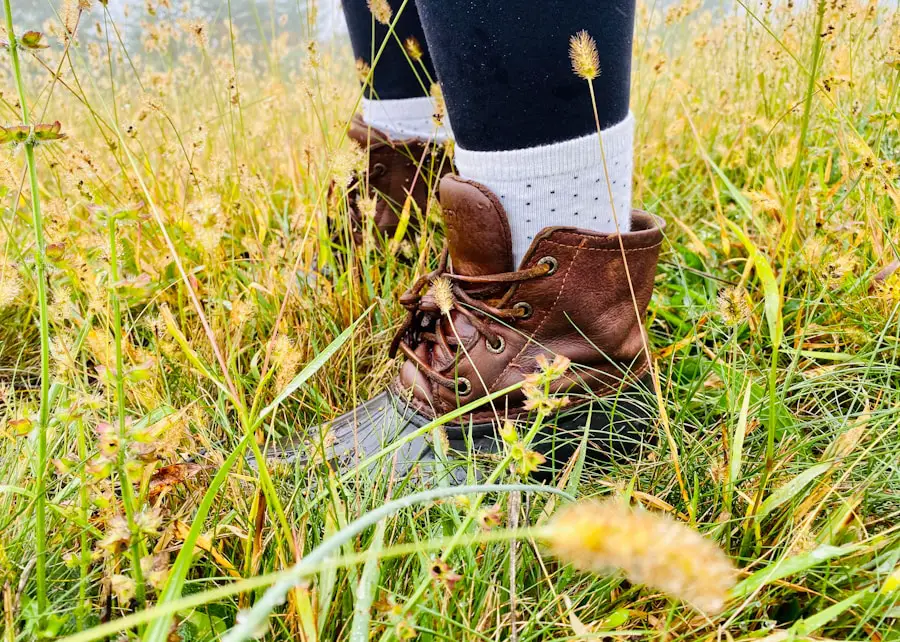
Cushioning affects both comfort and how much room your feet have inside your footwear. Many hiking socks concentrate padding beneath the heel and ball of the foot, where pressure is commonly highest. That extra material can make long days on rocky or uneven trails more comfortable.
More padding is not automatically better. Heavy cushioning also takes up more space inside a boot. If your footwear already fits snugly, a thick sock can squeeze the toes or create pressure points. Always judge cushioning while wearing the actual boots or shoes you plan to hike in.
How Much Cushioning Should You Choose?
- No or minimal cushion: Useful for close-fitting trail shoes, high-output activity, and hikers who prefer maximum ground feel.
- Light cushion: A versatile choice for many day hikes and warm-weather trips.
- Medium cushion: Adds underfoot comfort for longer mileage, backpacking, or cooler conditions.
- Heavy cushion: Provides more insulation and padding but requires enough room inside the footwear.
Many socks also include elastic around the arch or instep. These bands can improve fit and reduce sliding, but they are different from a supportive shoe, orthotic insert, or medical device.
Pro Tip: Try hiking socks on with your actual hiking footwear. A sock that feels perfect by itself can become uncomfortable if its cushioning makes the boot too tight.
Moisture-Wicking and Breathability in Hiking Socks
Moisture management is one of the most important functions of a hiking sock. Feet can sweat heavily during climbs and long days, and moisture changes the way skin responds to repeated rubbing and pressure.
A 2022 study indexed by the U.S. National Library of Medicine found that wearing wet socks increased blister risk in hikers. The study did not find sock fiber composition alone to be the deciding factor, which is an important reminder that keeping feet reasonably dry can matter more than choosing a particular fiber.
Blister prevention is not just about buying “blister-proof” socks. Moisture, fit, pressure, and friction all affect what happens to your feet on the trail.
Breathable mesh zones and moisture-managing yarns can help move sweat away from the skin and allow heat to escape. This is especially useful during hot-weather hiking or sustained uphill effort.
What Current Hiking-Sock Brands Actually Offer
Brandwide numerical moisture or breathability ratings are not meaningful unless all socks are tested under the same controlled method. Different models from the same company can use very different fiber blends, cushioning, and ventilation. A more useful comparison is to look at verified construction features:
| Brand | Verified Example | What It Shows |
|---|---|---|
| Smartwool | Hike Crew models combine merino wool, nylon, and elastane with targeted cushion and mesh/fit features. | A wool-rich performance blend designed around fit, durability, and ventilation. |
| Darn Tough | Current lightweight hiking models use merino wool blended with nylon and Lycra. | A blend that combines wool comfort with synthetic durability and stretch. |
| Thorlo | Hiking models use synthetic or wool-blend constructions with substantial cushioning and ventilation panels. | A cushioning-focused approach that varies considerably by model. |
| Balega | Its Hike Crew combines moisture-managing synthetic yarn, merino wool, and Tencel lyocell. | A mixed-fiber approach designed for moisture control and comfort. |
Instead of choosing solely by brand, compare the specific model’s fiber blend, cushion level, sock height, sizing, and intended conditions.
Durability and Longevity of Hiking Socks
Hiking socks repeatedly rub against footwear, dirt, grit, and the skin, so durability matters. Higher-quality models often reinforce the heel and toe or use stronger synthetic fibers in high-wear zones. Dense knitting can also make a sock more resistant to abrasion.
Durability depends on fit as well. Socks that slide excessively can experience concentrated wear, while socks that are too large may fold or wrinkle. Keeping grit out of your footwear also reduces unnecessary abrasion.
Care has a major effect on longevity. Bleach, fabric softeners, excessive heat, and aggressive washing can damage wool or elastic fibers. Washing according to the manufacturer’s label is safer than applying one universal rule to every hiking sock.
When Should You Replace Hiking Socks?
There is no fixed mileage at which every pair should be discarded. Replace or retire hiking socks when they develop holes, thin patches at the heel or forefoot, stretched cuffs, damaged seams, or permanently flattened cushioning. A sock that no longer stays snug against your foot can also create wrinkles and rubbing even if the fabric has not torn yet.
Fit and Comfort of Hiking Socks
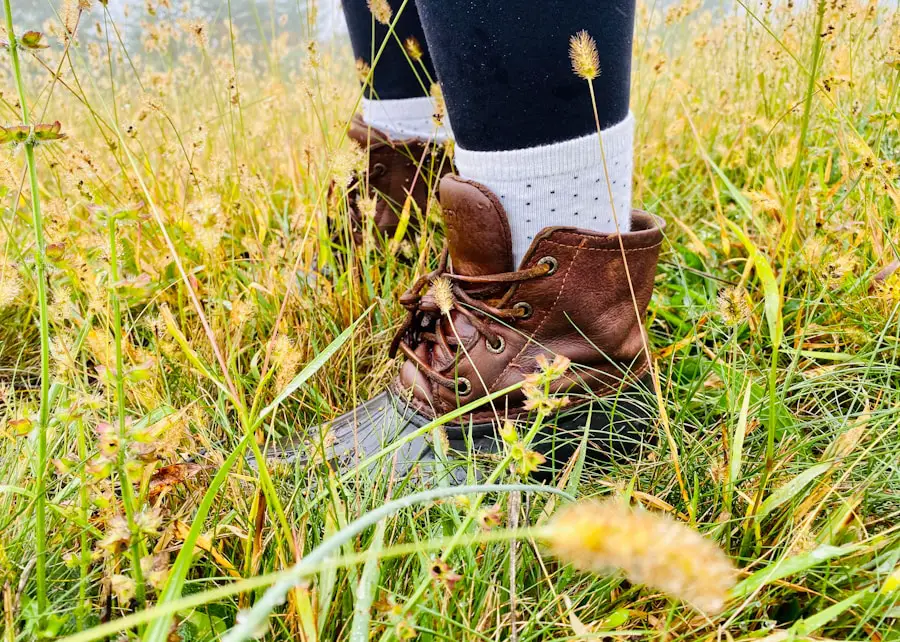
The best hiking sock should hug the foot without painfully squeezing it. Excess fabric can wrinkle and create rubbing points, while a sock that is too small can create pressure and may slide out of position.
REI’s hiking-sock fitting guidance recommends checking that the heel cup of the sock lines up with your actual heel. Hikers who fall between sock sizes may benefit from trying the smaller size if the larger option leaves excess material, but the final test is whether the sock remains comfortably snug without restricting the toes.
Low-profile or flat toe seams can also reduce irritation. Some socks use elastic zones through the midfoot to help the fabric stay in place. These fit features can be valuable over long distances because a stable sock is less likely to bunch inside the footwear.
Some hiking socks are sold with graduated compression. True compression stockings can promote venous blood flow, but an ordinary snug-fitting hiking sock should not automatically be assumed to offer the same medical effect. People using compression for swelling, circulation problems, or another medical reason should follow appropriate healthcare guidance.
Sock Thickness Must Match Footwear Volume
Thickness is partly a comfort preference and partly a footwear-fit decision. A hiker with extra room inside a boot may prefer a somewhat thicker sock. Someone whose hiking shoe already fits closely may need a lighter sock to avoid compressing the toes.
This is why changing from thin summer socks to thick winter socks can alter how the same boot fits. Always check toe room, heel hold, and pressure around the forefoot after changing sock thickness.
Choose the Right Sock Height for Your Footwear
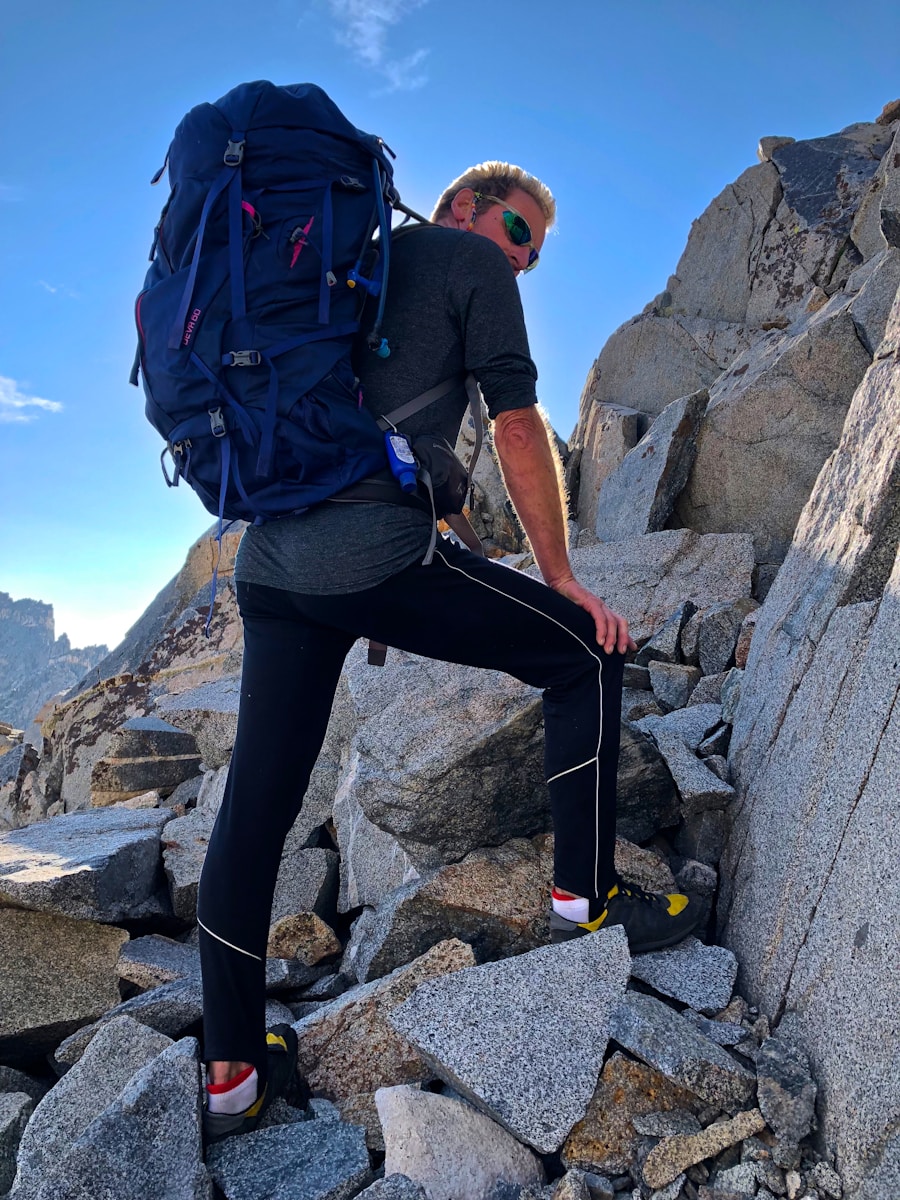
Sock height is easy to overlook, but it directly affects protection from rubbing. In general, the top of the sock should reach at least as high as the cuff of the footwear.
- No-show socks: Best reserved for low-cut shoes when the shoe collar will not rub exposed skin.
- Ankle or quarter socks: Work well with many low-cut hiking shoes and some mid-cut footwear.
- Crew socks: The classic option for hiking boots because they extend above most boot collars.
- Taller socks: Useful with high boots, in cold conditions, or where extra lower-leg protection is desired.
Current hiking-sock guidance recommends choosing a sock high enough to prevent the footwear cuff from rubbing directly against the skin.
Best Hiking Socks for Different Terrains and Conditions
The best sock for one hike may be uncomfortable on another. Temperature, terrain, mileage, footwear, pack weight, and how much your feet sweat should all influence the choice.
Cold-Weather Hiking
For cold conditions, thicker merino-wool blends are popular because they combine insulation with moisture management. Smartwool and Darn Tough both offer hiking socks in multiple cushion weights, allowing hikers to choose extra warmth without automatically moving to an excessively bulky sock.
Remember that warmth depends on circulation and footwear fit too. Stuffing a very thick sock into an already-tight boot can make feet less comfortable rather than warmer.
Warm and Humid Conditions
For hot-weather hikes, lightweight merino or synthetic blends with breathable knit zones are often more comfortable. Light cushioning reduces bulk, and quick-drying fabrics become especially useful when sweat levels are high.
A toe-sock design, such as those produced by Injinji, places fabric between individual toes. This can reduce direct skin-on-skin rubbing between toes, which some hikers find helpful. However, no sock design can guarantee blister prevention.
Rocky Trails and Long Backpacking Days
On rough terrain or long-mileage trips, moderate cushioning under the heel and forefoot can soften repeated impacts and pressure. Reinforced high-wear areas are also useful when socks will be used day after day.
For backpacking, prioritize a sock that stays in position throughout the day. A durable sock that fits well is generally more useful than adding maximum cushioning without considering boot volume.
Wet Trails and Stream Crossings
If you expect creek crossings, rain, or very sweaty conditions, drying speed becomes a major priority. Carrying a spare pair lets you change once your socks become saturated.
Pro Tip: Keep your spare hiking socks in a waterproof bag inside your pack. A dry pair does little good if it becomes soaked at the same time as the pair on your feet.
Hiking Socks and Blister Prevention
Blisters form through repeated shear and friction within the skin, and the risk is influenced by moisture, pressure, footwear fit, and individual skin characteristics. Technical socks can help control several of these factors, but they are only one part of blister prevention.
A 2024 review of foot-blister research discusses moisture management as one potential way socks can influence friction conditions at the foot. Properly fitting footwear remains equally important.
Consider Liner Socks if You Get Frequent Hot Spots
Some hikers use a thin liner beneath a hiking sock. The extra layer can move some rubbing away from the skin and may help manage moisture. Research on sock systems has shown benefits in certain settings, but liners are not necessary for everyone.
A liner also adds volume, so test the complete system with your boots before using it on a long hike.
Change Wet Socks
If your socks become soaked with sweat, rain, or stream water, changing into a dry pair is one of the simplest ways to restore a drier environment around the skin. REI’s blister-prevention guidance specifically recommends changing into dry socks when needed.
Stop When You Feel a Hot Spot
Do not wait for mild rubbing to become painful. If you notice warmth, stinging, or repeated rubbing in one place, stop and inspect your sock and footwear. Smooth wrinkles, remove grit, adjust lacing if needed, and protect the area before continuing.
Note: Socks cannot compensate for boots that are fundamentally the wrong size or shape. Persistent heel lift, crushed toes, or repeated pressure points are footwear-fit problems first.
Care and Maintenance of Hiking Socks
Proper care helps hiking socks retain their shape, cushioning, and moisture-management performance. Start with the care label because instructions vary by fiber blend and manufacturer.
For many merino and synthetic hiking socks, a gentle wash in cool or cold water with mild detergent is appropriate. Avoid bleach unless the product label specifically permits it, and skip fabric softener because it can interfere with performance fibers.
Turning cushioned socks inside out before washing can help remove dirt, sweat, and skin particles trapped within the loops of the fabric.
Air drying is a gentle option and avoids unnecessary heat exposure. However, low-temperature machine drying is permitted for some products. For example, Darn Tough’s current care instructions allow tumble drying on low or hanging socks to dry, while Smartwool recommends checking individual care labels and generally favors gentle washing and low-heat or air-drying methods.
Store clean socks completely dry. Leaving damp hiking socks compressed in a pack or laundry pile encourages odor and gives fibers less opportunity to recover their shape.
Simple Hiking-Sock Care Checklist
- Check the manufacturer’s care label first.
- Turn socks inside out before washing when appropriate.
- Use cool or cold water and a gentle cycle.
- Use mild detergent.
- Avoid bleach and fabric softener unless specifically permitted.
- Air dry or use low heat when the care label allows machine drying.
- Store socks clean and completely dry.
When it comes to hiking, footwear and socks work as a system. The right pair should fit smoothly, manage moisture, match the height of your footwear, and provide enough cushioning without making your boots cramped. Conditions matter too. For example, hikers planning a warm-weather trip to Hawaii may also want to consider seasonal heat and rainfall when choosing gear; this seasonal Hawaii travel guide provides additional trip-planning context.
Frequently Asked Questions
What are the best socks for hiking?
For most hikers, a snug-fitting merino-wool or synthetic blend is the best starting point. Match the sock’s height to your footwear and select cushioning that feels comfortable without making your boots or shoes too tight.
Why is moisture-wicking material important in hiking socks?
Moisture-managing fibers help move sweat away from the skin and allow it to spread or evaporate more efficiently. Keeping feet from remaining saturated is useful because wet conditions can increase blister risk.
What is the benefit of cushioning in hiking socks?
Cushioning adds padding beneath high-pressure areas such as the heel and forefoot. It can improve comfort on rough terrain, but overly thick socks may make close-fitting footwear too tight.
Are merino wool socks better than synthetic socks for hiking?
Neither material is automatically best for everyone. Merino blends are valued for temperature regulation, comfort, and odor control, while synthetic blends can be highly durable and quick drying. Many excellent hiking socks combine both types of fiber.
Should hiking socks be thick or thin?
Choose thickness according to conditions and footwear fit. Thin or lightly cushioned socks are often comfortable in warm weather and close-fitting shoes. Medium or heavier socks add warmth and padding, but only when the footwear has enough room.
Are cotton socks good for hiking?
Generally, no. Cotton absorbs moisture and dries slowly, so 100% cotton socks are usually a poor choice for active hiking. Merino-wool and synthetic performance blends are better suited to managing sweat and changing trail conditions.
Should I carry an extra pair of hiking socks?
A dry spare pair is useful on long hikes, wet trails, backpacking trips, or any outing where your feet sweat heavily. Changing out of saturated socks can improve comfort and reduce the amount of time your skin stays wet.
Sources
- REI — How to Choose Hiking Socks — sock height, cushioning, materials, and fit.
- National Park Service — Walking It Off in the Backcountry — cotton socks, moisture, and blister-prevention guidance.
- PubMed — The Influence of Sock Composition on Blister Development — evidence on wet socks and blister risk in hikers.
- PubMed Central — Friction Blisters of the Feet: A Critical Assessment — mechanisms and prevention considerations for foot blisters.
- Darn Tough — Product & Sock Care — current manufacturer washing and drying instructions.
- Smartwool — Merino Wool Washing & Care — current merino-wool care guidance.

