
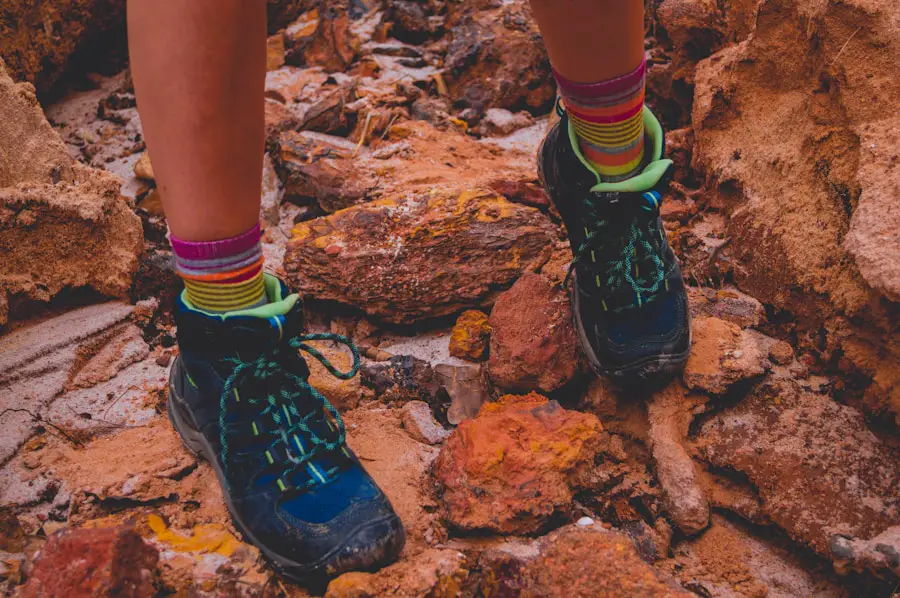
Last Updated on July 27, 2026 by Daniel Globe
Wool socks are a popular hiking choice because they balance warmth, moisture management, cushioning, and odor control without requiring a bulky sock. Modern hiking socks usually use fine merino wool blended with nylon and elastane, giving hikers the comfort of wool with added durability and stretch. The best pair, however, still depends on your footwear, weather, sock thickness, and fit.
Quick Answer
Wool socks are excellent for hiking because they manage moisture vapor, insulate in changing temperatures, resist odor, and remain comfortable over long trail days. Merino-wool blends are usually the most practical choice because nylon adds abrasion resistance and elastane improves fit. Good fit and keeping socks dry still matter more than fiber alone for preventing blisters.
Key Takeaways
- Merino wool manages moisture vapor well and can stay comfortable across a wider range of temperatures than a heavy cotton sock.
- Wool can reduce odor buildup, which is useful on long hiking days and multi-day backpacking trips.
- Most high-performance wool hiking socks are blends; nylon adds abrasion resistance while elastane helps the sock hold its shape.
- Wool alone does not prevent blisters. Sock fit, wetness, footwear movement, friction, terrain, and changing wet socks all matter.
- Choose cushioning and sock height for your footwear and conditions rather than assuming the thickest or highest-wool sock is automatically best.
Disclosure: As an Amazon Associate I earn from qualifying purchases. Some links on this page are affiliate links, at no extra cost to you.
Why Wool Works Well in Hiking Socks
Wool is a hygroscopic fiber, which means it can absorb moisture vapor into its structure and release that moisture as conditions change. According to The Woolmark Company, merino wool can help manage the humid microclimate next to the skin by absorbing and releasing moisture vapor.
This is different from saying that wool instantly removes every drop of liquid sweat. The performance of a hiking sock also depends on its knit, thickness, shoe ventilation, and other fibers in the blend. That is one reason modern technical hiking socks are rarely made from wool alone.
Why Merino Wool Is Common
Merino wool uses relatively fine fibers that bend more easily against the skin than coarse traditional wool. This generally gives merino socks a softer feel and makes them more suitable for next-to-skin use.
Fine wool is also naturally elastic and has a crimped structure that helps create loft. In a hiking sock, manufacturers combine those fiber properties with different knit densities and padding zones to control warmth and cushioning.
Why Most Wool Hiking Socks Are Blends
A technical hiking sock may contain merino wool along with nylon, polyester, and a small amount of elastane or spandex. Wool contributes moisture management, thermal comfort, and odor control. Nylon or polyester can improve abrasion resistance and drying characteristics, while elastane helps the sock stay snug against the foot.
Note: A higher wool percentage is not automatically better. A well-designed wool blend may last longer and fit better than a 100% wool sock, especially around the heel and toe where abrasion is highest.
Comfort and Cushioning
Cushioning and Impact Absorption
Wool fibers naturally have loft, but most of the cushioning you feel underfoot comes from how the sock is knitted. Hiking-sock manufacturers can place denser terry loops or additional material under the heel, ball of the foot, and toes while keeping the top of the foot thinner for ventilation.
That targeted cushioning can make rocky trails and long days more comfortable. It can also help fill excess space inside a boot, but more cushioning is not always better. A sock that is too thick for the shoe can compress the toes and make the footwear feel tight.
Enhanced Comfort and Fit
A good hiking sock should sit smoothly against your foot without wrinkles, bunching, or a loose heel. Merino blends work well for this because wool provides softness while stretch fibers help the sock maintain contact with the foot.
Your socks also need to fit your hiking shoes or boots. A heavily cushioned sock takes up more interior volume than a lightweight sock, so changing sock thickness can noticeably change footwear fit.
Preventing Slippage and Foot Fatigue
Loose fabric can bunch and create friction, while a poorly fitted heel can move repeatedly inside the boot. A correctly sized sock with elastic support around the arch and ankle is less likely to shift during walking.
Cushioning may improve underfoot comfort, but it should not be treated as a cure for foot fatigue. Footwear fit, pack weight, trail surface, conditioning, and total mileage all contribute to how your feet feel at the end of a hike.
Pro Tip: Try on hiking shoes or boots with the exact sock thickness you expect to wear on the trail. Switching from a thin everyday sock to a heavily cushioned hiking sock can make otherwise well-fitting footwear too tight.
Moisture Management and Breathability
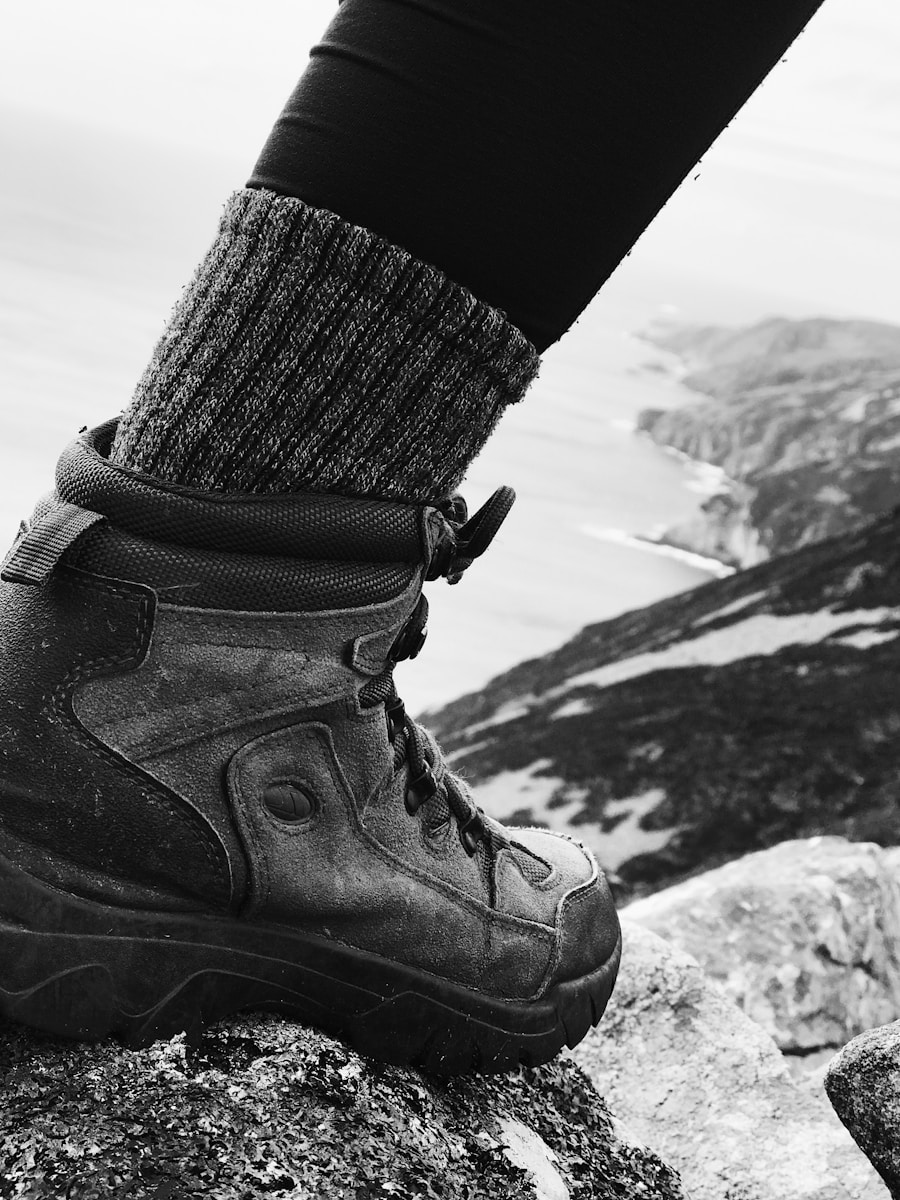
One of wool’s strongest advantages is how it handles moisture vapor. Wool can absorb moisture within the fiber before the fabric feels saturated, which can help moderate the humid environment around your feet.
This ability is particularly useful when hiking intensity changes throughout the day. Your feet may sweat heavily on a steep climb and cool quickly when you stop. A sock that manages moisture and temperature well can make those transitions feel less uncomfortable.
Wool should not, however, be described as magically keeping feet dry. Waterproof footwear, high humidity, stream crossings, and heavy sweating can overwhelm any sock. Some synthetic socks also dry faster than wool once fully wet.
In a 2022 study of 203 long-distance hikers, wearing wet socks was associated with 1.94 times greater blister risk, while the proportion of natural versus synthetic fibers was not associated with blister occurrence.
The study, published in the Journal of Tissue Viability, supports a practical lesson: keeping socks reasonably dry and changing saturated pairs can be more important for blister control than choosing a fiber based on marketing claims alone. See the PubMed record for the hiking-sock study.
Insulation and Temperature Regulation
| Sock Material | Main Strength | Main Limitation | Typical Hiking Use |
|---|---|---|---|
| Merino-wool blend | Temperature range, moisture management, odor resistance | Usually costs more and may dry slower than some synthetics | Day hiking, backpacking, cool weather, mixed conditions |
| Synthetic | Fast drying and abrasion resistance | Some fabrics retain more odor | Hot weather, trail running, very wet trips |
| Cotton | Soft and inexpensive | Retains substantial moisture and dries slowly | Better suited to casual use than demanding hikes |
Wool’s crimped fibers create loft that helps trap still air, contributing to insulation. Its ability to absorb moisture vapor also helps buffer changes in the microclimate around the skin.
Research on wool apparel has found benefits for thermal comfort in cool environments, including reduced post-exercise cooling under some conditions. Wool therefore works especially well when hikers move between hard exertion and rest or experience rapidly changing mountain temperatures.
That does not mean every wool sock is ideal for every season. A thick, heavily cushioned merino sock that feels excellent in winter can be unnecessarily warm inside a low-ventilation shoe in midsummer.
Choosing Sock Weight for the Weather
Lightweight socks use minimal cushioning and are generally the better choice for warm conditions, trail runners, or snug footwear.
Midweight socks balance cushioning and insulation and work well for general hiking and backpacking across three-season conditions.
Heavy-cushion socks provide more warmth and padding but occupy more space inside footwear. They are usually better suited to cold weather, mountaineering, or boots designed with sufficient volume.
Durability and Longevity
Wool itself should not be portrayed as universally tougher than synthetic fiber. Abrasion resistance depends heavily on the yarn, knit, sock thickness, and fiber blend.
That is why many durable hiking socks reinforce the heel and toe and use nylon or similar synthetic fibers alongside merino. Current hiking-sock guidance from REI likewise emphasizes fabric, cushioning, height, and fit rather than treating any single fiber as sufficient by itself.
A quality wool-blend sock can last through many hikes when properly fitted and cared for. At the same time, an ultralight high-wool sock will normally face different durability demands than a densely knitted sock with reinforced wear zones.
Odor Resistance
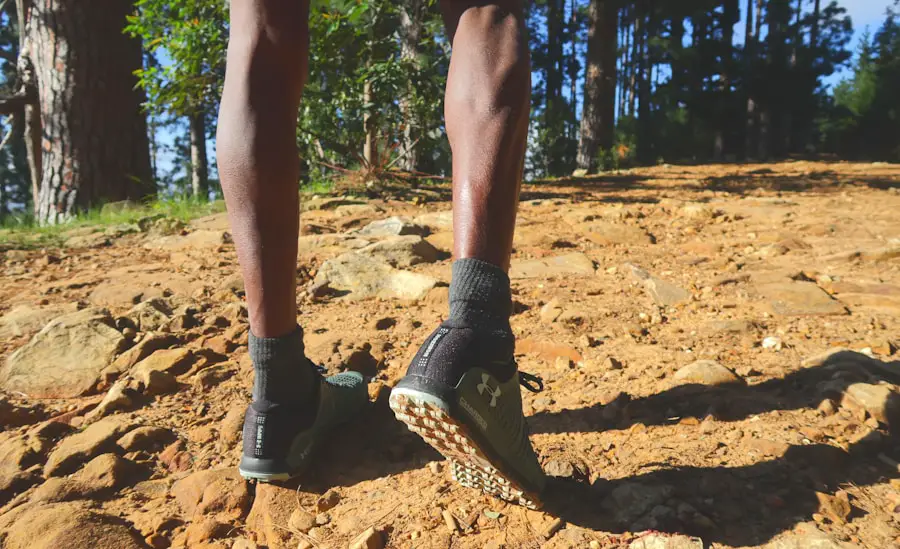
Odor control is one of wool’s most useful advantages for backpacking. The benefit is not best explained by lanolin. Instead, wool’s moisture behavior and complex chemical structure allow the fiber to absorb moisture vapor and bind some odor-causing compounds.
Woolmark’s odor-resistance research reports that wool can retain less odor after wear than several common apparel fibers. That can make a noticeable difference on multi-day trips where hikers cannot wash clothing every evening.
Odor resistance does not make socks self-cleaning and should not be described as preventing fungal or bacterial infections. Wet, dirty socks should still be changed and allowed to dry whenever practical.
Wool Socks and Blister Prevention
Blisters develop through repeated shear and friction within the skin. Moisture, footwear movement, long distances, terrain, and sock construction can all influence that process.
Wool socks may help by managing moisture and providing a smooth, well-fitted layer between the foot and shoe, but research does not support promising that wool fiber itself will prevent blisters. A systematic review of friction-blister prevention found limited high-quality evidence supporting many commonly recommended sock and barrier strategies. The review is available through PubMed.
Warning: Do not ignore a developing hot spot simply because you are wearing wool socks. Stop early, remove debris, smooth any sock wrinkles, adjust the footwear if needed, and change saturated socks. A small friction problem is easier to manage before a blister forms.
Practical Ways to Reduce Sock-Related Friction
- Choose socks that fit without loose fabric or wrinkles.
- Match sock thickness to the available room inside your shoes or boots.
- Change socks when they become thoroughly wet on long hiking days.
- Carry a dry spare pair on wet or multi-day trips.
- Address heel lift or toe pressure in the footwear rather than trying to solve a poor boot fit with thicker socks.
- Test socks and footwear together before a long hike.
How to Choose Wool Socks for Hiking
Choose the Right Height
Sock height should primarily protect your skin from contact with the footwear. No-show or ankle socks can work with low trail shoes, while quarter, crew, and boot-height socks provide more coverage around higher collars.
A sock should extend above any part of the shoe or boot that could rub the ankle or lower leg.
Match Cushioning to Your Footwear
Use lightweight cushioning when your shoes fit closely or when heat management is the priority. Medium cushioning is a versatile choice for general trail hiking. Heavy cushioning can add warmth and underfoot comfort, but only when your footwear has room for it.
Check the Fiber Blend
Do not judge a sock by the word “merino” alone. Read the material label. A blend with wool plus nylon and elastane can provide an effective balance of comfort, stretch, and durability.
A very high wool percentage may appeal to hikers who prioritize natural fiber and odor resistance, while a higher synthetic percentage may suit someone who values faster drying and abrasion resistance.
Pay Attention to Fit
The heel pocket should line up with your heel, the toe seam should not create pressure, and the sock should remain snug around the arch without cutting off circulation.
For more on matching sock thickness to footwear volume, see TakeTravelInfo’s hiking boot fit guide.
Are Wool Socks Good for Summer Hiking?
Yes, lightweight merino-blend socks can work very well in warm weather. Wool’s moisture-vapor management and odor resistance remain useful when feet sweat.
The key is choosing the right construction. A thin merino sock with ventilation zones feels very different from a thick winter sock. In very hot conditions, some hikers prefer lightweight synthetic socks because they can dry faster after becoming saturated.
There is therefore no need to treat wool and synthetic fibers as opposing choices. Both can work, and many of the best technical socks intentionally combine them.
Are Wool Socks Good for Cold and Wet Hiking?
Cold, variable conditions are where wool becomes especially attractive. Wool provides useful insulation while absorbing moisture vapor, and it generally feels less clammy than a saturated cotton sock.
However, no ordinary wool sock is waterproof. If water enters your footwear, the sock can still become soaked. A dry spare pair is one of the simplest comfort upgrades for long trips in persistent rain or snow.
Pro Tip: On a multi-day trip, rotate pairs when possible. Let the damp pair dry on your pack or in camp while you wear the drier pair. Keep a separate dry pair protected for sleeping when conditions are persistently wet.
Drawbacks of Wool Hiking Socks
Wool has plenty of advantages, but it is not automatically the best option for every hiker.
- Cost: Quality merino hiking socks often cost more than basic synthetic or cotton socks.
- Drying time: Some synthetic socks dry faster after becoming fully saturated.
- Abrasion: High-wool-content socks may need synthetic reinforcement in high-wear areas.
- Warmth: Heavy wool socks can be too warm for hot-weather hiking.
- Skin feel: Fine merino is much softer than coarse traditional wool, but people with sensitive skin may still prefer another fiber.
- Care: Excessive heat and aggressive washing can shorten the life of some wool products.
How to Wash and Care for Wool Hiking Socks
Always follow the care label because wool blends and treatments vary. In general, turn socks inside out before washing so sweat, skin oils, and trail dirt can be removed more effectively from the inner surface.
Use the machine setting and water temperature recommended by the manufacturer. Avoid assuming that every wool sock must be hand washed; many modern merino hiking socks are designed for machine washing.
High dryer heat can shorten the life of some wool products, so follow the label before tumble drying. Air drying is a conservative choice when you are unsure.
Inspect the heel, toe, and ball of the foot for thinning fabric. Retire or repair a sock before a worn area becomes a hole during a long trip.
Environmental and Responsible-Sourcing Considerations
Wool has several useful environmental attributes. Sheep grow a new fleece, making wool a renewable fiber, and wool itself can biodegrade under suitable environmental conditions. Research summarized by The Woolmark Company has documented biodegradation of wool fibers in soil and marine environments.
Those properties do not mean every pair of wool socks has a lower environmental footprint than every synthetic alternative. Farming practices, processing, dyeing, transportation, how long the socks last, how often they are washed, and the presence of nylon or elastane all affect the product’s lifecycle.
Animal-welfare claims should also be verified rather than assumed. Textile Exchange’s Responsible Wool Standard addresses sheep welfare, land management, traceability, and certification through the supply chain.
Note: As of July 27, 2026, the Responsible Wool Standard remains a current Textile Exchange standard. Textile Exchange is transitioning its material-specific standards toward its Materials Matter system, with the new standard scheduled to become effective on December 31, 2026.
Are Wool Socks Worth It for Hiking?
For many hikers, yes. A well-designed merino-wool blend offers an unusually useful combination of moisture management, temperature versatility, odor resistance, softness, and cushioning. These qualities are especially valuable on long days and multi-day trips where feet experience repeated changes in temperature and moisture.
The strongest reason to choose wool is not that it beats every synthetic material in every category. Synthetic fibers can dry faster and provide excellent abrasion resistance. The advantage of a good wool hiking sock is the balance it provides, particularly when wool is combined with durable synthetic fibers and a well-engineered knit.
The final choice should therefore come down to fit, sock weight, footwear, weather, and personal comfort. A lightweight merino blend may be ideal for a summer day hike, while a thicker merino blend can be a better match for winter boots. Whatever material you choose, properly fitting footwear and changing wet socks remain central to keeping your feet comfortable.
Frequently Asked Questions
What are the benefits of wearing wool socks for hiking?
Wool hiking socks provide moisture-vapor management, temperature regulation, cushioning, and odor resistance. Merino is also relatively soft against the skin. Most technical wool socks combine wool with nylon or other synthetics to improve abrasion resistance and elastane to help maintain fit.
Are wool socks durable for hiking?
Quality wool-blend hiking socks can be very durable, particularly when the heel and toe are reinforced. Wool alone is not necessarily more abrasion-resistant than synthetic fiber, which is why nylon and similar fibers are commonly included in technical hiking socks.
Do wool socks provide cushioning for hiking?
Yes, but cushioning depends more on sock construction than on wool fiber alone. Manufacturers create padded zones using denser knitting or terry loops under areas such as the heel and forefoot. Choose the amount of cushioning that fits comfortably inside your footwear.
Are wool socks suitable for all seasons?
They can be. Lightweight merino blends work well in many warm-weather conditions, while midweight and heavy-cushion wool socks add insulation for cooler hikes. Very thick wool socks may be too warm in summer, so choose the weight for the weather rather than relying on fiber alone.
How do wool socks compare with synthetic hiking socks?
Wool generally offers excellent temperature versatility and odor control, while many synthetic socks dry quickly and resist abrasion well. Neither is universally better. Wool-synthetic blends are popular because they combine advantages from both types of fiber.
Do wool socks prevent blisters?
Not by themselves. Wool can help manage moisture and provide a smooth layer between the foot and footwear, but research in hikers has found that wet socks are an important risk factor while natural-versus-synthetic fiber composition alone does not determine blister occurrence. Proper shoe fit, dry socks, low friction, and early treatment of hot spots remain important.
Are 100% wool socks best for hiking?
Not necessarily. A wool blend is often more practical because nylon can improve abrasion resistance and elastane helps the sock maintain a close fit. The best blend depends on whether you prioritize warmth, odor control, fast drying, durability, or a combination of those qualities.
How should wool hiking socks be washed?
Follow the manufacturer’s care label because blends and treatments differ. Turning socks inside out before washing can help clean the surface that contacts your feet. Use the recommended wash temperature and avoid excessive dryer heat unless the label specifically permits it.
Sources
- Journal of Tissue Viability — Influence of sock composition on foot blisters in hikers — supports the distinction between wet-sock risk and fiber composition.
- Wilderness & Environmental Medicine — Systematic review of friction-blister prevention — supports the cautious treatment of sock-related blister claims.
- The Woolmark Company — Wool Fibre Properties — supports wool’s moisture-vapor, elasticity, thermal, and biodegradability characteristics.
- The Woolmark Company — Wool Is Naturally Odour Resistant — supports the corrected explanation of odor management.
- Textile Exchange — Responsible Wool Standard — supports responsible-sourcing, animal-welfare, and land-management guidance.
- REI Expert Advice — How to Choose Hiking Socks — supports practical guidance on sock height, cushioning, fabric, and fit.

