
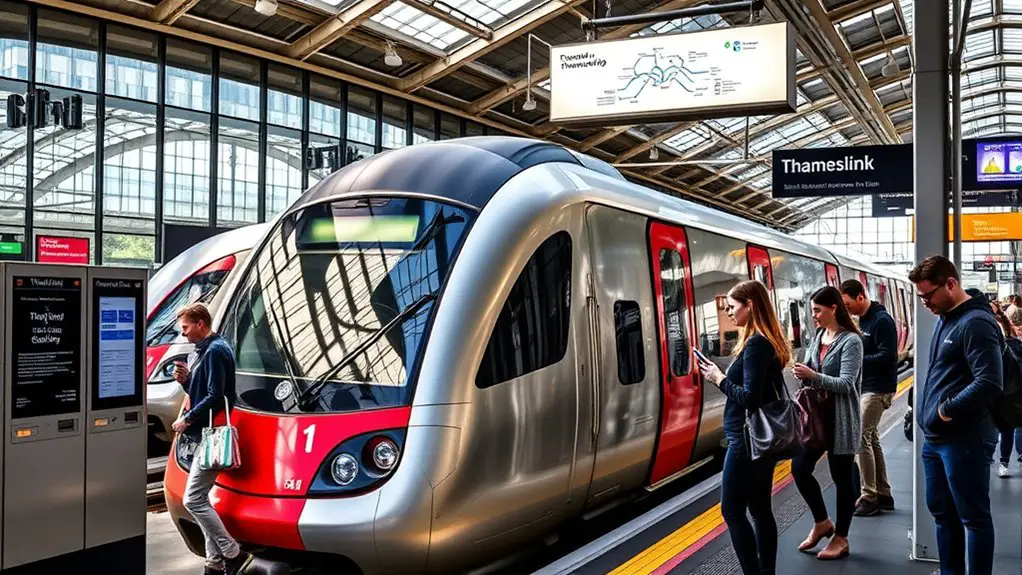
Last Updated on August 2, 2026 by Daniel Globe
Thameslink is one of the most useful rail services for travelling across London without terminating at a central station. Its trains connect destinations north and south of the capital through central stops such as St Pancras International, Farringdon, City Thameslink, Blackfriars and London Bridge. The key is knowing which ticket or payment method is valid, because Oyster, contactless and ordinary National Rail tickets do not all have the same coverage.
Quick Answer
Thameslink runs cross-London trains linking places such as Bedford, Cambridge and Peterborough with Gatwick Airport, Brighton, Horsham and other destinations south of London. Use the journey planner for your exact route, check whether Oyster or contactless is valid at both stations, and review live service updates before travelling.
Key Takeaways
- Thameslink crosses central London and serves destinations including Bedford, Cambridge, Peterborough, St Albans, Luton, Gatwick Airport, Brighton, Horsham, Sutton, Rainham and Sevenoaks.
- Oyster and contactless are not interchangeable across the whole network. Oyster PAYG is available on Thameslink within London Zones 1–6, while contactless extends to selected stations farther out.
- Compare Anytime, Advance, Off-Peak, Railcard, GroupSave, Season and Flexi Season options instead of assuming PAYG is always cheapest.
- Check live departure boards, calling patterns, platform numbers and engineering work before travelling, especially at weekends.
- Passengers needing assistance should check individual station accessibility and can use Thameslink’s Passenger Assist service.
Disclosure: As an Amazon Associate I earn from qualifying purchases. Some links on this page are affiliate links, at no extra cost to you.
Overview of Thameslink Routes and Key Destinations
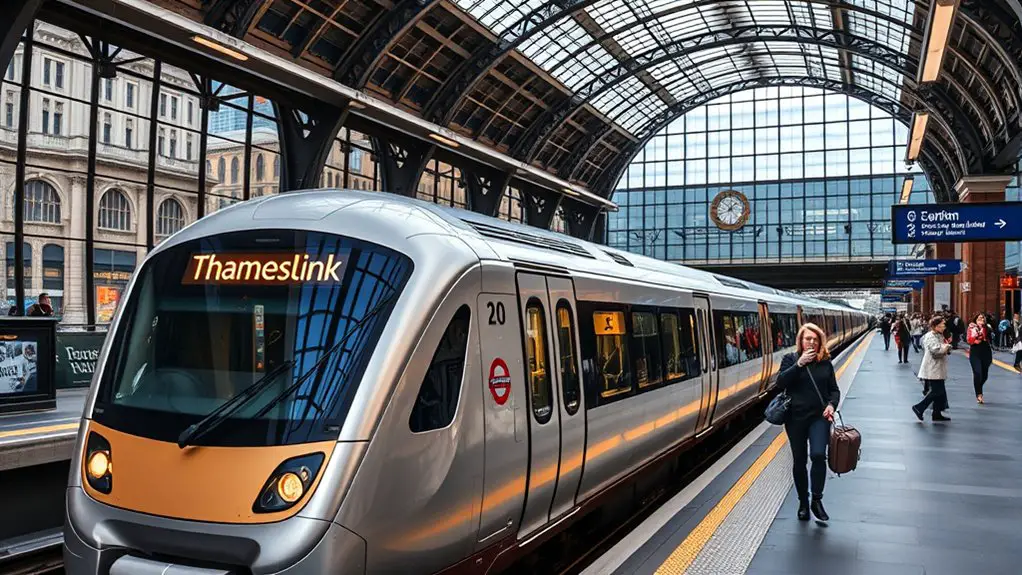
Thameslink operates a large cross-London rail network rather than a single railway line. According to Thameslink’s current network information, services connect Bedford, Peterborough and Cambridge with destinations including Brighton, Horsham, Littlehampton and East Grinstead. Other routes connect Luton and St Albans with Sutton, Wimbledon and Rainham, while Thameslink also operates services between London and Sevenoaks.
For many passengers, the biggest advantage is that trains can pass through central London instead of terminating on one side of the city. This can remove a Tube transfer from journeys between the northern and southern parts of the network.
Central London Thameslink Stations
The main cross-London corridor includes London St Pancras International, Farringdon, City Thameslink, London Blackfriars and London Bridge. These stations offer useful connections to other rail and London transport services.
- St Pancras International: useful for connections with King’s Cross, East Midlands Railway, Southeastern high-speed services and Eurostar.
- Farringdon: a major interchange with the Elizabeth line and London Underground.
- City Thameslink: convenient for the City of London and St Paul’s area.
- Blackfriars: serves both sides of the River Thames and connects with the Underground.
- London Bridge: a major interchange for other National Rail services and the Jubilee and Northern lines.
Always confirm the train’s destination and calling pattern rather than assuming that every Thameslink train serves every central station or continues to the same outer destination.
Split Tickets and “London Thameslink” Validity
Some tickets are issued to a group station rather than a single stop. A ticket booked to “London Thameslink” is generally valid at any station between St Pancras International and either Elephant & Castle or London Bridge, regardless of which direction you are travelling from, which gives some useful flexibility for choosing your central London exit point. If you are travelling a long distance, it can also be worth checking whether splitting your journey into two tickets at an intermediate station is cheaper than a single through-fare, though the train itself does not stop or require you to change for a split ticket to be valid — check the current rules on the journey planner before relying on this.
Gatwick and Luton Airport Connections
Thameslink is particularly useful for airport journeys. Many services call directly at Gatwick Airport railway station, so passengers can walk from the station into the airport terminals.
London Luton Airport works differently. Thameslink trains serve Luton Airport Parkway, not the terminal itself. From there, passengers transfer to the Luton DART. Thameslink states that a through-ticket booked to “Luton Airport” includes the DART transfer. See the official Luton Airport travel guide before booking.
Pro Tip: For a Luton Airport trip, search for “Luton Airport” rather than stopping your booking at “Luton Airport Parkway” if you want a through-ticket that includes the DART connection.
How to Navigate Thameslink Stations and Platforms
Thameslink stations range from small suburban stops to major interchanges, so the most reliable way to find your train is to follow the live departure information for your specific service.
Use Departure Boards and Calling Patterns
Start with the main departure board and match your destination to the train’s departure time, final destination and calling pattern. Then check the platform number. At large stations, two trains leaving close together may travel in the same general direction but stop at different stations.
Thameslink’s live departure boards can show train times, platform numbers, delays, cancellations, train length and, where available, expected seat availability.
Platform assignments can change at short notice, so recheck the station screens after you arrive rather than relying only on information saved earlier.
Platform Safety Measures
Stay behind platform safety markings while waiting and let passengers leave the train before you board. Watch the gap between the train and platform, particularly when travelling with children, luggage or mobility equipment.
Avoid standing in doorways or blocking accessible boarding areas. Listen for announcements during disruption because a train’s platform, calling pattern or destination can change.
Warning: Do not board simply because the train carries Thameslink branding and is travelling in the right general direction. Confirm that your destination appears in the calling pattern, especially at London Bridge, Blackfriars, St Pancras and other busy interchanges.
Ticketing Options and Fare Structures

Thameslink ticketing is more complex than a single London zone system because the railway extends well beyond the capital. London fare zones matter for many journeys within the city, but journeys farther across the Thameslink network use National Rail fares and ticket restrictions.
| Option | Best For | Important Rule |
|---|---|---|
| Oyster PAYG | Many journeys within London | Thameslink states Oyster PAYG is valid on its trains within London Zones 1–6. |
| Contactless PAYG | Flexible journeys between participating stations | Coverage extends beyond the Oyster area but does not include every Thameslink station. |
| Anytime ticket | Maximum time flexibility | Usually costs more than restricted ticket types. |
| Off-Peak ticket | Travel outside busy periods | Valid times vary by journey and ticket. |
| Advance ticket | Planned journeys where available | Normally tied to the specific booked train. |
| Season ticket | Frequent commuting on the same route | Compare the cost with individual fares for your actual travel pattern. |
| Flexi Season | Part-time commuting | Provides eight travel days within a 28-day period on an eligible route. |
Oyster vs. Contactless on Thameslink
Thameslink’s Oyster guidance says Oyster PAYG can be used on Thameslink trains within London Zones 1–6.
Contactless PAYG covers a wider area, reaching selected stations across London Zones 1–9 and beyond under the Department for Transport’s ongoing Project Oval expansion. That expansion does not mean contactless can be used at every Thameslink station. Check the current Thameslink contactless coverage information before relying on a bank card or mobile wallet.
Warning: Contactless PAYG is not valid across every Thameslink journey. Check that your origin and destination are covered before boarding. When using PAYG, touch in and out with the same physical card or the same device so the system can match the journey correctly.
Peak and Off-Peak Fares
Off-Peak tickets can cost less than unrestricted fares, but there is no single Off-Peak start time that applies to every National Rail ticket. Restrictions depend on the journey and fare, so check the ticket shown in the journey planner.
For PAYG contactless, Thameslink currently identifies the morning peak as 06:30–09:30 Monday to Friday. An evening peak of 16:00–19:00 Monday to Friday can also apply when travelling from or via a London station. Weekends and bank holidays are treated as off-peak all day. Check the latest rules before travel because PAYG pricing and caps can differ from conventional rail tickets.
Railcards, GroupSave and Commuter Tickets
A valid Railcard can reduce many eligible rail fares, commonly by around one-third depending on the Railcard and ticket conditions.
If three to nine adults are making an eligible Off-Peak journey together, GroupSave can reduce participating Standard Class adult fares by one-third. The group must travel together and restrictions apply.
Regular commuters should compare weekly, monthly or annual Season tickets. Part-time commuters should also check Flexi Season tickets, which provide eight days of travel within a 28-day period on the selected route.
Pro Tip: Do not assume Oyster or contactless is automatically the cheapest option. Compare PAYG with Advance, Off-Peak, Railcard, GroupSave and Season products for the journey you actually plan to make.
Tips for Commuters: Making Your Journey Seamless
Check the exact train rather than relying on a memorized timetable, especially when engineering work or disruption is affecting the network.
Plan Ahead Effectively
Before leaving, check your departure time, destination, calling pattern and any required changes. For important journeys, build in extra time rather than planning around the last possible connection.
- Check the journey planner shortly before leaving.
- Look for engineering work if travelling at night or on weekends.
- Confirm which ticket restrictions apply to your chosen train.
- Check whether your station supports your planned payment method.
- Allow extra time when travelling with luggage, children or mobility equipment.
Use Real-Time Updates
Thameslink’s live tools are more useful than relying on a static timetable when trains are disrupted. The official live departure boards can provide current platform information, delays, cancellations and calling patterns.
Where data is available, Thameslink also shows indicators of how busy a train is expected to be. That can help flexible commuters choose a quieter service.
The Thameslink On Track app can also be used for journey information and tickets. Third-party rail apps can be convenient, but check official Thameslink or National Rail information when disruption is developing rapidly.
Pack Smartly for Comfort
For an ordinary commute, keep what you carry simple: a water bottle, charger and weather protection may be enough. For airport or longer-distance trips, organize luggage so you can board quickly and keep aisles and doors clear.
Thameslink’s luggage guidance currently allows passengers to bring up to three pieces of luggage, provided they can carry and safely store them and the items meet the relevant conditions. Larger bags should use luggage racks where available; smaller items can go overhead or beneath a seat.
Taking a Bike on Thameslink
Folding bikes are welcome on all Thameslink trains at any time, with no need to pre-book. Standard, non-folding bikes are also carried free of charge on most services, but they are restricted on weekday services scheduled to arrive in or pass through central London during the morning peak and to depart central London during the evening peak. Space for non-folding bikes is never guaranteed, particularly on short-formed weekend trains, so build in flexibility and check Thameslink’s current cycle policy before travelling with a full-size bike.
Benefits of Using Thameslink for Weekend and Leisure Travel
Thameslink can be useful for day trips because its cross-London routes connect the capital with destinations such as Brighton, St Albans, Cambridge and other towns without requiring every passenger to change between London terminals.
Weekend travel can also open access to cheaper Off-Peak fares and GroupSave on eligible journeys. However, weekends are also a common time for railway engineering work, so always check the journey planner before setting out.
| Benefit | Description |
|---|---|
| Potential Savings | Off-Peak fares, Railcards and GroupSave may reduce eligible leisure fares. |
| Cross-London Travel | Many journeys continue through central London instead of ending at a London terminal. |
| Airport Access | Services connect central London with Gatwick Airport and Luton Airport Parkway. |
| Accessibility Support | Passenger Assist is available, although station accessibility must be checked individually. |
Planning Your Trips With Thameslink’s Schedules and Services
Thameslink frequencies vary by route, station, day and time, so there is no useful single figure for how often “a Thameslink train” runs. A central London station may see several Thameslink services in a short period while an outer station may have a much wider gap between suitable trains.
Use the current timetable for advance planning, then check live information again shortly before departure. Thameslink advises passengers to recheck journeys because engineering works, temporary timetables and short-notice disruption can alter published services.
- Use live departures for current platform numbers and train running information.
- Check the calling pattern before boarding.
- Review planned engineering work before weekend and late-night journeys.
- Look at expected crowding information when your departure time is flexible.
- Keep an alternative route in mind for time-critical journeys.
What to Do if Your Train Is Delayed or Cancelled
If disruption occurs, first check Thameslink’s service updates and listen to station announcements. During major incidents, ticket acceptance may be arranged on alternative operators or routes, but only rely on arrangements that have actually been announced for the disruption affecting you.
Passengers who arrive at their destination at least 15 minutes late because of an eligible Thameslink delay or cancellation may be able to claim through Delay Repay. Keep your ticket or other proof of travel. If you decide not to travel because of disruption, or you buy a ticket you no longer need, check Thameslink’s refund conditions, since eligibility and any admin fee depend on the ticket type.
A Thameslink delay of 15 minutes or more may qualify for Delay Repay compensation, depending on the journey and ticket held.
Insider Advice for Saving Money and Enhancing Your Experience
The best fare depends on where, when and how often you travel. Contactless is convenient where accepted, but convenience and lowest price are not always the same thing.
For a one-off journey, compare the available Advance, Anytime and Off-Peak fares. Railcard holders should enter their Railcard when searching for conventional tickets. Groups should check GroupSave, while frequent commuters should compare Season and Flexi Season products against individual journeys.
Travelling outside the busiest periods can reduce both cost and crowding on many routes. Thameslink’s live departure information can also show expected seat availability for some services, which is helpful when you have flexibility over departure time.
Buying direct from Thameslink currently avoids a booking fee, although the fare itself may still depend on the ticket and route selected.
Accessibility, Luggage and Station Facilities
Accessibility varies across the Thameslink network, so do not assume every station has the same step-free route, lifts or toilet facilities. Check the station page before travelling, particularly if a lift is essential to your journey.
Thameslink’s Passenger Assist service can help passengers with boarding, ramps, station navigation and connections. Thameslink recommends booking assistance at least two hours before travel when possible, although “turn up and go” assistance is also available.
Note: Lift and step-free access at individual stations, including at busy interchanges like St Pancras International, can be temporarily suspended for maintenance or refurbishment work. These closures are announced on a rolling basis and are not always long-term, so always check Thameslink’s live station accessibility page shortly before an accessible journey rather than relying on a status you saw previously.
Left-luggage facilities are not a standard feature at every Thameslink station. Some major stations do provide them; for example, current Network Rail station information lists left-luggage services at London Bridge and St Pancras International. Check the individual station before relying on storage.
Frequently Asked Questions
How Often Do Thameslink Trains Run During Peak Hours?
There is no single Thameslink-wide peak frequency. Service levels depend on the station, route, direction and current timetable. Busy central sections can have frequent trains, while individual routes and outer stations may have longer gaps. Check Thameslink’s journey planner or live departures for your exact trip.
Are There Accessible Facilities for Disabled Passengers on Thameslink?
Yes, Thameslink provides accessibility support including Passenger Assist, wheelchair spaces and priority seating, but station facilities and step-free routes vary. Check the accessibility information for each station before travelling. Assistance can be booked in advance, and passengers can also ask staff or use a Help Point when travelling without a booking.
Can I Use Contactless Payment on All Thameslink Services?
No. Contactless PAYG is available only for journeys between stations included in the contactless area. Coverage has expanded beyond London, but it does not include every Thameslink station. Check current coverage before travelling and use the same card or device to touch in and out.
What Are the Best Apps for Real-Time Thameslink Updates?
Thameslink’s On Track app and official live departure boards are good first choices for tickets and real-time journey information. National Rail journey information is also useful. Third-party apps can help with planning, but official service updates are worth checking during major disruption.
Are There Luggage Storage Options at Thameslink Stations?
Some stations have left-luggage facilities, but many do not. London Bridge and St Pancras International currently list left-luggage services. Check the specific station before travelling. On Thameslink trains, passengers can generally bring up to three pieces of luggage subject to size, safe-storage and other conditions.
Is Oyster the Same as Contactless on Thameslink?
No. Thameslink states that Oyster PAYG is valid on its trains within London Zones 1–6. Contactless PAYG reaches additional stations outside that area, but it still does not cover the entire Thameslink network. Always check the payment coverage for both stations.
How Do I Use Thameslink for Gatwick and Luton Airports?
Thameslink trains call directly at Gatwick Airport railway station. For London Luton Airport, take Thameslink to Luton Airport Parkway and transfer to the Luton DART. A through-ticket booked to “Luton Airport” includes the DART transfer under current Thameslink ticketing arrangements.
Can I Claim Compensation if My Thameslink Train Is Delayed?
You may be able to claim Delay Repay if an eligible Thameslink delay or cancellation causes you to arrive at your destination at least 15 minutes late. The amount depends on the length of the delay and the ticket held. Keep your ticket or other proof of travel and check the current claim rules.
Can I Take My Bike on a Thameslink Train?
Folding bikes are allowed on all Thameslink trains at any time. Standard, non-folding bikes are carried free of charge on most services but are restricted on weekday trains arriving in or passing through central London during the morning peak and departing central London during the evening peak. Space is never guaranteed, so check the current cycle policy before travelling.
Conclusion
Thameslink can make cross-London, airport, commuter and leisure journeys much simpler, but the best experience comes from checking the details of your specific trip. Confirm the train’s calling pattern, compare ticket types, verify Oyster or contactless coverage, and check live updates before departure. For accessible travel, review station facilities rather than assuming every stop is step-free. These steps help you avoid invalid fares, missed connections and unnecessary delays while getting more value from the Thameslink network.
Sources
- Thameslink — Company Information — current network coverage and destinations.
- Thameslink — Contactless Travel — PAYG contactless coverage, peak periods and capping guidance.
- Thameslink — Using an Oyster Card — Oyster PAYG validity on Thameslink.
- Thameslink — Assisted Travel — Passenger Assist, accessibility and station support.
- Thameslink — Luggage — onboard luggage limits and storage guidance.
- Thameslink — Delay Repay — compensation guidance for eligible delays.
