
Last Updated on July 27, 2026 by Daniel Globe
Using an Oyster Card is still one of the easiest ways to navigate London’s extensive transit network, especially if you need a Railcard discount, a Travelcard, or a physical card for budgeting. The rules are simple once you know when to touch in and out, how capping works, and when contactless may be the better choice. Whether you’re a first-time visitor or a regular commuter, here’s how to use your Oyster Card with confidence.
Quick Answer
An Oyster Card is a reusable smart card for pay-as-you-go travel and Travelcards in London. Add credit, then touch in and out on Tube, rail, DLR and Elizabeth line journeys; on buses and trams, touch in only. Adult daily and Monday-to-Sunday caps are applied automatically when eligible.
Key Takeaways
- A new standard blue Oyster Card costs £10.50 in 2026, before you add travel credit or a Travelcard; the card fee is non-refundable.
- Touch in and out on Tube, DLR, London Overground, Elizabeth line and rail journeys. On buses and trams, touch in only.
- Daily capping runs from 04:30 to 04:29 the following morning, while weekly capping uses a fixed Monday-to-Sunday period.
- Use the same Oyster Card for the whole journey, touch pink readers when your route requires it, and give each passenger a separate card or payment method.
- Contactless is often simpler for adult visitors, but Oyster remains useful for Travelcards, eligible Railcard discounts and Young Visitor discounts.
At a Glance
| Time Required | About 5–10 minutes to buy and top up a card; touching in takes only a few seconds per journey |
| Difficulty | Easy |
| Tools Needed | Oyster Card plus pay-as-you-go credit or a valid Travelcard; a TfL account or TfL Go app is optional for a standard Oyster |
| Cost | £10.50 non-refundable fee for a new standard blue Oyster Card in 2026, plus travel credit or a Travelcard. Visitor Oyster Cards also include a £10.50 non-refundable card fee, with the total price depending on preloaded credit and delivery. |
Disclosure: As an Amazon Associate I earn from qualifying purchases. Some links on this page are affiliate links, at no extra cost to you.
How to Obtain Your Oyster Card
Getting an Oyster Card is easy, but it helps to understand the three payment options travellers often group together: a standard Oyster Card, a Visitor Oyster Card, and contactless payment. Contactless is not a type of Oyster Card; it is a separate way to pay.
You can get a standard Oyster Card from many Tube, London Overground and Elizabeth line stations, Oyster Ticket Stops, Visitor Centres and other authorised outlets. When a card is issued, you normally add pay-as-you-go credit or a travel product at the same time. See Transport for London’s current pay-as-you-go guidance before travelling.
As of 2026, the fee for a new standard blue Oyster Card is £10.50 before travel credit is added, and the card fee itself is non-refundable.
Standard Oyster vs Visitor Oyster
A standard Oyster Card is usually the better physical-card choice if you live in London, expect to return often, want to load an eligible Travelcard, or need an eligible Railcard discount. A standard Oyster can also be registered, which helps protect its balance and travel products if the card is lost or stolen.
A Visitor Oyster Card is designed for visitors who want a physical card ready before reaching London. It can be ordered through the official TfL Visitor Shop with pay-as-you-go credit preloaded. Its £10.50 card fee is non-refundable, although unused pay-as-you-go credit is treated separately. Visitor Oyster Cards cannot be registered and cannot have Travelcards, season tickets or Railcard discounts loaded onto them.
Note: A compatible contactless bank card or mobile wallet is often the simplest option for an adult visitor because there is no Oyster card fee or balance to top up. Adult pay-as-you-go fares and caps are generally the same where both methods are accepted. However, some overseas cards may not work or may attract foreign transaction fees from the card issuer.
Using Your Oyster Card on London Transit
The basic rule is to present your Oyster Card to the yellow reader whenever TfL requires a touch. A green light and confirmation sound normally show that the card has been accepted.
- Tube, DLR, London Overground, Elizabeth line and most National Rail journeys: touch in at the start and touch out at the end.
- Buses and trams: touch in when you board. Do not touch out.
- Open gates: still touch the yellow reader when leaving a rail journey, even if the barrier is already open.
- Connections: follow station signs and touch any readers required as you transfer.
- Pink readers: when a route offers a pink reader, touch it to show the route you took. This can prevent the system from assuming you travelled through Zone 1 and charging a higher fare.
TfL also advises passengers to use the same Oyster Card, contactless bank card or mobile device throughout a journey. For example, touching in with a physical bank card and touching out with the same card stored in Apple Pay can be treated as two different payment methods.
Keep the card you intend to use separate from other contactless cards when you touch a reader. Presenting a wallet containing several cards can cause card clash, where the reader charges or attempts to read the wrong card. TfL’s pay-the-right-fare guidance explains the current touching rules.
Warning: On Tube and rail journeys, always touch out when required, even if the gate is open. Missing a touch can create an incomplete journey and a maximum fare. Also avoid touching a whole wallet or purse to the reader, since card clash can charge the wrong payment method.
Each passenger needs a separate Oyster Card, contactless card or other valid ticket while travelling at the same time. One Oyster Card cannot pay for two people on the same journey.
Where Oyster Works — and Where It Doesn’t
Oyster pay-as-you-go is accepted on buses, the Tube, trams, DLR, London Overground, most Elizabeth line services, the London Cable Car, Thames Clippers River Bus services and most National Rail services within London’s fare zones. It is also accepted at some National Rail stations beyond Zone 9.
Coverage is not unlimited. In particular, Oyster is not accepted on Elizabeth line journeys between Iver and Reading, where contactless payment or another valid rail ticket is needed.
Oyster pay-as-you-go can be used on both Heathrow Express and Gatwick Express, but those express fares do not count toward normal Oyster daily or weekly caps. London Cable Car and Thames Clippers River Bus fares are also outside normal capping, as are Southeastern High Speed journeys between St Pancras International and Stratford International.
Because National Rail acceptance becomes more complicated outside central London, check TfL’s current PAYG coverage or the National Rail journey information for an outer-London trip instead of assuming Oyster will work everywhere.
Topping Up and Managing Your Balance
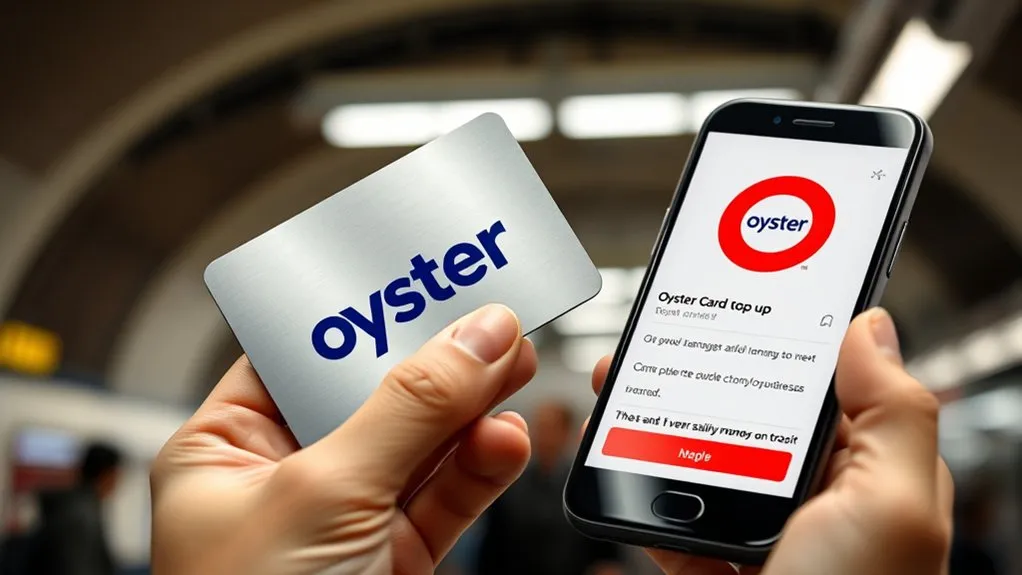
To keep a pay-as-you-go Oyster Card ready for travel, add enough credit for the journeys you expect to make. A standard Oyster can also hold an eligible Travelcard.
You can top up in several ways:
- Station ticket machines: add pay-as-you-go credit at participating stations for immediate use.
- Oyster Ticket Stops: participating newsagents and shops can add credit.
- TfL account or TfL Go: standard Oyster users can manage supported top-ups and view payment or journey information online.
- Auto top-up: eligible standard Oyster users can arrange automatic credit top-ups through their account.
If your Oyster Card does not contain enough credit for a bus fare, TfL can allow one more bus journey. Your balance then becomes negative, and you must top it up before the card can be used again.
For Tube and rail travel, make sure you have enough credit to start the journey. A negative or insufficient balance can prevent the card from being accepted at the gate.
Registering a Standard Oyster Card
Registering a standard Oyster Card is worthwhile if you plan to keep it. Registration lets TfL associate the card with your account, making it easier to manage travel history and protect eligible credit or tickets if the card is lost or stolen. Visitor Oyster Cards cannot be registered.
Daily and Weekly Travel Caps Explained
Fare capping limits how much you pay for eligible pay-as-you-go journeys when you keep using the same Oyster Card or contactless payment method.
A daily cap applies over TfL’s traffic day, which runs from 04:30 until 04:29 the following morning. Your cap depends on the zones and services you use.
A weekly cap is not a rolling seven-day cap. It covers a fixed Monday-to-Sunday period. If you begin a week of heavy travel on a Thursday, the first weekly cap ends that Sunday and a new one starts Monday.
For an adult-rate Oyster Card in 2026, current TfL fare material lists these examples:
| Zones | Daily Cap | Monday–Sunday Cap |
| Zones 1–2 | £8.90 | £44.70 |
| Zones 1–3 | £10.50 | £52.50 |
| Zones 1–6 | £16.30 | £81.60 |
Current cap figures can change with TfL fare revisions, so check the official TfL fare-capping page and adult fare table before relying on a specific amount.
Not every Oyster-paid trip counts toward these caps. Heathrow Express, Gatwick Express, London Cable Car, Thames Clippers River Bus and certain Southeastern High Speed journeys are among the services excluded from normal daily and weekly capping.
Pro Tip: For heavy travel from Monday through Sunday, pay-as-you-go capping is often very convenient. For a seven-day trip that crosses two TfL capping weeks — such as Thursday through Wednesday — compare the cost with a 7-Day Travelcard for the zones you will use.
Oyster Card vs Contactless: Which Is Better?
For many adults, Oyster and contactless produce the same PAYG fares and daily or weekly caps on journeys where both are accepted. The better option depends on how you travel.
- Choose contactless if you already have a compatible bank card or mobile wallet, want to avoid the £10.50 Oyster card fee, and do not need an Oyster-only discount or Travelcard.
- Choose a standard Oyster Card if you want an eligible Railcard discount added, need a Travelcard or Bus & Tram Pass, qualify for another Oyster-specific concession, or simply prefer to control your travel spending with a separate balance.
- Consider a Visitor Oyster Card if you specifically want a physical card delivered before arrival and are comfortable paying the non-refundable card fee.
Contactless also has wider acceptance on some National Rail routes outside the Oyster area. If you use a non-UK bank card, check whether your bank charges foreign transaction or overseas contactless fees.
Tips for Saving Money With Your Oyster Card
The most important money-saving habit is simple: touch correctly so TfL can calculate the right fare and apply any eligible cap.
- Travel off-peak when practical. Many Tube and rail journeys cost less outside peak periods, although the exact fare depends on the journey.
- Add an eligible Railcard. Eligible National Railcards can generally give one-third off qualifying off-peak Oyster PAYG fares and off-peak caps. See TfL’s Railcard discount rules.
- Understand the 18+ Student Oyster discount. Eligible students living in London while studying at a participating institution can get 30% off adult-rate Travelcards and Bus & Tram Pass season tickets. The Student Oyster alone does not automatically reduce every ordinary PAYG fare. See TfL’s 18+ Student Oyster guidance.
- Ask about the Young Visitor discount. Eligible visitors aged 11–15 can have a Young Visitor discount added to an Oyster or Visitor Oyster Card for up to 14 days, giving 50% off adult PAYG fares.
- Use a Group Day Travelcard when it genuinely fits. Groups of 10 or more people travelling together may qualify for a Group Day Travelcard. Do not try to share one Oyster Card between passengers.
The 60+ London Oyster photocard is another concession, but it is intended for qualifying London residents aged 60 or over who have not yet reached eligibility for a Freedom Pass. It is not a visitor senior-discount card.
Troubleshooting Common Oyster Card Issues
Most Oyster problems come from a missed touch, insufficient credit, a damaged card or a journey that has not yet been fully processed. Check your balance and journey history first before assuming the fare is wrong.
Card Not Detected
If the yellow reader does not detect your Oyster Card, try the card by itself rather than through a wallet, hold it flat against the reader, and wait for the light or confirmation tone. If a different reader also fails, ask station staff for help.
A faulty standard Oyster Card may be replaceable, with eligible balance or travel products transferred where TfL’s conditions allow. A visibly damaged card can be treated differently from a card that has failed through normal use, so avoid bending, punching or cutting it.
Balance Discrepancies
Check your recent journeys through your Oyster account, TfL Go or a ticket machine where supported. A missing touch can cause an incomplete journey and a maximum fare.
For an incomplete journey, TfL advises allowing at least 48 hours for the journey information to settle before seeking a correction. Eligible incomplete-journey refund claims can generally be made within eight weeks. Use the official TfL refunds guidance for current claim options.
Lost or Stolen Oyster Cards
If a registered standard Oyster Card is lost or stolen, report it through your Oyster account or TfL customer service so eligible credit and travel products can be protected and transferred. An unregistered standard card does not have the same loss protection.
A Visitor Oyster Card cannot be registered, so treat it like cash and keep it secure.
Frequently Asked Questions
Can I use my Oyster Card outside of London?
Oyster is mainly a London payment system, but pay-as-you-go is accepted at some National Rail stations beyond Zone 9. It is not accepted everywhere outside London, and Oyster cannot be used on the Elizabeth line between Iver and Reading. Check TfL or National Rail coverage before an outer-London journey.
Are there discounts for seniors or students with Oyster?
Yes, but eligibility matters. The 60+ London Oyster photocard is for qualifying London residents rather than tourists. Eligible 18+ students living in London while attending a participating institution can get 30% off adult-rate Travelcards and Bus & Tram Pass season tickets. Eligible National Railcards can also be loaded onto standard Oyster Cards for discounted qualifying fares.
How does contactless payment differ from using an Oyster Card?
Adult pay-as-you-go fares and caps are generally the same where both are accepted, but contactless has no Oyster card fee or balance to top up. A standard Oyster is more useful when you need an eligible Railcard discount, Travelcard or Oyster-specific concession. Contactless is also accepted on some rail routes where Oyster is not.
What should I do if my Oyster Card is lost or stolen?
If it is a registered standard Oyster Card, report the loss through your TfL account or customer service so eligible credit and tickets can be protected and transferred. Unregistered standard Oyster Cards do not have the same protection. Visitor Oyster Cards cannot be registered.
Are there special Oyster Card options for visitors or tourists?
Yes. A Visitor Oyster Card can be ordered before travelling and delivered with pay-as-you-go credit already loaded. In 2026 it includes a £10.50 non-refundable card fee. Unlike a standard Oyster, it cannot be registered and cannot hold Travelcards, season tickets or Railcard discounts.
Can I use Oyster on Heathrow Express?
Yes. Oyster pay-as-you-go is accepted on Heathrow Express. However, Heathrow Express fares do not count toward normal Oyster daily or weekly caps, and a London Travelcard does not cover the Heathrow Express fare.
Do I need to touch out on a London bus or tram?
No. On buses and trams, touch your Oyster Card on the yellow reader when you board and do not touch out. Tube, DLR, London Overground, Elizabeth line and most National Rail journeys normally require both a touch-in and a touch-out.
Can two people travel using one Oyster Card?
Not on the same journey. Each passenger needs a separate Oyster Card, contactless payment method or valid ticket. A pay-as-you-go-only Oyster Card can be lent to another person when you are not travelling with it, provided it does not contain a personal ticket or discount that prevents transfer.
Using your Oyster Card correctly makes London travel much easier. Keep enough credit on the card, touch in and out where required, use pink readers when appropriate, and remember that buses and trams require only a touch-in. For many adults, contactless is equally convenient, while a standard Oyster remains valuable when you need a Travelcard or eligible discount. Check current TfL fare information before your trip because card fees, caps and individual fares can change.
Sources
- Transport for London – Pay As You Go — Oyster and contactless acceptance, top-ups, registration, card sharing and coverage
- Transport for London – Fare Capping — daily traffic-day rules, Monday-to-Sunday weekly capping and Travelcard comparisons
- Transport for London – Pay the Right Fare — touch-in, touch-out, pink-reader and card-clash rules
- Transport for London – Conditions of Carriage — Oyster card fees, registration, PAYG conditions, replacements and service exclusions
- Transport for London – Adult Fares — current adult PAYG caps and zonal fare information
- Transport for London Visitor Shop – Visitor Oyster Card — Visitor Oyster pricing, preloaded credit, validity and card restrictions
