
Last Updated on July 24, 2026 by Daniel Globe
London’s fare zones affect what you pay on the Tube, DLR, London Overground, Elizabeth line, and many National Rail services. Most visitors stay within Zones 1–6, but the full zonal network extends to Zone 9. Choosing between contactless, Oyster, and a Travelcard depends on your route, travel dates, discounts, and how often you plan to ride.
Quick Answer
Zones 1 and 2 cover most central London attractions, while Heathrow Airport is in Zone 6. For most adult visitors, contactless or Oyster pay as you go is simpler and cheaper than a paper Day Travelcard because daily caps apply automatically. Use the same card or device for every touch.
Key Takeaways
- London’s rail fare network uses Zones 1–9, although most visitor destinations are in Zones 1–6.
- TfL buses are not zoned. A valid Travelcard covers TfL bus journeys throughout Greater London, regardless of the zones printed on it.
- Adult pay as you go is capped automatically when you use the same contactless card, device, or Oyster card correctly.
- A Zones 1–6 Travelcard can cover the Piccadilly line and qualifying Elizabeth line services to Heathrow, but it does not cover Heathrow Express.
- A standard Oyster card can hold a seven-day or longer Travelcard. A Visitor Oyster card cannot hold a Travelcard.
What’s in This Article
- Overview of London’s Transport Zones
- Understanding Zone 1 and Its Key Attractions
- Exploring Zones 2 to 6
- Current Travelcard Prices and Fare Caps
- Travelcards, Oyster, and Contactless Compared
- Choosing the Right Payment Method
- Using Tickets on Each Type of Transport
- Zones 7–9 and Travel Beyond London
- Buying in Advance
- Where to Buy Tickets and Oyster Cards
- Common Fare Mistakes
- Frequently Asked Questions
Disclosure: As an Amazon Associate I earn from qualifying purchases. Some links on this page are affiliate links, at no extra cost to you.
Overview of London’s Transport Zones
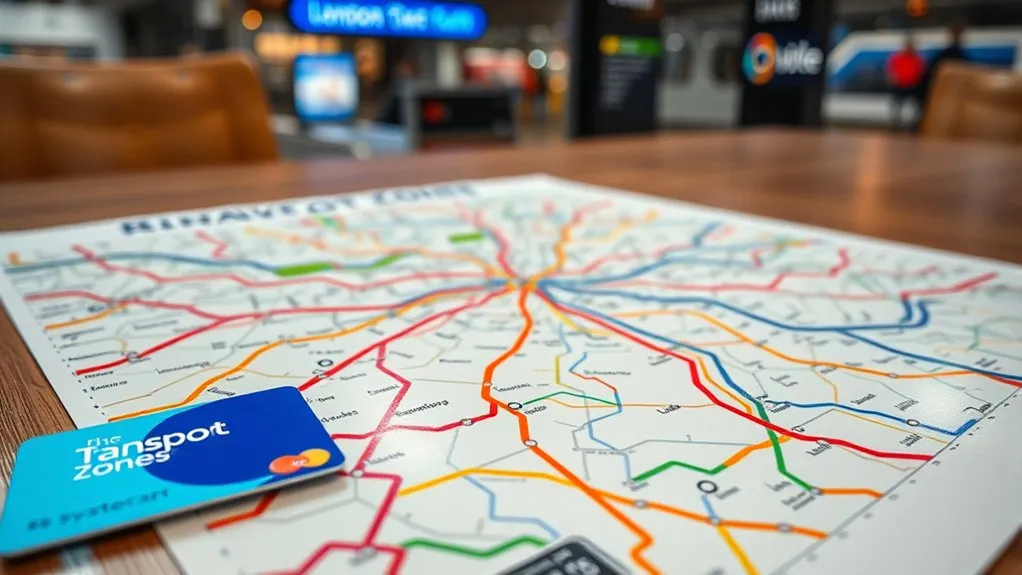
London’s Tube, DLR, London Overground, Elizabeth line, and many National Rail stations are grouped into fare zones. Zone 1 covers the center of London, and the zone numbers increase as you move farther away.
Most tourist journeys take place in Zones 1 and 2. Heathrow Airport is in Zone 6, while parts of the Tube, London Overground, and National Rail network continue through Zones 7, 8, and 9.
The zones crossed by your rail journey help determine your fare, but they are not the only factor. The price may also depend on whether you travel during peak hours, pass through Zone 1, use a special route, or travel on a service with separate pricing.
Note: London buses are not divided into fare zones. Any valid Travelcard covers TfL bus services throughout Greater London, even when the zones printed on the Travelcard do not include the area through which the bus travels.
You can check station zones on the official TfL Tube map. For a specific journey, use the TfL Single Fare Finder because two journeys crossing the same number of zones may not always cost the same.
Understanding Zone 1 and Its Key Attractions
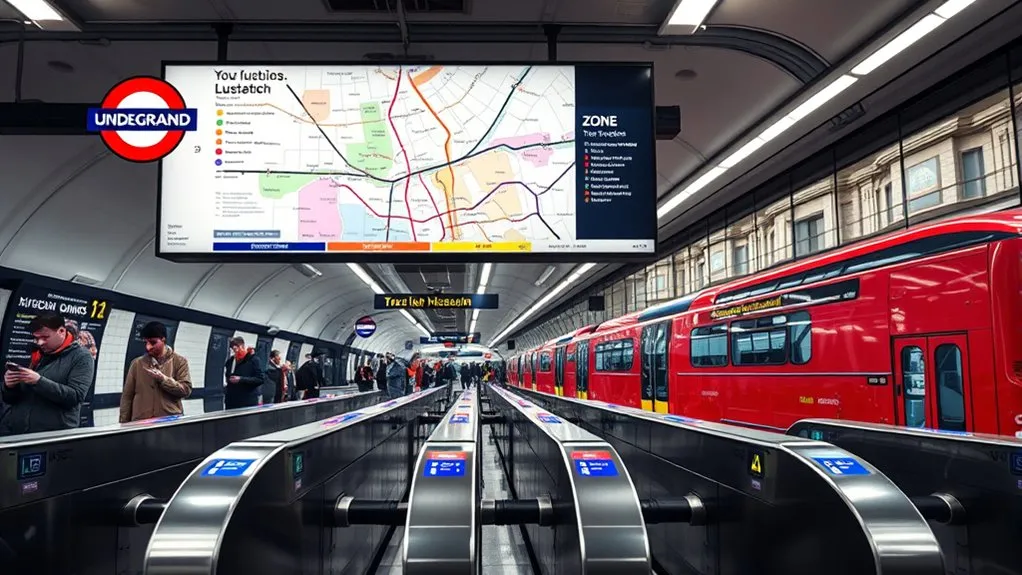
Zone 1 covers Central London and contains many of the city’s best-known landmarks, museums, shopping streets, theaters, and railway terminals. It also has the densest concentration of Tube lines and bus routes.
Central London Coverage
Major Zone 1 stations include King’s Cross St Pancras, Oxford Circus, Westminster, Waterloo, Victoria, Liverpool Street, and London Bridge. Staying near one of these stations can make sightseeing easier, but Central London accommodation often costs more than accommodation in outer zones.
Popular Tourist Destinations
Popular Zone 1 destinations include:
- The Tower of London: A historic fortress beside the River Thames.
- Buckingham Palace: The monarch’s official London residence.
- The British Museum: A major museum of global history and culture.
- Covent Garden: A shopping, dining, theater, and street-performance district.
- Westminster: Home to the Houses of Parliament, Westminster Abbey, and nearby government buildings.
Transport Connectivity Options
Zone 1 has frequent Tube and bus services, but central stations can become crowded during commuter hours. Where practical, walking between nearby attractions may be faster than making a short Tube journey.
A Zones 1–2 adult pay-as-you-go user pays no more than the daily cap for eligible capped journeys when every touch is completed with the same card or device.
Exploring Zones 2 to 6: Suburban Travel Insights

Zones 2 through 6 cover a large area around Central London. These zones include residential neighborhoods, major sports grounds, parks, historic sites, and Heathrow Airport.
- Zones 2 and 3: Include many inner-London neighborhoods and destinations such as parts of Greenwich, Wimbledon, and Kew.
- Zone 4: Includes destinations such as Wembley Park and parts of outer West, North, and South London.
- Zones 5 and 6: Reach farther into the suburbs and include Heathrow Airport and Hampton Court.
Staying outside Zone 1 may reduce your accommodation cost, but compare that saving with the additional journey time and higher rail fare. A hotel beside a fast Tube or Elizabeth line station can be more practical than a slightly cheaper hotel requiring several changes.
How Travelcard Pricing Is Determined by Zones
A Travelcard must cover every rail zone through which your permitted route passes. Wider coverage costs more because it allows unlimited eligible journeys across a larger part of the network.
How Zone Boundaries Affect Fares
- A rail journey that includes Zone 1 often costs more than a journey that avoids it.
- A station shown in two zones is treated as being in the zone that applies under the fare rules for the journey.
- A pink reader may confirm that you took a route avoiding Zone 1.
- Peak and off-peak rules can change the price of pay-as-you-go rail journeys.
- Some airport and premium rail services use separate fare rules.
Warning: Do not start an out-of-zone journey with only a paper Travelcard that does not cover the full route. Buy an extension ticket first. If your Travelcard is on Oyster, keep enough pay-as-you-go credit for the uncovered part of the journey. Travelling without a valid fare can lead to an additional charge or penalty fare.
2026 Daily Caps and Seven-Day Prices
The following adult prices were current on July 25, 2026. TfL fares can change, so confirm the latest amount with the official TfL fare tools before travelling.
| Zones | Adult Daily PAYG Cap | Seven-Day Travelcard or Equivalent Weekly Cap |
|---|---|---|
| Zones 1–2 | £8.90 | £44.70 |
| Zones 1–3 | £10.50 | £52.50 |
| Zones 1–4 | £12.80 | £64.20 |
| Zones 1–5 | £15.30 | £76.40 |
| Zones 1–6 | £16.30 | £81.60 |
The weekly pay-as-you-go cap runs from Monday to Sunday. A seven-day Travelcard can start on any chosen day, which may make it more suitable when a seven-day visit begins late in the week.
2026 Paper Day Travelcard Prices
| Day Travelcard | Adult Price | When It Can Be Used |
|---|---|---|
| Anytime Zones 1–4 | £16.60 | From the start of service on the printed date |
| Anytime Zones 1–6 | £23.60 | From the start of service on the printed date |
| Off-Peak Zones 1–6 | £16.60 | From 09:30 Monday to Friday and all day on weekends and public holidays |
Note: Adult pay as you go with daily capping is normally cheaper than buying a paper Day Travelcard for journeys within Zones 1–9. A Day Travelcard may still suit groups, passengers who cannot use contactless or Oyster, or travelers combining it with a National Rail ticket from outside London.
Differences Between Travelcards, Oyster Cards, and Contactless
These payment methods can access much of the same network, but they do not work in exactly the same way.
| Option | How It Works | Best For | Important Limitation |
|---|---|---|---|
| Contactless card or device | Charges pay-as-you-go fares and applies eligible daily and weekly caps automatically. | Most adult visitors with a supported fee-free card. | Foreign transaction fees may apply, and discounts such as the Young Visitor discount cannot be added. |
| Standard Oyster card | Stores pay-as-you-go credit and can hold a seven-day, monthly, or longer Travelcard. | Travelers without suitable contactless cards and people using eligible discounts. | Requires a card fee and may need topping up. |
| Visitor Oyster card | Arrives with prepaid pay-as-you-go credit and applies daily caps. | Visitors who want a card ready before reaching London. | A Travelcard or National Railcard discount cannot be loaded onto it. |
| Paper Day Travelcard | Provides unlimited eligible travel within the printed zones and time period. | Qualifying groups, travelers arriving by National Rail, or people who cannot use smart payment. | Usually costs more than the equivalent adult daily PAYG cap. |
| Seven-day Travelcard | Provides seven consecutive days of unlimited eligible travel in the selected zones. | Frequent travel over seven days, especially when the trip does not align with Monday-to-Sunday capping. | Must cover all rail zones used. |
Pro Tip: Choose one contactless card or one device and use it for every journey. A physical bank card, phone, and watch are treated as different payment methods even when they are connected to the same bank account.
Tips for Choosing the Right Payment Method
Start by listing the stations you expect to use, including your airport or mainline railway station. Then compare your likely daily cap with the available Travelcard.
- One to five days of adult sightseeing: Contactless or Oyster pay as you go is usually the simplest choice.
- Seven consecutive days beginning on a Monday: Contactless weekly capping may provide the same zonal limit as the equivalent seven-day product.
- Seven days beginning later in the week: A seven-day Travelcard may be easier because it can start on your chosen date, while weekly PAYG capping resets after Sunday.
- Children aged 11–15: Consider a Zip Oyster photocard, child Travelcard, or the temporary Young Visitor discount on an Oyster or Visitor Oyster card.
- Groups of 10 or more: A Group Day Travelcard may be useful when everyone travels together for the entire journey.
- Travel from outside London: Check whether a National Rail ticket with a London Travelcard add-on offers better value.
- Travel to Heathrow: Choose Zones 1–6 for the Piccadilly line or qualifying Elizabeth line travel, but buy a separate fare for Heathrow Express.
Using Travelcards on Buses, Tubes, and Overground Services
The correct validation method depends on the transport mode and whether your ticket is paper, Oyster, or contactless.
Tube, DLR, London Overground, Elizabeth Line, and National Rail
- Touch in and touch out with Oyster or contactless, even when a gate is open.
- Insert a paper Travelcard into the ticket gate or show it to staff when requested.
- Use the same card or device at both ends of the journey.
- Touch a pink reader when your route requires one to show that you avoided Zone 1.
London Buses
- Touch an Oyster or contactless card only when boarding.
- Do not touch out when leaving the bus.
- Show a valid paper Travelcard to the driver when required.
- A valid Travelcard covers TfL buses throughout Greater London, regardless of its printed rail zones.
London Trams
Touch in before boarding and do not touch out at the end. A Travelcard is valid on trams when it includes Zone 3, 4, 5, or 6.
River Services and the IFS Cloud Cable Car
Travelcards do not include free river or cable-car journeys. A Travelcard provides one-third off standard Uber Boat by Thames Clippers fares when the discount conditions are met. The IFS Cloud Cable Car requires a separate fare, and its pay-as-you-go spending does not count toward normal TfL caps.
Navigating Zones Beyond 6: Extended Fare Areas
Zones 7, 8, and 9 cover selected outer Tube, London Overground, and National Rail stations. Pay as you go also extends to some stations beyond the numbered zones, where special fares or contactless-only rules may apply.
Examples of places outside the standard Zones 1–6 visitor area include parts of the Metropolitan line and rail routes toward towns such as Watford and Shenfield. Do not assume that every outer station accepts Oyster, even when contactless is available.
If a journey starts inside your Travelcard zones and finishes outside them:
- Keep sufficient pay-as-you-go credit on a standard Oyster card to cover the extension.
- Buy an extension ticket before travelling with a paper Travelcard.
- Check whether Oyster, contactless, or both are accepted at the destination.
- Use the official fare finder because special fares can apply beyond Zone 9.
Airport Zone Rules
- Heathrow Airport: In Zone 6 for the Piccadilly line. Zones 1–6 Travelcards are also accepted on qualifying Elizabeth line services, but not Heathrow Express.
- London City Airport: Served by the DLR in Zone 3.
- Gatwick Airport: Outside Zones 1–9. Oyster and contactless can be used on eligible services, but a standard Zones 1–6 Travelcard does not cover the full journey.
- Stansted Airport: Outside the Travelcard zonal area. Buy a separate rail or coach ticket.
- Luton Airport: Outside the Travelcard zonal area. Buy the correct rail, coach, and airport-transfer ticket.
Benefits of Purchasing Travelcards in Advance
Buying in advance can save time, but it does not automatically reduce the fare. Compare the full purchase price, delivery charge, card fee, and your bank’s foreign transaction fees before deciding.
Cost Considerations
- Adult daily PAYG caps are normally lower than paper Day Travelcard prices.
- A seven-day Travelcard may be useful when your seven travel days cross two TfL capping weeks.
- A Visitor Oyster card has a purchase fee and cannot hold a Travelcard.
- A foreign contactless card may incur charges from the issuing bank.
- Group, child, student, or Railcard discounts can change the comparison.
Time Efficiency
A Visitor Oyster card or prepaid paper ticket can be ready before arrival. However, travelers with a supported contactless card can usually begin travelling without visiting a ticket machine.
Travel Convenience
- A prepaid ticket gives you a defined travel area.
- Contactless avoids topping up an Oyster balance.
- A registered standard Oyster card offers better protection for stored products if the card is lost.
- Pay as you go automatically calculates eligible caps when the card is used correctly.
Where to Buy Your Travelcard
Available products vary by seller and station.
- Tube station ticket machines: Sell Oyster cards, top-ups, and selected paper tickets and Travelcards.
- London Overground and Elizabeth line ticket offices: Sell selected tickets where staffed facilities are available.
- National Rail stations: Many sell Travelcards and tickets that combine a journey into London with zonal travel.
- Visitor Centres: Provide ticketing help and sell selected Oyster and Travelcard products.
- TfL Visitor Shop: Sells Visitor Oyster cards and selected Day Travelcards before arrival.
- Oyster Ticket Stops: Local retailers where standard Oyster cards can be topped up and selected products purchased.
A Visitor Oyster card must generally be ordered before arriving in London. A standard Oyster card can be obtained after arrival and can hold a seven-day or longer Travelcard.
Common Mistakes to Avoid When Using Travelcards
Using Different Cards or Devices
Do not touch in with a phone and touch out with a watch or physical bank card. TfL treats them as separate payment methods, which can create incomplete journeys and maximum fares.
Forgetting to Touch Out
Touch out after Tube, DLR, London Overground, Elizabeth line, and eligible National Rail journeys. You must still touch out when the gates are open.
Touching Out on a Bus or Tram
Buses and trams require a touch only at the start. Touching again can create an unnecessary charge.
Keeping Several Cards Together
Remove the card you intend to use from your wallet before touching the reader. Card clash can charge the wrong card or split the journey between two cards.
Assuming Every Airport Train Is Included
A Zones 1–6 Travelcard does not include Heathrow Express. Standard zonal Travelcards also do not cover the full trip to Gatwick, Stansted, or Luton.
Using an Out-of-Zone Paper Travelcard
Buy an extension before entering the uncovered part of the route. Do not rely on paying the difference after an inspection.
Ignoring Pink Readers
When a route avoids Zone 1, touching the appropriate pink reader can help the system charge the correct fare. Follow the signs at interchange stations.
Pro Tip: Register your Oyster or contactless card in a TfL account. You can review journey history and may be able to request a correction when a missed touch causes a maximum fare.
Frequently Asked Questions
Can Travelcards be used on National Rail services outside London?
A Travelcard covers most National Rail journeys only within the zones printed on the ticket. For a journey beyond those zones, buy an extension or separate ticket. Premium and airport services, including Heathrow Express, Gatwick Express, and Stansted Express, are not covered by a standard London Travelcard.
Are there discounts for children or seniors?
Children under 11 can travel free on buses, trams, the Tube, DLR, London Overground, Elizabeth line, and some National Rail services when the accompaniment rules are met. Travelers aged 11–15 may qualify for a Zip Oyster photocard or Young Visitor discount. The 60+ London Oyster photocard is for eligible London residents, not short-term visitors. Eligible visitors with a National Railcard may be able to add its discount to a standard registered Oyster card.
How does contactless fare capping work?
TfL totals eligible pay-as-you-go journeys made with the same card or device. Once the applicable daily cap is reached, further eligible journeys in the covered zones do not increase that day’s capped total. Weekly capping runs from Monday to Sunday. Separate fares and excluded services may not count toward the cap.
Can I get a refund if I lose my Travelcard?
A lost paper Day Travelcard is difficult to replace because it is not linked to an account. A Travelcard stored on a registered Oyster card has better protection. Report the Oyster card as lost so TfL can block it and determine whether the remaining product can be transferred.
Are Travelcards valid on riverboats or the IFS Cloud Cable Car?
The fare is not included. A Travelcard can provide one-third off standard Uber Boat by Thames Clippers fares when the discount rules are met. The IFS Cloud Cable Car requires a separate fare, and pay-as-you-go cable-car spending does not count toward normal TfL fare caps.
Does a Zones 1–2 Travelcard cover buses in Zone 4?
Yes, when it is a valid Travelcard and you are using a TfL bus within Greater London. London buses are not zoned, so the rail zones printed on the Travelcard do not limit ordinary TfL bus travel.
Can I use a Travelcard to reach Heathrow Airport?
A Zones 1–6 Travelcard can be used on the Piccadilly line and qualifying Elizabeth line services to Heathrow. It cannot be used on Heathrow Express, which requires a separate fare.
Making the Most of London’s Zone System
The easiest way to control London transport costs is to check every destination before choosing a ticket. Most adult visitors can use contactless or Oyster pay as you go and rely on daily capping, while a seven-day Travelcard may suit frequent travel that does not align with the Monday-to-Sunday cap.
Remember the exceptions: buses are not zoned, trams have their own Travelcard rule, premium airport trains may not be included, and a Visitor Oyster card cannot hold a Travelcard. Use the same card or device throughout each journey, touch out on rail services, and buy an extension before leaving your paid zones.
Sources
- Transport for London: Best ways for visitors to pay — pay as you go, Oyster, Travelcards, buying options, and child travel
- London City Hall: March 2026 TfL fare changes — 2026 daily caps, Travelcard prices, and Tube fare changes
- London City Hall: July 2026 fare changes — bus and tram fare freeze through October 2026
- TfL Visitor Shop: Ticket comparison — zone coverage, Travelcard validity, airport exclusions, and river discounts
- Transport for London: How to pay the right fare — touching rules, card clash, pink readers, and incomplete journeys
- Transport for London: IFS Cloud Cable Car fares — separate fares, discounts, and capping exclusions
