
Last Updated on September 11, 2026 by Daniel Globe
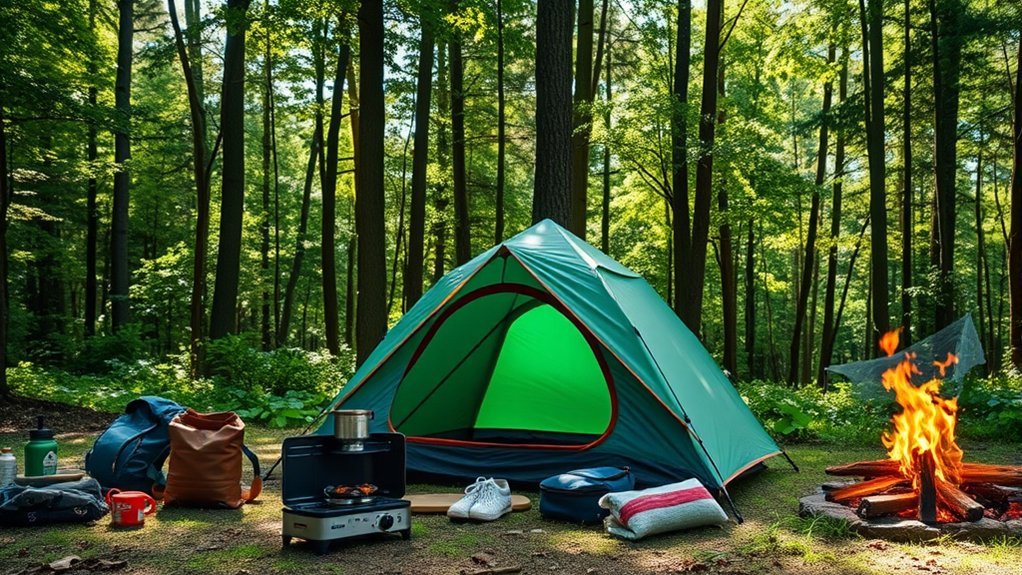
Your first tent-camping trip does not need to be complicated. Start with a legal campsite, a weather-ready shelter and sleep system, simple food, safe water, and a clear plan for fire, wildlife, and emergencies. Practice setting up your tent at home, pack for the lowest expected nighttime temperature, and arrive with enough daylight to organize camp safely.
Quick Answer
For a successful first tent-camping trip, reserve an appropriate campsite, test your tent before leaving, pack a complete sleep system, bring simple meals and safe water, and check local rules for fires, pets, and food storage. Set up before dark, keep fuel-burning gear outside, and leave the site cleaner than you found it.
Key Takeaways
- Choose a developed campground for an easier first trip, then read its rules before packing.
- Bring a tent, stakes, sleeping bag, sleeping pad, lighting, weather-ready clothing, water, food, and a first aid kit.
- Use assigned tent pads in campgrounds; the 200-foot guideline mainly applies to dispersed or backcountry camping unless local rules say otherwise.
- Store food and scented items exactly as the land manager requires, and never keep them in your tent in bear country.
- Cook outside, monitor the weather, extinguish fires fully, and pack out all trash.
At a Glance
| Time Required | One at-home planning and practice session, plus campsite setup before dark |
| Difficulty | Beginner; easiest at a reservable drive-in campground |
| Tools Needed | Tent, stakes, sleep system, headlamp, cooking kit, water containers, food storage, weather layers, navigation, and first aid supplies |
| Cost | Varies by campsite and gear; borrowing or renting can reduce the first-trip cost |
Disclosure: As an Amazon Associate I earn from qualifying purchases. Some links on this page are affiliate links, at no extra cost to you.
Essential Gear for Tent Camping
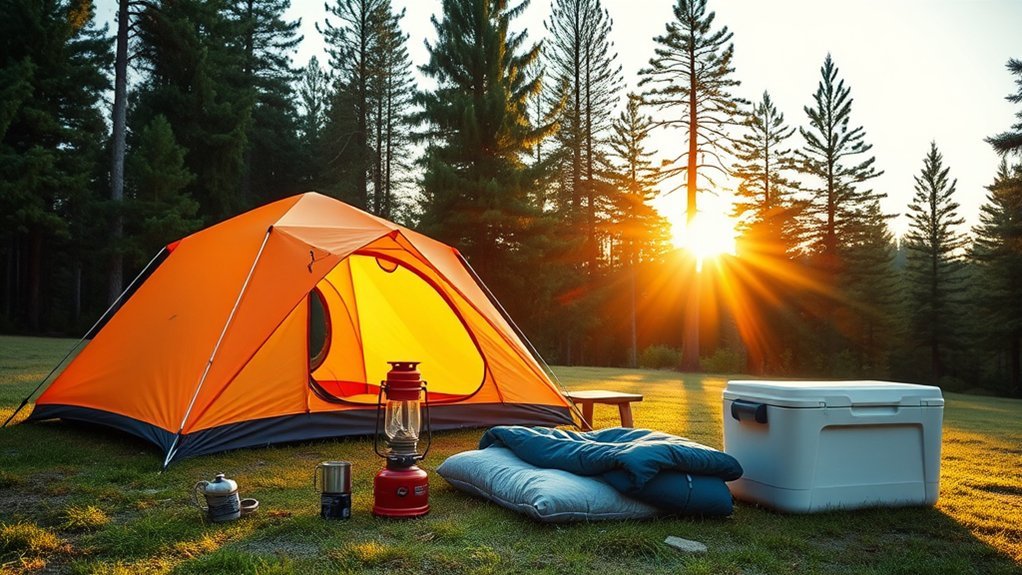
The best beginner camping checklist covers shelter, sleep, cooking, lighting, clothing, water, navigation, and emergencies. Pack for the conditions at your specific campground rather than relying on a one-size-fits-all list.
Shelter and Sleep System
- Tent: Choose one sized for your group, weather, and camping style. For car camping, a tent with one extra person of capacity often gives you more room for gear.
- Rainfly, poles, stakes, and guylines: Confirm that every part is in the bag. Add a footprint only when the tent maker recommends one or when the ground is rough.
- Sleeping bag or quilt: Use a model rated for temperatures below the expected overnight low, and adjust for how warmly or coldly you normally sleep.
- Sleeping pad: A pad adds comfort and reduces heat loss to the ground. A sleeping bag alone is not enough insulation underneath you.
- Pillow and sleep clothes: Keep a dry layer reserved for sleeping so damp daytime clothing does not chill you at night.
Camp Kitchen and Water
- Portable stove, fuel, lighter or matches, pot, utensils, mug, and a stable cooking surface
- Cooler or food bag appropriate for the menu and local wildlife rules
- Enough drinking water, plus a treatment method when potable water is not available
- Biodegradable soap, wash basin, sponge, trash bags, and a container for packing out food scraps
Clothing, Lighting, and Emergency Items
- Weather-appropriate layers, rain jacket, sturdy footwear, extra socks, and sun protection
- Headlamp or flashlight for each camper, with spare batteries or a charged backup
- First aid kit, personal medicines, whistle, map, compass or offline map, and emergency contacts
- Small repair kit with duct tape, cord, tent-pole sleeve, patch material, and a multitool where permitted
- Camp chairs or a table only when they fit your camping style and transport space
Pro Tip: Pitch the tent once at home. Learn how the poles, rainfly, stakes, vents, and guylines work, then repack every part together. A practice setup catches missing pieces before you reach camp.
Plan Your First Camping Trip Before You Leave
A developed campground is usually the simplest choice for a beginner because it may provide a reserved site, parking, toilets, potable water, picnic tables, fire rings, or food lockers. Amenities vary, so confirm what is actually available.
- Reserve the site: Check vehicle limits, tent-pad dimensions, check-in times, quiet hours, maximum group size, and cancellation rules.
- Read local regulations: Confirm rules for pets, fires, firewood, generators, food storage, parking, and campground access.
- Check the forecast and alerts: Look at daytime highs, nighttime lows, wind, rain, thunderstorms, heat, smoke, flood risk, and road conditions.
- Make a simple itinerary: Share the campground, site number, route, vehicle details, companions, and expected return time with a trusted person.
- Download information: Save maps, campground rules, reservation details, and emergency contacts for offline use.
- Pack and test: Test the stove outdoors, charge devices, inspect the first aid kit, and use a written checklist.
Note: Local orders always take priority over general camping advice. Fire restrictions, food-storage rules, weather closures, and water availability can change quickly.
Choosing the Right Campsite
In a developed campground, use the assigned campsite or tent pad even when it is closer to water than a general backcountry guideline. In dispersed or backcountry areas, follow the land manager’s rules and use durable surfaces. Leave No Trace recommends camping at least 200 feet from lakes and streams in appropriate backcountry settings, while also emphasizing established sites in popular areas.
Look Up, Look Down, and Look Around
- Look up: Avoid dead branches, damaged trees, unstable rock, and other overhead hazards.
- Look down: Choose level, durable ground with drainage. Avoid depressions, dry streambeds, soft shoulders, sharp objects, and fragile vegetation.
- Look around: Avoid cliff edges, animal trails, tall isolated trees, exposed ridges, flood-prone areas, and spots where runoff will cross the tent.
- Consider access: Make sure children, older adults, and anyone with mobility needs can safely reach the tent, toilet, water, and vehicle.
- Protect privacy: Keep your tent, chairs, pets, and gear within your site rather than spreading into neighboring campsites.
A good campsite is legal, durable, well drained, away from overhead hazards, and suited to the current weather—not simply the prettiest open patch of ground.
How to Set Up a Tent Campsite
- Park and inspect the site. Identify the tent pad, cooking area, food-storage location, water source, toilet, and emergency exit route.
- Pitch the tent first. Face the door away from the strongest expected wind when practical. Stake the corners, attach the rainfly, and tension guylines so water sheds away from the tent.
- Build the sleep system. Place sleeping pads beneath sleeping bags and keep sleep clothes dry.
- Organize lighting. Put headlamps where everyone can reach them before dark. Keep walkways clear of guylines, coolers, and loose gear.
- Create a separate cooking area. Use the campground table or another stable outdoor surface. Keep flames and hot cookware away from tents, dry grass, and children.
- Secure food and scented items. Use the method required for that location as soon as you arrive.
- Prepare for overnight weather. Put rain gear, shoes, water, and essential medicine where you can reach them without searching.
Meal Planning and Cooking Tips
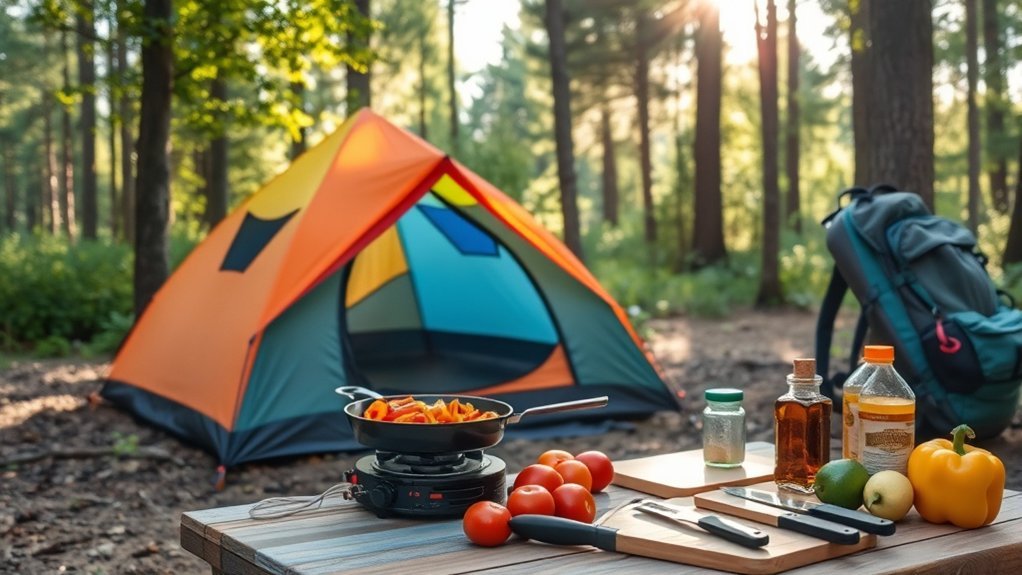
Plan familiar meals with short ingredient lists and minimal cleanup. Pre-measure dry ingredients, chop food at home when practical, and label each meal. Multi-use ingredients can reduce bulk and waste.
Easy Food for a First Camping Trip
- Breakfast: Oatmeal, fruit, nut butter, eggs, or breakfast wraps
- Lunch: Sandwiches, tortillas, shelf-stable tuna packets, fruit, or snack plates
- Dinner: One-pot pasta, chili, soup, rice bowls, or pre-cooked food reheated safely
- Snacks: Trail mix, granola bars, dried fruit, crackers, or other foods your group already enjoys
Keep perishable food cold in a well-packed cooler, separate raw foods from ready-to-eat foods, and wash hands before cooking. Bring a food thermometer when cooking meat or poultry rather than judging doneness by color alone.
Warning: Never use a camp stove, charcoal grill, fuel-burning lantern, or outdoor heater inside a tent or other enclosed sleeping space. The U.S. Consumer Product Safety Commission warns that carbon monoxide can build up without color or odor and can be fatal. Review the CPSC camping-equipment guidance.
Food and Scented-Item Storage
Wildlife rules differ by park and species. Some places require a campground locker or approved bear-resistant canister; others allow a specific hanging method. Follow the posted rule instead of assuming that a tree hang is acceptable. The National Park Service advises checking each park’s food-storage requirements and treating food, trash, toiletries, coolers, and other scented items as attractants. Never store food in your tent in bear country.
Safe Drinking Water and Cleanup
Use campground water only when it is marked potable. Clear stream or lake water can still contain germs. When water safety is uncertain, the CDC recommends boiling it or using an appropriate combination of filtration and disinfection according to the product instructions.
Wash dishes away from natural water, use only a small amount of biodegradable soap, strain food scraps, and pack the scraps out. Never dump grease, food, or soapy water directly into a lake or stream.
Safety Precautions for Beginners
Camping safety begins before the trip. Know the local hazards, carry the right gear, and make decisions based on conditions rather than on a fixed schedule.
Weather and Lightning
Check forecasts before leaving and continue monitoring conditions at camp. A tent is rain shelter, but it is not safe lightning shelter. The National Weather Service says a tent offers no lightning protection. When thunder threatens and a substantial building or hard-topped vehicle is available, move there rather than staying in the tent. Avoid exposed ridges, open fields, water, and isolated tall trees.
Navigation and Communication
- Carry a paper map or downloaded offline map, and know how to use it.
- Do not rely on cell service being available.
- Tell a trusted person where you are going and when to seek help if you do not return.
- Know the campground’s emergency number, nearest staffed location, and route to medical care.
- For remote trips, consider a satellite communicator or personal locator beacon and learn how it works before departure.
First Aid, Heat, and Cold
Pack a first aid kit that matches the group and trip, including personal medicines. Learn basic first aid before traveling far from help. Drink regularly, use sun protection, add or remove layers early, and change out of wet clothing. If someone develops severe symptoms, confusion, trouble breathing, loss of consciousness, uncontrolled bleeding, or another emergency, seek professional help rather than relying on a camping checklist.
Campfires
Use a fire only when it is allowed and conditions are safe. Keep water nearby, never leave the fire unattended, and keep children and pets at a safe distance. Before sleeping or leaving, add water, stir the ashes, and repeat until every ember is cold to the touch. Do not transport firewood where local rules prohibit it.
Insects and Ticks
Use an EPA-registered repellent recommended by the CDC, follow the label, wear protective clothing, and check people, pets, and gear for ticks. Citronella candles and essential oils should not replace a registered repellent where mosquito- or tick-borne disease is a concern.
Camping Etiquette and Best Practices
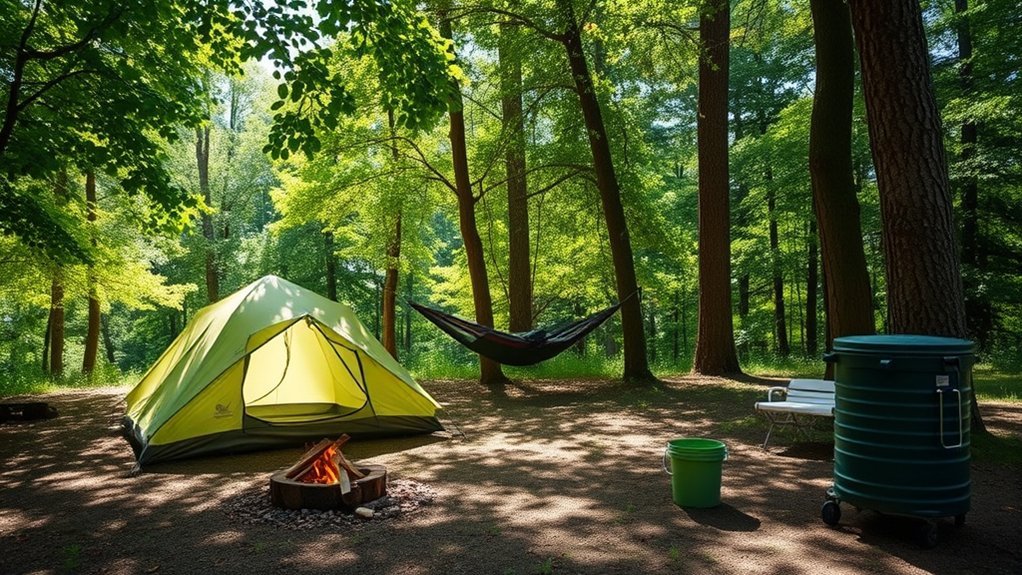
Good camping etiquette protects natural areas and makes the campground more enjoyable for everyone.
- Respect campground rules: Follow quiet hours, parking limits, pet policies, fire restrictions, and checkout times.
- Practice Leave No Trace: Use durable surfaces, pack out trash and food scraps, and leave plants, rocks, and cultural objects where you find them.
- Protect wildlife: Store food and scented items correctly, never feed animals, and observe them from a safe distance.
- Be considerate: Keep music and voices low, control lights after dark, and do not cut through occupied sites.
- Manage pets: Use a leash where required, clean up waste, prevent barking or chasing, and never leave a pet unattended in unsafe temperatures.
- Leave the site ready for the next camper: Remove micro-trash, dismantle temporary additions, and check the fire area before departing.
Common Beginner Camping Mistakes to Avoid
- Arriving after dark: You may miss hazards, struggle with setup, and disturb nearby campers.
- Skipping a practice pitch: Missing poles, unfamiliar clips, or tangled guylines are harder to solve at camp.
- Relying only on a sleeping bag: Without an insulated pad, the ground can pull heat from your body.
- Leaving the rainfly or guylines unused: A loosely pitched tent can collect condensation, flap in wind, or leak during rain.
- Cooking too close to the tent: Flames, hot cookware, grease, and carbon monoxide create avoidable hazards.
- Assuming all food-storage rules are the same: Requirements vary, and a method allowed in one park may be prohibited in another.
- Overpacking complicated meals: Too many ingredients create more cooler space, cleanup, and food waste.
- Ignoring the nighttime forecast: Daytime warmth does not guarantee a comfortable night.
- Depending only on a phone: Batteries fail and coverage disappears; carry offline information and a backup light.
Frequently Asked Questions
How do I choose the right tent for my needs?
Match the tent to your group size, expected weather, transport method, and desired comfort. Car campers can prioritize space and peak height, while backpackers must pay closer attention to weight. Check that the rainfly, ventilation, door layout, and packed size suit your trip.
What should I do if it rains while camping?
Attach and tension the rainfly, keep gear away from tent walls, place wet items outside the sleeping area, and maintain ventilation to reduce condensation. Do not dig drainage trenches. If flooding, strong wind, lightning, or falling branches threaten the site, move to a safer location.
Can I bring my pet camping with me?
Only when the campground permits pets. Bring a leash, water, food, waste bags, identification, bedding, and any needed medicine. Keep the pet controlled, protect it from heat and wildlife, and follow every site-specific rule.
How do I stay warm at night while camping?
Use a suitable sleeping bag with an insulated sleeping pad, wear dry sleep layers, eat and hydrate, and keep the tent ventilated. Add insulation beneath you before piling extra weight on top. Never bring a stove, grill, or outdoor heater into the tent for warmth.
What are the best ways to deal with insects?
Use an EPA-registered repellent as directed, wear long clothing when practical, keep tent screens closed, avoid standing water, and perform tick checks. Treat clothing or gear only with products labeled for that use.
How should I store food while camping?
Follow the land manager’s current rule. Use the provided food locker, an approved bear-resistant container, a locked vehicle where permitted, or the required hanging system. Secure food, trash, coolers, and toiletries whenever they are not in immediate use.
Can I cook inside my tent when the weather is bad?
No. Cook outdoors in a stable, ventilated location away from the tent and dry vegetation. Fuel-burning stoves, grills, lanterns, and heaters can cause fire, burns, oxygen depletion, and deadly carbon monoxide buildup in enclosed spaces.
Conclusion
Successful tent camping starts with a manageable destination, a tested shelter, a complete sleep system, simple meals, and a plan for weather and emergencies. Use the assigned campsite, follow local fire and food-storage rules, protect water and wildlife, and keep noise and trash under control. With those basics in place, your first trip can be comfortable, safe, and memorable without requiring complicated gear or expert skills.
Sources
- Leave No Trace — Travel and Camp on Durable Surfaces — campsite selection, durable surfaces, and the 200-foot backcountry guideline
- U.S. National Park Service — Storing Food — park-specific rules for food, trash, toiletries, lockers, canisters, and hangs
- U.S. Consumer Product Safety Commission — Portable Heaters and Camping Equipment — carbon-monoxide hazards from fuel-burning equipment in enclosed spaces
- National Weather Service — Outdoor Lightning Safety — why tents are not safe lightning shelters
- Centers for Disease Control and Prevention — Backcountry Water Treatment — boiling, filtration, and disinfection guidance
- Centers for Disease Control and Prevention — Preventing Tick Bites — registered repellents, protective clothing, and tick checks

