
Last Updated on July 25, 2026 by Daniel Globe
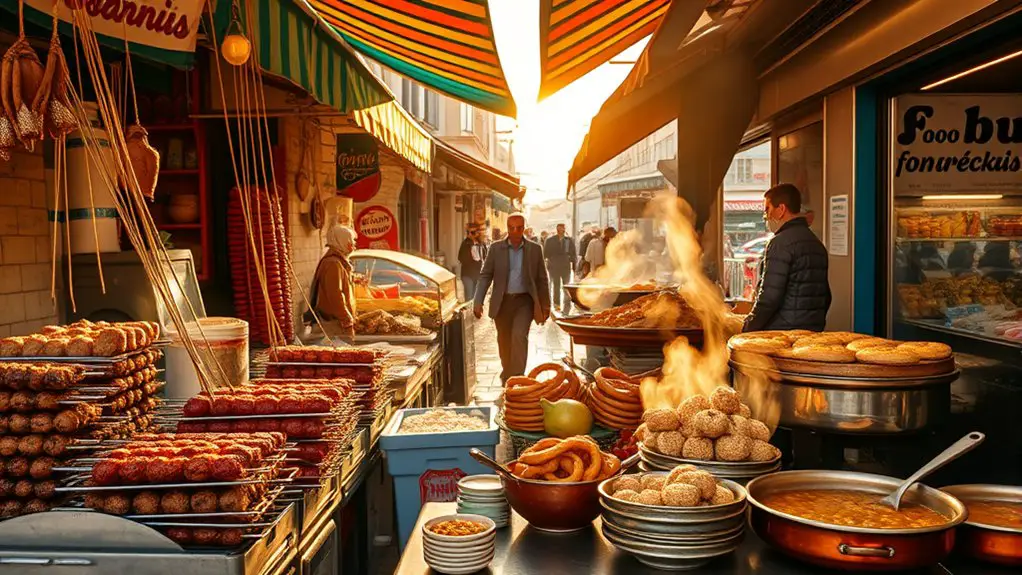
Istanbul’s Golden Horn is a rewarding place to explore the city through food, especially around the busy waterfronts of Eminönü and Karaköy and the historic neighborhoods stretching toward Fener, Balat, and Eyüp. Along the way, you can try classics such as balık ekmek, simit, midye dolma, kebabs, lahmacun, gözleme, ayran, baklava, dondurma, and künefe. Some come straight from carts or grills, while others are best found in bakeries and dessert shops.
Quick Answer
For a Golden Horn food crawl, start around Eminönü and Karaköy for balık ekmek, simit, midye dolma, grilled meats, and seasonal street snacks. Continue toward Fener, Balat, or Eyüp for cafés and casual Turkish food, then finish with baklava, dondurma, or hot künefe from a dessert shop.
Key Takeaways
- Balık ekmek is the essential Golden Horn bite: Eminönü and Karaköy are especially associated with Istanbul’s grilled fish sandwiches.
- Simit is an easy anytime snack: the sesame-coated bread ring is sold from carts and bakeries throughout Istanbul.
- Recipes vary: lahmacun, gözleme, kebabs, baklava, and other Turkish foods have regional and vendor-to-vendor differences.
- Not everything comes from a street cart: baklava, künefe, and dondurma are often better treated as dessert-shop stops on a street-food crawl.
- Use normal travel food-safety precautions: favor thoroughly cooked food served hot and take extra care with shellfish.
Disclosure: As an Amazon Associate I earn from qualifying purchases. Some links on this page are affiliate links, at no extra cost to you.
Where to Start Around the Golden Horn
The Golden Horn is an inlet of the Bosphorus bordered by several very different parts of Istanbul. That matters because there is no single “Golden Horn street-food market.” Instead, the best approach is to combine sightseeing with food stops as you move through the surrounding neighborhoods.
| Area | What to Look For |
|---|---|
| Eminönü | Balık ekmek, simit, midye dolma, roasted chestnuts, corn, döner, and other quick bites near the waterfront and market streets. |
| Karaköy | Fish sandwiches, bakeries, casual eateries, sweets, and coffee near the Golden Horn entrance. |
| Fener and Balat | Small cafés, bakeries, tea stops, pastries, and neighborhood restaurants mixed among the historic streets. |
| Eyüp | Traditional Turkish meals, tea, coffee, pastries, and dessert stops around the historic district and Pierre Loti area. |
Pro Tip: Treat the Golden Horn as a food route rather than a single dining district. Eminönü is the strongest starting point for classic street food, while Fener, Balat, and Eyüp work well for slower café, bakery, and dessert stops.
Sizzling Kebabs: A Taste of Tradition
Walk through Istanbul’s busy commercial streets and the smell of meat cooking over charcoal or on a rotating spit is hard to miss. Kebab is not one single dish but a broad family of grilled and roasted meat preparations with many regional styles.
Grilling meat on skewers has deep roots across Central and West Asian food traditions, and Ottoman cooks developed numerous versions over centuries. Rather than tying kebab to one simple invention story, it is more accurate to see today’s Turkish kebabs as part of a long and diverse cooking tradition.
Depending on the vendor, you may encounter şiş kebab cooked on skewers, köfte made from seasoned minced meat, or döner sliced from a rotating vertical spit. Seasoning, marinades, meat cuts, accompaniments, and bread all vary.
A good street-side serving is usually simple: freshly cooked meat, bread or flatbread, vegetables, and perhaps onion, herbs, yogurt, or a pepper-based accompaniment.
The Aromatic Allure of Lahmacun
Lahmacun is a thin round of dough spread with a finely chopped or minced meat mixture and baked until the base is crisp around the edges. Tomatoes, peppers, onion, parsley, garlic, and spices may appear in the topping, but recipes change from region to region.
It is commonly served with fresh parsley or greens and lemon, then folded or rolled before eating. Ayran makes a classic companion.
Traditional Culinary Delight
Lahmacun is sometimes described in English as “Turkish pizza,” but the comparison only goes so far. It normally has a much thinner base, no blanket of melted cheese, and a finely spread topping that cooks together with the dough.
The dish belongs to a wider culinary tradition shared across parts of Anatolia and the Middle East. Turkish regional versions have their own character: southeastern recipes may emphasize pepper, garlic, onion, or stronger seasoning, while other versions can be milder.
That regional variety is part of lahmacun’s appeal. There is no single spice formula that every baker follows.
Perfect Spice Blend
The seasoning in lahmacun should support the meat and vegetables rather than overwhelm them. Depending on the regional style and cook, the mixture may include red pepper, paprika, black pepper, cumin, or locally favored peppers such as isot.
Sumac may also appear on the table or with accompanying onions and salad, but it should not be treated as a mandatory ingredient in every lahmacun recipe.
The best way to appreciate the differences is to try lahmacun from more than one bakery or neighborhood rather than expecting every version to taste identical.
Fresh Ingredients Harmony
A typical topping combines finely prepared vegetables and herbs with minced lamb, beef, or a mixture chosen by the baker. Tomato, peppers, onion, parsley, and garlic are common ingredients.
The mixture is spread thinly across the dough so that the topping and base cook quickly together. A hot oven gives the dough browned edges while keeping the topping moist.
Fresh parsley, greens, sliced onion, and lemon can add brightness when the lahmacun is served.
Delightful Gözleme: A Savory Pastry Experience
Gözleme is a thin Turkish flatbread filled with savory ingredients, folded, and cooked on a hot flat surface. A traditional sac griddle is often used.
Fillings vary widely. Spinach and white cheese, minced meat and onion, or potato and herbs are among the familiar combinations.
As the thin dough cooks, browned spots develop on the surface while the filling heats inside. The result can be crisp in places while remaining soft and tender elsewhere.
Authentic Gözleme Ingredients
The dough is rolled thin before the filling is spread over part of the surface and the dough is folded closed.
- Spinach and White Cheese: Greens with salty Turkish white cheese make a common meat-free option.
- Minced Meat and Onions: A hearty filling with seasoned meat and onion.
- Potato and Herbs: A mild and filling version that may be suitable for vegetarians depending on the fat and other ingredients used.
Cheese, butter, meat, and seasoning vary by cook, so travelers with dietary restrictions should ask what is inside before ordering.
Traditional Cooking Techniques
Gözleme depends on thin dough, an evenly distributed filling, and fast cooking on a hot surface. The cook rolls the dough, adds the filling, folds it, and turns it as necessary so both sides brown without burning.
| Step | Description |
|---|---|
| Dough Prep | Dough is rolled into a thin sheet. |
| Filling | Spinach and cheese, meat, potato, or another savory filling is added. |
| Folding | The dough is folded to enclose the filling. |
| Cooking | The filled flatbread is cooked on a hot griddle until browned. |
| Serving | It is usually cut and served hot. |
Freshly cooked gözleme works well as either a snack or a light meal during a day of sightseeing.
Simit: The Turkish Street Food Staple
Few foods are easier to find in Istanbul than simit, the ring-shaped bread coated generously with sesame seeds. It appears at bakeries, ferry terminals, transit areas, and traditional street carts.
Simit is one of Istanbul’s most recognizable everyday foods: portable, sesame-crusted, and equally at home at breakfast or on a ferry ride.
Istanbul’s Governor’s Office notes an archival reference to simid-i halka from 1593, giving the bread a documented history stretching back to the Ottoman period. Official Istanbul guidance continues to list simit among the city’s defining street foods.
Classic simit has a browned exterior, toasted sesame flavor, and chewy crumb. It is often eaten plain or paired with Turkish tea, cheese, or other breakfast foods.
- For breakfast: pair it with tea and cheese.
- For sightseeing: eat it plain as a portable snack.
- For vegetarians: traditional simit can be a useful option, although ingredients should be confirmed when dietary restrictions are strict.
Balık Ekmek: The Golden Horn Classic You Should Not Miss
If one food deserves special attention in a Golden Horn guide, it is balık ekmek. The name simply means “fish bread,” and the dish usually combines grilled fish with bread and fresh accompaniments such as onion, lettuce, or other greens.
Visit Istanbul specifically highlights Eminönü and Karaköy along the Golden Horn as classic places to encounter balık ekmek. Eminönü’s waterfront, ferries, Galata Bridge views, and fish-sandwich vendors make the meal as much about location as ingredients.
The basic formula is intentionally uncomplicated: hot grilled fish, bread, vegetables, and lemon. That simplicity makes freshness and careful cooking particularly important.
Note: The exact fish species, garnishes, portion size, and price can change with season, supplier, and vendor. Treat balık ekmek as a style of sandwich rather than one rigid recipe.
Sweet and Sticky: Discovering Baklava
Baklava layers very thin pastry with butter or clarified butter, nuts, and sweet syrup. Pistachio and walnut versions are especially familiar in Türkiye, although many regional and modern variations exist.
For protected Antep Baklavası/Gaziantep Baklavası, the official European specification calls for Antep pistachios and syrup. It specifically states that honey should not be used in that protected style. The EU product specification is a useful reminder that “baklava” covers more than one recipe.
| Baklava Variety | What to Expect |
|---|---|
| Classic Walnut | Rich, nutty filling between crisp pastry layers |
| Pistachio | Aromatic pistachio flavor; strongly associated with Gaziantep-style baklava |
| Chocolate | A modern variation rather than a traditional benchmark |
| Almond | A less typical variation with a mild nut flavor |
| Hazelnut | A regional or specialty-shop variation with a distinct roasted-nut character |
Baklava is more commonly bought from a pastry or dessert shop than from a mobile street cart, but it fits naturally into an Istanbul food crawl.
Dondurma: The Unique Turkish Ice Cream
Dondurma can be noticeably denser and more elastic than many Western ice creams. The best-known regional style is Maraş Dondurması from Kahramanmaraş.
Traditional Maraş Dondurması is known for a dense, resistant texture that comes largely from its ingredients and working method rather than from ordinary ice-cream aeration alone.
The protected Maraş Dondurması specification from TÜRKPATENT describes ice cream made with goat milk and salep. Salep, derived from orchid tubers, contributes to the characteristic body and elasticity.
Some ice-cream recipes elsewhere may use mastic or other flavorings, but mastic is not a required defining ingredient of protected Maraş Dondurması.
In tourist areas, buying dondurma can also involve playful vendor theatrics, with long-handled paddles used to stretch, spin, and briefly pull the cone away before handing it over.
- Expect a denser texture than ordinary soft ice cream.
- Ask about ingredients if you have dairy or other food allergies.
- Remember that authentic regional Maraş Dondurması and generic “Turkish-style” ice cream are not necessarily identical.
Exploring the Flavors of Midye Dolma
Midye dolma is one of Istanbul’s best-known seafood snacks: mussel shells filled with a seasoned rice mixture and served with lemon.
The filling commonly includes rice, onion, salt, and spices, with recipes varying by producer. Pine nuts, currants, cinnamon, or herbs can appear in some versions, but they are not universal.
The usual eating ritual is simple. Open the shell, squeeze lemon over the filling, use one half of the shell like a small scoop if needed, and eat the mussel and rice together.
Midye dolma is sold in many parts of Istanbul and is particularly associated with quick, informal eating.
Warning: Shellfish can carry foodborne pathogens when handled or cooked improperly. The CDC advises travelers that thoroughly cooked food served hot is generally the safest choice. Pregnant travelers, older adults, people with liver disease, and people with weakened immune systems should be especially cautious with raw or undercooked shellfish.
Refreshing Ayran: The Perfect Beverage Companion
Ayran is a simple savory drink made from yogurt, water, and salt. Served cold, it pairs especially well with kebabs, lahmacun, gözleme, and other rich or spicy foods.
The drink may have a light foam on top, particularly when vigorously mixed. Some establishments also garnish ayran with mint or serve their own regional variation.
Commercial products differ, so claims about live probiotic cultures should be checked on the individual product rather than assumed for every glass or bottle.
Ayran contains dairy unless a clearly labeled alternative is used, which makes it unsuitable for people avoiding milk products.
Indulging in Künefe: A Sweet Cheese Delight
Künefe combines fine strands of pastry with cheese, butter, and syrup, producing a dessert that is crisp outside and soft, stretchy, and rich inside.
Antakya has an especially important connection to the dish. Antakya Künefesi received EU Protected Geographical Indication status in 2023, recognizing it as a regional specialty of Türkiye.
That does not mean every form of künefe or the wider kunafa dessert family originated exclusively in modern Antakya. Related preparations are found across the Levant and eastern Mediterranean. The protected Antakya version is a specific regional expression of that broader tradition.
Künefe is traditionally served hot so the cheese remains soft. Pistachio is a common garnish, and some shops add kaymak or other rich accompaniments.
Unlike simit or chestnuts, künefe is usually a sit-down or takeaway dessert-shop stop rather than food eaten directly from a mobile cart.
Other Istanbul Street Foods to Watch For
Your Golden Horn walk may also bring you past other familiar Istanbul snacks. Availability changes by neighborhood and season, so think of these as foods to watch for rather than a required checklist.
- Roasted chestnuts: especially common in cooler weather and sold from street carts.
- Roasted or boiled corn: a simple snack frequently sold from carts in busy pedestrian areas.
- Kokoreç: seasoned lamb or sheep offal cooked thoroughly, chopped, and commonly served in bread.
- Tavuk pilav: chicken served over rice as a filling quick meal.
- Çiğ köfte: modern meat-free versions are commonly made with bulgur, pepper paste, spices, herbs, and other seasonings, often wrapped with greens.
Current guidance from the Istanbul Governor’s Office continues to highlight foods such as simit, balık ekmek, chestnuts, corn, and lokma as part of the city’s street-food identity.
Vegetarian, Allergy, and Dietary Tips
Istanbul street food offers several meat-free possibilities, but recipes and cooking fats vary. Ask before ordering when your restriction is strict.
- Vegetarian options: simit, roasted chestnuts, corn, potato or spinach gözleme, some cheese gözleme, and meat-free çiğ köfte can work depending on ingredients.
- Gluten: simit, lahmacun, gözleme, baklava, and most breads contain wheat.
- Sesame: simit is heavily coated in sesame and sesame can appear elsewhere.
- Dairy: ayran, dondurma, cheese gözleme, and künefe commonly contain milk ingredients.
- Nuts: baklava and künefe may contain or be garnished with pistachios, walnuts, hazelnuts, or other nuts.
- Shellfish: midye dolma contains mussels and is not suitable for anyone with a shellfish allergy.
Cross-contact can be difficult to assess at busy stalls, bakeries, and small kitchens. Travelers with severe allergies should communicate the allergy clearly and choose establishments that can confidently explain ingredients and preparation.
How to Choose Street Food Safely
Street food is part of the fun of exploring Istanbul, but sensible food-safety habits still matter.
- Favor food that is thoroughly cooked and served hot.
- Be cautious with raw or undercooked meat, fish, eggs, and shellfish.
- Choose dairy products from sources where proper refrigeration is evident.
- Pay attention to how food is stored and handled before it reaches you.
- If you are at higher risk of serious foodborne illness, be more conservative with shellfish and foods whose handling is uncertain.
Note: Do not rely on an old dollar price guide for Istanbul street food. Prices can change quickly and are normally quoted in Turkish lira. Check the current menu or displayed price before ordering, particularly when choosing seafood or items sold by weight or portion.
Frequently Asked Questions
What Is the Best Time to Visit Golden Horn for Street Food?
Street food is available throughout the year, so there is no single best season. Spring and autumn are comfortable for long walks, summer brings longer evenings, and winter is a good time to encounter seasonal snacks such as roasted chestnuts. Individual vendors keep their own hours, so a fixed 6–8 PM peak should not be treated as a rule.
Are There Vegetarian Options Available in Golden Horn Street Food?
Yes. Simit, roasted chestnuts, corn, some potato or spinach gözleme, cheese gözleme, and meat-free çiğ köfte can be suitable choices. Recipes vary, so ask about butter, cheese, meat stock, or shared cooking surfaces if your diet is strict.
How Do Locals Typically Enjoy Their Street Food?
Many Istanbul street foods are designed for quick, informal eating. Simit may be paired with tea, lahmacun with greens and ayran, and midye dolma with lemon. Other dishes, especially künefe and baklava, are more often eaten at a pastry shop, café, or dessert counter.
What Is the Average Cost of Street Food in Golden Horn?
There is no dependable fixed average because prices vary by food, portion, neighborhood, season, and inflation. Prices are normally shown in Turkish lira. Check the current menu or ask the price before ordering rather than relying on an older U.S.-dollar estimate.
Are There Guided Street Food Tours Available in Golden Horn?
Yes, Istanbul food walks are available, but routes differ. Some concentrate on Kadıköy, Beyoğlu, or other districts rather than the Golden Horn. Before booking, check whether the itinerary specifically includes places such as Eminönü, Karaköy, Fener, Balat, or Eyüp.
What Is the Most Iconic Street Food Near the Golden Horn?
Balık ekmek is one of the strongest choices because Eminönü and Karaköy are closely associated with Istanbul’s waterfront fish sandwiches. Simit and midye dolma are also easy to encounter around busy central areas.
How Can I Reduce Food-Safety Risk When Eating Street Food?
Choose food that is thoroughly cooked and served hot, avoid raw or undercooked shellfish and meat, and pay attention to storage and handling. Travelers at higher risk of serious foodborne illness should be especially cautious with shellfish and foods whose refrigeration or preparation is uncertain.
Conclusion
The Golden Horn gives you a useful cross-section of Istanbul food culture, from the fish sandwiches of Eminönü and Karaköy to simit carts, stuffed mussels, grilled meats, flatbreads, yogurt drinks, and rich desserts. Start with balık ekmek by the waterfront, add simit, lahmacun, gözleme, or midye dolma as you explore, and save room for baklava, dondurma, or hot künefe. Recipes change from one cook and region to another, so part of the experience is tasting those differences rather than searching for one supposedly definitive version.
Sources
- Istanbul Governor’s Office — İstanbul’un Sokak Lezzetleri — current official guidance on characteristic Istanbul street foods.
- Visit Istanbul — Street Delicacies — Golden Horn-area guidance for balık ekmek and other Istanbul street foods.
- GoTürkiye — Golden Horn — official geographic and neighborhood context for the Golden Horn.
- CDC Yellow Book — Food and Water Precautions for Travelers — food-safety guidance for travelers and shellfish precautions.
- TÜRKPATENT — Maraş Dondurması Geographical Indication — protected ingredients and characteristics of Maraş Dondurması.
- EUR-Lex — Antakya Künefesi PGI Registration — official EU registration of Antakya Künefesi.

