
Last Updated on July 25, 2026 by Daniel Globe
Southwest Airlines has operated scheduled passenger flights since 1971 and has carried millions of travelers across the United States and nearby international markets. Its history includes several accidents and serious incidents, so describing the airline as “crash-free” would be inaccurate. The more useful question is what happened, whether fatalities occurred, and what investigators learned from each event.
Quick Answer
Yes, Southwest Airlines has experienced accidents, including runway overruns, a fuselage rupture, a nose-gear collapse, and an in-flight engine failure. Flight 1248 caused one fatality on the ground in 2005, while Flight 1380 caused one passenger fatality in 2018. A simple “crash count” can be misleading because official records distinguish accidents from incidents.
Key Takeaways
- Southwest has had multiple events classified by the National Transportation Safety Board as accidents.
- The 2005 Flight 1248 runway overrun killed a child in a vehicle outside Chicago Midway Airport.
- The 2018 Flight 1380 engine failure and cabin depressurization killed one passenger.
- Several other major accidents, including events in 2000, 2011, and 2013, caused injuries or substantial aircraft damage but no fatalities.
- Southwest remains subject to FAA regulation and oversight, but no airline can guarantee that an accident or serious incident will never occur.
Disclosure: As an Amazon Associate I earn from qualifying purchases. Some links on this page are affiliate links, at no extra cost to you.
Has Southwest Airlines Ever Crashed?
Yes. In everyday speech, several Southwest events could reasonably be called crashes. However, aviation investigators normally use the more specific terms accident and incident.
Note: “Crash” is an informal word and does not have one universally applied statistical definition. The NTSB classifies events according to factors such as fatalities, serious injuries, and substantial aircraft damage. That is why different websites may report different Southwest crash totals.
Instead of relying on a single number, the following timeline summarizes several of the airline’s most significant NTSB-investigated accidents.
| Date and Flight | What Happened | Fatalities |
|---|---|---|
| March 5, 2000 Flight 1455 |
The Boeing 737 overran the runway while landing at Burbank, crossed the airport boundary, and stopped on a city street. The NTSB attributed the accident primarily to excessive approach speed, an excessive flight-path angle, and failure to abandon an unstabilized approach. | None; two passengers were seriously injured. |
| December 8, 2005 Flight 1248 |
The aircraft overran a snow-covered runway at Chicago Midway, broke through the airport perimeter, and struck vehicles. The NTSB investigation identified delayed use of reverse thrust and several contributing operational and airport factors. | One child in a vehicle outside the airport was killed. No one aboard the aircraft died. |
| April 1, 2011 Flight 812 |
A section of fuselage skin ruptured during climb, causing rapid cabin decompression. The pilots made an emergency descent and landed safely. The NTSB found that improper installation during manufacturing led to fatigue cracking and eventual failure. | None; two people sustained minor injuries. |
| July 22, 2013 Flight 345 |
The nose landing gear collapsed during landing at New York LaGuardia Airport, and the aircraft slid on its nose. The NTSB attributed the accident to an attempted recovery from an unstabilized approach instead of a go-around, with failure to follow procedures as a contributing factor. | None; nine people received minor injuries. |
| April 17, 2018 Flight 1380 |
A fatigue-fractured engine fan blade led to separation of engine inlet and fan-cowl components. Debris damaged the fuselage near a window, causing rapid depressurization. The crew diverted to Philadelphia and landed safely. See the NTSB investigation. | One passenger died; eight passengers sustained minor injuries. |
Two fatal events are central to Southwest’s safety history: Flight 1248 caused one fatality on the ground in 2005, and Flight 1380 caused one passenger fatality in 2018.
How Safe Is Southwest Airlines?
Southwest operates within the same federal safety framework that applies to other major U.S. passenger airlines. Its aircraft, maintenance programs, pilot qualifications, dispatch procedures, training programs, and operating practices are subject to Federal Aviation Administration requirements and surveillance.
The airline’s accident history does not support saying that it has never experienced fatal events. At the same time, accident history alone cannot produce a simple or permanent safety ranking. A meaningful comparison would need to consider the number of flights operated, passenger exposure, fleet size, routes, time period, event severity, and whether the source counts accidents, incidents, diversions, or mechanical reports.
Southwest’s 2025 Form 10-K states that the company began scheduled service on June 18, 1971. As of December 31, 2025, it operated 803 Boeing 737 aircraft and reported approximately 10,321 pilot full-time equivalents. The airline’s size means that raw event totals should not be interpreted without operational context.
Southwest Airlines Safety Measures and Protocols
Southwest is a Part 121 air carrier, meaning its scheduled airline operations are governed by detailed FAA requirements. The FAA’s Southwest Airlines Certificate Management Office is responsible for certificate-management oversight of the carrier.
Airline safety controls include documented operating procedures, dispatch support, weather assessment, crew qualification, recurrent training, aircraft inspection requirements, internal reporting, and risk analysis. These controls are intended to identify hazards before they develop into accidents, but their effectiveness depends on accurate information, consistent compliance, effective oversight, and timely corrective action.
Southwest’s safety performance should not be evaluated only through the airline’s own descriptions. Independent findings matter as well. A 2020 U.S. Department of Transportation Office of Inspector General audit identified weaknesses in FAA oversight of Southwest’s systems for managing safety risks. The DOT OIG’s public recommendation tracker shows that all 11 recommendations were eventually closed, with the final recommendations closed in 2026.
Following several operational events, the FAA stated in July 2024 that it had increased oversight of Southwest through its risk-based Certificate Holder Evaluation Process. Increased oversight does not by itself prove that an airline is unsafe, but it is important context that should not be omitted from an independent safety review.
Southwest Airlines Fleet and Maintenance
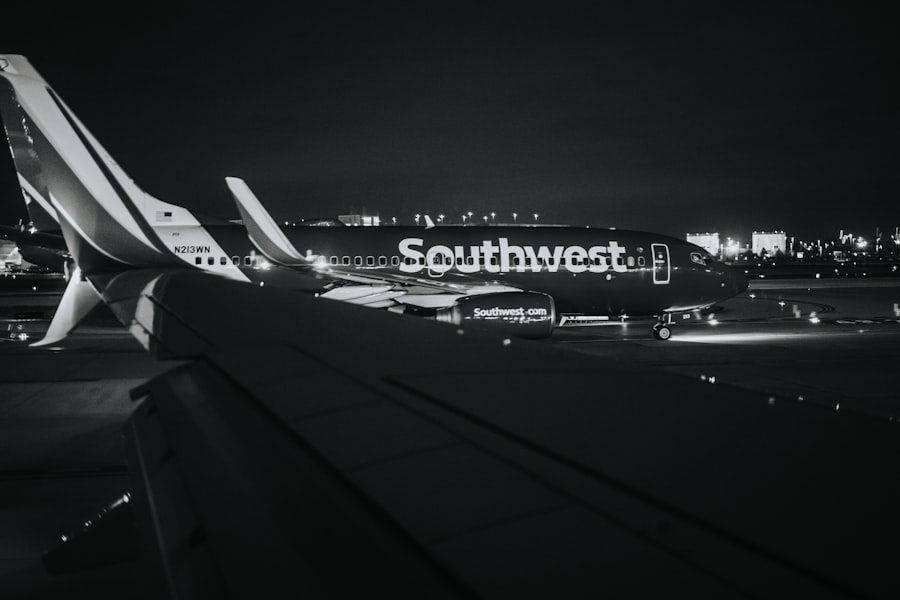
Southwest operates an all-Boeing 737 fleet. According to the company’s 2025 Form 10-K, the fleet consisted of 803 aircraft on December 31, 2025:
- 305 Boeing 737-700 aircraft
- 198 Boeing 737-800 aircraft
- 300 Boeing 737-8 aircraft
Using one aircraft family can simplify parts of scheduling, maintenance, flight operations, safety management, and training. It also creates concentration risk because a fleet-wide technical issue, regulatory restriction, or manufacturer problem affecting the Boeing 737 can influence a large share of Southwest’s operations.
Airline aircraft are maintained through scheduled inspections, component-life limits, airworthiness directives, manufacturer instructions, reliability monitoring, defect reporting, and corrective maintenance. Aircraft may not legally return to service unless required work has been completed or an item is handled under an approved procedure such as a minimum equipment list.
Maintenance should not be described as flawless or self-validating. The FAA, manufacturers, airline personnel, contractors, and independent investigators all have roles in identifying defects and improving standards. The 2011 Flight 812 fuselage rupture and the 2018 Flight 1380 engine failure demonstrate why aging-aircraft inspections, manufacturing quality, component inspection methods, and continued-airworthiness programs require ongoing review.
Products Worth Considering


Colorful gift box shows the full aircraft and has cutouts that provide a peek at the mug inside

Southwest Airlines Pilot Training and Experience
Southwest reported approximately 10,321 pilot full-time equivalents as of December 31, 2025. Its Wings Complex in Dallas includes a Leadership Education and Aircrew Development Center with classroom space and 26 Boeing 737 flight simulators.
| Training or Qualification Area | What It Means |
|---|---|
| FAA certification | Southwest publishes an FAA Airline Transport Pilot certificate with airplane multiengine land privileges and a current first-class medical certificate among its minimum qualifications. |
| Flight experience | The FAA’s standard ATP pathway normally requires 1,500 flight hours, although restricted-ATP pathways permit certain qualified military pilots and graduates of approved aviation programs to qualify with fewer hours. Southwest publishes additional preferred experience on its careers website. |
| Aircraft-specific training | Pilots receive training and checking for the aircraft they operate, including systems, normal procedures, abnormal procedures, and emergency scenarios. |
| Recurrent training | Part 121 pilots must complete recurring training and proficiency checks rather than relying only on their initial qualification. |
| Crew resource management | Training addresses communication, workload, decision-making, leadership, monitoring, and coordination among crewmembers. |
Training requirements continue to evolve as investigators identify new risks. In May 2026, the NTSB recommended more realistic smoke-in-cockpit simulation training after investigating a December 2023 Southwest incident in which a bird strike was followed by smoke rapidly filling the flight deck. The recommendation addressed a broader industry training gap rather than claiming that only Southwest faced the issue.
Southwest Airlines Safety Culture and Oversight
A safety culture depends on whether employees can report hazards, whether managers investigate those reports, whether risk assessments identify root causes, and whether corrective actions are completed and verified. A policy stating that safety comes first is useful only when daily operational decisions consistently support it.
Southwest states that safety is its first operational priority. Independent oversight is nevertheless essential. The FAA monitors the airline’s operating certificate, while the NTSB investigates qualifying accidents and serious incidents and may issue recommendations to the airline, manufacturers, the FAA, or other organizations.
The DOT OIG’s 2020 audit found problems involving oversight, weight-and-balance information, imported-aircraft records, risk assessments, and evaluation of safety culture. FAA accepted the audit’s 11 recommendations, and the public record shows that the recommendations were closed between 2020 and July 2026.
This history supports a balanced conclusion: Southwest has formal safety systems and extensive regulatory requirements, but those systems have also required scrutiny and improvement. That is normal in a safety-critical industry where lessons from accidents and incidents are used to update equipment, procedures, training, and oversight.
Southwest Airlines Emergency Response and Preparedness
Pilots and flight attendants train for emergencies such as rejected takeoffs, evacuations, fires, smoke, decompression, severe turbulence, medical events, and equipment malfunctions. The exact response depends on the aircraft’s condition, weather, airport facilities, and information available to the crew.
The emergency landings following Flights 812 and 1380 demonstrate why crew coordination and procedural training matter. In both cases, the pilots descended and diverted after an in-flight failure. Flight 1380 also showed how a component failure can create a chain of hazards involving structural damage, cabin depressurization, passenger injury, and limited time for decision-making.
Passengers also have a role in emergency preparedness. Flight attendants provide a briefing before departure because exit locations, brace positions, oxygen-mask procedures, flotation equipment, and evacuation commands may differ by aircraft or situation.
Pro Tip: Keep your seat belt fastened whenever you are seated, even when the sign is off. Unexpected turbulence is a common source of passenger and crew injuries, and a properly fastened belt can reduce the risk of being thrown from the seat.
Products Worth Considering

Home Health Aids Re-usable Transport Seat/Unit Megamover Portable Transport Portable Stretcher 8 heavy duty, black 1 1/2 webbing handles Royal blue all impervious material...
Southwest Airlines Incident Reporting and Analysis
Aviation safety programs rely on more than accident investigations. Airlines collect reports about mechanical defects, unstable approaches, procedural deviations, turbulence injuries, ground damage, near misses, and other events that may reveal a developing risk.
Useful reporting systems should allow safety personnel to:
- Identify repeated events or trends.
- Separate immediate causes from deeper organizational causes.
- Assess the probability and possible severity of a hazard.
- Assign corrective actions to responsible teams.
- Verify that the corrective action actually reduced the risk.
- Share relevant information with regulators and industry safety programs.
Not every report indicates that an aircraft was unsafe to fly, and not every diversion becomes an NTSB-classified accident. Reports are valuable because they can reveal warning signs before a more serious event occurs.
What Passengers Can Do to Improve Their Safety
Passengers do not control aircraft maintenance or airline operating procedures, but they can reduce their risk of injury by following a few basic practices:
- Keep the seat belt low and tight whenever seated.
- Listen to the safety briefing, even when you fly frequently.
- Count the rows between your seat and the nearest usable exits.
- Keep bags and personal items out of aisles and exit paths.
- Follow flight-attendant instructions immediately during turbulence or an emergency.
- Leave baggage behind during an evacuation.
- Report smoke, overheating batteries, unusual odors, or damaged equipment to a crewmember promptly.
Products Worth Considering

Universal Design: Designed to fit all airplane seat belt extenders, our adjustable extender is suitable for all airlines, including Southwest Airlines' 737-800/737MAX8. Never worry about compatibility again.

✈️[Adjustable Length]: The longer adjustable size of 7-31" means for large-size passengers. such as big waists, pregnant women, and those who have just completed abdominal surgery, and improve comfort.

1.Widely Compatible: This extender is for airplanes seat belt,which is the most common in North American airplanes as well as other airlines globally. Fits most of airplane seat belts, except for Southwest Airlines airplanes.
Southwest Airlines Safety Record: Bottom Line
Southwest Airlines has experienced multiple accidents and serious incidents. It is therefore inaccurate to say that the airline has never crashed or has never had a fatal accident. The verified record includes one fatality on the ground following the 2005 Flight 1248 runway overrun and one passenger fatality during the 2018 Flight 1380 engine failure and depressurization.
The record also includes successful emergency responses in which crews landed damaged aircraft without loss of life. Southwest operates under extensive FAA requirements, uses an all-Boeing 737 fleet, conducts recurrent pilot training, and maintains formal safety-management processes. Those controls reduce risk but cannot eliminate it entirely.
For travelers evaluating safety, official NTSB investigations, FAA records, current regulatory actions, and the airline’s public filings are more dependable than unsourced claims that an airline has “never crashed” or is automatically safer than every competitor.
Frequently Asked Questions
Has Southwest Airlines ever experienced a crash?
Yes. Southwest has experienced several events commonly described as crashes, including runway overruns and landing accidents. Official sources normally classify events as accidents or incidents rather than relying on the informal word “crash.”
How many crashes has Southwest Airlines had?
There is no single reliable total because “crash” is not a consistently defined regulatory category. Notable NTSB-classified Southwest accidents include Flight 1455 in 2000, Flight 1248 in 2005, Flight 812 in 2011, Flight 345 in 2013, and Flight 1380 in 2018. Other less prominent accidents and incidents may also appear in official databases.
Has anyone died in a Southwest Airlines accident?
Yes. A child in a vehicle outside Chicago Midway Airport died after Flight 1248 overran the runway in 2005. One passenger died after an engine failure damaged the fuselage and caused rapid depressurization on Flight 1380 in 2018.
What caused Southwest Flight 1248 to overrun the runway?
The NTSB identified the pilots’ delayed use of reverse thrust as the probable cause. Contributing factors included Southwest guidance and training, landing-distance calculations, weather and runway conditions, the decision not to divert, and the limited runway safety area at Chicago Midway.
What caused the fatal Southwest Flight 1380 accident?
A fatigue crack caused an engine fan blade to fracture. Parts of the engine inlet and fan cowl separated and struck the aircraft. Damage near a cabin window caused rapid depressurization and the passenger fatality.
Does Southwest use only Boeing 737 aircraft?
Yes. As of December 31, 2025, Southwest reported an all-Boeing 737 fleet containing 803 aircraft: 305 Boeing 737-700s, 198 Boeing 737-800s, and 300 Boeing 737-8s.
Is Southwest Airlines considered safe to fly?
Southwest is a federally certificated U.S. passenger airline operating under FAA safety requirements and oversight. It has extensive training, maintenance, and risk-management systems, but it also has a documented accident history. No responsible assessment can guarantee that any airline is completely risk-free.
Sources
- NTSB: Southwest Airlines Flight 1455 — Burbank runway-overrun facts, injuries, probable cause, and recommendations.
- NTSB: Southwest Airlines Flight 1248 — Chicago Midway runway overrun, ground fatality, contributing factors, and corrective actions.
- NTSB: Southwest Airlines Flight 812 — fuselage rupture, rapid decompression, injuries, and manufacturing-related fatigue findings.
- NTSB: Southwest Airlines Flight 345 — nose-gear collapse, injuries, unstabilized approach, and procedural findings.
- NTSB: Southwest Airlines Flight 1380 — fan-blade fracture, cabin depressurization, passenger fatality, and safety recommendations.
- Southwest Airlines 2025 Form 10-K — current fleet composition, pilot staffing, training facilities, operations, and regulatory context.
