
Last Updated on September 10, 2026 by Daniel Globe
Hiking boots that are too big can feel comfortable when you first put them on, yet become frustrating once you start climbing or descending. The clearest warning signs are repeated heel lift, your foot sliding forward or sideways, excessive empty space around the midfoot, hot spots, blisters, and the need to overtighten the laces just to keep your foot in place. A good hiking boot should hold the heel and midfoot securely while still leaving enough room for your toes to move without hitting the front.
Quick Answer
Your hiking boots are probably too big if your heel repeatedly lifts, your foot slides inside the boot, the upper has excess empty volume, or you must crank the laces painfully tight to stay secure. Test them with your normal hiking socks on level ground, uphill, and downhill before deciding.
Key Takeaways
- Repeated heel lift and forward or sideways foot movement are stronger signs of oversized boots than the printed size number alone.
- Your heel and midfoot should feel secure, while your toes should have room to move without striking the front on descents.
- Blisters and hot spots can result from excess movement, but they can also come from moisture, socks, boot construction, inadequate break-in, or a boot that is too small.
- Thicker socks, insoles, and heel-lock lacing can help with a small amount of excess volume, but they cannot reliably correct a boot that is substantially too long, wide, or high-volume.
- Persistent numbness, balance problems, severe pain, wounds, or toenail changes should not automatically be blamed on boot size.
At a Glance
| Time Required | 10–20 minutes for an indoor fit test; longer if you can safely test an incline |
| Difficulty | Easy |
| Tools Needed | Your normal hiking socks, any orthotics you use, and a safe staircase or incline if available |
| Cost | $0 for testing; replacement cost depends on the boot |
Disclosure: As an Amazon Associate I earn from qualifying purchases. Some links on this page are affiliate links, at no extra cost to you.
How Hiking Boots Should Fit
A hiking boot should feel secure without squeezing your foot. Your heel should sit firmly in the heel cup, and your midfoot should not slide from side to side. Your toes need space to wiggle and enough forward clearance that they do not strike the front of the boot during a descent.
Do not judge fit from the labeled size alone. Foot length, width, instep height, heel shape and overall foot volume all matter. Different models from the same manufacturer can also fit differently.
Columbia Sportswear’s hiking-boot fit guidance recommends trying footwear with your hiking socks and checking for heel lift, excessive toe-box space and movement inside the boot.
Pro Tip: Try hiking boots later in the day when your feet have already been active, and wear the same socks and orthotics you intend to use on the trail. This gives you a more realistic fit test than trying them with thin everyday socks first thing in the morning.
How to Tell If Hiking Boots Are Too Big
1. Your Heel Lifts With Each Step
Heel movement is one of the clearest signs that a boot may have too much length, width or internal volume. Lace the boots normally and walk on level ground. Then walk uphill or climb a few stairs. Your heel should remain seated rather than noticeably lifting with every stride.
A tiny amount of movement may occur in some stiff new boots, but repeated lifting that creates rubbing or makes the boot feel loose deserves attention.
2. Your Foot Slides Forward on Descents
Test the boots on a safe downward slope or staircase. Your toes should not repeatedly slam into the front. If they do, do not immediately assume the boot is too small. Your foot may be sliding forward because the boot has too much volume or because the heel and midfoot are not being held securely.
Try normal firm lacing or a heel-lock technique. If your foot still surges forward despite secure lacing, a different size or boot shape is usually a better solution.
3. Your Foot Moves Side to Side
Extra width can be just as problematic as extra length. Your forefoot needs room to spread naturally, but the whole foot should not shift sideways whenever you step on angled or uneven ground.
Side-to-side movement may mean the boot is too wide or has too much volume for your foot shape, even when the length appears correct.
4. There Is Too Much Empty Space Above Your Foot
Some hikers buy the correct nominal length but choose a model with excessive volume through the instep or midfoot. A warning sign is a large amount of space between the top of your foot and the boot even after comfortable lacing.
If tightening the laces enough to remove that space causes painful pressure across the top of your foot, the problem may be boot shape rather than your lacing technique.
5. You Must Overtighten the Laces
Properly fitted boots should not require extreme lace tension simply to stop your foot moving. If the upper bunches deeply or the laces become uncomfortable before the foot feels secure, the boot may have too much volume.
This is especially useful when comparing two sizes or two models with different lasts.
6. You Develop Repeated Heel or Toe Hot Spots
Blisters do not automatically prove a boot is oversized, but repeated hot spots in areas where the foot is sliding are an important clue. Excess movement increases repetitive shear between the foot, sock and footwear.
Research on foot blisters in hikers identifies inappropriate footwear, moisture, activity duration and socks among several contributing factors, so fit should be considered alongside those other variables.
7. You Feel Less Precise or Stable on Uneven Ground
A hiking boot should move with your foot rather than forcing you to control the boot separately. If the footwear feels sloppy during side steps, rock crossings or uneven terrain, check whether your foot is moving inside it.
This differs from poor outsole traction. A boot can have a grippy sole and still fit too loosely.
8. Extra Socks or Insoles Are the Only Things Making the Boots Wearable
An aftermarket insole can improve support or remove a small amount of excess volume, and hiking socks naturally affect fit. However, needing unusually thick socks, multiple sock layers or a bulky footbed solely to keep the boot attached to your foot suggests the underlying fit may be wrong.
A hiking boot needs toe room without allowing the entire foot to roam inside the shoe. Space for your toes and a loose boot are not the same thing.
Frequent Tripping or Slipping
Frequent tripping can occur when oversized footwear feels cumbersome or when the foot is not held securely enough for precise placement. Slipping, however, may also come from worn or inappropriate outsoles, wet terrain or environmental hazards rather than boot size.
Check two things separately: first, whether your foot is sliding inside the boot; second, whether the outsole itself is sliding against the ground. Only the first is primarily a fit issue.
Everyday footwear can also affect stability. High heels, worn soles and footwear that does not secure the foot can reduce stability. CDC fall-prevention guidance likewise recommends footwear that fits correctly and provides good traction, particularly for people already at increased fall risk.
Peripheral neuropathy can reduce sensation in the feet and make changes in terrain harder to detect. If tripping continues in multiple pairs of correctly fitted footwear, do not assume that boot size is the only possible cause.
Warning: New or worsening balance problems, numbness, weakness, unexplained falls or difficulty walking that occurs even without the hiking boots deserves medical evaluation. Footwear troubleshooting cannot diagnose neurological, vestibular or musculoskeletal conditions.
Blisters and Hot Spots
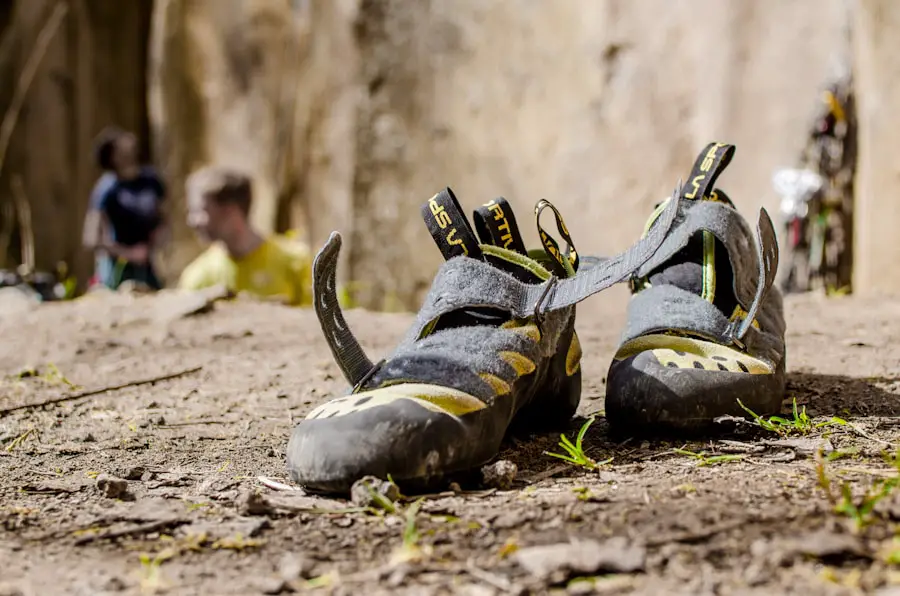
Blisters and hot spots are common during long walks and hikes. A hot spot is an irritated area that develops before a full blister and should be treated as an early warning to stop and correct the source of movement or pressure.
Loose boots can contribute when the heel repeatedly lifts or the foot slides, but fit is only part of the picture. Moisture, repetitive activity, socks, terrain, boot construction and conditioning also influence blister formation. A 2024 peer-reviewed review describes foot friction blisters as the result of repeated shear deformation rather than simply surface “rubbing.”
At the first sign of a hot spot, stop and inspect your socks and footwear. Remove wrinkles or debris, retie the boot if necessary, and protect the irritated skin with an appropriate blister dressing or moleskin. Moisture-wicking hiking socks can also help manage moisture during long hikes.
See peer-reviewed research on foot friction blisters for more detail on the mechanism.
Pain and Discomfort
| What You Feel | What It May Suggest |
| Heel rubbing or heel blister | Heel lift, excess volume, sock movement or poor heel shape match |
| Toes strike the front downhill | Insufficient length or a foot that is sliding forward because the heel/midfoot is not secure |
| Numbness or pinching | Often points toward excessive pressure, a narrow shape or overtightened laces rather than simply a boot that is too big |
| Persistent heel or arch pain outside the boots | May have a cause other than sizing and can warrant professional evaluation |
Foot pain should not automatically be interpreted as proof that hiking boots are too big. A boot can also be too narrow, too short, too stiff or simply the wrong shape for your foot.
Conditions such as plantar fasciitis, tendinitis and bunions can also cause pain independent of boot size. The American Academy of Orthopaedic Surgeons notes that plantar fasciitis commonly causes pain near the heel, particularly during the first few steps after getting out of bed or after a long period of rest.
See the AAOS plantar fasciitis guidance for symptoms and treatment information.
Arthritis can cause joint pain, stiffness, swelling and reduced movement, while neurological conditions including multiple sclerosis and Parkinson’s disease can affect gait or balance. If walking is difficult in several different pairs of footwear rather than only one pair of hiking boots, a footwear change alone may not solve the problem. Depending on the cause, healthcare professionals may recommend treatment such as physical therapy, tailored exercises or an assistive device.
Excessive Wear on the Heel
Look at the soles of your boots, but do not treat heel wear as a precise sizing or gait diagnosis. Wear can reflect your walking pattern, terrain, sole compound, friction, mileage and the way the boot contacts the ground.
It is common to see online claims that inner wear automatically proves overpronation while outer wear proves supination. Research does not support such a simple one-condition, one-wear-pattern relationship. A study of healthy military recruits found substantial variation in heel wear and did not find heel abrasion patterns to correspond neatly with the expected pronation/supination measurements.
The practical question is whether the tread is worn enough to reduce traction or whether one boot is degrading abnormally quickly. If wear is extreme, painful or accompanied by persistent gait problems, a podiatrist or physical therapist can assess your walking mechanics more reliably than the sole alone.
See the published study on outsole heel-wear patterns.
Difficulty in Maintaining Balance
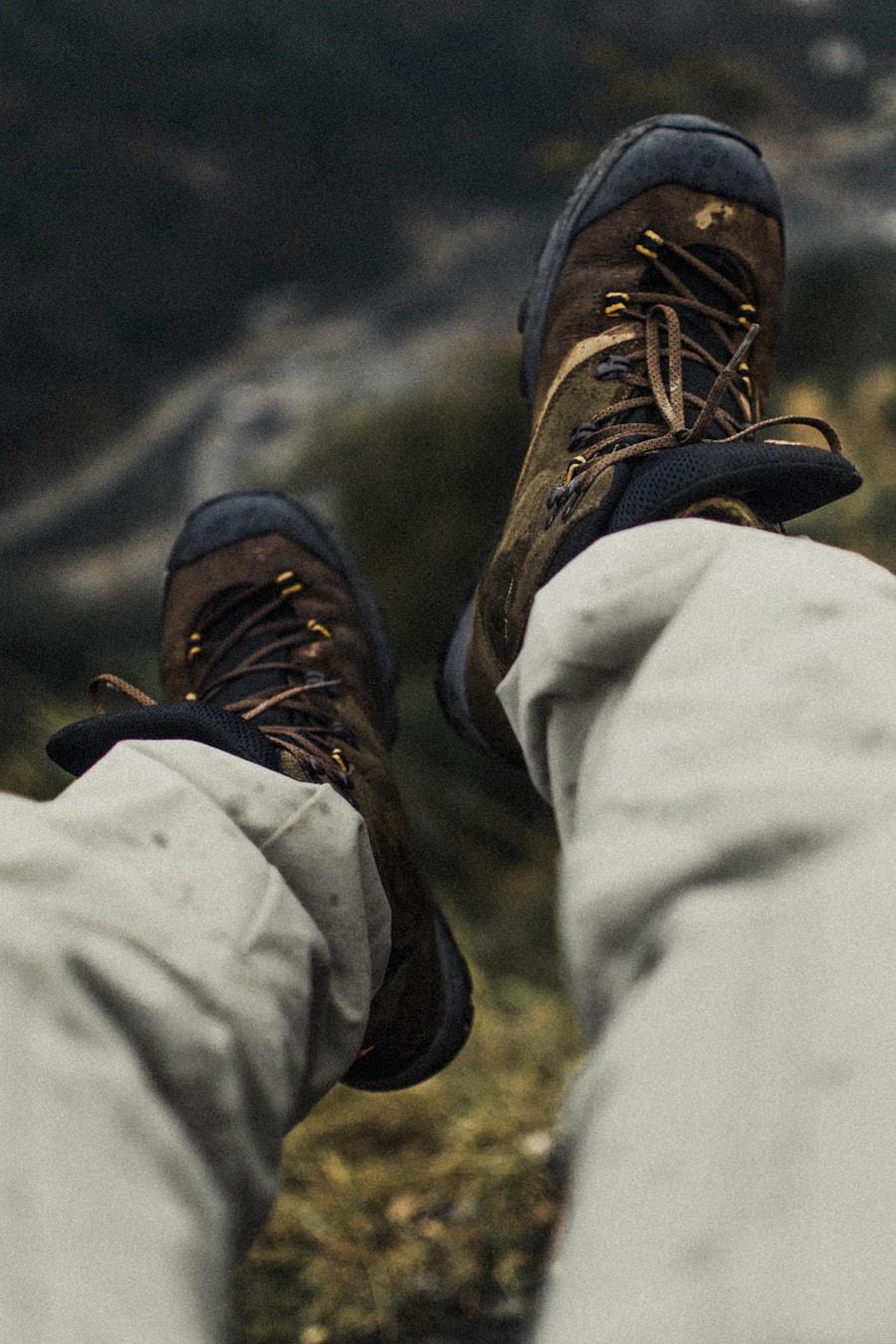
An oversized boot can feel unstable because your foot moves before the footwear responds. That may make precise foot placement harder on roots, rocks or side slopes. Before blaming your balance itself, check whether the heel and midfoot are moving inside the boot.
Balance problems can also have causes unrelated to footwear. Age-related changes in strength, some medications, vision problems and vestibular or neurological conditions can all contribute to instability. Benign paroxysmal positional vertigo, or BPPV, is one example: the National Institute on Deafness and Other Communication Disorders describes it as a balance disorder that can cause sudden dizziness or vertigo with head movement.
For persistent balance concerns, appropriately selected strengthening and balance exercises may be helpful. CDC fall-prevention guidance specifically includes strength and balance exercise such as tai chi among strategies for older adults.
See NIDCD information about BPPV and CDC fall-prevention guidance.
Loss of Toenails
Toenail bruising or loss is a warning that the nail has been repeatedly traumatized, but it does not prove that the boot is too big. Toe impact can happen when a boot is too short, when the toe box is too shallow, or when an otherwise roomy boot allows your foot to slide forward on descents.
If your toes repeatedly hit the front, retest the boot on a downhill slope. Tighten the heel and midfoot securely without crushing the forefoot. If the foot still slides forward, the boot may have too much internal volume or the wrong shape for your foot.
Toenail changes can also result from direct trauma, fungal infection and other medical conditions. Diabetes deserves special caution because it can damage nerves and reduce circulation in the feet, which can make injuries easier to miss and harder to heal.
The National Institute of Diabetes and Digestive and Kidney Diseases recommends regular foot inspection for people with diabetes and prompt attention to blisters, sores, ingrown nails and other foot problems.
Note: Persistent black or damaged toenails, open wounds, swelling, infection, loss of sensation, or foot problems in someone with diabetes should be assessed by a healthcare professional rather than treated only as a boot-sizing problem.
Persistent Foot Fatigue
Feet naturally become tired after long hours of hiking, especially if your distance or elevation increases faster than your conditioning. Oversized boots can add to that fatigue when your foot muscles repeatedly work to stabilize a loose shoe.
However, fatigue can also result from inadequate conditioning, unsuitable cushioning, poor support, heavy footwear or an abrupt increase in hiking distance. That makes fatigue a supporting clue rather than a definitive test of oversized boots.
Before replacing the boots, check whether your heel and midfoot are actually moving. Take regular breaks during unusually long days, increase mileage gradually and use footwear suited to the terrain and load.
How to Test Hiking-Boot Fit Before a Hike
- Put on your real hiking socks. Include any orthotics or footbeds you normally use.
- Lace the boots normally. Do not overtighten them simply to compensate for empty space.
- Walk on level ground. Check for heel lift, sideways movement and pressure points.
- Walk uphill. Your heel should remain reasonably secure rather than repeatedly lifting.
- Walk downhill. Your toes should not strike the front, and the whole foot should not surge forward.
- Check the instep and midfoot. Large amounts of empty space after comfortable lacing suggest excessive volume.
- Move side to side. Your foot should move with the boot rather than sliding across the footbed.
- Wear them long enough to notice hot spots. A few minutes of standing still is not enough to judge a hiking boot.
Are the Boots Too Big or Too Small?
Some symptoms overlap, which is why it is easy to misdiagnose hiking-boot fit.
- More consistent with too big: heel lift, sideways sliding, excess space above the foot, foot surging forward despite adequate toe length, or laces that must be pulled excessively tight.
- More consistent with too small or narrow: cramped toes, numbness, pinching, pressure against the sides of the forefoot, or toes contacting the front even when the heel is securely locked back.
- Could be either: blisters, toe pain, nail trauma and general discomfort. Use the location and type of movement to identify the cause.
Can You Fix Hiking Boots That Are Slightly Too Big?
Sometimes. The correct fix depends on where the excess space is.
Try Heel-Lock Lacing
A heel-lock or surgeon’s-knot lacing technique can reduce modest heel movement without crushing the toes. This is worth trying when the overall length and width feel right but your heel lifts slightly.
Consider a Suitable Footbed
An aftermarket footbed can reduce a small amount of internal volume while changing support and heel position. It should not make the toe box cramped or put excessive pressure on the top of the foot.
Use the Socks You Actually Hike In
Changing from very thin casual socks to appropriate hiking socks can alter fit slightly. Deliberately wearing several thick pairs solely to rescue a badly oversized boot is not a good long-term solution.
Replace the Boots When the Size or Shape Is Fundamentally Wrong
If your heel still lifts substantially, your foot continues sliding on descents, or you need extreme lacing pressure to stay secure, moving to a smaller size, narrower width or lower-volume model is usually more effective than stacking temporary fixes.
Pro Tip: When one size feels too short but the next size feels sloppy, do not assume you must choose between them. A different boot model, width or last may match your foot shape much better.
If you’re planning a hiking trip to Greece, check your boot fit well before departure rather than discovering a sizing problem during the trip. You can also review the best time to travel to Greece: a seasonal guide while planning your itinerary.
Frequently Asked Questions
What are the signs that hiking boots are too big?
Common signs include repeated heel lift, your foot sliding forward or sideways, excess empty volume above the foot, unstable footing and needing to overtighten the laces to stop movement. Repeated blisters or hot spots can also be clues when they occur where the foot is sliding.
How should hiking boots fit?
The heel and midfoot should feel securely held without painful pressure. Your toes should have room to wiggle, and they should not hit the front when walking downhill. The boot should move with your foot rather than allowing the foot to slide inside it.
What can happen if hiking boots are too big?
Too much internal movement can contribute to hot spots, blisters, toe impact, foot fatigue and less precise footing on uneven terrain. The effect depends on how oversized the boot is, its shape, how it is laced and the terrain you are hiking.
Can insoles or thicker socks help if hiking boots are too big?
They may help with a small amount of extra volume. A suitable footbed or the hiking socks you normally wear can improve fit, but neither is a reliable fix for a boot that is substantially too long, too wide or the wrong shape.
How can I determine if my hiking boots are too big?
Wear your normal hiking socks, lace the boots comfortably, then walk on level ground, uphill and downhill. Look for heel lift, sideways movement, excess volume and forward sliding. Your toes need space, but the rest of your foot should remain securely held.
Should hiking boots be one size bigger than normal shoes?
Not automatically. Hiking footwear needs enough room for your toes and for normal foot expansion during activity, but choosing an arbitrary full size larger can create excessive movement. Fit the individual boot to your foot rather than relying on a universal size-up rule.
Does heel slippage always mean hiking boots are too big?
No. Slight heel movement can sometimes improve with appropriate lacing, while a stiff new boot may also behave differently after limited break-in. Persistent or substantial heel lift despite secure, comfortable lacing is a stronger indication that the size, width or heel shape is wrong.
Sources
- Columbia Sportswear — How to Tell If Hiking Boots Are Too Big — boot sizing, heel movement, toe-box space and internal foot movement.
- Journal of Athletic Training — Friction Blisters of the Feet — blister formation and repetitive shear forces.
- American Academy of Orthopaedic Surgeons — Plantar Fasciitis — heel-pain symptoms and causes.
- CDC — Preventing Falls and Hip Fractures — balance, strength and fall-prevention guidance.
- NIDCD — Benign Paroxysmal Positional Vertigo — positional vertigo and balance symptoms.
- NIDDK — Diabetes and Foot Problems — neuropathy, circulation and foot-care precautions.

