
Last Updated on September 10, 2026 by Daniel Globe
Work boots can handle some hikes, but they are not automatically good hiking footwear. A well-fitting pair with intact, trail-friendly tread can work for short and easy routes, while heavy safety-toe boots or boots with smooth, worn, or poorly suited soles are usually a worse choice for long, steep, wet, or technical trails. Fit, outsole design, weight, flexibility, weather, and distance all matter.
Quick Answer
Yes, some work boots are fine for short, easy hikes if they fit well, have deep unworn tread, and do not cause heel slip or toe pressure. For long distances, steep or wet terrain, hiking boots or trail shoes are usually better because they are designed around trail traction, walking comfort, and mobility.
Key Takeaways
- Work boots can be suitable for easy hiking, but the specific boot matters more than the label on the box.
- A workplace “slip-resistant” sole is not automatically ideal for mud, loose dirt, wet rock, roots, or steep trail surfaces.
- Heavy safety toes, stiff soles, insulation, and thick leather can add protection at work but may increase bulk and discomfort on long hikes.
- Check fit, tread depth, outsole condition, flexibility, weather protection, and comfort before taking work boots onto a trail.
- For long-distance, steep, wet, or technical hiking, purpose-built hiking shoes, hiking boots, or suitable trail-running shoes are generally the better option.
Disclosure: As an Amazon Associate I earn from qualifying purchases. Some links on this page are affiliate links, at no extra cost to you.
Differences Between Work Boots and Hiking Boots
Work boots and hiking boots can look similar, but they are designed around different hazards. Work footwear may prioritize impact protection, puncture resistance, electrical protection, durability, or grip on workplace surfaces. Under OSHA’s foot-protection rule, employers must provide or require appropriate protective footwear when workplace hazards justify it.
Not every work boot has a steel toe, and not every work boot is safety rated. When protective toes are required, current ASTM F2413-24 covers performance requirements for safety-toe footwear, including impact and compression protection and optional protections for certain other workplace hazards.
Hiking footwear is designed around repeated walking over natural terrain. Depending on the model, that can mean a lugged outsole, cushioning, torsional stability, toe protection, lower weight, and enough flexibility for a comfortable stride. Hiking footwear ranges from low-cut trail shoes to mid-height hiking boots and much stiffer backpacking or mountaineering boots.
Many hiking models also use waterproof-breathable membranes. For example, GORE-TEX footwear technology is designed to provide waterproof protection while allowing water vapor to escape. Waterproofing is not universal, however, and a non-waterproof shoe can sometimes be more comfortable in hot, dry conditions.
Note: A work-boot safety rating tells you which workplace hazards the footwear has been tested to address. It does not certify that the outsole will grip wet rocks, loose soil, mud, roots, or every other trail surface.
Boot height also deserves some nuance. The National Park Service recommends sturdy hiking footwear with non-slip tread and appropriate support for backcountry travel. A supportive boot can feel more stable, but a higher collar alone cannot guarantee that you will avoid an ankle injury. Fit, outsole stability, terrain, conditioning, pack weight, and careful foot placement still matter.
Pros and Cons of Using Work Boots for Hiking
Advantages of Hiking in Work Boots
One advantage is durability. A sturdy work boot can protect your feet from brush, minor impacts, and rough ground, especially if you already wear that pair comfortably for long periods. Familiar footwear may also be preferable to brand-new hiking boots that have never been tested on your feet.
Rated safety footwear can provide additional protection when you genuinely need it. A safety toe, for example, is designed to resist specific impact and compression hazards. Thick uppers can also shield the foot from abrasion and debris.
Some outdoor-oriented work boots also combine deep tread, waterproof construction, cushioning, and a relatively flexible sole. A pair with those characteristics can overlap substantially with traditional hiking footwear and may perform well on an easy trail.
Disadvantages of Hiking in Work Boots
The biggest drawback is that protection designed for work can become unnecessary bulk on a recreational hike. Safety toes, puncture-resistant components, heavy leather, tall shafts, and thick insulation can make some boots heavier and stiffer than necessary.
Traction also needs closer inspection. A boot marked “slip resistant” may have been designed primarily for wet or greasy workplace flooring. NIOSH research shows that outsole design and wear influence footwear friction, and traction declines as tread becomes worn. That means the label alone is not enough to judge performance on a muddy or rocky trail.
Thick, waterproof, or insulated work boots may also feel hot during summer hiking. Sweat, friction, and pressure are major contributors to blisters, so a boot that is comfortable while standing at work is not automatically comfortable during several hours of continuous climbing and descending.
Warning: Do not rely on worn-smooth tread, a separating outsole, a loose heel, or a painful safety-toe fit for a steep or slippery hike. Those problems should be corrected before you head onto the trail.
Factors to Consider When Choosing Work Boots for Hiking
| Factor | What to Look For |
|---|---|
| Material | Leather can be durable but may be heavier; synthetic panels can reduce weight and improve flexibility or ventilation. |
| Waterproofing | Useful for wet grass, mud, shallow puddles, rain, and snow. In hot, dry weather, prioritize ventilation unless waterproofing is truly needed. |
| Traction | Look for pronounced, well-spaced tread suited to dirt, mud, gravel, and uneven surfaces rather than assuming a workplace slip-resistant rating is enough. |
| Tread Condition | Lugs should not be worn smooth. Check for cracking, chunks missing from the outsole, or separation between the sole and upper. |
| Ankle Support | Choose a secure fit and stable platform. A taller shaft may feel supportive, but height alone does not guarantee protection from ankle injuries. |
| Weight | Lighter footwear is usually easier to tolerate over long distances. Avoid unnecessary safety or insulation features when the hike does not require them. |
| Comfort | Your heel should stay secure, your toes should have room, and there should be no pinching, rubbing, or painful pressure points. |
| Toe Protection | Steel or composite safety toes can protect against workplace impact hazards but are unnecessary for most ordinary hikes. Make sure the toe area never presses on your toes during descents. |
| Flexibility | The boot should flex naturally enough for walking while remaining stable underfoot. Extremely rigid work boots may feel tiring on rolling trails. |
| Price | Using boots you already own can save money, but buying hiking footwear can make sense if poor fit, weight, or traction limits how comfortably or safely you hike. |
Fit should come first. Lace the boots with the socks and insoles you plan to use on the trail. Your heel should not repeatedly lift, the forefoot should not feel squeezed, and your toes should not strike the end of the boot when walking downhill. REI’s current guide to choosing hiking boots and hiking shoes likewise emphasizes fit, heel position, friction points, and toe clearance.
Next, inspect the sole. Deep tread is useful only when enough of it remains to work. NIOSH research on naturally worn footwear found that traction performance declined as footwear wear increased, reinforcing the need to inspect the outsole instead of judging a boot by its original specifications alone.
When Work Boots Are Good Enough for Hiking
Work boots are most reasonable for hiking when the route is short, the terrain is straightforward, and the boots already fit you well. A maintained dirt path, gravel trail, or easy woodland route is a much better candidate than a steep scramble or a long backpacking trip.
Your existing work boots are more likely to be suitable when:
- you can walk several miles in them without rubbing, numbness, or pressure;
- the heel stays securely in place;
- the outsole has deep, unworn tread suited to natural terrain;
- the sole is firmly attached with no cracks or separation;
- the boot is flexible enough for a natural walking stride;
- the weather matches the boot’s insulation and waterproofing; and
- you do not needlessly carry the weight of heavy protective features for many miles.
Pro Tip: Before committing to a long trail, take the boots on a one- or two-mile walk that includes an incline and descent. That simple test can reveal heel lift, toe impact, hot spots, poor grip, or excessive stiffness before you are miles from the trailhead.
When Hiking Boots or Trail Shoes Are the Better Choice
Dedicated hiking footwear makes more sense as distance and terrain difficulty increase. Long days mean more repeated steps, so small fit problems that are tolerable at work can turn into painful hot spots or blisters on the trail.
Consider hiking-specific footwear instead when you expect:
- long-distance hiking or multiple consecutive hiking days;
- steep ascents and descents;
- mud, wet rock, loose dirt, scree, roots, or other technical footing;
- hot conditions in which heavy or insulated work boots become uncomfortable;
- a heavy pack that makes precise footing more important; or
- work boots with safety features you do not need on the trail.
Purpose-built hiking footwear also gives you more choices. A low hiking shoe can provide trail-oriented tread without the bulk of a traditional boot, while a mid-cut model can provide more coverage. Trail-running shoes are another lightweight option for many maintained trails, although the best choice depends on your feet, terrain, weather, load, and experience.
Tips for Using Work Boots for Hiking
If you decide to hike in work boots, test them gradually. New boots may need time to soften and adapt, but break-in should never be used as an excuse to tolerate a fundamentally bad fit. If a boot crushes your toes, allows excessive heel movement, or creates persistent pain, more miles are unlikely to turn it into the right boot.
Current boot break-in guidance from REI recommends starting indoors, progressing to short walks, and gradually adding trail distance and pack weight rather than taking brand-new footwear directly on a major trip.
Wear well-fitting hiking socks made from wool or suitable synthetic fibers rather than socks that stay wet against the skin. Moisture, pressure, and friction increase the chance of blister problems. Research involving military recruits has also found that sock systems can influence blister incidence and severity.
Pay attention to your feet while you hike. Stop as soon as you notice a hot spot instead of waiting for it to become a blister. Dry or change wet socks when practical, adjust the laces if your heel is slipping, and carry basic blister-care supplies on longer outings.
On uneven ground, shorten your stride and place your feet deliberately. Boots cannot compensate for poor footing, and no outsole grips every surface equally well.
Common Mistakes When Using Work Boots for Hiking
One of the biggest mistakes is assuming that any sturdy-looking boot is trail ready. Fit and outsole condition matter more than appearance. A boot that is comfortable during a work shift can still cause heel rubbing or toe pressure when climbing and descending for hours.
Another mistake is treating “slip resistant” as a universal traction rating. NIOSH footwear research focuses on how outsole design, fluid drainage, surface conditions, and wear affect friction. Trail surfaces introduce a different mix of mud, rock, gravel, roots, leaves, and loose soil, so evaluate the actual tread rather than relying on a workplace label.
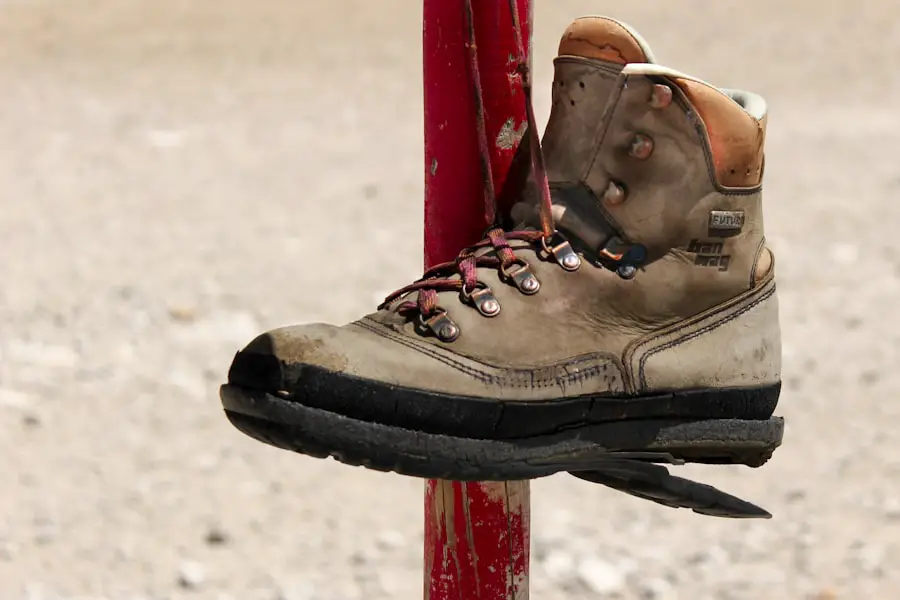
Do not ignore outsole wear. The second image above shows an extreme example of outsole separation. A boot in that condition should not be trusted for a hike. Inspect the heel, forefoot, edges, bonding, tread channels, and any cracks before leaving.
Choosing a safety toe simply because it sounds more protective is another common error. Safety-toe footwear is valuable when impact or compression hazards require it, but the extra structure may offer little practical advantage on an ordinary recreational trail.
Weather mismatch can also ruin a hike. A waterproof, insulated work boot may be useful in cold rain or snow but uncomfortable in summer heat. Conversely, a highly ventilated boot may not provide enough protection for cold, wet conditions.
Note: Never assume that “more boot” automatically means more safety. Extra height, stiffness, insulation, or toe protection only helps when it matches the conditions you actually face.
Alternatives to Work Boots for Hiking
If your work boots fail the trail-readiness test, you do not necessarily need a heavy traditional hiking boot. Hiking shoes are a popular option for easy to moderately rough terrain because they combine trail tread with a lower, more flexible upper.
Trail-running shoes are lighter and often highly breathable. Many hikers use them on maintained trails and for longer distances, especially in warm weather. Their lower profile means less coverage than a boot, so terrain, weather, foot stability, and personal preference should guide the choice.
Mid-cut hiking boots sit between low hiking shoes and heavy backpacking boots. They offer more coverage around the ankle while remaining lighter and more flexible than many industrial work boots.
There are also hybrid outdoor work boots that combine workplace features with hiking-style outsoles and athletic construction. These can be useful for someone who genuinely needs one pair for both environments, provided the required workplace safety ratings and trail characteristics are both present.
Final Thoughts on Using Work Boots for Hiking
So, are work boots good for hiking? Sometimes. A comfortable pair with secure fit, intact trail-friendly tread, reasonable flexibility, and weather-appropriate construction can be perfectly serviceable on an easy hike. The fact that a boot was sold as work footwear does not automatically make it unsuitable.
However, durability and workplace protection do not automatically translate into better trail performance. Heavy safety features, a stiff sole, poor ventilation, or tread designed for a different surface can become disadvantages as the mileage, heat, elevation change, or technical difficulty increases.
The simplest rule is to match the footwear to the trip. Inspect the boots, test them on a shorter walk, and be honest about the terrain. If the boots slip, rub, feel excessively heavy, or restrict your stride, purpose-built hiking footwear is the better option.
Footwear is only one part of preparing for an outdoor trip. If you are also deciding how to research your destination, this guide on how to choose the best travel guidebook for your next trip can help you select a useful planning resource.
Frequently Asked Questions
Are work boots good for hiking?
Some work boots are good enough for short or moderate hikes if they fit well, have intact trail-friendly tread, and are not excessively heavy or stiff. For long, steep, wet, or technical routes, hiking-specific footwear is usually the better choice.
What features should I look for in work boots for hiking?
Prioritize secure fit, adequate toe room, deep unworn tread, a firmly attached outsole, reasonable flexibility, cushioning, and weather protection suited to the trip. A workplace safety rating does not by itself tell you how well the boot will perform on a trail.
Can work boots be used for long-distance hiking?
They can, but only when the specific pair remains comfortable over long distances. Heavy safety toes, stiff soles, poor ventilation, heel movement, or pressure points can become much more noticeable after several hours of continuous walking. Test the boots on progressively longer hikes first.
Are work boots suitable for hiking in different weather conditions?
It depends on the boot. Waterproof work boots can be useful in rain, mud, and wet snow, while insulation may help in cold conditions. Thick waterproof or insulated boots can become uncomfortable in hot weather, so choose the construction for the expected temperature and moisture.
Can work boots provide the same level of traction as hiking boots?
Some can, but there is no universal answer. Traction depends on the rubber compound, lug shape, tread depth, surface, moisture, and tread wear. A work boot designed for outdoor construction or forestry may grip natural terrain well, while a smooth wedge sole or workplace floor-oriented tread may perform poorly on a muddy slope.
Are steel-toe work boots good for hiking?
Steel-toe boots can be used for hiking when they fit properly, but the protective toe is usually unnecessary on a normal recreational trail. It may add weight and stiffness, and your toes still need enough clearance to avoid striking the toe cap on descents.
Do work boots need to be waterproof for hiking?
No. Waterproofing is useful when you expect sustained rain, wet vegetation, mud, puddles, or snow, but it is not necessary for every hike. In hot and dry conditions, a more breathable non-waterproof boot or trail shoe may be more comfortable.
Sources
- Occupational Safety and Health Administration — 29 CFR 1910.136 Foot Protection — workplace protective-footwear requirements and hazard-based selection.
- ASTM International — ASTM F2413-24 — current performance requirements for protective safety-toe footwear.
- National Park Service — Hiking Safety — guidance on sturdy hiking footwear, tread, and trail preparedness.
- NIOSH/CDC — Effects of Natural Shoe Wear on Traction Performance — research on tread wear and declining footwear traction.
- PubMed — Sock Systems to Prevent Foot Blisters — research supporting the importance of sock systems in blister risk.
- GORE-TEX — Footwear Technologies — manufacturer documentation on waterproof and breathable footwear membranes.

