
Last Updated on July 31, 2026 by Caleb Warren
Disclosure: As an Amazon Associate, we earn from qualifying purchases. If you click a link on this page and make a purchase, we may receive a small commission at no extra cost to you.
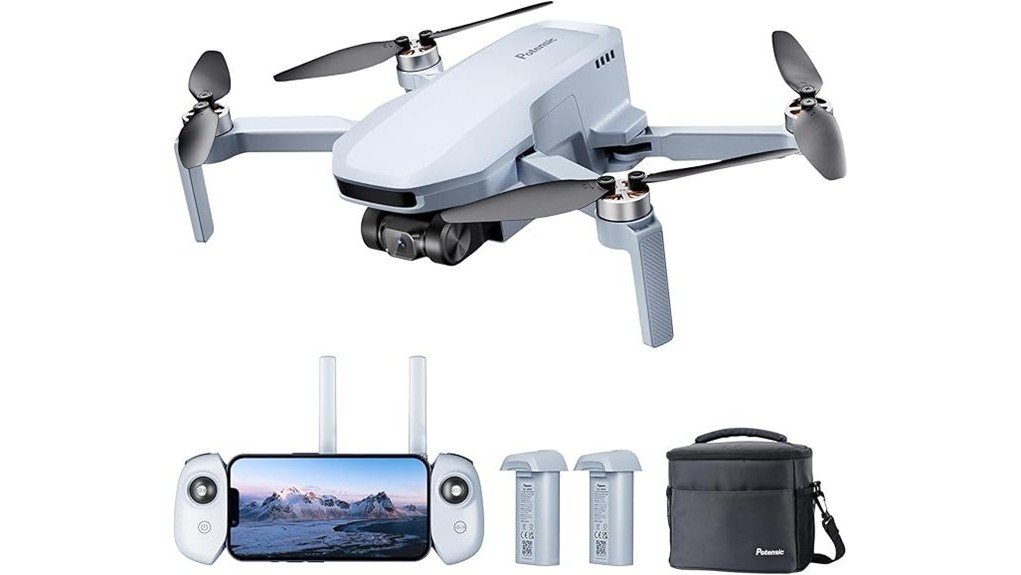
Choosing a compact camera drone often means balancing image quality, flight time, and safety features against price. The Potensic ATOM SE GPS Drone gives you 4K recording, GPS-assisted flight, a foldable sub-249g body, and two-battery bundles that claim up to 62 minutes of total flight time. Its main compromise is stabilization: you get a single-axis camera mount with electronic image stabilization, not the smoother three-axis mechanical gimbal found on higher-tier models. This review explains where the ATOM SE performs well, where you need extra care, and which buyers should consider a newer alternative.
Quick Verdict
Rating: 8/10
Best For: Beginners and travelers who want an affordable, lightweight GPS drone with 4K video and long combined battery time.
Bottom Line: The ATOM SE offers strong range, useful automated flight modes, and a compact design. You should accept weaker stabilization than a three-axis gimbal and the lack of obstacle avoidance.
| Specification | Detail |
|---|---|
| Brand | Potensic |
| Model | ATOM SE, DSDR04B |
| Product type | Foldable GPS camera drone |
| Takeoff weight | Under 249g with the original battery, propellers, and microSD card |
| Folded size | 88 × 143 × 58 mm |
| Unfolded size | 300 × 242 × 58 mm with propellers |
| Camera | 1/3-inch Sony CMOS, 12MP, f/2.2, 118° field of view |
| Video | 4K at 30fps, 2.7K at 30fps, 1080p at 60 or 30fps |
| Stabilization | Single-axis gimbal with ShakeVanish electronic image stabilization |
| Flight time | Up to 31 minutes per battery, up to 62 minutes with two batteries |
| Battery | 2500mAh intelligent flight battery |
| Transmission | PixSync 2.0, up to 4 km in ideal open conditions, 720p live view |
| Maximum speed | 16 m/s in Sport mode |
| Wind resistance | Up to Level 5, 38 km/h manufacturer claim |
| Smart modes | Follow Me, Circle Flight, and Waypoint Flight |
| Storage | microSD, 4GB to 256GB, Class 10 or U1 minimum; card not included |
| Main limitation | No obstacle avoidance |
What Is the Potensic ATOM SE?
The Potensic ATOM SE is a lightweight folding drone designed for beginners, travelers, and casual aerial photographers. Its compact body fits easily in a small camera bag, while GPS positioning, downward vision positioning, and automatic return functions make it more manageable than a basic toy drone.
The camera records 4K video at 30 frames per second and 12MP still photos. You control the camera angle through a single-axis gimbal, while Potensic’s ShakeVanish system handles electronic stabilization. This setup can produce good daylight travel footage, but it does not isolate movement as effectively as a three-axis mechanical gimbal.
Who Should Buy It?
Best For
- First-time pilots who want GPS assistance and Beginner mode
- Travelers who value a foldable drone under 249g
- Budget-minded buyers who want 4K recording and two-battery flight time
Skip If
- You need three-axis mechanical stabilization for consistently smooth cinematic footage
- You want obstacle sensors for flying near trees, buildings, or other hazards
- You need a professional camera system with a larger sensor and advanced manual controls
Design and Portability
At under 249g, the ATOM SE is easy to carry on day trips and vacations. It measures 88 × 143 × 58 mm when folded, so you can store it in a compact case without taking up much luggage space. The arms fold against the body, and the controller also packs down for transport.
The low weight helps with portability, but it also means you should treat the arms, propellers, and camera mount carefully. The drone is not built to absorb repeated impacts. Inspect the propellers before each flight and replace any blade that is cracked, bent, or producing unusual vibration.
Before You Buy: The ATOM SE does not include obstacle avoidance. GPS return and downward positioning can help with navigation and low-altitude hovering, but they do not detect and steer around trees, walls, wires, or people.
Camera Quality and Stabilization
The 1/3-inch Sony CMOS sensor captures 12MP stills and 4K video at 30fps. Its wide 118-degree field of view is useful for landscapes, coastlines, large properties, and group scenes. You can also record 1080p at 60fps when smoother motion matters more than maximum resolution.
ShakeVanish electronic image stabilization reduces high-frequency vibration, and the single-axis gimbal lets you tilt the camera from about +20 degrees to -90 degrees. This is enough for level horizon shots and straight-down views, but it cannot mechanically correct roll and yaw movement. In stronger wind or during quick turns, footage can show more tilt and movement than video from a three-axis gimbal drone.
The camera performs best in daylight. The f/2.2 lens and small sensor can lose detail as light drops, so sunset and low-light footage may show more noise and motion softness. For the best results, fly slowly in Video or Normal mode and avoid sharp direction changes while recording.
Flight Performance, Range, and Smart Modes
Potensic rates the ATOM SE for a maximum horizontal speed of 16 m/s in Sport mode and Level 5 wind resistance up to 38 km/h. Those figures describe controlled test conditions. Real-world speed, range, and battery life change with wind, temperature, signal interference, altitude, and how aggressively you fly.
PixSync 2.0 provides a claimed transmission distance of up to 4 km in open, low-interference conditions. That number is a technical maximum, not a reason to fly beyond sight. You should always follow local rules and keep the drone close enough to see its position, direction, and movement.
Follow Me, Circle Flight, and Waypoint Flight add useful automated options. They can help you plan a simple route or create repeatable movement, but you must choose an open area because the drone cannot avoid obstacles on its own. Return-to-Home can activate by command, low battery, or signal loss, provided the drone has a suitable GPS home point.
Battery Life and Charging
Each 2500mAh battery is rated for up to 31 minutes of flight in low-altitude, windless testing. The two-battery package therefore advertises up to 62 minutes of combined flight time. Your usable time will usually be lower because the drone needs reserve power for a safe return and landing.
A second battery is valuable when you travel because it lets you fly another short session without waiting for a recharge. Allow a warm battery to cool before charging, use a compatible charging cable and power source, and follow Potensic’s storage instructions if you will not fly for an extended period.
Pro Tip: Start your return flight earlier when flying into the wind. The drone uses more battery when it must fight a headwind on the way back, so the remaining-time estimate can fall faster than expected.
App, Controls, and Storage
The included controller holds a compatible phone and connects by cable. The PotensicPro app displays the live 720p feed, flight data, battery status, GPS information, camera controls, and firmware updates. Check current phone and operating-system compatibility before buying because app requirements can change.
Full-resolution photos and videos are saved to a microSD card, not directly to the app. The drone supports cards from 4GB to 256GB with at least Class 10 or U1 performance. A card is not included, so add one before your first recording session.
Beginner mode limits the drone to a 30-meter radius and 30-meter height while restricting it to Video mode. This is a useful way to learn the controls in an open field before using Normal or Sport mode.
Compatibility and Safety
In the United States, an under-250g drone flown only under the recreational exception generally does not require FAA registration. That exception does not apply to Part 107 operations, and recreational pilots still need to pass TRUST, follow airspace rules, and keep the drone within visual line of sight. Check current FAA guidance and local restrictions before every flight.
The downward vision system can support low-altitude positioning indoors when the surface has enough light and visible texture. Indoor flight still carries extra risk because the ATOM SE has exposed propellers and no obstacle avoidance. Use a large, clear space, keep people and pets away, and stop if the drone cannot hold a stable position.
Return-to-Home is a backup feature, not a substitute for active control. Set a return altitude that clears nearby obstacles, confirm that the home point has updated, and watch the battery and signal indicators throughout the flight.
How It Performs in Real Use
For Travel and Day Trips
The folded size and sub-249g weight make the ATOM SE convenient for road trips, hikes, and vacations. The two-battery kit gives you more flexibility when charging access is limited, although you still need to follow airline battery rules and local drone laws.
For Beginner Practice
GPS positioning, Beginner mode, one-key takeoff, and automatic return reduce the learning curve. You should still practice manual orientation, landing, and emergency responses in an open area because automated functions can be affected by poor GPS, interference, or incorrect settings.
For Casual Aerial Video
The 4K camera is well suited to daylight scenery, property overviews, and social video. Slow, planned movements can look clean, while fast turns and gusty weather reveal the limits of the single-axis and electronic stabilization system.
For Breezy Conditions
The drone’s Level 5 wind-resistance claim is useful for a lightweight model, but strong wind still shortens flight time and can reduce video quality. If the app shows a strong-wind warning, lower the altitude and return promptly rather than testing the maximum rating.
Setup Tips Before Your First Flight
- Charge everything: Fully charge the flight battery, controller, and phone before leaving home.
- Install a microSD card: Use a supported Class 10 or U1 card if you want full-resolution photos and video.
- Inspect the aircraft: Check the propellers, arms, camera, and downward sensors for damage or dirt.
- Update firmware: Connect through the PotensicPro app and complete any required updates before traveling to your flight location.
- Confirm GPS and the home point: Wait for a stable GPS lock and verify the home-point message before takeoff.
- Set Return-to-Home altitude: Choose a height that clears nearby obstacles while staying within legal limits.
- Use an open practice area: Start in Beginner or Video mode away from trees, wires, roads, people, and buildings.
Pros and Cons
Pros
- Foldable body weighs under 249g
- 4K video, 12MP photos, and RAW still-image support
- Up to 31 minutes per battery and 62 minutes with two batteries
- GPS return, Beginner mode, and three smart flight modes
- Long claimed 4 km transmission range in ideal conditions
Cons
- Single-axis gimbal is less effective than three-axis stabilization
- No obstacle avoidance for trees, walls, or wires
- microSD card is required for recording and is not included
Is It Worth the Price?
The ATOM SE sits in the budget-to-mid-range part of the compact GPS drone market. It offers strong value when you care most about portability, 4K recording, useful automated modes, and the combined flight time of a two-battery kit.
It is less compelling when smooth cinematic video is your top priority. Spending more on a model with a three-axis gimbal can reduce tilt and vibration without requiring as much careful flying. The ATOM SE makes the most sense when you can work around that limitation and fly mainly in open, daylight conditions.
How It Compares to Alternatives
The Potensic ATOM is the closest step up within the same brand because it adds a three-axis gimbal and a longer claimed transmission range. The newer Potensic ATOM 2 adds a more advanced imaging system, AI tracking, and newer transmission technology, making it a better fit for creators who want more room to grow.
The DJI Mini 4K is another direct alternative with a three-axis gimbal, 4K video, and a longer claimed transmission range. The ATOM SE remains attractive when its package price and included batteries matter more than maximum stabilization or ecosystem depth.
Frequently Asked Questions
Does the Potensic ATOM SE need FAA registration?
In the United States, a drone under 250g generally does not need registration when flown only under the recreational exception. Part 107 operations require registration, and recreational pilots must still complete TRUST and follow all airspace and operating rules.
Does it have obstacle avoidance?
No. The downward vision system supports positioning and low-altitude hovering, but it does not identify and avoid objects in the flight path. You need to choose open routes and maintain visual control.
Is the advertised 62-minute flight time realistic?
The 62-minute figure is the combined maximum for two batteries rated at up to 31 minutes each. Wind, temperature, speed, filming, and the need to land with reserve power will reduce real-world flight time.
Can the ATOM SE fly indoors?
It can use downward vision positioning indoors when lighting and floor texture are suitable. A large clear space is essential because GPS may be unavailable, smart modes are limited, and the drone has no obstacle avoidance.
What memory card does it need?
Use a microSD card from 4GB to 256GB with at least Class 10 or U1 performance. The card is not included, and full-resolution photos and videos cannot be recorded without one.
How well does it handle wind?
Potensic rates the drone for Level 5 wind resistance up to 38 km/h. Strong wind still increases battery use, extends braking distance, and can reduce video quality, so return early when the app issues a warning.
Is it a good first drone?
Yes, provided you practice in a clear open area. Beginner mode, GPS hovering, one-key takeoff, and Return-to-Home help reduce the learning curve, but you must still learn manual control and obstacle awareness.
What warranty coverage comes with the drone?
Warranty and return terms can vary by seller, country, and purchase date. Review the current Amazon listing and Potensic support terms before ordering, and keep your order details if you need after-sales assistance.
The Bottom Line
The Potensic ATOM SE is a practical choice for beginners and travelers who want a compact GPS drone, 4K recording, and long combined battery time without moving into premium pricing. You should skip it if obstacle avoidance or three-axis mechanical stabilization is essential, but it remains a strong value for careful pilots who fly in open areas.
Ready to Buy?
Check the latest price, package contents, and product details before you decide.
