
Last Updated on July 31, 2026 by Caleb Warren
Disclosure: As an Amazon Associate, we earn from qualifying purchases. If you click a link on this page and make a purchase, we may receive a small commission at no extra cost to you.
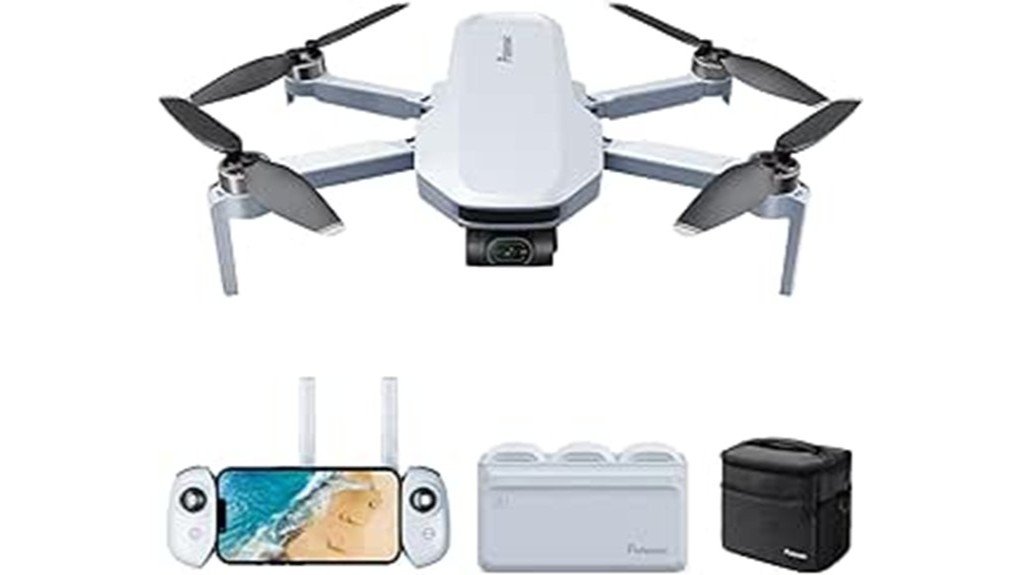
Choosing a small camera drone usually means balancing image quality, flight time, portability, and safety features. The Potensic ATOM Drone offers a sub-249g folding body, a 12MP Sony CMOS camera, 4K video at up to 30 fps, and a three-axis mechanical gimbal. Its Fly More Combo adds three batteries for a claimed 96 minutes of combined flight time, but the drone has no obstacle-avoidance system and performs best in open, well-lit areas. This review explains where the ATOM delivers strong value and where a newer or more advanced model may suit you better.
Quick Verdict
Rating: 8.2/10, Recommended with caveats
Best For: Beginner and casual pilots who want stabilized 4K daylight footage in a compact travel kit
Bottom Line: The Potensic ATOM combines a true three-axis gimbal, useful GPS flight tools, and a generous three-battery bundle. You should skip it if obstacle detection, strong low-light imaging, or 4K at 60 fps is a priority.
| Specification | Detail |
|---|---|
| Brand | Potensic |
| Model | ATOM, model DSDR04C |
| Product type | Foldable GPS camera drone |
| Takeoff weight | Under 249g with the original battery and propellers |
| Folded size | 88 × 143 × 58 mm |
| Unfolded size | 300 × 242 × 58 mm with propellers |
| Camera | 12MP Sony CMOS sensor, 78° field of view |
| Video | 4K up to 30 fps, 2.7K up to 30 fps, 1080p up to 60 fps |
| Stabilization | Three-axis brushless mechanical gimbal |
| Flight time | Up to 32 minutes per battery, 96 minutes claimed across three batteries |
| Battery | 2230 mAh smart Li-Po battery |
| Transmission | PixSync 3.0, up to 6 km in open, interference-free test conditions |
| Wind resistance | Level 5, rated up to 38 km/h |
| Flight features | GPS positioning, Return to Home, visual tracking, waypoint flight, QuickShots |
| App compatibility | PotensicPro app, iOS 11 or later and Android 7.0 or later |
| Storage | microSD card, U1 or Class 10 rating or higher |
| Fly More bundle | Three batteries, parallel charging hub, remote controller, carrying bag, spare propellers and screws, cables, tools, and a listing-dependent 64GB microSD card bonus |
| Warranty | 12 months for eligible new products from Potensic or authorized Amazon retailers; exclusions apply |
What Is the Potensic ATOM Drone?
The Potensic ATOM is a compact GPS camera drone made for adults who want smoother aerial footage than a basic electronically stabilized model can provide. Its key advantage is the three-axis mechanical gimbal, which keeps the camera level as the aircraft moves and tilts.
The reviewed Amazon listing is the Fly More Combo with three batteries. That package is better suited to day trips and repeated practice sessions than a one-battery kit, since you can swap batteries instead of ending the session after one flight. The ATOM also includes automated camera moves, visual subject tracking, and Return to Home, but you remain responsible for watching the flight path.
Who Should Buy It?
Best For
- New adult pilots who can practice in wide, obstacle-free areas
- Travelers who want a folding sub-249g drone with a carrying case
- Casual creators who value smooth 4K daylight video over advanced camera controls
Skip If
- You need obstacle avoidance for tracking near trees, buildings, or wires
- You want 4K at 60 fps, RAW stills, or dependable low-light quality
- You plan to fly mainly indoors or in crowded spaces
Design and Portability
At under 249g, the ATOM is light enough to fit in a small day bag without taking up the space of a larger camera drone. It folds to 88 × 143 × 58 mm, while the Fly More carrying bag keeps the controller, batteries, charging hub, and small accessories together.
The low weight helps with travel, but it does not make the aircraft immune to wind. Potensic rates the drone for Level 5 wind resistance, up to 38 km/h, yet strong gusts can increase power use and reduce gimbal stability. You should turn back early when the app reports high wind rather than relying on the maximum rating.
Camera Performance and Gimbal Stability
The ATOM records 4K video at 24, 25, or 30 fps and 1080p video at up to 60 fps. Its 12MP Sony CMOS sensor and 78-degree field of view suit landscapes, property views, travel clips, and wide establishing shots. The camera also supports digital zoom, although cropping reduces fine detail.
The three-axis brushless gimbal is the main reason to choose this model over the ATOM SE. It physically corrects pitch, roll, and yaw movement, producing steadier footage during turns and moderate wind. This stabilization helps your clips look smoother, but it cannot correct poor exposure, aggressive stick input, or very dim lighting.
Still images are better suited to casual sharing than heavy editing. The ATOM records JPEG photos rather than RAW files, so you have less room to recover highlights or adjust color after the flight.
Flight Time and Battery Life
Potensic rates each 2230 mAh battery for up to 32 minutes, measured in calm conditions while flying at an efficient speed. Real flight time will usually be lower because hovering, wind, fast acceleration, cold weather, filming, and the safety reserve all use energy.
The three-battery kit is marketed for 96 minutes of combined flight time. That figure is useful for comparing bundles, but you should plan shorter individual flights and land with a safe reserve. The parallel charging hub can recharge all three batteries in about 1.3 hours when used with a compatible 60W charging setup.
Pro Tip: Number the batteries and rotate them in order. Let a warm battery cool before charging, and check the app for cell or temperature warnings before takeoff.
Advanced Features for Creative Filming
QuickShots create preset camera moves without requiring you to fly every part of the path manually. The ATOM supports Pull-Away, Rocket, Circle, Spiral, and Boomerang. These modes can help you capture repeatable clips, provided the area is open and the GPS signal is strong.
Visual tracking can follow or orbit a selected subject, while waypoint flight lets you place multiple points on the map for a planned route. Tracking works best with clear subject contrast and good light. It may lose the subject when movement is fast, the background looks similar, or lighting is extremely bright or dark.
Controls, App, and Ease of Use
The controller connects to a compatible phone by USB cable and uses the PotensicPro app for the live view, camera settings, flight data, maps, and automated modes. Beginner Mode limits the initial flight range and height, which gives you room to learn the sticks before opening the full limits.
GPS positioning helps the drone hold its location outdoors, and Return to Home can activate after a low-battery warning, signal loss, or a manual command. RTH is a backup tool, not a collision-prevention system. You must set a suitable return altitude and confirm the Home Point before takeoff.
How It Performs in Real Use
For Travel and Day Trips
The folding body and organized carrying bag make the ATOM easy to pack for a hike, road trip, or vacation. Three batteries reduce downtime, but local drone laws, airline battery rules, and weather conditions still need to be checked before you travel.
For Daylight Aerial Video
In bright or moderate daylight, the 4K camera and gimbal can produce clean, stable footage for social media, family videos, and hobby projects. Slow stick movements and planned turns give the gimbal more time to keep the horizon steady.
For Windy Conditions
The Level 5 rating gives the ATOM more confidence than a toy-class drone in a breeze, but a light aircraft can still drift or consume power quickly in gusts. Keep the drone close, monitor the return path, and avoid flying downwind until the battery is low.
For Learning to Fly
Beginner Mode, GPS hold, and one-button RTH lower the learning barrier. The missing obstacle sensors mean you should start in a large field, keep the aircraft within visual line of sight, and practice takeoff, hovering, gentle turns, and landing before using tracking or waypoint modes.
Setup Tips Before Your First Flight
- Charge and update: Fully charge the controller, phone, and flight batteries, then install current firmware through the app.
- Inspect the aircraft: Confirm the battery latch is secure, the gimbal protector is removed, and each propeller is undamaged and attached in the correct position.
- Use a suitable microSD card: Insert a U1 or Class 10 card or better, then format it through the app when required.
- Choose an open launch point: Avoid trees, power lines, crowds, metal structures, moving vehicles, and sources of radio interference.
- Confirm GPS and Home Point: Wait for GPS mode and verify that the app has recorded the correct takeoff location.
- Set RTH altitude: Choose an altitude that clears nearby obstacles while staying within applicable local flight limits.
Flight Safety and U.S. Registration Notes
The ATOM does not have obstacle-avoidance sensors. Its downward vision system assists low-altitude positioning over suitable surfaces, but it does not detect trees, walls, wires, or other objects in the forward flight path. Keep manual control available during QuickShots, tracking, waypoint flight, and Return to Home.
In the United States, a drone under 250g is generally exempt from FAA registration only when it is flown strictly under the recreational exception. Recreational pilots still need to pass TRUST, follow airspace rules, maintain visual line of sight, and obtain authorization when required. Any Part 107 operation requires registration regardless of the drone’s weight, and registered drones generally must comply with Remote ID. Review the current FAA recreational flyer guidance before you fly.
Before You Buy: The sub-249g weight does not remove all flight rules, and the ATOM cannot steer around obstacles during tracking or Return to Home. Buy it only if you can fly in open areas and actively monitor the route.
Pros and Cons
Pros
- Three-axis mechanical gimbal produces smoother footage than single-axis EIS models
- Sub-249g folding design is easy to carry
- Three-battery bundle provides more practice and filming time
- Useful GPS tools include RTH, waypoint flight, tracking, and QuickShots
- 4K30 and 1080p60 cover common casual video needs
Cons
- No obstacle avoidance, including during automated flight and RTH
- 4K tops out at 30 fps, and still photos are JPEG rather than RAW
- Small sensor is better in daylight than in very dim scenes
Is It Worth the Price?
The Potensic ATOM sits in the mid-range of compact beginner camera drones. It offers strong value when the three-battery bundle is priced well below newer models, since you receive a mechanical gimbal, 4K recording, a charging hub, and a complete travel kit.
You get the most value if smooth daylight video and longer session time matter more than advanced sensors or professional photo formats. It is less compelling when the price approaches the newer ATOM 2 or another model with a larger camera sensor, improved tracking, or better long-term feature support.
How It Compares to Alternatives
The Potensic ATOM SE is usually the simpler choice if your budget matters more than mechanical stabilization, but its single-axis gimbal and electronic stabilization are less capable than the ATOM’s three-axis system. The newer Potensic ATOM 2 is worth comparing when you want a larger sensor, higher-resolution photos, and updated tracking features.
The DJI Mini 4K is another direct sub-250g alternative with 4K30 video and a three-axis gimbal. The ATOM makes the most sense when its Fly More bundle gives you more batteries and accessories for the money, while the DJI may suit you better if you prefer its app ecosystem and camera processing.
Frequently Asked Questions
Is the Potensic ATOM suitable for children?
The listing describes it as an adult product, and Potensic’s manual says users under 16 should be supervised by an adult. It is not a suitable unsupervised toy because the propellers, speed, battery system, and airspace rules require responsible operation.
Can you fly the Potensic ATOM indoors?
Indoor flight is possible in a large, clear space, but GPS may be unavailable and the drone has no obstacle avoidance. Beginners should learn outdoors in an open area rather than near walls, people, furniture, or fragile objects.
Does the Potensic ATOM require FAA registration or Remote ID?
For strictly recreational U.S. flights, a drone under 250g is generally exempt from registration. Part 107 flights require registration at any weight, and drones that are registered generally must meet Remote ID rules, so check current FAA guidance for your intended use.
Does it have obstacle avoidance?
No. The downward vision system supports positioning over suitable surfaces, but it does not steer around objects in front of the drone. Use tracking, QuickShots, waypoint flight, and RTH only where the route is clear.
How long does each battery actually last?
Potensic rates each battery for up to 32 minutes in calm test conditions. Expect less during normal use, especially in wind, cold temperatures, Sport Mode, repeated climbs, or when keeping a safe landing reserve.
What microSD card does the ATOM need?
Potensic specifies a microSD card rated U1 or Class 10 or higher. The reviewed listing mentions a 64GB card bonus, but bundle contents can change, so confirm the current package before ordering.
What warranty does Potensic provide?
Potensic states that eligible new products sold directly or through authorized Amazon retailers receive a 12-month warranty from the purchase date. Refurbished products and some accessories, including propellers, may be excluded.
How does the camera perform in low light?
The ATOM is best used in daylight or bright overcast conditions. In dim scenes, expect more image noise, softer detail, and less reliable visual tracking, so it is not the strongest choice for night-focused filming.
The Bottom Line
The Potensic ATOM is a strong fit for adult beginners and travelers who want stabilized 4K daylight footage, three batteries, and useful GPS tools in a compact package. Skip it if you need obstacle avoidance, 4K60 recording, RAW photos, or strong low-light performance. Its value depends on the current bundle price compared with newer compact drones.
Ready to Buy?
Check the latest price, seller, and included bundle items before you decide.
