
Last Updated on September 11, 2026 by Daniel Globe
If you are considering a flight with Pegasus Airlines, the most useful approach is to look beyond isolated reviews or promotional claims. Its current licences, international audits, accident history, fleet, maintenance system and regulatory status provide a more reliable picture. The evidence is mixed but generally supports a balanced conclusion rather than calling the airline either completely safe or unsafe.
Quick Answer
Pegasus Airlines meets major current regulatory and audit requirements, holds EASA and UK operating approvals, is IOSA registered and is not on the EU Air Safety List as of July 2026. However, its history includes several runway excursions and a fatal 2020 accident, so its record is not spotless.
Key Takeaways
- Pegasus holds an Air Operator Certificate, EASA TCO approval, UK TCO approval and IOSA registration.
- The airline is not included on the European Union’s June 2026 list of banned or restricted carriers.
- Pegasus flight PC2193 left the runway in Istanbul on February 5, 2020, killing three passengers and seriously injuring four people.
- Customer-service complaints do not provide reliable evidence about pilot training, aircraft maintenance or regulatory compliance.
- No licence, audit, rating or accident record can guarantee the outcome of a future flight.
Understanding Pegasus Airlines’ Current Safety Record
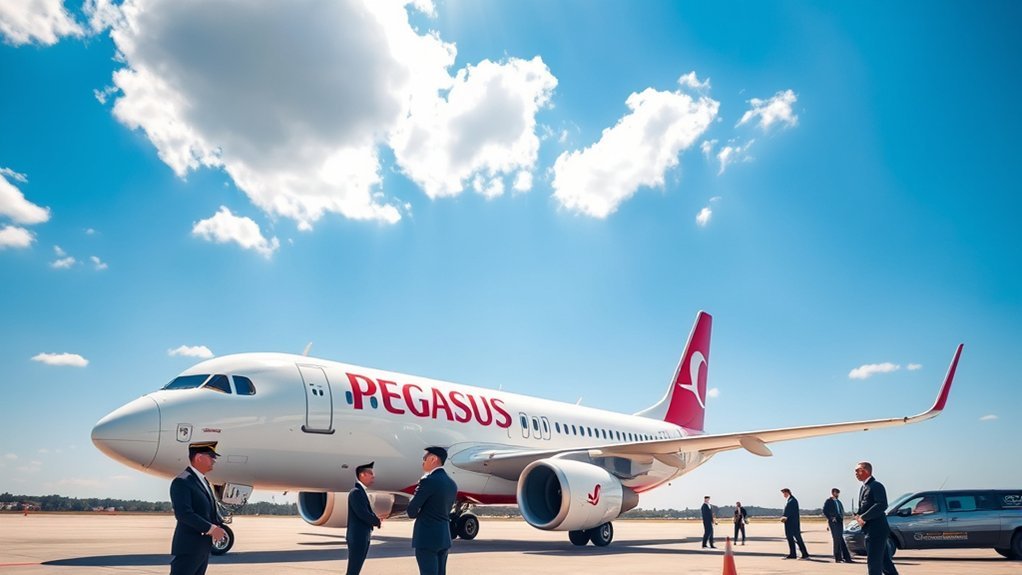
Based on publicly available information as of July 24, 2026, Pegasus Airlines continues to operate under Turkish and international aviation oversight. It is an established scheduled airline rather than an unregulated charter operator.
Pegasus lists an Air Operator Certificate, continuing-airworthiness approval, maintenance-organization approval, maintenance-training approval, EASA Third Country Operator approval and UK TCO approval. Its Turkish certificates page also lists IATA Operational Safety Audit registration.
| Safety Indicator | Current Position | What It Means |
| Operating approval | Current AOC and listed operational approvals | The airline is authorised to conduct commercial operations under applicable oversight. |
| IOSA | Registered | Operational management and control systems are assessed against the IATA audit framework. |
| EU Air Safety List | Not listed in the June 2026 update | Pegasus is not subject to an EU operating ban or restriction under that list. |
| Fatal accident history | One fatal accident in February 2020 | Its record is not accident-free and should not be described that way. |
| Third-party rating | 5 out of 7 from AirlineRatings | This is a commercial rating, not an official government safety certificate. |
Note: Passing an audit or holding an operating approval is a positive indicator, but it does not certify that an airline will never experience an accident, technical problem, diversion or emergency.
Who Regulates and Audits Pegasus Airlines?
Pegasus identifies Türkiye’s Directorate General of Civil Aviation as its auditing authority. The airline must maintain its operating approvals, aircraft airworthiness, maintenance programs, crew qualifications and operating procedures under the rules that apply to its services.
Pegasus is also listed as a current IATA member airline. IATA states that its airline members must remain registered under the IATA Operational Safety Audit program. IOSA examines operational management and control systems across areas such as flight operations, maintenance, cabin operations, ground handling and security management.
The European Commission’s EU Air Safety List updated on June 9, 2026 does not name Pegasus or Türkiye among the carriers and states subject to a full or partial ban. This supports the conclusion that Pegasus currently meets the conditions required to operate relevant European services.
Pegasus is currently licensed, internationally audited and permitted to operate in European markets, but those facts should be considered together with its accident history rather than used to erase it.
Pegasus Airlines Accident and Incident History
Pegasus has experienced several serious runway events. They should be described accurately and without assuming that every event had the same cause.
Flight PC2193: Fatal Accident in 2020
On February 5, 2020, Pegasus flight PC2193, operated by Boeing 737-800 TC-IZK, left runway 06 after landing at Istanbul Sabiha Gökçen Airport. The aircraft travelled beyond the runway and broke apart after leaving the airport surface.
Türkiye’s Transport Safety Investigation Center states that three people died and four were seriously injured. The authority announced in March 2022 that the final accident-investigation report had been completed.
The event is the most important negative fact in Pegasus’s recent safety history. However, the public summary page does not support reducing a complex accident to a single phrase such as “pilot error.” Weather, approach decisions, runway conditions, crew actions, airport infrastructure and other operational factors must be considered through the complete investigation process.
Trabzon Runway Excursion in 2018
On January 13, 2018, Pegasus flight PC8622 left the runway after landing at Trabzon Airport. The aircraft stopped on a slope near the Black Sea. The Turkish investigation authority’s completion notice records one passenger with a minor injury and no fatalities.
Sabiha Gökçen Runway Excursion in January 2020
On January 7, 2020, a Pegasus Boeing 737 operating from Sharjah left the runway after landing at Sabiha Gökçen Airport. Pegasus reported that all passengers and crew were evacuated and that no deaths or injuries occurred.
This event took place less than one month before the fatal PC2193 accident. The two events were separate occurrences and should not be combined into a vague reference to “the 2020 crash.”
Warning: Do not rely on social-media posts or a single passenger-review score to reconstruct an aviation accident. Use the investigating authority’s findings and distinguish confirmed facts from allegations or early reports.
What Safety Measures Does Pegasus Have?
Relevant safety measures extend far beyond aircraft cleaning. They include regulatory approvals, continuing airworthiness, maintenance, qualified crews, operational procedures, reporting systems, dispatch controls, security and emergency preparation.
Fleet and Maintenance
Pegasus’s current fleet page lists 112 aircraft, including Boeing 737-800s and Airbus A320 and A321 aircraft. Most of the listed fleet consists of newer-generation Airbus A320neo and A321neo models.
A young or modern fleet can offer newer systems and improved efficiency, but aircraft age alone does not determine safety. Older aircraft can remain safe when they are properly inspected, maintained and operated, while a newer aircraft still requires disciplined maintenance and qualified crews.
In February 2026, Pegasus announced the opening of a new maintenance center at Sabiha Gökçen Airport. The facility can provide maintenance for five narrow-body aircraft at the same time and is authorised for Boeing 737 NG and Airbus A320 and A321 family aircraft.
Training and Operational Authorisations
Pegasus lists approvals covering pilot type-rating training, cabin-crew initial training, aviation-security training, maintenance human factors, continuing airworthiness, approved maintenance and dangerous-goods operations. These approvals show that relevant activities are conducted within formal regulatory frameworks.
Cabin Air and Hygiene
Pegasus states that its aircraft use HEPA filtration and that cabin air is refreshed approximately every three minutes. The airline says these filters remove more than 99.99% of specified airborne contaminants and dust particles.
Its still-published coronavirus information also says aircraft are disinfected every 24 hours with approved cleaning products. These details relate mainly to cabin hygiene and infection-control practices. They do not measure runway safety, pilot decisions, mechanical reliability or maintenance quality.
Does Being a Low-Cost Airline Mean Pegasus Is Less Safe?
A low-cost business model does not allow an airline to ignore applicable safety regulations. Budget airlines commonly reduce costs through optional baggage, paid meals, high aircraft use, direct sales, standardised fleets and simpler onboard service.
Those commercial choices are separate from required aircraft maintenance, crew licensing, operating approvals and airworthiness standards. A limited meal service, strict baggage policy or basic cabin does not by itself make an airline unsafe.
However, cost pressures can exist throughout aviation. That is why independent oversight, audits, incident reporting and transparent investigations matter more than whether a ticket includes food or checked baggage.
How Passenger Reviews Relate to Safety
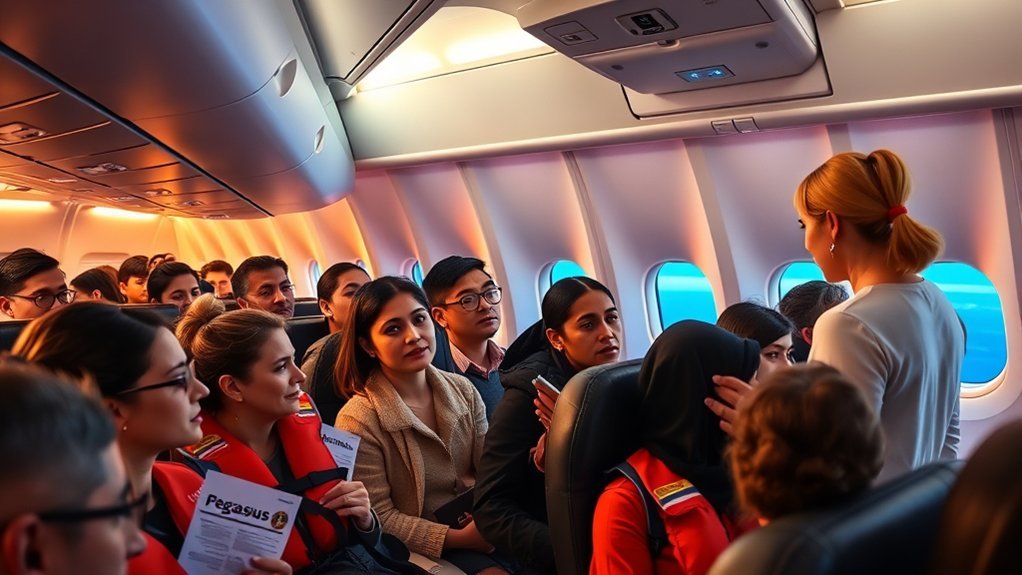
Passenger feedback about Pegasus is mixed, but reviews must be interpreted according to what they actually describe. Complaints about call centers, delays, refunds, baggage charges, seat comfort or staff attitude can help you assess the customer experience. They do not establish whether an aircraft was maintained correctly or whether a pilot followed an approved procedure.
Reviews can still reveal useful cabin-level information, such as whether passengers received clear announcements, whether cabin baggage was secured and whether staff appeared to enforce seatbelt instructions. Even then, an individual review is an anecdote rather than a complete safety audit.
Note: Service reliability and operational safety can overlap in limited areas, but a poor refund experience does not prove that an aircraft is unsafe.
How to Evaluate a Pegasus Flight Before Booking
- Check current regulatory information. Confirm that the airline remains absent from the EU Air Safety List and retains its listed operating approvals.
- Check the exact operating carrier. A ticket sold by one airline may sometimes be operated by another carrier. Review the “operated by” information during booking.
- Review the route. Government travel advisories and conflict-zone information may matter more for some destinations than the airline’s overall record.
- Check flight status and airport conditions. Severe weather can cause delays, diversions or cancellations. A diversion is often a precaution rather than evidence of unsafe conduct.
- Separate ratings from official oversight. Third-party scores can be useful summaries, but their methods and scoring periods vary.
- Use travel insurance correctly. Insurance may cover eligible cancellations, medical costs or disruption. It does not change the physical safety of the flight.
Pro Tip: Check current information shortly before departure. Airline approvals, airspace restrictions, weather and destination advisories can change after you book.
Tips for Safe Travel With Pegasus
- Listen to the cabin safety demonstration, even when you fly often.
- Locate the nearest usable exits before takeoff and count the seat rows between you and the exits.
- Keep your seatbelt low and tight whenever you are seated, including when the sign is off. The FAA warns that unexpected turbulence can throw unrestrained passengers from their seats.
- Follow crew instructions immediately during turbulence, an evacuation or any other abnormal event.
- Store bags securely so they cannot block the aisle or become loose during sudden movement.
- Keep essential medicine, identification and important documents in your personal item rather than checked baggage.
- Check Pegasus’s current battery, dangerous-goods and cabin-baggage rules before packing.
- Do not inflate evacuation risk by stopping to collect luggage during an emergency evacuation.
Frequently Asked Questions
Is It Safe to Fly With Pegasus Airlines?
Current regulatory indicators support the conclusion that Pegasus is a legitimate, audited airline that meets the requirements needed for its operations. It is IOSA registered, holds EASA and UK TCO approvals and is not on the EU Air Safety List. Its record is not spotless, however, because it experienced a fatal runway accident in February 2020.
Has Pegasus Airlines Ever Had a Crash?
Yes. Pegasus flight PC2193 left the runway after landing at Istanbul Sabiha Gökçen Airport on February 5, 2020. Three passengers died and four people were seriously injured according to Türkiye’s Transport Safety Investigation Center. Pegasus also experienced nonfatal runway excursions in Trabzon in 2018 and at Sabiha Gökçen in January 2020.
What Are the Top 5 Safest Airlines in the World?
There is no official government-issued global top five. AirlineRatings ranked Etihad, Cathay Pacific, Qantas, Qatar Airways and Emirates as its five safest full-service airlines for 2026. The ranking uses its own methodology and should not be treated as a guarantee or permanent classification.
What Is the Safety Rating of Pegasus Airlines?
No single official universal numerical rating exists. AirlineRatings currently gives Pegasus 5 out of 7. Its method awards points for factors such as IOSA registration, operating standards and the absence of an EU ban, while deducting for a fatal accident within its scoring period. Other organizations may use different methods.
Is Pegasus Airlines IOSA Registered?
Yes. Pegasus lists IATA IOSA registration among its certificates, and it is a current IATA member. IOSA evaluates an airline’s operational management and control systems, but registration does not mean the airline is guaranteed to remain accident-free.
Is Pegasus Airlines Banned in Europe?
No. Pegasus is not included on the European Union Air Safety List published on June 9, 2026. The airline also lists EASA Third Country Operator approval, which is required for relevant commercial operations into the European Union.
Do Negative Pegasus Reviews Mean the Airline Is Unsafe?
Not necessarily. Most public reviews focus on baggage charges, delays, refunds, customer support, seat comfort and communication. Those issues may affect your experience, but they do not replace accident investigations, maintenance oversight, crew licensing or operational audits.
Conclusion
Pegasus Airlines has positive current safety indicators. It holds the approvals needed for its operations, is IOSA registered, operates a fleet dominated by newer-generation aircraft and is not on the current EU Air Safety List.
Its history must still be presented honestly. The airline experienced multiple runway excursions and the fatal PC2193 accident in February 2020. Those events prevent a claim that Pegasus has a spotless or accident-free record.
Overall, the available evidence supports viewing Pegasus as a regulated commercial airline with recognised international approvals, not as an airline with no safety oversight. Make your decision using current official information, the specific route and your own comfort with its historical record rather than relying only on ticket price or passenger-review scores.
Sources
- Türkiye Transport Safety Investigation Center — PC2193 accident date, fatalities, serious injuries and final-report status.
- Pegasus Airlines Authorisations and Certificates — operating, maintenance, training, EASA TCO and UK TCO approvals.
- International Air Transport Association — current Pegasus membership details.
- European Commission EU Air Safety List — current banned and restricted airline information.
- Pegasus Airlines Fleet Information — current fleet size and aircraft types.
- AirlineRatings Pegasus Safety Rating — third-party 5-out-of-7 rating and scoring components.
