
Last Updated on September 11, 2026 by Ethan Caldwell
For most travelers, the best time for a Panama Canal cruise is during Panama’s predominantly dry season, especially in January or February. You are more likely to get lower rainfall for deck viewing and shore excursions, but Panama stays tropical throughout the year, and brief showers are still possible. Your ideal date also depends on fares, itinerary type, departure port, and crowd tolerance.
Quick Answer
January and February are usually the best months for a Panama Canal cruise because they fall within Panama’s mainly dry period from mid-December through April. For more availability, consider December, March, or April. October, November, and May can offer appealing itineraries, but rain and humidity are more likely.
Key Takeaways
- Best overall months: January and February for a strong balance of lower rainfall and comfortable sightseeing.
- Main cruise season: Panama Canal cruise itineraries generally operate from October through May.
- Best shoulder periods: October, November, and May may have fewer classic sailings and more rain, but they can still be worth comparing.
- Most important booking detail: Confirm whether the itinerary includes a full Canal transit, partial transit, or only a nearby port visit.
- Weather reminder: Panama remains warm and humid, and the Caribbean side can be wetter than the Pacific side.
Disclosure: As an Amazon Associate I earn from qualifying purchases. Some links on this page are affiliate links, at no extra cost to you.
Best Months for a Panama Canal Cruise
The strongest weather window usually runs from mid-December through April. The Smithsonian Tropical Research Institute explains that Panama’s predominantly dry conditions normally begin around mid-December and continue through April.
January and February are often the easiest months for travelers who want less rain during lock viewing, city tours, rainforest walks, or other outdoor excursions. They are popular months, however, so preferred ships, balcony cabins, and tours may have less availability.
December can be a good compromise. The rainy season is ending, the main cruise season is underway, and holiday activities may add energy to the trip. Holiday departures can also attract stronger demand.
March and April remain within the usual dry period. Expect tropical warmth, strong sun, and potentially busier sailings around school breaks and Easter. April is a reasonable choice, but it should not be described as automatically more expensive because cruise pricing changes constantly.
October, November, and May are the most practical shoulder-season months to compare. They fall within or near the main Canal cruise season, but they usually bring a greater chance of rain, high humidity, and itinerary changes. June through September generally have fewer classic Canal cruise options.
Pro Tip: Search by itinerary before searching by month. A well-priced January sailing is not useful if it only visits Colón and does not actually transit the locks.
Why the Dry Season Makes the Difference
Panama has two main seasons: wet and dry. From about May through November, the Intertropical Convergence Zone contributes to wetter conditions. By mid-December, seasonal wind patterns normally bring drier weather that lasts through April.
The dry season does not mean completely rain-free weather. Panama remains tropical, and conditions can differ across a single itinerary. The Caribbean side, including areas around Colón, generally receives more rain than the Pacific side around Panama City.
| Dry-Season Pattern | What It Means | Possible Benefit |
|---|---|---|
| Lower average rainfall | Fewer prolonged downpours on many days | More dependable deck viewing and outdoor tours |
| Strong tropical sun | Sun exposure can be intense even when clouds are present | Bright views and good photography conditions with proper sun protection |
| Drier trails | Some rainforest and nature routes may be easier to walk | More comfortable shore excursions |
| Higher seasonal demand | Popular cabins and tours may sell earlier | A wider selection of classic Canal itineraries |
Note: Drier weather does not guarantee calm ocean conditions. A Panama Canal itinerary may include open-water sailing in the Caribbean or Pacific, where wind and waves can differ from conditions inside the Canal.
Panama Canal Cruise Weather by Month
The Panama Canal Authority has described the established cruise season as running from October through May. The following guide focuses on seasonal patterns rather than promising exact temperatures or rainfall totals for every port.
| Month | Typical Conditions | Best For | Main Tradeoff |
|---|---|---|---|
| October | Rainy and humid as the cruise season begins | Travelers comparing early-season itineraries | Frequent showers and possible schedule changes |
| November | Still within the wet season, with improving conditions later in the month | Travelers who value itinerary choice over perfect weather | Rain remains likely |
| December | Transition toward the dry season | Holiday travel and improving outdoor conditions | Holiday demand and some remaining rain |
| January | Predominantly dry, warm, and sunny | First-time visitors and outdoor excursions | Popular dates may book earlier |
| February | Usually one of the drier parts of the season | Deck viewing, photography, and nature tours | Strong demand for preferred cabins and tours |
| March | Dry, sunny, and often hotter during the afternoon | Travelers comfortable with tropical heat | High sun exposure and school-break demand |
| April | Usually dry early in the month, with the rainy season approaching | Late dry-season departures | Heat, holiday demand, and increasing weather variability |
| May | Rain and humidity generally increase | Travelers considering the end of the main season | Fewer sailings and more frequent showers |
| June–September | Wet, humid, and outside the main cruise period | Travelers who find a specialized or regional sailing | Limited classic Canal itineraries |
Full Transit vs. Partial Transit
Before choosing a month or cruise line, check exactly how the itinerary describes the Canal experience. Similar-sounding cruises can provide very different views.
Full Panama Canal Transit
A full transit crosses the isthmus between the Pacific and Atlantic sides. It normally occupies much of the day and provides the most complete view of the locks, Gatún Lake, the Culebra Cut, bridges, and surrounding landscape.
This is usually the best choice when the Canal itself is the main reason for your trip. Full transits are often part of longer one-way or repositioning cruises, so you may need separate flights into and out of different cities.
Partial Panama Canal Transit
A partial transit enters part of the Canal, passes through one or more lock sections, and normally returns toward the same coast. Some itineraries also offer a smaller-boat excursion that travels farther through the Canal while the cruise ship remains elsewhere.
Partial transits can be easier to fit into a round-trip vacation. They may also include additional Caribbean ports, but they do not provide the same ocean-to-ocean experience.
Canal Port Visit Without a Transit
Some cruises stop in Colón or another nearby port without taking the cruise ship through the locks. Passengers may visit Miraflores, Agua Clara, or another Canal attraction by road. This can still be worthwhile, but it should not be confused with a full or partial ship transit.
Warning: Do not rely only on a cruise title that contains “Panama Canal.” Read the daily itinerary and look for clear wording such as “full transit,” “partial transit,” or “Canal experience.”
When the Rainy Season Can Still Work
A wet-season or shoulder-season departure is not automatically a bad choice. Rain often arrives in heavy bursts rather than lasting all day, and the landscape can look especially green. Some travelers also prefer sailing when popular tourist areas feel less crowded.
The tradeoff is greater uncertainty. Outdoor tours may be muddy, afternoon showers can interrupt sightseeing, and fewer cruise lines offer classic Canal routes from June through September. Heavy rainfall or fog can also affect maritime schedules.
Choose a wetter month when the itinerary, ship, departure port, or total price matters more to you than having the lowest possible chance of rain. Choose January or February when outdoor reliability is your top priority.
What to Pack for a Panama Canal Cruise
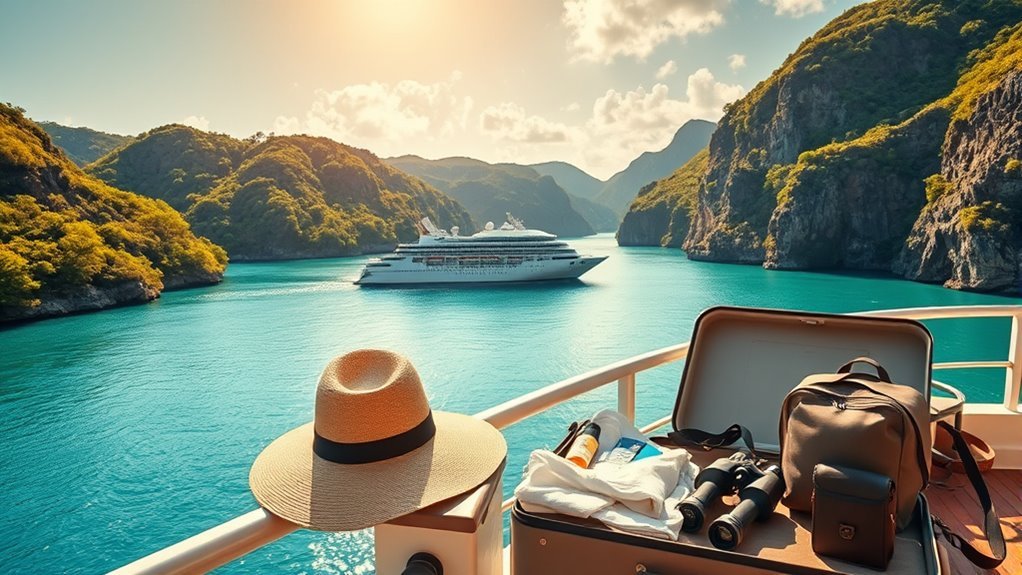
Pack for tropical heat, humidity, strong sun, air-conditioned ship interiors, and sudden rain. The following items cover most Canal transits and common shore excursions:
- Lightweight, breathable clothing: Choose quick-drying shirts, shorts, dresses, or trousers.
- Light rain protection: Bring a compact rain jacket or travel umbrella, even during the dry season.
- Sun protection: Pack broad-spectrum sunscreen, sunglasses, and a wide-brimmed hat.
- Insect repellent: Use an effective repellent for rainforest, lake, or rural excursions.
- Closed-toe walking shoes: Choose shoes with reliable traction for trails, wet paths, and uneven streets.
- Refillable water bottle: Drink regularly during hot excursions.
- Light sweater or wrap: Indoor dining rooms, theaters, and buses can feel cool.
- Binoculars: Useful for birds, monkeys, ships, lock machinery, and shoreline viewing.
- Small day bag: Carry rain protection, water, identification, medication, and sun protection ashore.
- Personal medication and travel-health supplies: Keep essential medication in your carry-on luggage.
The CDC’s Panama travel guidance recommends preparing for heat, protecting yourself from sun exposure, staying hydrated, and taking steps to prevent mosquito bites.
Warning: Tropical heat can become uncomfortable quickly during long shore excursions. Drink water regularly, take shade breaks, and follow your clinician’s advice if you have a condition affected by heat or strenuous walking.
When to Book for the Best Deals
There is no dependable rule that January is always cheapest or that April is always expensive. Cruise pricing changes according to the ship, itinerary, cabin inventory, departure city, school holidays, promotions, and cancellation conditions.
Use the following booking strategy instead:
- Choose full or partial transit first. This prevents you from comparing cruises that provide fundamentally different experiences.
- Compare equivalent cabin categories. A balcony cabin on one ship should not be compared with an interior cabin on another without accounting for the difference.
- Calculate the total trip cost. Include flights, hotels, transfers, gratuities, drinks, Wi-Fi, specialty dining, insurance, and shore excursions.
- Check the departure and arrival cities. A one-way full transit may require more expensive open-jaw flights.
- Review cancellation and price-adjustment rules. A cheaper nonrefundable fare may provide less flexibility.
- Reserve high-priority excursions early. Small-group wildlife tours and specialized Canal excursions may have limited capacity.
- Compare the final price again before the penalty period. Promotions and cabin availability can change.
Booking early is most valuable when you need a specific date, accessible cabin, connecting room, balcony location, or limited-capacity excursion. Flexible travelers may also find later promotions, but availability is less predictable.
Pro Tip: When two cruises appear similar, compare how many daylight hours they spend in the Canal. Transit timing affects how much of the locks and surrounding landscape you can see.
How to Choose a Panama Canal Cruise Line
There is no single best cruise line for every Panama Canal traveler. During the 2025–2026 season, the Panama Canal Authority reported scheduled visits from major operators as well as smaller luxury and expedition ships. The exact selection changes each season.
| Your Priority | What to Look For |
|---|---|
| Complete Canal experience | An explicitly labeled full transit with daylight passage and onboard narration |
| Easy flights | A round-trip partial transit from a convenient home port |
| Nature and learning | Smaller ships, naturalist-led excursions, lectures, and longer port calls |
| Family activities | Age-appropriate programs, pools, flexible dining, and suitable cabin layouts |
| Quiet or premium experience | Higher crew-to-passenger ratios, smaller venues, and more included services |
| Lowest total cost | Transparent inclusions, reasonable airfare, and fewer paid add-ons |
Also check the ship’s outdoor viewing space. A Panama Canal cruise is more enjoyable when you can move between forward, aft, and side views instead of watching the entire transit from one crowded location.
What Not to Miss on a Panama Canal Cruise
- The lock approach: Go outside before the ship enters the first lock so you can watch the pilots, tugboats, gates, and chamber alignment.
- The change in water level: Notice how gravity-fed water raises or lowers the ship inside each chamber.
- Gatún Lake: Look for forested islands, birds, and other wildlife as the ship crosses the lake.
- The Culebra Cut: This narrow section shows the scale of the excavation required to build the Canal.
- Onboard narration: Lectures or live commentary make the engineering and history easier to understand.
- Panama City: A pre- or post-cruise stay can include Casco Viejo, the Amador Causeway, museums, and local food.
- Canal visitor centers: Miraflores on the Pacific side and Agua Clara on the Atlantic side provide close views of lock operations.
- A nature excursion: Gatún Lake boat tours and rainforest walks can add wildlife and ecology to the engineering experience.
The best Canal itinerary is not necessarily the cheapest or longest cruise. It is the one that gives you the transit type, daylight viewing, port time, and onboard experience you value most.
Check Current Canal Conditions Before You Travel
The Canal operates throughout the year, but rainfall, reservoir levels, scheduled maintenance, traffic, and visibility can affect maritime operations. The Panama Canal Authority publishes current news and shipping advisories.
Operational notices aimed at commercial ships do not automatically mean a passenger cruise will be canceled. Your cruise line remains the best source for changes to your specific sailing, transit time, or shore excursion.
2026 Visitor Note: The Panama Canal Authority says modernization work at the Miraflores Visitor Center is expected to continue through the end of 2026. Entry waits may be longer during high-demand periods, so check current visitor information and purchase tickets in advance when available.
Before departure, review current health guidance and your government’s Panama travel information. U.S. travelers can consult the U.S. Department of State’s Panama page. Travelers from other countries should use their own government’s official advisory service.
Frequently Asked Questions
What is the best month to cruise through the Panama Canal?
January and February are usually the strongest choices for lower rainfall and outdoor sightseeing. December, March, and April are also good options. Your best month may change if you prioritize lower total cost, a specific ship, easier flights, or fewer crowds.
What caused the April 2026 explosion near the Panama Canal?
On April 6, 2026, a fuel tanker exploded near the base of the Bridge of the Americas at the Pacific entrance to the Canal. The incident killed one person and injured two firefighters. Initial reporting said the cause remained under investigation. It was not reported as a routine-maintenance gas explosion at the Miraflores Locks. See the Associated Press report for details.
What should I not miss on a Panama Canal cruise?
Do not miss the ship’s approach to the locks, the changing water level inside each chamber, Gatún Lake, the Culebra Cut, and onboard commentary. A pre- or post-cruise visit to Panama City or an official Canal visitor center can make the experience more complete.
What is the best cruise line for the Panama Canal?
There is no universal best cruise line. Choose according to the transit type, ship size, daylight passage, viewing space, port schedule, onboard narration, family facilities, included services, departure city, and total cost. Compare the actual itinerary rather than relying only on the cruise line’s reputation.
Is a full Panama Canal transit better than a partial transit?
A full transit is better when crossing the entire Canal is your main goal. A partial transit can be better when you want a shorter round-trip itinerary, easier flights, or more Caribbean ports. Confirm how many locks the ship enters and whether the transit occurs during daylight.
Do Panama Canal cruises operate year-round?
The Canal operates year-round, but the main passenger cruise season generally runs from October through May. Classic full and partial transit choices are usually more limited from June through September, when Panama is also within its wetter season.
Sources
- Smithsonian Tropical Research Institute: Why Panama? — Panama’s wet and dry seasons and regional rainfall patterns.
- Panama Canal Authority: 2025–2026 Cruise Season — current cruise operators, full and partial transits, and seasonal Canal traffic.
- Panama Canal Authority: 2026 Operational Stability — climate monitoring, water management, and operational planning.
- Panama Canal Authority: Miraflores Modernization — 2026 visitor-center work and possible entry delays.
- CDC Panama Traveler View — heat, sun, mosquito, vaccination, and travel-health guidance.
- U.S. Department of State: Panama Travel Information — current entry, safety, and travel-advisory information for U.S. travelers.
Conclusion
January and February are usually the best months for a Panama Canal cruise when lower rainfall and outdoor sightseeing are your main priorities. December, March, and April are also strong choices, while October, November, and May can suit travelers who accept more weather variability.
Before booking, confirm whether the cruise offers a full transit, partial transit, or only a nearby port visit. Then compare daylight transit time, ship design, ports, flights, cabin costs, and included services. Pack for heat, sun, insects, and sudden showers, and check official Canal and cruise-line updates before departure.

