

Last Updated on July 28, 2026 by Daniel Globe
Getting permission to travel while on probation can feel intimidating, but it does not have to derail your plans. Courts and probation departments have clear processes for reviewing travel requests, and understanding those steps in advance gives you the best chance of approval — and helps you avoid a violation that could put your freedom at risk.
Quick Answer
Yes, you can usually travel while on probation, but you must get explicit written permission (a travel permit) from your probation officer or judge before departing. Submit a request with your dates, destination, and purpose well in advance, and never book non-refundable travel until you have official written approval.
Courts often use travel restrictions as a standard condition of probation. These rules keep individuals within a specific geographical area, usually the county or court jurisdiction where they were sentenced, so officers can monitor compliance, protect public safety, and support the rehabilitation process.
Travel limits allow probation officers to keep a closer watch over individuals who need to complete specific requirements, like attending counseling or holding down a job. The exact rules depend on the offense, the court’s terms, and the probation department’s policies. Someone on felony probation typically faces tighter restrictions — often limited to their home county without prior written clearance — while someone on misdemeanor or informal probation may have more freedom to move within the state.
Many courts require individuals to stay within their home state or even a specific county. If you are on probation, you need to understand these rules, because violating travel restrictions can lead to severe penalties, including a revoked probation status and prison time.
Key Takeaways
- Understand your restrictions: Know the specific travel limitations imposed on you, including county, out-of-state, and international travel rules.
- Apply for permission properly: Submit required forms and documents to your probation officer well in advance of your trip.
- Provide clear justification: Explain your reason for travel and include supporting documents like job itineraries, event invitations, or medical records.
- Meet with your officer: Discuss your plans honestly and secure official written approval before making financial commitments.
- Follow all rules while away: Maintain required check-ins, adhere to drug screening schedules, and carry your signed permit at all times.
At a Glance
| Time Required | 2 to 8 weeks advance notice (depending on destination and probation type) |
| Difficulty | Moderate (requires formal paperwork, documentation, and compliance checks) |
| Tools Needed | Travel Request Form, Travel Itinerary, Employer/Medical Verification, Signed Permit Copy |
| Cost | $0 standard permit fee (court filing fees apply if petitioning a judge) |
Disclosure: As an Amazon Associate I earn from qualifying purchases. Some links on this page are affiliate links, at no extra cost to you.
Applying for Travel Permission
The Application Process
If you want to travel outside your restricted area, you must formally apply for permission from your probation officer. You usually need to submit a written request that includes your exact travel dates, lodging address, contact phone numbers, transportation details, and purpose. Providing thorough information helps your officer evaluate your request quickly.
Timely Submission and Compliance
Submit your request well before your planned trip. As a general rule, out-of-state travel requests should be submitted at least two to three weeks ahead of time. International travel requests often need six to eight weeks, as they usually require a formal review and signed order from the sentencing judge. Your local probation office may have specific lead-time requirements, so check your orientation packet or ask your officer directly.
Note: Felony probation generally comes with stricter travel limits than misdemeanor or informal probation. If you are unsure which supervision tier applies to you, ask your probation officer directly — it dictates how far in advance you must plan and how much verification documentation is required.
Maintaining Open Communication
Stay in touch with your probation officer throughout the application process. Clear, proactive communication demonstrates that you respect your court conditions. It also fosters professional trust, which significantly increases the likelihood of approval for future travel requests.
Providing Justification for Travel

Probation departments rarely grant travel requests for vague or casual reasons. You need a compelling justification showing how the trip aligns with your rehabilitation or personal stability. Approved reasons typically include employment obligations, job interviews, immediate family emergencies, specialized medical care, or educational milestones.
Present each reason clearly and back it up with concrete documentation. For instance, if you are traveling for a mandatory work conference, supply an official letter from your employer on corporate letterhead, including event dates, hotel address, and work schedules. Address potential supervision concerns upfront by demonstrating that your trip will not cause you to miss required drug testing or court-ordered classes.
Meeting with Probation Officer
Sample Check-In Schedule
| Meeting | Format | Location | Purpose |
|---|---|---|---|
| Initial Request | In-person | Probation Office | Discuss travel dates, destination, and reason |
| Follow-Up Review | Virtual or Phone | Remote | Confirm documentation and compliance status |
| Final Approval | In-person | Probation Office | Sign travel permit and confirm check-in plan |
An in-person meeting with your probation officer is usually required before travel authorization is granted. This meeting gives your officer an opportunity to review your travel itinerary, ask specific questions about your destination, and verify that all financial obligations (like court fines or restitution) are up to date.
Be completely transparent during this meeting. Bring a physical folder containing all supporting paperwork, including flight itineraries, lodging confirmations, and contact details for everyone you will be staying with. Being organized and cooperative reinforces your reliability.
Obtaining Supporting Documents
Independent documentation validates that your travel request is authentic. Depending on the nature of your trip, you should collect and submit:
- Work-related travel: Letter from your manager detailing travel requirements, event schedule, and conference registration.
- Family events/emergencies: Wedding invitations, hospital admission notes, funeral notices, or obituaries.
- Medical care: Appointment confirmation letters from out-of-area specialists or medical centers.
- Logistics proof: Flight itineraries, round-trip train/bus tickets, hotel booking confirmations, or rental car receipts.
Waiting for Approval

After submitting your request and meeting with your officer, you must wait for formal administrative or judicial approval. Processing times vary depending on departmental caseloads and whether court sign-off is required. Never leave your jurisdiction until you hold a fully executed, signed travel permit.
Warning: Purchasing non-refundable plane tickets, hotel rooms, or rental cars before receiving written approval is a risky mistake. If your request is delayed or denied, you risk financial loss and face probation revocation if you decide to travel anyway.
Maintain consistent communication while your request is processed. Respond quickly to any follow-up questions from your officer, and keep up with all standard obligations, including scheduled drug tests and counseling appointments.
Managing Drug Testing and Treatment Requirements While Away
If your probation conditions include random drug screening (such as a color-code hotline) or court-mandated treatment sessions, traveling does not relieve you of these requirements. You must arrange a compliance plan with your probation officer before leaving.
For drug testing, your probation officer may arrange courtesy testing at an approved drug screening facility, local sheriff’s office, or probation clinic in your destination city. You will be responsible for any out-of-pocket testing fees at the remote location. If you participate in mandatory weekly counseling or recovery meetings, ask if you can attend remotely via teletherapy or obtain signed attendance sheets from certified local support groups while away.
Products Worth Considering

MEETS OFFICIAL STANDARD CUTOFF: This at-home thc drug test kit detects down to 50 ng/mL threshold. For over-the-counter use. Using the same detection method as lab screening weed drug test.
![Prime Screen [5 Pack] 6 Panel Urine Drug Test Kit (THC-Marijuana, BZO-Benzos, MET-Meth, OPI, AMP, COC), WDOA-264](https://m.media-amazon.com/images/I/510viUXO8hL._SL500_.jpg)
Accurate and Reliable - 510(k) Cleared for Home Use (OTC Use) and professional use. Over 99% accurate in detecting 6 drugs according to the recommended cut-off level: THC-50 ng/mL; OPI-2000 ng/mL; AMP-1000ng/mL; COC-300 ng/mL; BZO-300 ng/mL; MET/mAMP-1000ng/mL.
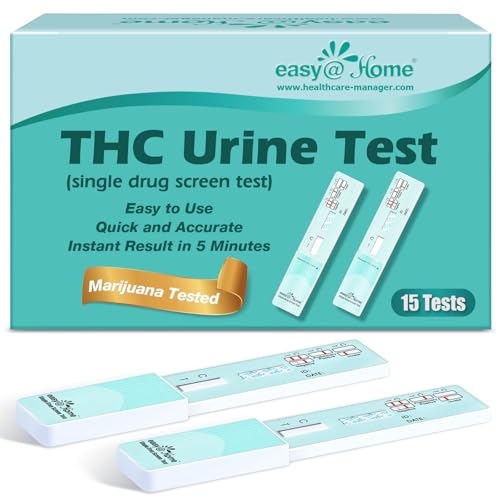
Track Your THC Detox: Utilize this home THC testing kit to gauge the presence of THC in urine. Regular testing can help you observe the decrease in THC levels, offering a simple and budget-friendly way to oversee your detox progress.
Airport Security, TSA, and Border Control Considerations
A common concern for individuals on probation is passing through airport security and border checkpoints. Transportation Security Administration (TSA) agents focus primarily on aviation security and passenger identification. However, federal and state law enforcement databases are connected, and warrants or travel restrictions can surface during routine passport control or customs checks.
When traveling domestically, carry your government-issued ID alongside a physical, signed copy of your official probation travel permit. If questioned by law enforcement or airport security officers during standard identity verification, present your permit calmly. For international travel, U.S. Customs and Border Protection (CBP) officers review entry and exit records. Returning to the U.S. without proper judicial travel authorization on file can result in detainment at the port of entry.
Products Worth Considering
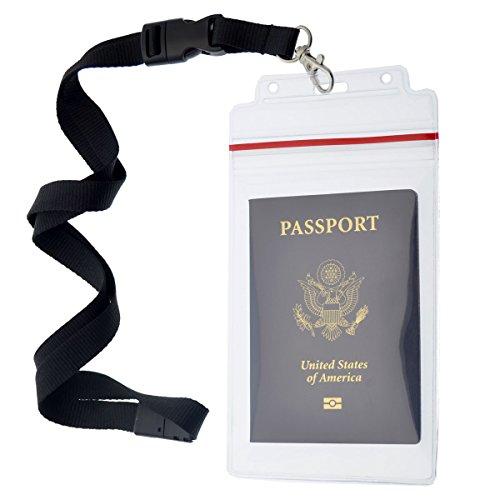
WATER RESISTANT - Do Not Submerge in Water - Sturdy and Heavy Duty to Keep Out the Elements, but is Not Designed for Swimming or Diving

Material: Defend your possessions with durable, rip-stop nylon, and water-resist nylon materials. Mesh separators between each section in this RFID card holder will help to keep your cards and valuables free from scratches and damage while ensuring that you can grab the items you need at a moment's notice, great for this airport hassles.
Traveling with Permission
Once you receive written approval, you may proceed with your trip. However, you must adhere strictly to all special conditions outlined on your permit. Your officer may require you to check in via telephone, email, or a mobile probation app at designated times (e.g., upon arrival and before departure).
Maintain a low profile and avoid environments or individuals that could lead to legal trouble, alcohol consumption, or drug exposure. Keep all travel documentation accessible throughout your journey.
Pro Tip: Store a digital copy of your signed travel permit on your smartphone in addition to carrying a physical paper copy in your travel bag. Having instant access to digital proof ensures you can verify your permission if questioned by law enforcement.
Products Worth Considering
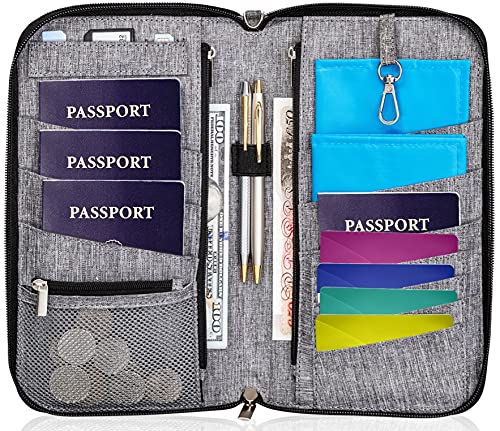
DESIGNED BY TRAVELERS FOR TRAVELERS unique, Smartly designed, elegant high capacity document holder. Removable wristlet and cross body straps allow choosing the desired type of wearing and usage

Durable & Weather-Resistant – Designed to securely store 8.5" x 11" permits, plans, and flyers, this outdoor permit holder ensures your important documents remain safe and accessible. The clear, weather-resistant plastic provides visibility while protecting against rain, wind, and other outdoor elements.

Easily travel with loose sheets of paper as the document wallet features a die-cut closure that can easily flip open and securely close
Moving or Staying Long-Term Out of State
If you plan to relocate permanently or reside in another state for an extended period, a temporary travel pass is insufficient. Long-term relocation requires a formal transfer of your probation supervision under the Interstate Compact for Adult Offender Supervision (ICAOS).
ICAOS is a federal agreement among all 50 states and U.S. territories governing interstate supervision. The transfer process involves formal applications, background reviews, and home evaluations by both your sending state and the receiving state. Because ICAOS transfers typically take between 45 and 90 days to complete, you must remain in your home jurisdiction until the receiving state formally accepts your supervision transfer.
Special Considerations: Sex Offender & Specialized Probation
Individuals supervised under specialized probation units — such as sex offender management, domestic violence programs, or high-risk gang units — face strict statutory rules regarding movement. Sex offender registration laws often mandate notification to local law enforcement in any county or state where you stay for more than 24 to 48 hours.
If you are on specialized probation, your travel approval will require multi-agency coordination. You may need to register with local law enforcement upon arrival at your destination city and report back immediately upon returning home. Failing to comply with registration notification requirements during travel constitutes a separate felony offense in many states.
Emergency Travel Requests
Unforeseen crises, such as a severe family illness, death, or urgent medical emergency, require immediate action. If an emergency arises, contact your probation officer or their department supervisor right away.
Most probation offices have protocols for emergency travel authorizations. You must still provide verifiable proof — such as a hospital admission summary, doctor’s letter, or formal funeral notice. Probation officers can often issue an expedited travel permit within 24 to 48 hours for verified emergencies.
What to Do If Your Travel Request Is Denied
If your probation officer denies your travel request, do not travel anyway. Doing so will lead to a violation warrant. Instead, follow a structured legal approach to address the denial:
- Request a detailed written explanation: Ask your officer to specify why the request was refused (e.g., lack of documentation, outstanding fees, or supervision level).
- Address the underlying issue: If the refusal was based on unverified itineraries or unpaid fees, resolve those items and re-apply.
- File a judicial motion: If your officer unreasonably denies a legitimate request (such as for employment or family care), your criminal defense attorney can file a Motion to Modify Probation Conditions directly with the sentencing judge. The judge has the authority to overrule the probation officer and grant a court order permitting travel.
Consequences of Traveling without Permission
Leaving your designated county or state without prior written permission is a direct probation violation. If you leave your jurisdiction unauthorized, your probation officer can file a violation petition, leading to a bench warrant for your arrest.
Even a short, well-intentioned trip taken without approval can be treated the same as a deliberate violation — it’s the missing permission, not the distance traveled, that matters most to the court.
Penalties for travel violations range from stricter probation terms (such as electronic GPS monitoring or curfew restrictions) to complete probation revocation and imprisonment. Furthermore, an unauthorized trip severely damages your credibility with the court, making future travel requests or early probation termination unlikely.
If you are granted permission to travel out of the country, maintaining a reliable connection for mandated check-ins is vital. Using a portable WiFi hotspot for international travel ensures you can access communication apps and complete required check-ins on schedule.
Frequently Asked Questions
What is probation?
Probation is a court-ordered period of community supervision that serves as an alternative to incarceration. It allows you to remain in your community as long as you comply with specific legal conditions set by the sentencing judge.
Can I travel while on probation?
Yes, but you usually need explicit written permission (a travel permit) from your probation officer or judge before departing. This ensures your travel does not interfere with legal requirements, drug testing, or supervision schedules.
How do I get permission to travel while on probation?
You must submit a formal written travel request to your probation officer that includes your travel dates, destination, contact information, purpose, and supporting documentation such as employer letters or event invitations.
What factors will be considered when requesting permission to travel while on probation?
Officers evaluate the severity of your original offense, your overall compliance history, the reason for the trip, outstanding fines or restitution balances, and whether you present any flight risk or public safety concern.
What happens if I travel without permission while on probation?
Traveling without approval is a direct violation of probation. It can lead to an arrest warrant, probation revocation, mandatory GPS monitoring, fines, or immediate incarceration.
Can I travel out of state or internationally while on probation?
Out-of-state and international travel are permitted under specific conditions, but they require a formal approval process. Out-of-state trips require advance officer approval, while international travel typically requires an order signed directly by a judge.
What can I do if my probation officer denies my travel request?
If your officer denies your request, ask for the specific reasons and try to resolve any missing requirements. If the denial remains unreasonable, your defense attorney can file a Motion to Modify Probation Conditions with the court to request a judge’s order.
Sources
- Nolo: How Probation Works — Overview of standard probation rules, court conditions, and legal restrictions.
- New Jersey Courts: Travel While on Probation FAQ — State judicial system guidance on travel permits and judicial clearance requirements.
- Interstate Commission for Adult Offender Supervision (ICAOS) — Official governing body rules for transferring probation supervision between states.
- Stroleny Law: Traveling Out of Florida on Probation — Statutory framework for state travel restrictions and international travel permits.
This article is for general informational purposes only and does not constitute formal legal advice. Probation rules vary significantly by state, court jurisdiction, and judge, so always verify your specific requirements with your assigned probation officer or a licensed criminal defense attorney.
