
Last Updated on July 31, 2026 by Daniel Globe
“Hotel California” is challenging because one guitarist is trying to represent a recording built from several layered rhythm and lead parts. The best approach is to learn a simplified one-guitar arrangement first: master the eight-chord cycle, keep the arpeggio even, and add the lead phrases only after the rhythm feels automatic.
The original published key is B minor, and the song is commonly played in standard tuning. You can use direct B-minor chord shapes or place a capo at the seventh fret and use easier Em-family shapes. Both approaches can sound correct when the chords, timing, and dynamics are handled carefully.
Quick Answer
To play “Hotel California” on guitar, use standard tuning and learn the song in B minor. The main progression is Bm–F#7–A–E–G–D–Em–F#7. Beginners can use a capo at the seventh fret and play Em-family shapes. Master the arpeggio first, then add rhythm, dynamics, and the dual-guitar outro.
Key Takeaways
- The original published key is B minor, and standard tuning works for both direct-chord and capo arrangements.
- The main eight-measure progression is Bm–F#7–A–E–G–D–Em–F#7.
- A capo at the seventh fret lets you use Em, B7, D, A, C, G, and Am chord shapes while sounding in B minor.
- The opening can be played with a flatpick, fingers, or hybrid picking; clean timing matters more than the picking method.
- The famous outro combines alternating Don Felder and Joe Walsh phrases with harmonized dual-guitar lines.
- Use modest gain and controlled bends before adding optional modulation, delay, or other effects.
At a Glance
| Time Required | 30–45 minutes per practice session; several weeks may be needed for a polished full arrangement |
| Difficulty | Intermediate for the chords and arpeggio; advanced for the complete dual-guitar outro |
| Tools Needed | Guitar, tuner, metronome, pick or fingers, optional capo, and a slow backing track |
| Cost | No added cost with existing gear; licensed sheet music, a capo, or effects are optional purchases |
Know the Key, Tuning, Tempo, and Arrangement
“Hotel California” was written by Don Felder, Glenn Frey, and Don Henley and appeared in 1976. The Eagles received the 1978 Grammy Award for Record of the Year for the recording. The licensed lead-sheet listing identifies B minor as the original published key and marks the tempo at a moderately slow pace of about 76 beats per minute.
- Tuning: Standard tuning, E–A–D–G–B–E.
- Original published key: B minor.
- Practice tempo: Start near 45–55 BPM and increase gradually toward the recording’s approximate tempo.
- Main texture: Arpeggiated rhythm guitar, layered six-string and 12-string parts, melodic fills, and an extended dual-guitar outro.
- Practical choice: Use direct B-minor chords or a capo-7 arrangement with easier chord shapes.
Note: The studio recording contains more guitar layers than one player can reproduce at once. Don Felder has described recording roughly 13–14 guitar parts and needing both 12-string and six-string sounds. A solo-guitar version should preserve the main harmony, bass movement, and melody rather than trying to copy every overdub.
Understand the Chord Progressions
The main progression creates the song’s dark, circular quality. It lasts eight measures, with one chord filling each measure in a basic arrangement.
Intro, Verse, and Outro Progression
| Measure | 1 | 2 | 3 | 4 | 5 | 6 | 7 | 8 |
| Chord | Bm | F#7 | A | E | G | D | Em | F#7 |
F#7 is more useful than a plain F# major chord because its seventh adds tension that pulls the progression back toward B minor. Detailed transcriptions may add color tones such as suspended notes, ninths, or minor sevenths. Learn the basic harmony first, then add those details.
Chorus Progression
The chorus begins on G and briefly creates a brighter sound before returning to B minor:
G – D – F#7 – Bm – G – D – Em – F#7
Practice the chorus separately. Its first chord differs from the verse, so relying only on muscle memory can cause players to return to Bm by mistake.
Capo at the Seventh Fret
A capo at the seventh fret lets you use more open-string chord shapes while remaining in the sounding key of B minor.
| Sounding Chord | Capo-7 Shape |
|---|---|
| Bm | Em |
| F#7 | B7 |
| A | D |
| E | A |
| G | C |
| D | G |
| Em | Am |
Pro Tip: Say the next chord name aloud during the final two beats of the current measure. This trains your fretting hand to prepare early and reduces pauses between changes.
Master the Iconic Intro and Guitar Riffs
The opening is built from arpeggiated chords and melodic movement rather than continuous strumming. A clean version depends on note separation, steady subdivision, and quiet string changes.
- Hold the first chord without picking. Check every required string for buzzing or muted notes.
- Pick one string at a time. Let each note ring until the next note or chord change requires it to stop.
- Use a steady picking motion. Avoid changing your picking direction randomly whenever the chord changes.
- Practice two chords at a time. Work on Bm to F#7, then F#7 to A, and continue through the cycle.
- Join the pairs. Play all eight measures slowly without stopping.
- Add melodic emphasis. Bring out the top notes slightly while keeping the bass notes controlled.
You can play the pattern with a flatpick, fingerstyle, or hybrid picking. Fingerstyle may make independent bass and treble control easier, while a flatpick can produce a firmer attack. Neither method is mandatory.
A convincing “Hotel California” performance comes from steady timing and clear voice movement—not from playing every studio layer at once.
Products Worth Considering

♫ Smart Guitar Chords Training Tool – 6 String 6 Fret allowing you to practice more versatile scales and note combinations; design a rotatable screen which could display the most basic, common chords featuring precise finger positions, as we put over 400 kinds of chords inside the IC. Great for guitar beginners/ students to develop muscle memory for chords and is a perfect tool for finger placement exercise.

Play the Arpeggios Cleanly
The arpeggios create the flowing texture beneath the vocal and lead parts. Keep your picking hand close to the strings and use the smallest comfortable motion.
Fingerstyle Approach
- Use the thumb for the lower bass strings.
- Assign the index, middle, and ring fingers to higher strings.
- Keep the wrist relaxed rather than planting the hand rigidly on the guitar.
- Allow notes to overlap when the harmony should ring, but release notes that create unwanted noise during a chord change.
Flatpick Approach
- Angle the pick slightly so it moves through the strings without catching.
- Use alternate picking when it feels natural, but plan string crossings consistently.
- Mute unused bass strings with the edge of the fretting hand or picking-hand palm.
- Accent the first note of each measure lightly so the chord cycle remains easy to follow.
Hybrid-Picking Approach
Use the pick for bass notes and the middle or ring finger for selected treble notes. This makes it easier to separate the bass line from the upper melody while keeping the attack of a pick.
Build the Rhythm and Dynamics
There is no single strumming pattern that represents every guitar layer in the recording. The verses are commonly reduced to an arpeggio or lightly picked pattern, while fuller strumming can be introduced during stronger sections.
Basic Rhythm Method
- Count each measure as four steady beats.
- Play the bass note on beat one.
- Fill the remaining beats with even picked notes or gentle down-and-up movement.
- Keep the verse restrained.
- Use a wider motion and slightly stronger attack as the chorus arrives.
- Reduce the volume again when returning to the verse.
Do not create dynamics by suddenly striking the strings much harder. Increase intensity gradually by widening the picking motion, emphasizing selected notes, and allowing the chord to ring more fully.
Note: A metronome should confirm your pulse, not overpower the music. Set it quietly enough that you can still hear uneven notes, string noise, and rushed chord changes.
Learn the Solo Sections
The extended outro is a conversation between Don Felder and Joe Walsh. The two guitarists trade phrases, answer one another, and eventually play harmonized descending lines. Treating the passage as one uninterrupted solo makes it harder to memorize and obscures the change in phrasing between the two parts.
| Section | Difficulty | Main Practice Focus |
|---|---|---|
| Introductory lead fills | Intermediate | Clean entrances, short bends, and space between phrases |
| Alternating outro phrases | Advanced | Bend pitch, vibrato speed, slides, timing, and phrase endings |
| Final harmony lines | Advanced to expert | Synchronization, note length, intonation, and two-part harmony |
Break the Solo Into Phrases
Work in phrases of one or two measures. Listen to the phrase, sing or hum its shape, play it slowly, and then check the ending note against the backing chord. Do not move forward until you can begin and end the phrase on time.
Check Every Bend
Play the target note normally before attempting a bend. Then bend the lower note until it matches that pitch. A bend that arrives early, stops flat, or rises sharp will sound wrong even when every fret number is correct.
Control Vibrato
Hold the note in tune before adding vibrato. Use an even motion and match the speed of the phrase. Fast, nervous vibrato can make the solo sound rushed.
Practice the Harmony Parts Separately
When two guitars play harmony, learn each line as an independent melody. If you are recording both parts, track them separately with the same tempo and note lengths. If you are performing alone, choose the more recognizable upper or lower line rather than jumping unpredictably between both.
Warning: Repeated wide bends can create unnecessary hand tension. Use a relaxed wrist, support bends with more than one finger when practical, take breaks, and stop if you feel sharp pain.
Dial In a Convincing Guitar Tone
The original recording contains several layered guitar sounds, so no single pedal setting will reproduce the entire track. Start with a clear tone that preserves picking detail.
- Gain: Clean to mild overdrive. Too much distortion hides the arpeggio and weakens note separation.
- Bass: Moderate. Reduce it if the lower strings sound cloudy.
- Midrange: Keep enough mids for lead notes to remain present.
- Treble: Add clarity without making the pick attack harsh.
- Reverb: Use a small or moderate amount.
- Delay: A subtle delay can add width to lead phrases, but keep repeats below the dry signal.
- Modulation: Phaser, chorus, or rotary-style effects are optional colors, not requirements.
For live performances, Felder used a doubleneck so he could move between 12-string and six-string parts. He has also described routing the 12-string side through a Leslie-style path and the six-string through a regular amplifier. That historical setup explains some of the texture, but a standard six-string guitar can still produce an effective arrangement.
Pro Tip: Record a short phone clip with less gain than you normally use. If the notes become clearer on playback, keep the lower-gain setting and let your bends and vibrato create the intensity.
Products Worth Considering
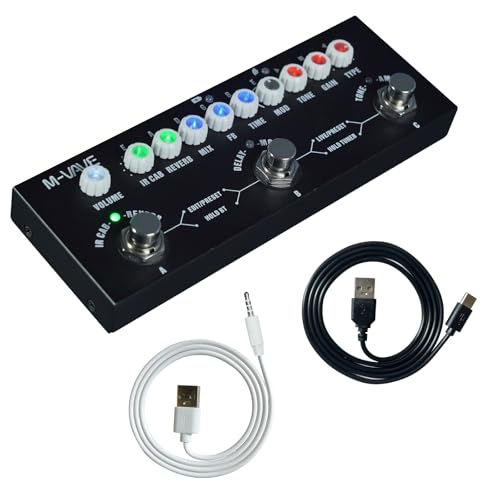
M-VAVE Guitar Accessories 🎸: We are the factory of M-VAVE, with our own R&D team, professional production instruments, own production, to ensure the quality of goods.

🌠Rich Presets and Tone DIY: This multi effects guitar pedal features 36 presets. Its effect chain has modules such as NOISE GATE, 9 AMP, 3 MOD (Chorus, Phaser, Tremolo), 3 DELAY (Analog, Tape, Dual), 3 REVERB (Room, Spring, Cloud), 8 IR CAB that allows you to customize your preferred tone.

Caline's DCP series is a line of dual pedals. 2 popular combo of effects in 1 unit for a very useful space saving feature.
Follow This Step-by-Step Practice Plan
-
Memorize the chord order.
Say and play the eight main chords without an arpeggio. Continue until you can complete the cycle without looking at a chart.
-
Clean up each chord.
Pick through every required string and correct buzzing, accidental muting, or excess pressure.
-
Add the basic arpeggio.
Practice near 45–55 BPM. Keep all notes evenly spaced and resist speeding up during easier chords.
-
Learn the chorus separately.
Start on G and practice the complete chorus progression until the change from verse to chorus feels natural.
-
Add dynamics and rhythm.
Keep the verse controlled, increase intensity through the chorus, and return smoothly to the quieter texture.
-
Learn lead phrases in small groups.
Check bends against target notes and use a slow backing track before attempting the full recording speed.
-
Assemble and record the performance.
Play the complete arrangement without stopping. Review the recording for timing, tuning, noise, dynamics, and weak transitions, then isolate the biggest problem for the next practice session.
Common Mistakes and Troubleshooting
| Problem | Likely Cause | Fix |
|---|---|---|
| Bm or F#7 buzzes | The barre finger is too far from the fret or the thumb is squeezing excessively | Move the index finger closer to the fret, keep the wrist neutral, and test one string at a time |
| The chord change creates a pause | The fretting hand waits until the measure has ended | Prepare the next shape during the final picked notes of the current measure |
| The arpeggio speeds up | The player follows finger movement instead of a steady pulse | Count subdivisions aloud and reduce the metronome speed |
| Open strings ring between chords | Unused strings are not being muted | Use the fretting fingers and picking-hand palm to release or mute unwanted notes |
| Solo bends sound wrong | The bend does not reach the target pitch | Play the destination note first, then match it with the bend |
| The tone sounds muddy | Excess gain, bass, reverb, or delay | Lower the gain and effects, then restore them one at a time |
| The performance feels flat | Every section is played at the same volume and intensity | Plan a quiet verse, stronger chorus, and gradual build into the outro |
Products Worth Considering

Guitar Practice Tool: This guitar chord trainer is designed specifically for those who want to master finger placement and chord transitions. It can help guitar beginners develop muscle memory for chords and finger flexibility, making it an ideal training tool for guitar beginners and professional guitarists.


Resources for Further Practice and Learning
Use a licensed score when you need exact rhythm, melody, or notation. The licensed “Hotel California” lead sheet confirms the original published key, approximate tempo, and songwriting credits.
For first-hand instruction, watch Don Felder demonstrate “Hotel California” guitar parts. Slow the video only as much as needed to hear the phrasing clearly, and practice from short sections rather than trying to memorize the entire solo in one sitting.
Backing tracks are useful after you can play the part with a metronome. Start with a reduced-speed track, check that chord changes land on beat one, and increase the speed in small steps.
Note: Practicing outdoors or during a camping trip requires enough steady light to read a chord chart and see the fretboard safely. This guide to choosing a solar-powered camping lantern may help with an off-grid practice setup.
Frequently Asked Questions
What are the basic chords used to play “Hotel California” on guitar?
The main progression uses Bm, F#7, A, E, G, D, and Em. The eight-measure intro, verse, and outro cycle is Bm–F#7–A–E–G–D–Em–F#7. The chorus is G–D–F#7–Bm–G–D–Em–F#7.
What key and tuning are used for “Hotel California”?
The original published key is B minor. Standard guitar tuning, E–A–D–G–B–E, is suitable for both the direct B-minor arrangement and the capo-7 version.
Where should I put the capo for an easier arrangement?
Place the capo at the seventh fret and use Em-family shapes. The main shape sequence becomes Em–B7–D–A–C–G–Am–B7, which sounds as Bm–F#7–A–E–G–D–Em–F#7.
What strumming pattern should I use?
The verses work best with a steady arpeggio or light picked pattern rather than one fixed full-strum pattern. Count four beats per measure, place the bass note clearly on beat one, and use even subdivisions for the remaining notes. Add broader down-and-up movement during stronger sections.
Which guitar techniques are required?
The rhythm parts require clean chord changes, arpeggio picking, muting, and dynamic control. The lead parts add bends, vibrato, slides, legato, position shifts, and accurate phrase timing. Hybrid picking can help but is not required.
Who plays the guitar solo in “Hotel California”?
Don Felder and Joe Walsh both perform the famous outro. They alternate lead phrases and then join in harmonized guitar lines. It is more accurate to treat the outro as a dual-guitar conversation than as one complete Felder solo followed by one complete Walsh solo.
Do I need a phaser or other guitar effects?
No single effect is required. Begin with a clean or mildly overdriven tone, moderate reverb, and optional subtle delay. A phaser, chorus, or rotary-style effect can add color, but clear picking, controlled bends, and accurate phrasing have a greater effect on the result.
Is “Hotel California” difficult to play on guitar?
The basic chord cycle and a simplified arpeggio are suitable for an intermediate player. The complete lead arrangement is advanced because it requires accurate bends, controlled vibrato, fast position changes, phrase memory, and synchronized harmony parts.
Sources
- Musicnotes licensed “Hotel California” lead sheet — supports the original published key, approximate tempo, date, and songwriting credits.
- Don Felder’s “Hotel California” guitar lesson via Guitar World — first-hand demonstration of guitar phrases and playing approach.
- Gibson Gazette interview with Don Felder — supports the layered guitar arrangement, 12-string and six-string requirements, doubleneck use, and live signal routing.
- Recording Academy: 20th Annual Grammy Awards — confirms the 1978 Record of the Year award.
- Rock & Roll Hall of Fame: Eagles — supports the band’s historical significance and catalog context.
