
Last Updated on July 27, 2026 by Daniel Globe
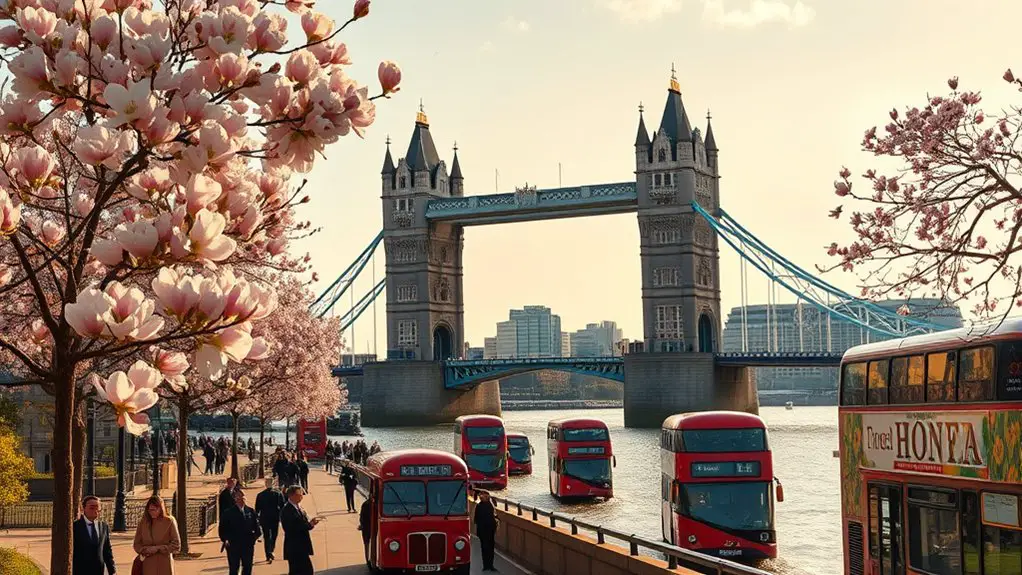
London in May combines mild spring weather, long sightseeing days, flowering parks, riverside walks, outdoor markets, and some of the city’s best-known annual events. It is a rewarding month to visit, but rain is still possible and bank-holiday weekends can be busy. A little planning helps you enjoy the gardens, festivals, historic sights, food markets, and outdoor spaces without wasting time in queues or arriving for a seasonal event at the wrong time.
Quick Answer
May is an excellent time to visit London for mild weather, spring gardens, outdoor sightseeing, and major events. Expect average daytime highs around 18°C (65°F), cool evenings, and occasional rain. Pack layers and waterproof protection, book popular attractions early, and expect larger crowds around May bank-holiday weekends.
Key Takeaways
- London’s long-term May weather is mild, with typical highs near 18°C (65°F), lows near 9°C (48°F), and rain still possible.
- Kew Gardens, Regent’s Park, Hyde Park, and smaller City gardens offer excellent late-spring scenery, although exact bloom times vary each year.
- The next announced RHS Chelsea Flower Show runs May 18–22, 2027, while the London Coffee Festival runs May 13–16, 2027.
- For Thames sightseeing, cruises and river services are easier for most visitors than independent paddling on the busy tidal river.
- Avoid leaving major attraction tickets until a bank-holiday weekend; in 2027, England and Wales have May bank holidays on May 3 and May 31.
Disclosure: As an Amazon Associate I earn from qualifying purchases. Some links on this page are affiliate links, at no extra cost to you.
London in May Weather and What to Pack
May usually brings comfortable sightseeing weather, but London can shift from sunshine to cool cloud and showers within the same day. According to the Met Office’s 1991–2020 Heathrow climate averages, May has an average maximum temperature of about 18.4°C (65°F) and an average minimum of about 9.1°C (48°F).
The same climate record shows about 45.9 mm, or 1.8 inches, of rainfall during May and roughly eight days with at least 1 mm of rain. These are long-term averages rather than a forecast, so check the daily weather shortly before your trip.
London’s long-term May averages at Heathrow are about 18.4°C (65°F) by day and 9.1°C (48°F) at night, with around 46 mm (1.8 inches) of rain across the month.
What to Wear in London in May
Layers are more useful than one heavy coat. A comfortable May packing list includes:
- A light jacket, cardigan, or sweater for mornings and evenings
- A lightweight waterproof jacket or compact umbrella
- Comfortable walking shoes with reasonable grip
- T-shirts or other light layers for warmer afternoons
- Sunglasses and sunscreen for bright days
- A small day bag that can hold an extra layer and water bottle
Note: London’s May climate averages are useful for packing, but they cannot predict the conditions during your particular visit. Check the short-range forecast before leaving each morning.
Celebrating the Blooming Gardens and Parks
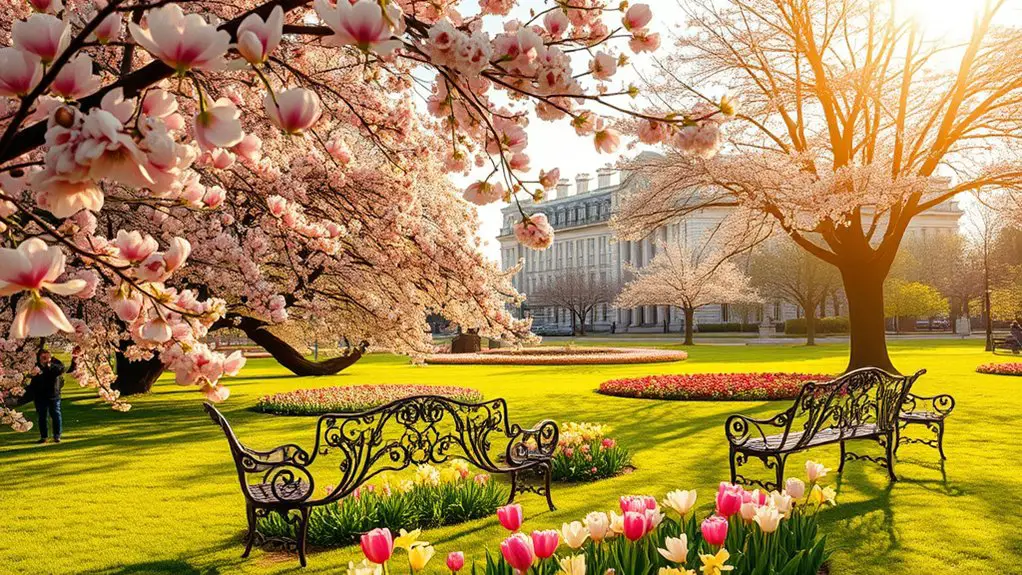
Late spring is an excellent time to explore London’s green spaces, although no single flower can be guaranteed for an entire month. Temperature, rainfall, and the timing of spring all affect when particular plants reach their peak.
Kew Gardens is one of the strongest choices because there is something seasonal to see even when a particular bloom has finished. Rhododendrons are a notable May feature, while wildflowers and other late-spring displays change as the month progresses. Depending on the year and your exact dates, some late tulips may also remain.
Hyde Park offers broad lawns, waterside walks around the Serpentine, and plenty of room for a picnic. Regent’s Park has formal spring planting, cherry trees, and several distinct gardens. Queen Mary’s Gardens is famous for its roses, although the Royal Parks notes that the best rose display is usually in the first two weeks of June rather than early May.
Cherry blossom can still appear in parts of London during early May in a late season, but do not plan an entire visit around seeing it at Battersea Park or any other single location. Blossom dates can move considerably from year to year.
Quieter Gardens Worth Finding
If you want a calmer alternative to London’s largest parks, try St Dunstan in the East Church Garden, where greenery grows through the ruins of a historic City church. Postman’s Park near St Paul’s Cathedral is another compact retreat, while St John’s Lodge Garden in Regent’s Park offers a more secluded formal setting.
Pro Tip: Visit major parks early on a dry weekday morning, then save smaller City gardens for the middle of the day when central attractions become busier.
Exploring London’s Iconic Festivals and Events
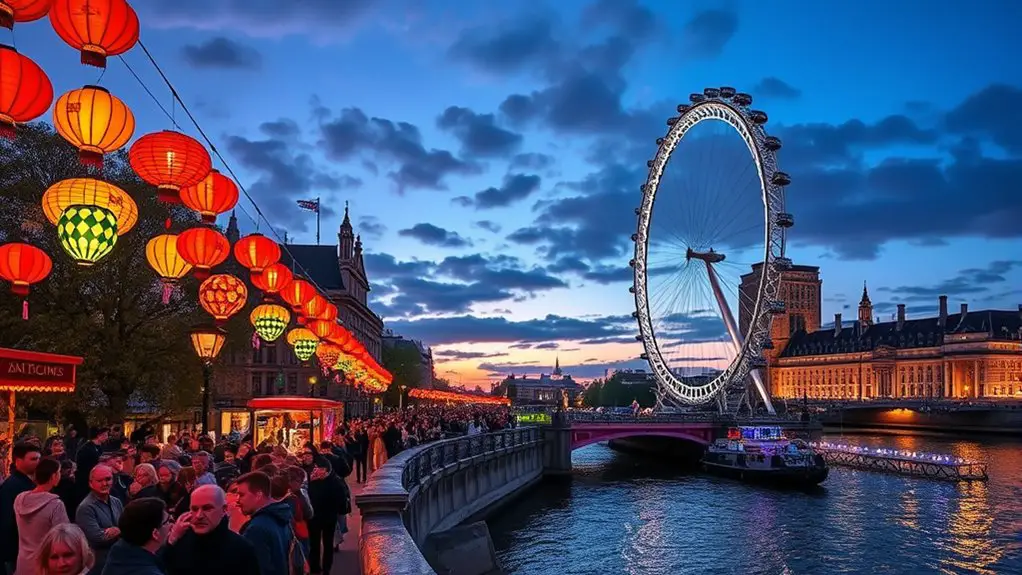
May has a strong events calendar, but annual dates change. Always check the organizer’s website before building flights or hotel reservations around a festival.
One of the month’s headline events is the RHS Chelsea Flower Show. The next announced show runs from May 18 to 22, 2027. Tickets and access differ between RHS members’ days and public days, so advance planning is important.
The London Coffee Festival is another established May event. The 2027 festival is scheduled for May 13–16 at The Truman Brewery on Brick Lane, with tastings, demonstrations, competitions, workshops, and coffee-industry programming.
Chelsea in Bloom is a free annual floral-art event that normally takes place around Chelsea Flower Show week, transforming shopfronts and streets across Chelsea with large floral displays. Dates and themes change each year, so check the official programme before visiting.
London Craft Week is another recurring late-spring option, with workshops, exhibitions, demonstrations, and open studios at venues across the city. Its dates also vary by year.
Note: Some older London guides list a “Thames Festival” as a May attraction. The current Totally Thames festival is a September event, not a May festival. Do not plan a May trip around it.
May Bank Holidays and Event Crowds
England and Wales normally have two bank holidays in May. For 2027, GOV.UK lists May 3 and May 31. Popular parks, family attractions, shopping districts, and transport hubs can be busier around those long weekends.
Opening hours may also change, and planned transport work is more likely to affect a leisure-heavy weekend. Check individual venues and TfL shortly before traveling.
Enjoying Outdoor Activities Along the Thames
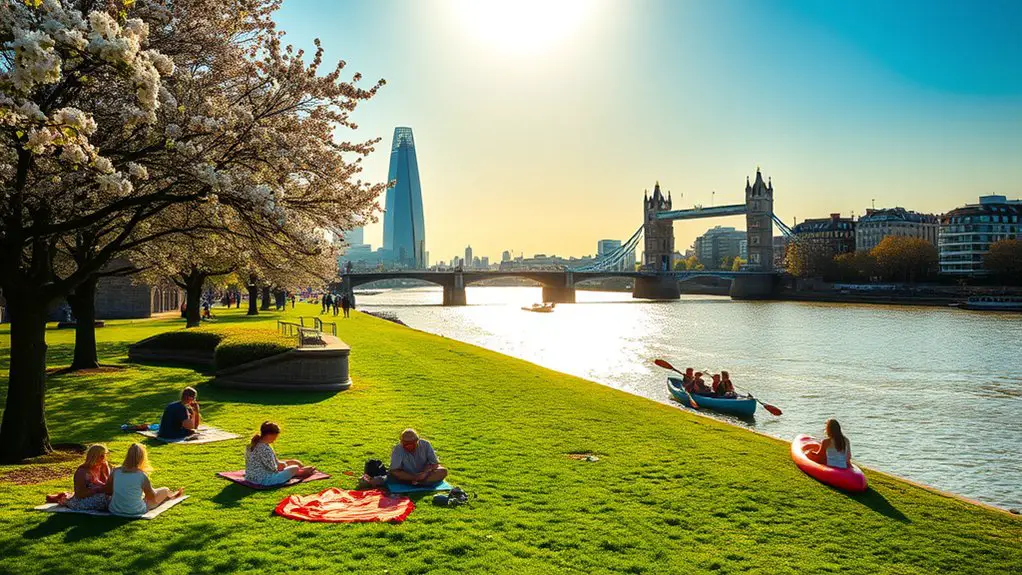
A dry May day is ideal for seeing London from the Thames. Walking is the simplest option, while sightseeing cruises and scheduled river services let you cover more ground without navigating the river yourself.
Riverside Walks and Views
The Thames Path follows the river through London and gives you many choices for a short urban walk or a longer day out. Central stretches are easy to combine with major attractions, although surfaces, crossings, gradients, and step-free access vary by location.
| Area | Why Walk Here |
|---|---|
| Tower Bridge | Tower Bridge, Tower of London, City skyline, and easy links to the South Bank |
| South Bank | London Eye, riverside cafés, cultural venues, performers, and bridge views |
| Westminster | Palace of Westminster, Westminster Bridge, and easy access to St James’s Park |
| Richmond Riverside | A greener, quieter Thames setting with riverside paths and places to stop for food |
Boating Adventures and Rentals
For most visitors, a sightseeing cruise or scheduled river service is the easiest way to experience London from the water. From the river you can see landmarks such as the London Eye, Palace of Westminster, Tower Bridge, and the Tower of London from a different angle.
Kayaking, canoeing, and stand-up paddleboarding do take place on the Thames, but the tidal river through London is not an ordinary recreational lake. Strong tides, commercial vessels, wash, bridges, and navigation rules make organized sessions with an experienced operator a better choice for visitors who do not already know the river.
Warning: Do not treat the central tidal Thames as a casual pedal-boat or beginner-kayak area. The Port of London Authority Tideway Code sets navigation and safety guidance for paddlers and rowers. Choose a recognized operator or club if you want to paddle.
Picnics and Relaxation
After a riverside walk, a picnic is an easy way to slow the day down. Much of the central South Bank promenade is paved, so look for nearby green spaces rather than expecting grassy riverbanks everywhere.
Jubilee Gardens near the London Eye, Potters Fields Park near Tower Bridge, Battersea Park, and green spaces around Richmond can all work well depending on your route. Bring something from a market or bakery, find a legal picnic area, and leave enough time simply to watch river traffic.
For a larger park picnic, Hyde Park is another convenient option away from the Thames. The Royal Parks permits informal picnics there but does not allow barbecues or open fires.
Visiting Historic Sites With a Springtime Twist
May weather makes it easier to combine indoor historic attractions with walking outside. The Tower of London pairs naturally with Tower Bridge and a Thames walk, while Westminster Abbey can be combined with Parliament Square, St James’s Park, and the exterior of Buckingham Palace.
Be careful with advice that treats Buckingham Palace Garden as an ordinary public garden. Buckingham Palace is a working royal residence, and public access is tied to specific openings and ticketed tours. For example, the 2026 State Rooms season ran from July into September rather than May. Check the Royal Collection Trust for the dates that apply to your trip.
In May, St James’s Park and Green Park are dependable outdoor choices near Buckingham Palace. They let you enjoy spring greenery and palace views without relying on a special Palace garden opening.
The South Bank is also useful for connecting history with outdoor sightseeing. From Westminster you can cross the river and walk east, passing bridges, performance venues, historic riverfront areas, and views back toward some of London’s best-known buildings.
Pro Tip: Reserve timed-entry attractions first, then build your park and walking time around those fixed bookings. Outdoor stops are easier to move if rain arrives.
Savoring Seasonal Cuisine and Markets
May is a good month to explore London’s food markets because you can combine eating with outdoor sightseeing. Seasonal produce changes with weather and supply, so look at what vendors actually have rather than expecting the same ingredients every week.
Fresh Spring Flavors
British asparagus is strongly associated with late spring, while peas, herbs, leafy vegetables, and the first British strawberries may also appear as the season develops. Not everything sold at a London market is locally grown or strictly seasonal, so ask vendors if that matters to you.
You will also find bread, cheeses, pastries, prepared meals, and international street food. That makes markets useful even when you do not have access to a kitchen.
Vibrant Market Stalls
Borough Market is particularly strong for food, produce, baked goods, specialty ingredients, and ready-to-eat meals. It can become crowded around lunch, so morning visits are often easier if you want to browse slowly.
Camden Market offers a different experience, combining international street food with clothing, accessories, gifts, and independent retail. It suits travelers who want shopping and eating in the same stop rather than a traditional produce-market experience.
Smaller neighborhood markets can be rewarding as well. Check operating days before traveling across the city because some markets run only on particular weekdays or weekends.
Getting Around London in May
Public transportation is usually more practical than driving in central London. According to Transport for London, visitors can use contactless payment or an Oyster card for pay-as-you-go travel.
Contactless and Oyster fares are capped according to the journeys and zones used, which makes them convenient for days that combine Tube, bus, rail, and other eligible TfL services. Use the same contactless card or device consistently so the system can calculate the correct fare and cap.
Walking is often faster than taking the Tube between nearby central attractions. For example, Westminster, St James’s Park, Buckingham Palace, Trafalgar Square, Covent Garden, and parts of the South Bank can be linked on foot without repeatedly entering stations.
Before traveling on a bank holiday or weekend, check the TfL journey planner or TfL Go for engineering work, closures, and service changes.
Crowds, Costs, and Booking Strategy
May is before the traditional peak summer period, but that does not mean London is quiet. Chelsea Flower Show week, school holidays, sunny weekends, and the two May bank-holiday weekends can all increase demand.
Book high-priority paid attractions as soon as your dates are firm, especially when a venue uses timed admission. This is more important if you have only one suitable day in your itinerary.
London also has plenty of activities that do not require an admission ticket. Major parks, St Dunstan in the East, riverside walks, window-shopping at markets, and many public streets and viewpoints can help balance the cost of ticketed attractions.
There is no universal “May discount” covering London attractions. Individual venues may offer advance prices, family tickets, concessions, membership benefits, or other promotions, but these change. Compare the official ticket page with any sightseeing pass before buying.
Note: In 2027, the England and Wales bank holidays fall on Monday, May 3 and Monday, May 31. Expect the surrounding weekends to attract more domestic visitors and check transport and venue hours in advance.
Rainy-Day Backup Ideas
Occasional rain should not spoil a May visit if you keep a flexible indoor option ready. London has enough museums, galleries, historic interiors, markets, shops, cafés, and covered attractions to change plans at short notice.
- Move a museum or gallery visit to the wettest part of the day.
- Use a light shower for lunch, a market stop, or a café break rather than abandoning the entire itinerary.
- Keep long park walks for the clearest forecast window.
- Bring waterproof outerwear so brief showers do not force you indoors.
- Check whether timed tickets can be changed before moving a prepaid attraction.
Some of London’s national museums and galleries have free general admission, although special exhibitions may require a paid ticket and busy periods can still involve queues.
Tips for Making the Most of Your May Visit
A successful May trip is less about filling every hour and more about keeping your schedule flexible enough for weather and crowds.
- Check annual event dates. Festivals do not necessarily fall on the same dates each year.
- Reserve your must-see attractions. Book timed-entry sites before filling the rest of the day.
- Start popular outdoor locations early. Parks, riverside paths, markets, and major photo spots are often calmer in the morning.
- Dress in layers. Cool mornings can turn into mild afternoons and then cooler evenings.
- Use public transport and walk between nearby sights. Driving and parking rarely make central sightseeing easier.
- Watch the bank-holiday calendar. Long weekends can change crowd levels, opening hours, and transport patterns.
- Keep one indoor backup. That prevents a short spell of rain from disrupting your whole day.
- Leave unscheduled time. May is ideal for stopping at a garden, market, riverside café, or neighborhood you discover along the way.
Sample One-Day London in May Plan
If you have only one day and want a mix of spring scenery, landmarks, food, and river views, this route keeps travel relatively simple.
Morning: Westminster and St James’s Park
Start around Westminster, see the Palace of Westminster and Westminster Abbey, then walk through St James’s Park toward Buckingham Palace. This gives you historic landmarks and spring greenery before the busiest part of the day.
Lunch: South Bank or Borough Market
Cross the Thames and follow part of the South Bank. Continue east by foot or public transport toward Borough Market for lunch. Arriving outside the busiest lunch rush makes browsing easier.
Afternoon: Tower Bridge and the Tower of London Area
Continue toward Tower Bridge. Visit the Tower of London if it is one of your priorities, or simply explore the riverside and bridge area if you prefer a lower-cost day.
Evening: See London From the River
Finish with a scheduled river boat or sightseeing cruise rather than retracing the same route underground. On a clear May evening, the changing light can make the river journey one of the best parts of the day.
Frequently Asked Questions
What is the weather like in London in May?
London is usually mild in May. Heathrow’s 1991–2020 climate averages show a typical maximum near 18.4°C (65°F), minimum near 9.1°C (48°F), and about 45.9 mm (1.8 inches) of rain during the month. Warm sunny spells and cool rainy days are both possible.
What Are the Best Hidden Gardens to Visit in London During May?
St Dunstan in the East is one of the most distinctive small gardens, with plants growing through the ruins of a historic church. Postman’s Park is another peaceful City option. In Regent’s Park, St John’s Lodge Garden provides a quieter alternative to the park’s busiest lawns and paths.
Are There Any Special May Discounts on London Attractions?
There is no universal May discount for London attractions. Savings vary by venue and may include advance-booking prices, family tickets, concessions, memberships, or temporary promotions. Compare the attraction’s official ticket page with any sightseeing pass before deciding which option is cheaper for your itinerary.
How Do I Avoid Crowds at Popular Outdoor Spots in May?
Visit popular parks, markets, and riverside areas early on weekday mornings when possible. Avoid scheduling your most crowd-sensitive activities for May bank-holiday weekends. Booking timed attractions in advance also reduces the risk of spending part of the day waiting for tickets.
What Are the Top Family-Friendly Outdoor Activities in London in May?
Good options include playgrounds and picnics in the Royal Parks, exploring Kew Gardens, walking a manageable section of the Thames Path, browsing an outdoor market, and taking a sightseeing boat trip. Choose shorter outdoor blocks if traveling with younger children so you can switch indoors if rain arrives.
Which Lesser-Known Festivals Occur in London in Late Spring?
London Craft Week and Chelsea in Bloom are useful alternatives to the biggest ticketed events, although their dates change annually. Chelsea in Bloom is normally timed around Chelsea Flower Show and is free to view. Totally Thames should not be included in a May list because that river festival takes place in September.
Are London’s May Bank Holidays Busy?
They can be. Parks, family attractions, shopping areas, and transport services may be busier over the long weekends, and some operating schedules can change. For 2027, the England and Wales May bank holidays are May 3 and May 31.
Conclusion
May gives you many of London’s best spring experiences without relying on peak-summer weather. You can combine flowering gardens, historic landmarks, markets, Thames walks, outdoor events, and long sightseeing days, while keeping museums and other indoor attractions ready for rain. Pack layers, check annual event dates, reserve your must-see attractions, and plan carefully around bank-holiday weekends. With that flexibility, May is one of the most enjoyable months for exploring London on foot and outdoors.
Sources
- Met Office — Heathrow long-term climate averages — May temperature, rainfall, rainfall-day, and sunshine averages.
- Royal Horticultural Society — RHS Chelsea Flower Show — official show dates and visitor information.
- The London Coffee Festival — official festival dates, venue, and programme information.
- Royal Botanic Gardens, Kew — What’s in the Gardens — current garden and seasonal visitor information.
- Transport for London — Best ways for visitors to pay — Oyster, contactless, pay-as-you-go, and fare-capping guidance.
- Port of London Authority — Tideway Code — official navigation and safety guidance for rowing and paddling on the tidal Thames.
