
Last Updated on July 27, 2026 by Daniel Globe
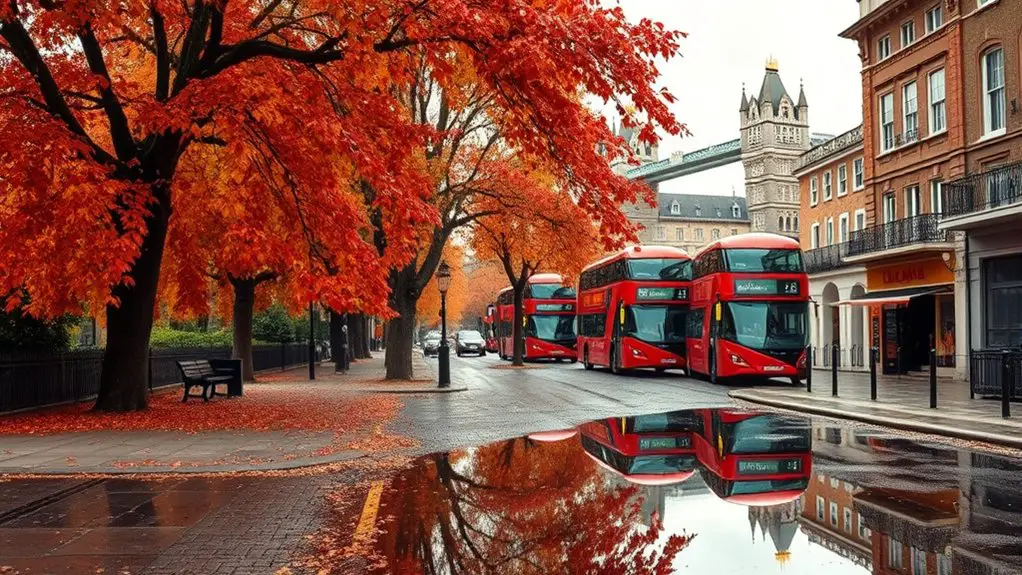
Autumn gives London a different rhythm. September can still feel mild, October brings some of the city’s strongest leaf color, and November shifts toward colder days, earlier sunsets, and the first winter events. Parks, historic streets, food markets, museums, theaters, and seasonal festivals make fall an excellent time to visit, but the weather and event calendar reward a little planning.
Quick Answer
London is a rewarding fall destination from September through November. October is usually the best all-around month for autumn color, while September is milder and November feels quieter and more wintry. Pack layers and rain protection, combine parks with indoor attractions, and check seasonal event dates before your trip.
Key Takeaways
- September is generally the mildest fall month, while October offers a strong balance of foliage, events, and manageable temperatures.
- Hyde Park, The Regent’s Park, Kew Gardens, Holland Park, and Hampstead Heath are strong choices for autumn walks.
- Confirmed 2026 seasonal highlights include Totally Thames programming in September, London Literature Festival from October 20 to November 1, and Halloween at Kew from October 16 to November 1.
- Rain is possible throughout fall, so build each outdoor day around an indoor backup such as a museum, gallery, market, or theater.
- Contactless pay-as-you-go or Oyster makes public transport easier than trying to cover London mainly on foot.
Disclosure: As an Amazon Associate I earn from qualifying purchases. Some links on this page are affiliate links, at no extra cost to you.
London in Fall: Weather and the Best Time to Visit
For travel planning, London’s fall season generally means September, October, and November. The biggest difference across those three months is not simply temperature: daylight becomes noticeably shorter, wetter weather becomes more common, and the city gradually moves from late-summer activity into Halloween and then the early festive season.
The Met Office 1991–2020 climate averages for Heathrow provide a useful guide to typical conditions around London:
| Month | Average High | Average Low | Average Rainfall |
|---|---|---|---|
| September | 20.2°C / 68°F | 11.6°C / 53°F | 49.6 mm / 2.0 in |
| October | 15.8°C / 60°F | 8.8°C / 48°F | 65.1 mm / 2.6 in |
| November | 11.5°C / 53°F | 5.3°C / 41°F | 66.6 mm / 2.6 in |
September suits travelers who want longer days and relatively mild weather. October is the strongest all-around choice for colorful parks and a busy cultural calendar. November works well if you prefer cooler, quieter sightseeing and do not mind shorter daylight hours.
Pro Tip: Treat London’s forecast as a daily planning tool rather than packing for one fixed kind of weather. A dry morning is often the best time for parks, viewpoints, and neighborhood walks; museums, galleries, markets, and theaters make easy afternoon backups.
Experiencing the Magic of Autumn Foliage in London’s Parks
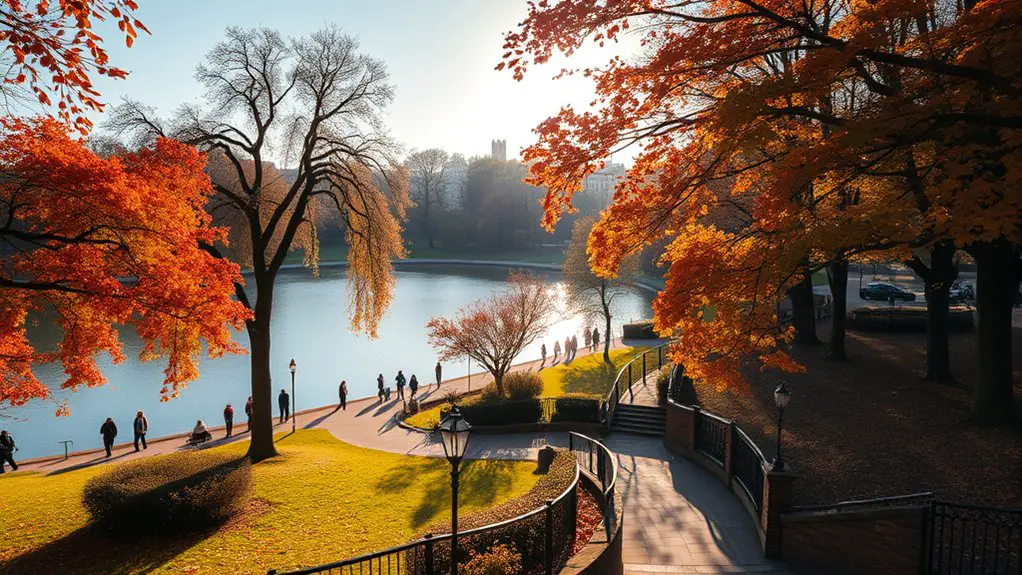
London’s parks are among the easiest places to experience the season. Hyde Park, Kensington Gardens, The Regent’s Park, Kew Gardens, Holland Park, Greenwich Park, and Hampstead Heath all offer different combinations of mature trees, lakes, gardens, lawns, and city views.
The Royal Parks highlights Hyde Park as a major autumn walking destination, while its tree guide shows why there is no single citywide foliage peak. Different species can produce their strongest color at different points from September onward.
If you have time for only one month, October is usually the safest bet for a broad mix of changing leaves. Still, weather matters. Warm summers, drought, wind, and rainfall can cause some trees to turn or drop their leaves earlier than expected.
Kew Gardens is especially useful for travelers who want to see many tree species in one place. Its Arboretum, Treetop Walkway, and other planted landscapes provide far more variety than a typical city park, although Kew is a ticketed attraction rather than a free public park.
There is no single guaranteed “peak foliage day” in London. Plan for a range of color rather than expecting every tree to turn at once.
Best London Parks for Fall Color
- Hyde Park and Kensington Gardens: Easy to combine in one walk, with lakeside paths and a large variety of mature trees.
- The Regent’s Park: A good mix of formal gardens, tree-lined avenues, and open space. The Royal Parks specifically highlights autumn color here.
- Kew Gardens: Best for botanical variety and a full half-day garden visit.
- Holland Park: Smaller and more intimate, with woodland areas and the Kyoto Garden.
- Hampstead Heath: Better for a wilder landscape; include Parliament Hill if you want a skyline view with the autumn scenery.
Must-Visit Markets and Food Festivals During Fall
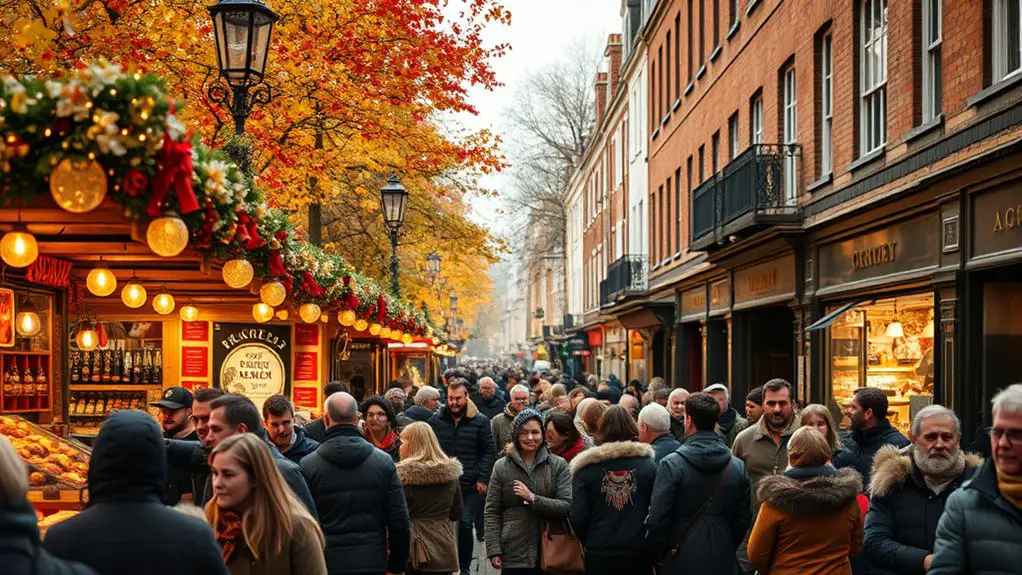
Fall is an excellent time to explore London’s established food markets because seasonal produce and colder-weather dishes begin to appear while outdoor dining is still practical on milder days. The safest approach is to choose markets with published operating schedules instead of relying on temporary market names that may no longer be active.
Autumn Food Markets
Borough Market is one of the strongest choices for seasonal food. Its autumn material highlights squash, beetroot, mushrooms, game, seafood, warming drinks, and other cold-weather ingredients.
The Southbank Centre Food Market is another reliable stop. Its current schedule lists Friday, Saturday, and Sunday trading, with a wide mix of street food, desserts, coffee, and drinks. Because individual traders change, check the current lineup rather than visiting for one specific dish.
Columbia Road is worth visiting for a different reason. The Sunday Columbia Road Flower Market specializes in flowers and plants. Cafés, pubs, galleries, and independent shops line the surrounding street, so it can still work well as part of a relaxed Sunday morning.
Harvest Festival Events
Harvest and half-term programs vary by year, so check official calendars before building a trip around them. For 2026, Borough Market currently lists its Market Explorers Garden: Autumn Half Term for October 27–29.
London’s permanent markets are more dependable than temporary harvest festivals. Use Borough Market or Southbank Centre Food Market as your anchor, then add any confirmed seasonal workshop, tasting, or family program that overlaps with your dates.
Note: Market hours, individual traders, and seasonal events can change. Check the official market calendar during the week of your visit, especially if a particular stall or workshop is important to you.
Exploring Historic Landmarks With a Seasonal Twist
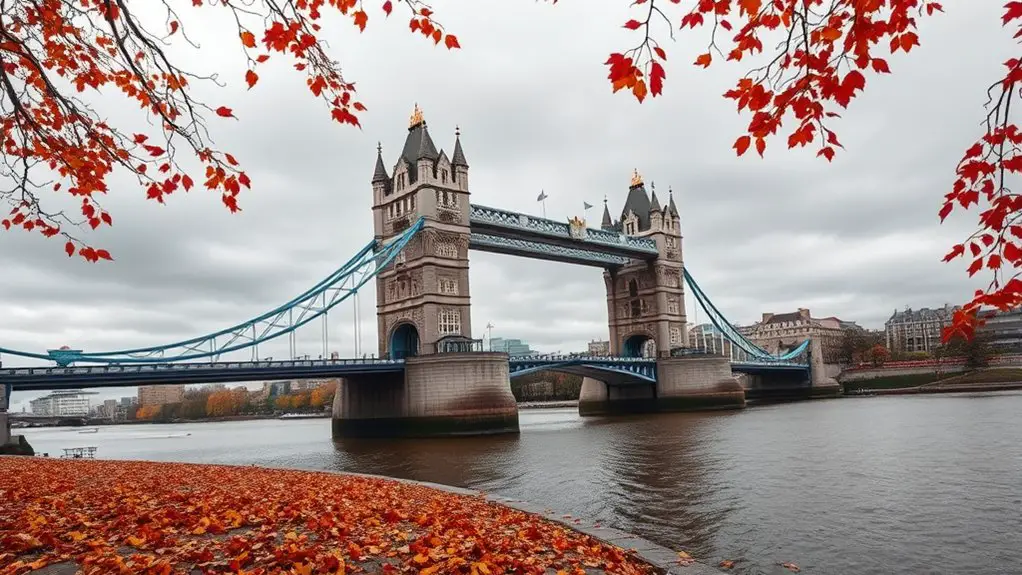
London’s historic landmarks are open year-round, but autumn can make sightseeing more comfortable than the hottest summer days. Cooler weather suits long walking routes, and lower-angle afternoon light can be especially attractive around stone buildings, riverside viewpoints, and tree-lined squares.
The Tower of London pairs naturally with a walk across Tower Bridge and along the Thames. Check the official Tower of London opening information before traveling because entrances, closures, ceremonies, and operating arrangements can change.
Westminster Abbey is another strong indoor-outdoor combination. You can visit the Abbey and then walk through nearby St James’s Park or toward the Thames. Because it is a working church, visitor hours can change around services and special events.
Book major paid attractions in advance when possible, especially on weekends and during school holidays. Keep nearby parks, streets, and viewpoints flexible so you can move outdoor sightseeing to the driest part of the day.
Enjoying Cultural Events and Autumn-Themed Festivals
Fall is one of London’s strongest cultural seasons, but named events should always be tied to the correct year.
In September 2026, the Thames Festival Trust has Totally Thames programming running across the month, including exhibitions, walks, river events, workshops, and performances in locations along the Thames.
Book lovers can plan around the London Literature Festival, scheduled for October 20 through November 1, 2026 at the Southbank Centre.
For Halloween, Halloween at Kew is confirmed for October 16 through November 1, 2026. It is a timed, ticketed illuminated trail, so it is different from a free daytime walk through Kew Gardens.
These confirmed programs are more reliable choices than generic references to an annual “Jack O’Lantern Festival” or a single “Thames Festival,” neither of which accurately describes London’s current seasonal calendar.
Family-Friendly Fall Activities in London
Families can build an autumn day around a park in the morning and an indoor attraction later. Hyde Park and Holland Park both give children room to move, while Kew offers a more structured garden experience and seasonal programming.
October half term usually brings additional family events across museums, parks, gardens, and markets. For 2026, Borough Market has already listed its autumn half-term program, and Halloween at Kew runs across the late-October school-break period.
For a low-cost day, combine a free park with a museum or gallery that offers free permanent collections. This also gives you a built-in rain plan without having to cross the city when the weather changes.
Cozy Cafés and Pubs to Warm Up in Cooler Weather
As temperatures fall, cafés and pubs become more useful than simply atmospheric. They give you a place to warm up, dry off, and adjust your plans between outdoor stops.
Traditional pubs can be particularly appealing after a long walk, while independent cafés work well for shorter breaks over coffee, tea, or hot chocolate. A fireplace can add to the atmosphere, but do not assume every historic pub lights one daily; operating practices vary with the weather and venue.
Rather than crossing London for a single fashionable café, match your break to the neighborhood you are already exploring. Borough and South Bank have many choices near markets and cultural venues, while Notting Hill, Kensington, Chelsea, Soho, and Covent Garden make it easy to combine sightseeing with an indoor stop.
Seasonal Shopping: Fashion and Gift Ideas for Fall
Fall packing in London is less about a heavy winter wardrobe and more about flexible layers. September afternoons can still feel mild, while a damp November evening may feel much colder.
Autumn Wardrobe Essentials
Prioritize pieces that handle temperature changes and light rain. A water-resistant outer layer is more useful than assuming every trench coat is waterproof.
| Item | Why It Helps |
|---|---|
| Water-resistant jacket or trench | Handles showers without requiring a bulky winter coat |
| Sweater or fleece | Adds warmth and can be removed indoors |
| Comfortable walking shoes | Useful for long sightseeing days and damp pavements |
| Compact umbrella | Easy to carry when showers are possible |
Cozy Gift Selections
Autumn shopping also works well for practical gifts. Scarves, knitwear, tea, chocolate, books, candles, and small home items are easy to carry and suit the season without relying on novelty souvenirs.
Markets and independent shopping streets can be more interesting than buying everything from a large souvenir shop. Borough Market is useful for food gifts, while areas such as Covent Garden, Soho, Notting Hill, and Columbia Road have independent businesses worth browsing.
Stylish Accessories Choices
For your own trip, choose accessories that earn their space in your bag.
| Accessory | Best Use |
|---|---|
| Scarf | Adds warmth without taking up much luggage space |
| Light gloves | Most useful in late October and November |
| Compact umbrella | Useful for passing showers |
| Secure crossbody bag | Keeps essentials accessible on public transport and walking routes |
Strolling Through Iconic Neighborhoods With Autumn Charm
Some London neighborhoods benefit from autumn even when they are not major foliage destinations.
Notting Hill works particularly well when paired with nearby Holland Park. Walk the residential streets first, then continue into the park for trees and the Kyoto Garden.
Kensington and Chelsea combine historic streets, museums, small gardens, cafés, and access to Hyde Park or Kensington Gardens. They are practical choices when the forecast is uncertain because indoor and outdoor attractions sit close together.
Covent Garden is better for architecture, restaurants, shopping, street activity, and theater than for large displays of foliage. It is especially useful later in the day when temperatures drop.
The key is to group nearby sights instead of spending much of the day traveling between distant neighborhoods.
Outdoor Activities and Nature Walks in Autumn
Hyde Park is one of the easiest places for a long central-London walk. You can follow the Serpentine, continue into Kensington Gardens, and leave near Kensington Palace or the Italian Gardens.
The Regent’s Park offers a more formal landscape with gardens, avenues, and open lawns. Kew Gardens suits travelers who want a botanical destination rather than a simple city stroll.
For a more natural setting, head to Hampstead Heath. Parliament Hill is the better-known choice for broad views across London, while the wider Heath provides woodland paths, ponds, and open ground.
Wet leaves can make paved paths, steps, and slopes slippery. Shoes with dependable grip are more useful than fashion-first footwear on rainy days.
Warning: Shorter daylight and wet ground matter more in late autumn. Start longer park and Heath walks early enough to finish comfortably before dark, and stay on established paths where conditions are muddy or slippery.
Attending Theater, Art, and Music Events in the Fall
Fall is an excellent season for London’s indoor cultural venues because you can keep sightseeing even when the weather turns wet.
The Royal Opera House, National Theatre, Southbank Centre, Tate Modern, National Gallery, and smaller venues across the West End and Soho all offer reasons to move indoors. Exhibitions and performance schedules change frequently, so check each venue’s calendar for your exact dates rather than relying on a generic seasonal list.
The 2026 London Literature Festival gives book lovers one fixed point in the calendar, running from October 20 to November 1 at the Southbank Centre. A festival event can be paired easily with a Thames walk, Southbank Centre Food Market visit, or Tate Modern.
A Simple One-Day Autumn Itinerary in London
If you have only one fall day, choose a route that mixes foliage with reliable indoor stops.
- Morning: Walk through Hyde Park and Kensington Gardens while conditions are bright and paths are quieter.
- Late morning: Travel toward Westminster and visit Westminster Abbey or walk past Parliament and along the Thames.
- Lunch: Continue to Borough Market for a wide choice of food.
- Afternoon: Walk along the South Bank. Use Tate Modern or another indoor attraction if rain arrives.
- Evening: Finish with a performance, literature event, dinner, or a pub near the South Bank, Covent Garden, or Soho.
This route avoids making autumn foliage the entire purpose of the day. Even if rain or wind affects the parks, the itinerary still works.
Tips for Visiting London in the Autumn Season
The best autumn trips stay flexible. Plan one or two fixed bookings each day, then leave outdoor walks movable so you can take advantage of the driest weather.
| Tip | Why It Helps | Example |
|---|---|---|
| Wear layers | Temperatures can feel very different morning, afternoon, and evening | Sweater + water-resistant jacket |
| Move parks to dry periods | Makes foliage walks more comfortable | Hyde Park in the morning, museum after lunch |
| Book major attractions early | Popular time slots and special events can sell out | Tower of London, Halloween at Kew, theater |
| Group sights geographically | Reduces time spent crossing London | Westminster + St James’s Park |
| Carry rain protection | Showers can interrupt long walks | Compact umbrella or hooded shell |
Use Public Transport Between Walking Areas
London is highly walkable within individual neighborhoods, but attractions are spread across a large area. Use the Underground, buses, Overground, Elizabeth line, and rail connections to bridge longer gaps.
Transport for London recommends pay-as-you-go travel using contactless payment, Oyster, or Visitor Oyster. Contactless and Oyster pay-as-you-go also use fare capping, which simplifies days with several journeys.
Keep a Rainy-Day Backup
A rainy afternoon does not need to derail your trip. Pair each outdoor district with an indoor alternative: Hyde Park with South Kensington museums, Westminster with Westminster Abbey, the South Bank with Tate Modern or Southbank Centre, and Covent Garden with theater or shopping.
Check Seasonal Hours
Some gardens, attractions, and events reduce hours as daylight shortens. Holland Park, for example, opens from 7:30 a.m. until dusk, so its closing time changes with the season. Ticketed attractions may also alter schedules for services, conservation work, or special events.
Frequently Asked Questions
What are the best hidden gardens to visit in London during fall?
Good quieter choices include Postman’s Park in the City of London, the Kyoto Garden inside Holland Park, and Chelsea Physic Garden. Postman’s Park and Holland Park are public green spaces, while Chelsea Physic Garden is a ticketed historic botanic garden, so check admission and seasonal hours before visiting.
Are there any unique autumn-themed tours available in London?
Yes, but schedules change each year. Look for official Royal Parks walks, Kew seasonal tours, Thames-related walks during Totally Thames, and specialist history or nature walks. Check the organizer’s current calendar rather than assuming a tour returns on the same dates annually.
How does London’s weather in fall affect outdoor activities?
September is usually milder, while October and November become progressively cooler and wetter. Outdoor sightseeing is still practical throughout fall, but layers, rain protection, grippy walking shoes, and a flexible schedule make the trip more comfortable.
What are family-friendly fall activities in London?
Families can combine park walks, playgrounds, markets, museums, and seasonal half-term events. Halloween at Kew runs from October 16 to November 1, 2026, while Borough Market currently lists an autumn half-term family program from October 27 to 29.
When does London’s fall foliage typically peak?
There is no single reliable citywide peak because tree species and weather conditions vary. Color can develop from September into November. October is generally the best single month to target for a broad mix of autumn foliage, but individual trees may turn earlier or later.
Is October a good month to visit London?
Yes. October offers a strong combination of fall color, cultural events, Halloween activities, and temperatures that are generally cool rather than wintry. Rain is more common than in September, so include indoor alternatives in your itinerary.
What should I pack for London in the fall?
Bring comfortable walking shoes, a sweater or fleece, a water-resistant outer layer, and a compact umbrella. Add a scarf and light gloves for late October or November. Layers are more useful than one very heavy coat because indoor spaces and public transport can feel much warmer than the street.
Conclusion
Autumn in London works best when you combine seasonal scenery with the city’s year-round strengths. Spend dry hours in Hyde Park, Kew, Holland Park, or Hampstead Heath, then use markets, museums, historic attractions, cafés, and theaters when the weather changes. September brings milder days, October offers the strongest overall mix of foliage and events, and November gives the city a cooler, quieter feel. With layers, rain protection, and a flexible itinerary, fall can be one of the most enjoyable times to explore London.
Sources
- Met Office — Heathrow Climate Averages — 1991–2020 temperature and rainfall normals used for the fall weather guidance.
- The Royal Parks — Best Trees to See This Autumn — seasonal color timing and autumn tree locations.
- Royal Botanic Gardens, Kew — Halloween at Kew — official 2026 event dates and visitor information.
- Borough Market — What’s On — current market and 2026 autumn half-term event information.
- Southbank Centre — London Literature Festival — official October 20–November 1, 2026 festival dates.
- Thames Festival Trust — What’s On — current 2026 Totally Thames programming and dates.
