
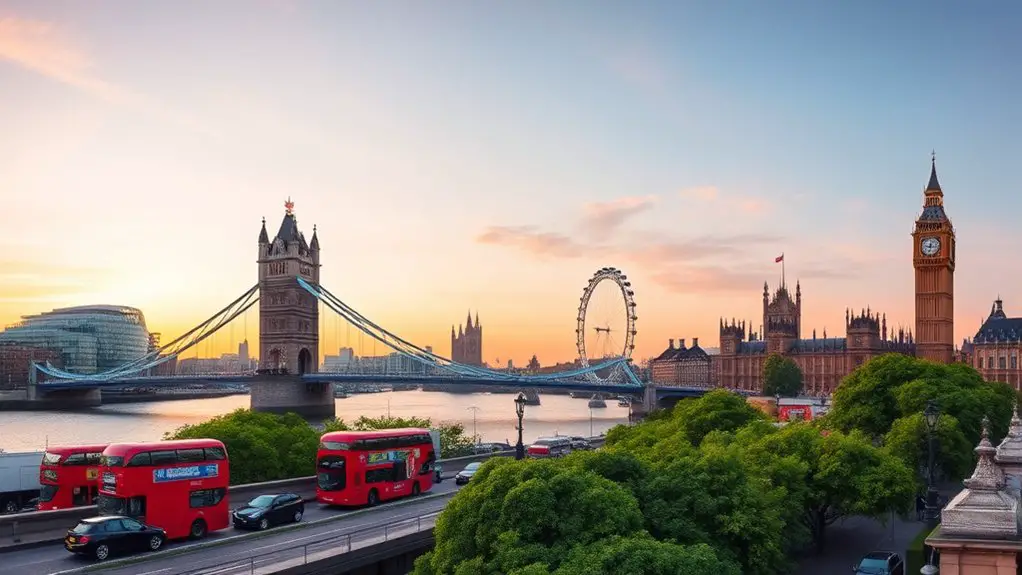
Last Updated on July 27, 2026 by Daniel Globe
Planning your first trip to London is much easier when you group sights by area instead of racing back and forth across the city. The best first-time plan mixes major landmarks, free museums, historic neighborhoods, parks, markets, and a little unstructured time. This guide gives you a practical four-day route, plus the transport, booking, food, and safety tips that make the trip run smoothly.
Quick Answer
For a first trip to London, plan at least three full days and ideally four. Group sights by area: Westminster and the South Bank, the Tower and Southwark, central museums and the West End, then South Kensington and Hyde Park. Use contactless or Oyster, pre-book must-see attractions, and leave room for neighborhood wandering.
Key Takeaways
- Three full days can cover the essentials, but four days gives you a better balance of landmarks, museums, neighborhoods, parks, and meals.
- Plan by neighborhood so you spend less time crossing London: Westminster/South Bank, Tower/Southwark, West End/Bloomsbury, and South Kensington/Hyde Park work well as daily clusters.
- Contactless payment or Oyster is usually the simplest way to use London public transport; use the same card or device for each journey.
- Pre-book attractions that matter most to you, and check the official Changing the Guard calendar because the ceremony is not held every day.
- Many major museums and parks are free, so you can control costs by mixing free sights with a few paid attractions.
At a Glance
| Time Required | 3 full days minimum; 4 days is more comfortable for most first-time visitors |
| Difficulty | Easy to moderate planning; expect plenty of walking and stairs |
| Tools Needed | Contactless card/device or Oyster, TfL route planning, comfortable shoes, and timed tickets for priority attractions |
| Cost | Flexible: many museums and parks are free; budget separately for transport, meals, shows, and paid landmarks |
Disclosure: As an Amazon Associate I earn from qualifying purchases. Some links on this page are affiliate links, at no extra cost to you.
A Practical 4-Day London Itinerary for First-Time Visitors
This route follows the same basic strategy used by London’s official visitor guidance: keep each day geographically focused. You can follow all four days or use the first three as a compact itinerary. Check current opening times and transport before each day, especially around holidays, strikes, major events, and ceremonial occasions.
Day 1: Westminster, South Bank, and the West End
Start around Buckingham Palace and St. James’s Park. If Changing the Guard is important to you, check the Household Division’s official calendar before arranging your morning; the ceremony is not a daily event.
Continue to Westminster Abbey, the Houses of Parliament, and the Elizabeth Tower, whose Great Bell is commonly known as Big Ben. Cross Westminster Bridge to the South Bank for riverside views and, if it fits your budget, a timed ride on the London Eye.
Spend the evening in Covent Garden or Soho. A West End show is a good first-night option if you are comfortable with a full day, but leave a lighter evening if you are arriving with jet lag.
Day 2: Tower of London, Tower Bridge, and Southwark
Make the Tower of London your main morning attraction and allow a few hours rather than squeezing it between several timed bookings. Walk toward Tower Bridge afterward; crossing the bridge at road level is different from visiting the paid Tower Bridge exhibition and high-level walkways.
Continue along the river to Borough Market for lunch. Then explore Southwark, where you can see Shakespeare’s Globe, the riverfront, and Tate Modern. This cluster works well because the sights are linked by a walk along the Thames rather than repeated Tube journeys.
Day 3: Bloomsbury, Trafalgar Square, and Soho
Begin with the British Museum. General admission to the permanent collection is free, and advance booking is recommended for smoother entry during busy periods. Do not try to see every gallery; choose a few collections that genuinely interest you.
Walk or take a short ride toward Covent Garden and Trafalgar Square, then spend part of the afternoon at the National Gallery, where general admission is also free. Finish in Soho, Chinatown, or the West End for dinner and nightlife.
Day 4: South Kensington, Hyde Park, and a Flexible Final Evening
Use your fourth day for a slower museum-and-park combination. The Victoria and Albert Museum in South Kensington offers free general admission and works well with a walk through Hyde Park afterward. You can also substitute another South Kensington museum based on your interests.
Keep the final evening flexible. Return to a neighborhood you liked, book a show, visit a gallery, or simply have a relaxed dinner rather than adding another cross-city checklist.
Pro Tip: Treat timed attractions as anchors and leave the rest of each day flexible. One major booked attraction in the morning and one optional paid experience later is usually more enjoyable than stacking reservations every hour.
Must-See Landmarks and Iconic Sights
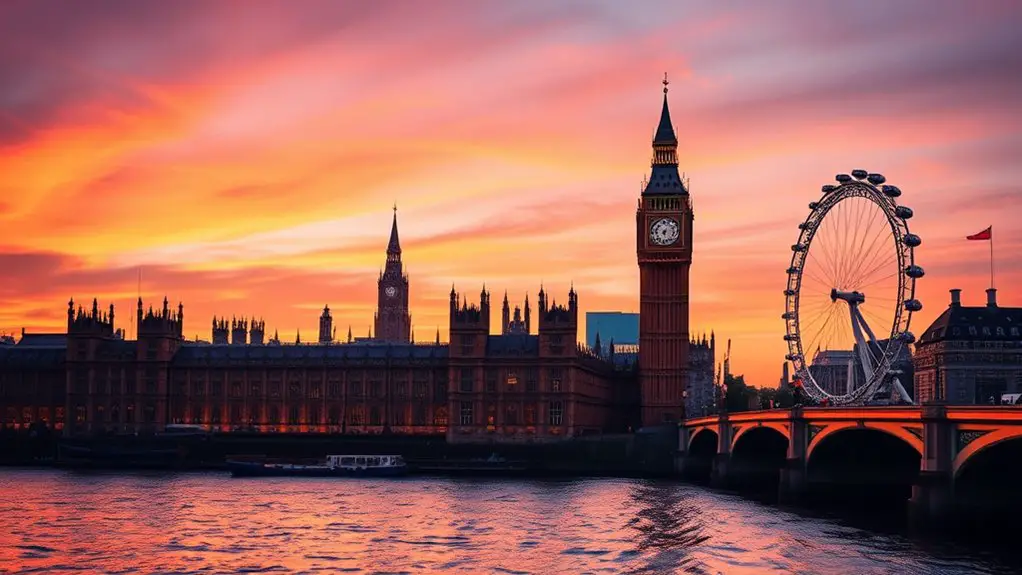
London’s most famous landmarks tell very different parts of the city’s story, from medieval royal history to modern riverfront views. For a first visit, choose the ones that match your interests instead of assuming you need a paid ticket for every sight.
The Tower of London is the strongest choice for travelers who want royal history, fortress architecture, the Crown Jewels, and Yeoman Warder tours. It deserves a substantial block of time rather than a quick photo stop.
Tower Bridge is both a working bridge and a landmark. You can walk across at street level for free, while the exhibition and elevated walkways require admission.
At Buckingham Palace, the exterior and nearby St. James’s Park are easy to combine. Changing the Guard is popular, but always check the official schedule before going.
In Westminster, you can see the Houses of Parliament and the Elizabeth Tower. Big Ben is technically the nickname of the Great Bell inside the tower, though the name is commonly used for the whole landmark.
Across the river, the London Eye offers panoramic views from the South Bank. It is a paid attraction with timed entry, so pre-booking makes sense when it is a priority for your trip.
Exploring Historic Neighborhoods and Cultural Hotspots
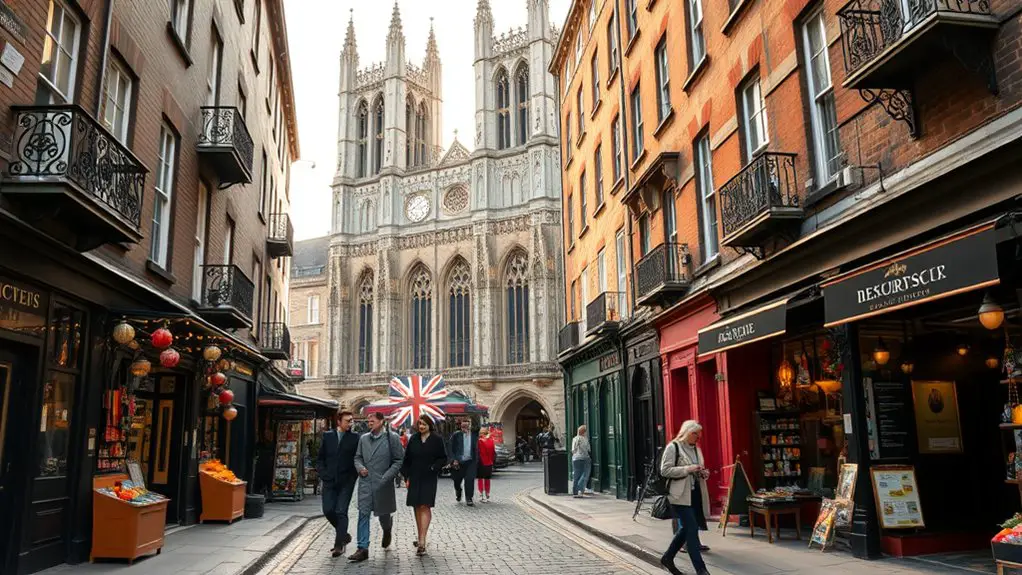
The best way to experience London beyond individual attractions is to spend time in a few neighborhoods instead of treating the city as one continuous sightseeing zone.
Westminster is the classic first-time area for royal and political landmarks, including Westminster Abbey, Parliament, St. James’s Park, and Buckingham Palace.
Covent Garden combines historic streets, shops, restaurants, street performers, and easy access to theaters. It is especially useful as a meal or evening stop after central sightseeing.
Soho is a compact choice for restaurants, bars, theaters, music history, and late-night energy. It can be lively and noisy, which is part of the appeal but worth considering if you are choosing a hotel nearby.
Southwark works well for food and culture. Borough Market, Shakespeare’s Globe, the Thames Path, and Tate Modern can all fit into the same broader riverside day.
For a different feel, Shoreditch and Spitalfields bring street art, independent shops, markets, and nightlife. They are better added after you have covered the central landmarks that matter most to you.
Where to Stay on a First Trip to London
There is no single best neighborhood for every first-time visitor. Focus on easy transport, the kind of evenings you enjoy, and how much walking you want to do.
- Westminster or Victoria: convenient for royal sights and central transport, with a more traditional sightseeing feel.
- Covent Garden or Bloomsbury: strong for museums, theaters, restaurants, and walkable access to many central areas.
- South Bank or Waterloo: useful for river walks and transport connections, especially if you like being near the Thames.
- Soho: excellent for nightlife and dining, but potentially noisy late at night.
A slightly cheaper room far from the places you plan to visit can cost you time and extra transit each day. For a short first trip, paying for a well-connected base can be worthwhile.
Enjoying the Best of London’s Parks and Open Spaces

London’s parks give you a useful break between museums, shops, and busy streets. They are also among the easiest free experiences to work into a first-time itinerary.
| Park | Highlights | Best Fit for a First Trip |
|---|---|---|
| Regent’s Park | Queen Mary’s Gardens, landscaped paths, boating | A slower half-day or a break from central sightseeing |
| Hampstead Heath | Open landscapes, city views, bathing ponds | Travelers who want a wilder park and do not mind leaving central London |
| Hyde Park | Serpentine, long walking routes, Speakers’ Corner | Easy to combine with South Kensington, Mayfair, or Marble Arch |
| St. James’s Park | Lake, landscaped views, Buckingham Palace nearby | The easiest park to add to a Westminster sightseeing day |
Hyde Park’s Speakers’ Corner is most associated with Sunday-morning public speaking. Queen Mary’s Gardens in Regent’s Park is especially known for its large rose collection, while St. James’s Park is the most convenient green space for a Buckingham Palace day.
Art, Museums, and Galleries You Can’t Miss
London is unusually good for travelers who want to keep sightseeing costs down because several major national collections have free general admission. Paid exhibitions may still require separate tickets, and some museums recommend free timed reservations during busy periods.
Iconic Art Collections
Choose museums by subject rather than trying to collect them all. The National Gallery is strongest for European painting, Tate Modern for modern and contemporary art, and the V&A for design, fashion, decorative arts, and material culture.
| Collection | Best Known For |
|---|---|
| National Gallery | European painting from the late medieval period through the early 20th century |
| Tate Modern | Modern and contemporary art in a former power station |
| Victoria and Albert Museum | Design, fashion, decorative arts, photography, and global material culture |
| The Courtauld Gallery | Impressionist and Post-Impressionist works plus earlier European art |
| The Wallace Collection | European paintings, furniture, arms, armor, and decorative arts |
How to Group Museums by Area
The original temptation is to treat London’s famous museums as if they are all next door to one another, but they sit in different parts of central London. A smarter plan is to cluster them.
- Bloomsbury: British Museum.
- Trafalgar Square and the West End: National Gallery and nearby commercial galleries.
- South Bank/Bankside: Tate Modern.
- South Kensington: V&A and other major museum institutions.
- Marylebone: Wallace Collection.
This approach keeps your museum time focused and avoids losing a large part of the day to transfers.
Hidden Gallery Gems
Smaller and specialist galleries can add variety after the major museums. The Wallace Collection, set in a historic townhouse, offers a more intimate experience than London’s biggest institutions and has free entry to its permanent collection.
The Saatchi Gallery focuses on contemporary art and changing exhibitions, while White Cube operates London spaces in Bermondsey and Mason’s Yard. Because commercial-gallery exhibitions change frequently, check current programs before building a special trip around one show.
Three easy first-trip culture stops—the British Museum, National Gallery, and V&A—offer free general admission, although some temporary exhibitions cost extra.
Foodie Experiences and Local Markets
London’s food scene is broader than any one “traditional” cuisine. A good first trip might include a historic market lunch, a neighborhood restaurant, a pub meal, and food from one of the city’s many immigrant communities.
Historical Food Markets
Not every historic market is a casual tourist food hall. Borough and Leadenhall are easy to visit during normal sightseeing, while Smithfield and Billingsgate are working wholesale markets with very early trading hours.
| Market | What to Know |
|---|---|
| Borough Market | Historic retail food market in Southwark with prepared food, produce, specialty ingredients, and long-established traders |
| Leadenhall Market | Historic covered market architecture with modern shops, pubs, restaurants, and food businesses |
| Smithfield Market | Working wholesale meat market; most stalls operate very early, so it is better for market-history enthusiasts than a casual lunch stop |
| Billingsgate Market | Working wholesale fish market near Canary Wharf with early trading hours and specific market-floor safety rules |
Borough Market’s own history traces trading in the area back many centuries, making it the most straightforward choice if you want both food and a sense of market heritage on a standard sightseeing day.
Warning: Billingsgate and Smithfield are active wholesale workplaces, not ordinary tourist food courts. Check official visitor rules before going. Billingsgate currently restricts children under 12 from the market floor and requires suitable footwear because surfaces can be wet and slippery.
Hidden Culinary Gems
For something less formal than the biggest visitor attractions, try smaller food areas and neighborhood restaurants. Maltby Street Market can be a useful alternative when its current trading days fit your schedule, especially if you are already in Bermondsey.
In and around Brick Lane and Spitalfields, you will find long-standing Bangladeshi and South Asian restaurants alongside newer cafes and food businesses. Rather than chasing “secret” restaurants, compare current menus, recent reviews, and how busy a place is before choosing.
Small bakeries, cafes, specialty food shops, and market stalls can be just as memorable as a famous reservation. Leave at least one meal unplanned so you can choose based on where you actually are when you get hungry.
Practical Tips for a Smooth First Visit
A good London itinerary depends as much on logistics as on sightseeing. Plan a few anchors, keep travel simple, and avoid filling every open hour.
Use Contactless or Oyster Consistently
Transport for London says contactless payment and Oyster are easy, flexible pay-as-you-go options. Contactless and Oyster can apply daily capping, and contactless can also apply weekly capping under TfL rules.
Use the same card or device each time so the system can calculate fares correctly. On rail services you normally touch in and out; on buses and trams you touch in only. Each traveler who needs their own fare generally needs their own valid payment method or Oyster card.
Book the Sights That Would Disappoint You to Miss
Reserve timed entry for attractions that are central to your trip, such as the Tower of London or London Eye. For free museums, check whether a free reservation is recommended. Keep at least one part of each day open so a delayed meal, rain shower, long museum visit, or spontaneous stop does not wreck the whole schedule.
Pack for Walking and Changing Weather
Wear comfortable shoes and use layers. A light waterproof outer layer is useful in many seasons, but do not assume London is always cold or rainy; summer heat can also affect a full day of walking. Check the forecast each morning and adjust your route if needed.
Protect Your Phone and Valuables
The Metropolitan Police advises visitors to keep phones, cameras, and other valuables close and stay alert for pickpockets. Be especially careful when using your phone near the curb or in crowded transport and tourist areas.
Note: In a UK emergency, call 999 or 112 for police, ambulance, or fire services. For non-emergency police matters, call 101.
| Tip | Details |
|---|---|
| Plan ahead | Book priority attractions and group each day by area |
| Pack smart | Bring comfortable shoes, weather layers, a portable charger, and secure storage for valuables |
| Stay connected | Save transport routes, tickets, and hotel details where you can access them easily |
| Be flexible | Leave buffer time for queues, delays, meals, and spontaneous stops |
| Respect local etiquette | Stand clear of train doors, keep escalator traffic moving, and follow posted rules at attractions and places of worship |
Frequently Asked Questions
What’s the best way to get around London efficiently?
Use the Tube, buses, Elizabeth line, London Overground, DLR, and walking based on the route. Contactless or Oyster is usually the simplest payment method. Group attractions by neighborhood so you are not crossing the city repeatedly.
Do I need an Oyster card if I have contactless payment?
Not necessarily. TfL accepts contactless cards and devices across its services, and pay-as-you-go travel can be capped. A Visitor Oyster card can still be useful if your bank card may not work in the UK, you want to avoid foreign transaction fees, or you prefer a dedicated travel card.
Are there free attractions suitable for first-time visitors?
Yes. General admission to the British Museum, National Gallery, and V&A is free, and London’s major parks cost nothing to enter. Some special exhibitions and activities charge separately, and free timed booking may be recommended.
How should I dress for London’s unpredictable weather?
Wear comfortable walking shoes and layers you can add or remove. A light waterproof jacket is useful, but check the forecast rather than assuming it will be cold. London can also have hot summer days, so carry water and sun protection when needed.
What safety tips should I keep in mind while exploring?
Keep your phone and wallet secure, stay alert in crowded areas, use licensed or reputable transport, and avoid leaving valuables unattended. The Metropolitan Police specifically advises visitors to watch for pickpockets and keep phones and cameras close.
Which neighborhoods are best for shopping and nightlife?
Oxford Street and Regent Street are major shopping corridors, while Covent Garden mixes shopping, dining, and theaters. Soho is one of the easiest central areas for bars and late-night dining, and Shoreditch offers a more East London-focused nightlife scene.
How many days should I spend in London on my first trip?
Three full days is enough for a focused introduction, while four or five days gives you more time for museums, parks, neighborhoods, and slower meals. With only two days, prioritize Westminster, the Tower/Southwark area, and one museum or neighborhood that matters most to you.
Conclusion
Your first trip to London does not need to include every famous sight to be memorable. Build each day around one area, choose a few priority attractions, and use free museums, parks, markets, and neighborhood walks to keep the pace manageable. With three or four well-planned days, you can see London’s headline landmarks and still leave enough space for the meals, streets, and spontaneous stops you will remember most.
Sources
- Visit London — first-time visitor itinerary — official destination guidance for grouping major sights and first-trip experiences.
- Transport for London — best ways for visitors to pay — contactless, Oyster, pay-as-you-go, and capping guidance.
- Household Division — Changing the Guard calendar — official ceremony schedule.
- Historic Royal Palaces — Tower of London visitor information — admission, visit planning, and current access information.
- British Museum — visit information — free general admission, hours, security, and advance-booking guidance.
- Metropolitan Police — visitor safety guidance — practical advice on valuables, pickpockets, and emergency contacts.
