

Last Updated on July 27, 2026 by Tyler Morgan
K.W. Chang, also known as Chang Kuo-wei, is the youngest son of Evergreen Group founder Chang Yung-fa and the founder and chairman of STARLUX Airlines. A trained pilot and aircraft-maintenance professional, he led EVA Air from 2013 until a family succession dispute pushed him out in 2016. He then built STARLUX into a premium international carrier, took it public in 2024, and continues to fly aircraft himself as the airline expands across Asia, North America, and, beginning in August 2026, Europe.
Quick Answer
K.W. Chang (Chang Kuo-wei) is a Taiwanese airline executive, pilot, and founder of STARLUX Airlines. The youngest son of Evergreen Group founder Chang Yung-fa, he led EVA Air from 2013 to 2016, was ousted during a family succession fight, and later built STARLUX, which listed on the Taiwan Stock Exchange in October 2024.
Key Takeaways
- K.W. Chang was chairman of EVA Air from 2013 until his removal in March 2016 during a family succession dispute.
- He laid the groundwork for STARLUX after leaving EVA Air; STARLUX was officially registered in 2018 and launched passenger flights in January 2020.
- Taiwan’s Supreme Court upheld his father’s will in August 2024 in a dispute involving an estate valued at about NT$14 billion.
- STARLUX listed on the Taiwan Stock Exchange in October 2024 and now flies nonstop to five U.S. destinations, with Prague scheduled to become its first European destination on August 1, 2026.
- Chang holds commercial pilot type ratings and aircraft-maintenance credentials and continues to personally pilot selected STARLUX flights and aircraft deliveries.
Disclosure: As an Amazon Associate I earn from qualifying purchases. Some links on this page are affiliate links, at no extra cost to you.
Who Is K.W. Chang?

K.W. Chang was born in Taipei, Taiwan, on September 6, 1970. He is the youngest son of Chang Yung-fa, founder of the Evergreen Group, and the only son of Chang Yung-fa’s second wife, Lee Yu-mei.
Chang studied in the United States. He earned a Bachelor of Science from the University of Southern California and later a Master of Economics from California State University, Long Beach. Forbes’ profile of Chang lists his graduate economics degree and describes him as a trained pilot and chairman of STARLUX.
His aviation career began inside the family business, where he worked through technical and operational roles before rising to EVA Air’s top leadership. He became EVA Air chairman in 2013 and remained in the position until March 2016, when a succession battle following his father’s death ended his tenure.
Chang later established STARLUX Airlines. He announced plans for the new airline in 2016, founded STARLUX Investment Co. in 2017, and completed the airline company’s official registration in 2018. STARLUX launched scheduled passenger operations on January 23, 2020.
Following the carrier’s October 2024 stock-market listing, Forbes reported that Chang and his two sons held about 64% of STARLUX. Forbes also ranked STARLUX as Taiwan’s third-largest international carrier by passengers and cargo volume at that time.
How Did K.W. Chang Build His EVA Air Career?
Chang spent roughly two decades building experience inside EVA Air before his 2016 departure. Rather than working only in management, he developed experience in aircraft maintenance, airline operations, and flying.
After a period of pilot training in the United States, Chang returned to EVA Air in 2010 as chief executive vice president while continuing his flight training. By 2013, he had been appointed chairman of the airline. Contemporary reporting described him as an unusually hands-on airline executive who continued flying while leading the company.
Pilot Training And Technical Credentials
Chang began first-officer training on the Boeing 777-300ER in 2010 and passed Taiwan’s Civil Aeronautics Administration captain examination in January 2013. He also developed aircraft-maintenance qualifications, giving him practical experience with both flight operations and aircraft systems.
His later qualifications expanded beyond the Boeing 777 to Airbus aircraft used by STARLUX, including the A321, A330, and A350 families.
Pilot And Chairman Rise
Chang’s EVA Air rise combined management responsibility with cockpit experience. The corrected timeline is:
| 2010 | Returned to EVA Air as chief executive vice president while developing his Boeing 777 pilot qualifications. |
| January 2013 | Passed Taiwan’s CAA captain examination. |
| 2013 | Appointed chairman of EVA Air. |
| March 2016 | Removed as chairman during the Evergreen family succession fight while he was operating an EVA Air trip to Singapore. |
The circumstances of his removal were particularly unusual. On March 11, 2016, Chang piloted an EVA Air aircraft to Singapore. While he was away, EVA Air’s board replaced him as chairman. He returned to Taiwan the following day as a passenger. The episode was reported at the time by Taipei Times and other Taiwanese and international media.
Why Did the EVA Air Succession Fight Start?
The dispute followed the death of Evergreen Group founder Chang Yung-fa on January 20, 2016. A will signed in 2014 named his youngest son, Chang Kuo-wei, as his intended successor to the Evergreen Group chairmanship and designated him to inherit his father’s estate.
Chang’s three older half-brothers held stronger voting positions in important Evergreen businesses. They moved to dissolve the group’s top management structure and later used their influence at EVA Air to remove Chang from the airline chairmanship.
The family dispute then moved into the courts. Chang Kuo-cheng, one of Chang’s half-brothers, challenged the validity of the will. Lower courts upheld it, and on August 14, 2024, Taiwan’s Supreme Court issued a final ruling rejecting the challenge. Taiwan News reported that the estate covered savings, shares, and real estate valued at about NT$14 billion, or roughly US$433 million at the time.
Note: The Supreme Court ruling settled the challenge to the will’s validity, but inheritance law can still affect how an estate is ultimately distributed among legally protected heirs. Forbes reported in June 2026 that Chang’s three older half-brothers had a combined estimated fortune of about $5.5 billion.
Why Did K.W. Chang Launch STARLUX Airlines?
After leaving EVA Air, Chang chose to build a new airline around his own ideas about aircraft, service, branding, and passenger experience. He publicly announced plans for STARLUX in November 2016 and formed STARLUX Investment Co. in 2017 to begin the regulatory and organizational work.
STARLUX Airlines received its official business registration in May 2018. According to the airline’s corporate history, it spent the following period recruiting employees, ordering aircraft, building operating systems, and completing Taiwan Civil Aeronautics Administration certification.
The airline attracted considerable attention before carrying its first passenger. When tickets opened in December 2019 for inaugural flights from Taipei to Macau, Penang, and Da Nang, the first-flight seats across the three routes sold out within 11 minutes.
STARLUX began operations on January 23, 2020, just as the global aviation industry was approaching the COVID-19 disruption. Despite that difficult timing, the carrier continued adding aircraft and routes before moving into long-haul North American service in 2023.
How Does STARLUX Airlines Stand Out Today?
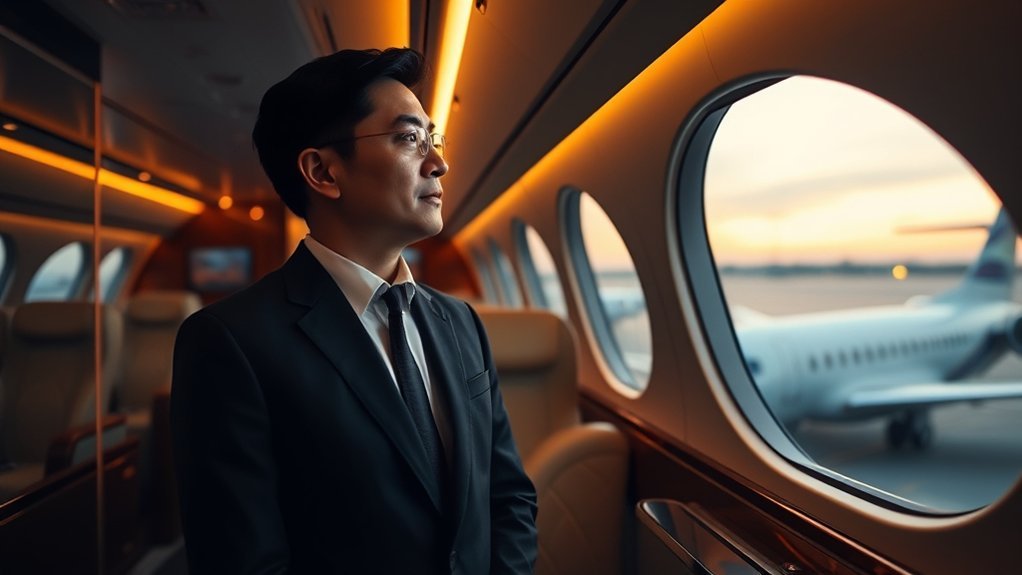
STARLUX positions itself as a premium full-service airline. Its distinguishing features include BMW Designworks-influenced interiors, a modern all-Airbus fleet, four-class long-haul A350 cabins, extensive seatback entertainment, connectivity, and a growing network centered on Taipei.
Luxury Cabin Design
STARLUX has worked with BMW Group’s Designworks on multiple cabin generations, but the exact seats and entertainment systems vary by aircraft.
On the A321neo, business-class seats convert into an 82-inch fully flat bed and use 15.6-inch 1080p entertainment screens. Economy seats have 10.1-inch 720p screens. These figures come from STARLUX’s original A321neo specification and should not be applied to the airline’s entire fleet.
The long-haul A350-900 has a different four-class layout. Its First Class uses a 32-inch 4K screen, Business Class a 24-inch 4K screen, Premium Economy a 15.6-inch 4K screen, and Economy a 13-inch 4K screen. First and Business Class seats feature sliding privacy doors and convert into fully flat beds. STARLUX also provides Bluetooth audio connectivity on the A350.
The airline’s branded onboard experience extends beyond seats. Its P.Seven-developed cabin fragrance, tailored lighting, meals, amenity kits, and cabin materials are designed to give the airline a recognizable look and feel.
Premium Route Expansion
STARLUX now has five nonstop U.S. gateways: Los Angeles, San Francisco, Seattle, Ontario, California, and Phoenix. Phoenix service launched on January 15, 2026, becoming the airline’s fifth U.S. destination and giving Phoenix its first nonstop passenger connection to Asia.
The Phoenix-Taipei route launched with Airbus A350-900 aircraft and an initial schedule of three flights per week, with STARLUX publishing plans for increased frequency as the route developed.
STARLUX has also expanded its U.S. reach through airline partnerships. Its interline agreement with American Airlines allows single-ticket itineraries and through-checked baggage between American’s North American network and STARLUX flights through Taipei. Its Alaska Airlines partnership provides additional U.S. connecting opportunities.
The next major step comes on August 1, 2026, when STARLUX is scheduled to begin Taipei-Prague service. Prague will become STARLUX’s first regular European destination. The airline plans three weekly flights initially, increasing to four weekly flights in October 2026, using the Airbus A350.
From its first North American route in 2023 to a five-city U.S. network and its first European route in 2026, STARLUX’s expansion has moved quickly for an airline that began scheduled operations only in 2020.
Pro Tip: STARLUX is an Alaska Airlines partner, and eligible flights can be booked with Atmos Rewards points. Alaska replaced its former Mileage Plan branding with Atmos Rewards in August 2025, so older references to “Mileage Plan miles” are now outdated.
Tech-Forward Experience
STARLUX operates Airbus A321neo, A330neo, A350-900, and A350-1000 aircraft. Connectivity and entertainment are offered across these fleets, although Wi-Fi access levels can differ by aircraft and cabin rather than following one universal plan.
- New-generation Airbus aircraft support fuel efficiency and modern cabin systems.
- Onboard connectivity is available, with access levels varying by cabin and aircraft.
- BMW Designworks has contributed to the airline’s distinctive cabin interiors.
- Long-haul A350 aircraft add lie-flat premium seating, privacy doors, 4K entertainment screens, and four cabin classes.
STARLUX’s service and safety profile has also received outside recognition. It was named a SKYTRAX 5-Star Airline in 2025, received the 2026 APEX Five Star Global Airline designation, and earned AirlineRatings’ 7-Star PLUS safety rating in December 2025.
How Did the 2024 Court Ruling Affect K.W. Chang?
In August 2024, Taiwan’s Supreme Court upheld the validity of Chang Yung-fa’s will, ending the principal legal challenge brought by Chang Kuo-cheng. The estate cited in reporting was worth about NT$14 billion.
Two months later, STARLUX completed its main-board listing on the Taiwan Stock Exchange on October 25, 2024. Forbes reported that the company floated about 18.5% of its equity, raised nearly $300 million, and saw its shares rise 54% on their first day of trading. The first-day move gave STARLUX a market value of about $2.4 billion.
Forbes estimated Chang’s wealth at about $1.2 billion following the listing and again listed a $1.2 billion net worth in its 2025 Billionaires profile dated April 1, 2025. That figure should be treated as a dated estimate rather than a live valuation because STARLUX’s share price and Chang’s holdings can change.
| August 2024 | Supreme Court upheld the disputed will involving an estate valued at about NT$14 billion. |
| October 2024 | STARLUX listed on the Taiwan Stock Exchange. |
| IPO result | About 18.5% of equity floated; nearly $300 million raised; approximately $2.4 billion first-day market value, according to Forbes. |
| Forbes wealth estimate | About $1.2 billion as of the 2025 Forbes Billionaires calculation. |
What Awards Have K.W. Chang and STARLUX Received?
Chang has received a major personal honor, while STARLUX has accumulated several airline-industry ratings and awards under his chairmanship.
- Knight of the Legion of Honour, 2021: France bestowed the Knight rank of its National Order of the Legion of Honour on Chang for his aviation-related contributions and ties with the French aerospace industry.
- SKYTRAX 5-Star Airline, 2025: STARLUX received SKYTRAX’s Five-Star Airline certification in June 2025, about five years after beginning scheduled operations.
- 2026 APEX Five Star Global Airline: STARLUX received the designation in September 2025 after previously being recognized in APEX’s Major Airline category.
- AirlineRatings 7-Star PLUS Safety Rating: STARLUX received the rating in December 2025 following safety audits and onboard assessments.
- 2026 World’s Best Airlines recognition: AirlineRatings placed STARLUX among its global top five in 2026 and recognized the airline’s in-flight catering program.
What Aviation Credentials Does K.W. Chang Hold?

Chang is widely described as an unusual airline chairman because he combines executive leadership with professional aircraft-maintenance credentials and commercial pilot type ratings. Published biographies list type ratings for the Boeing 777 and Airbus A321, A330, and A350, along with aircraft-maintenance qualifications.
He began first-officer training on the Boeing 777-300ER in 2010 and passed Taiwan’s Civil Aeronautics Administration captain examination in January 2013. He later qualified on Airbus types as STARLUX prepared to launch and expand its fleet.
Chang has repeatedly flown aircraft delivery and milestone flights himself. He piloted STARLUX’s early A321neo deliveries, operated the airline’s inaugural Macau service in January 2020, and captained its first long-haul flight to Los Angeles in April 2023.
His active flying has continued well beyond the airline’s startup years. In January 2026, Chang personally flew STARLUX’s first Airbus A350-1000 from Toulouse to Taipei. In July 2026 he also piloted the airline’s AIRSORAYAMA Silver A350-1000 to Taiwan and later operated its maiden passenger service to Tokyo, providing fresh evidence that he remains directly involved in flight operations while serving as chairman.
Is STARLUX Airlines Profitable?
STARLUX first became profitable in 2023, when Forbes reported NT$149 million in net profit. Its financial results have continued to fluctuate as the airline expands its fleet and long-haul network.
For full-year 2025, STARLUX reported operating revenue of about NT$44.05 billion and after-tax net profit of approximately NT$272.6 million. Profit was lower than in 2024 as expenses rose with continued expansion.
The airline then reported a stronger first quarter of 2026. According to company results reported by Taiwan’s Central News Agency, STARLUX recorded approximately NT$909.8 million in Q1 2026 net profit on NT$13.76 billion in revenue. That followed losses in the third and fourth quarters of 2025, illustrating that airline profitability can vary sharply from quarter to quarter.
Frequently Asked Questions
Why was STARLUX founded?
K.W. Chang announced plans for STARLUX after leaving EVA Air during the Evergreen family succession dispute. He wanted to build a premium airline around his own approach to aircraft, cabin design, service, and operations. The airline was officially registered in 2018 and began scheduled flights in January 2020.
How much is the owner of STARLUX worth?
Forbes estimated K.W. Chang’s net worth at about $1.2 billion in its 2025 Billionaires profile, dated April 1, 2025. Much of that estimate was tied to his STARLUX ownership after the airline’s 2024 listing, so it should not be treated as a fixed or real-time value.
Who is Chang Kuo-wei?
Chang Kuo-wei, commonly known as K.W. Chang, is a Taiwanese airline executive, commercial pilot, and the founder and chairman of STARLUX Airlines. He previously served as chairman of EVA Air from 2013 until 2016.
Is STARLUX profitable?
Yes, although earnings vary by period. STARLUX reported about NT$272.6 million in after-tax net profit for 2025 and approximately NT$909.8 million in net profit for the first quarter of 2026. The airline had recorded losses during the third and fourth quarters of 2025 before returning to profit in Q1 2026.
Does K.W. Chang still fly airplanes?
Yes. Chang continues to fly selected STARLUX aircraft and milestone missions. In January 2026 he flew the airline’s first A350-1000 from Toulouse to Taipei, and in July 2026 he piloted the AIRSORAYAMA Silver A350-1000 on both a delivery-related flight and its maiden passenger service to Tokyo.
Conclusion
K.W. Chang’s aviation career has taken an unusual path from aircraft maintenance and the cockpit to the EVA Air boardroom, a bitter family succession battle, and the creation of a new international airline. After his 2016 removal from EVA Air, he turned his attention to STARLUX, which launched in 2020, went public in 2024, and expanded to five U.S. destinations.
His story is still developing. Chang remains an active pilot in 2026, STARLUX has added the A350-1000 to its fleet, and Taipei-Prague service is scheduled to open the airline’s first European chapter on August 1, 2026. The combination of hands-on aviation experience, corporate setbacks, and a second airline career makes Chang one of the more distinctive executives in modern Asian aviation.
Sources
- STARLUX Airlines — Our History — company formation, certification, aircraft milestones, and operating timeline
- Taipei Times — Chang’s March 2016 removal from EVA Air while operating a trip to Singapore
- Taiwan News — August 2024 Supreme Court ruling and NT$14 billion estate
- Forbes — STARLUX IPO, ownership, valuation, and Chang’s billionaire estimate
- STARLUX Airlines 2025 Annual Report — 2025 revenue, operating profit, net profit, and fleet data
- Focus Taiwan / CNA — STARLUX first-quarter 2026 profitability and revenue

