
Last Updated on September 10, 2026 by Daniel Globe
Hiking boots take a beating from mud, grit, sweat, water, and trail debris. Cleaning them correctly helps remove abrasive dirt, keeps the outsole lugs clear, controls odor, and can extend the useful life of the upper and sole. The safest method is usually simple hand cleaning, followed by slow air drying and material-specific conditioning or waterproofing only when needed.
Quick Answer
To wash hiking boots, remove the laces and insoles, brush away loose dirt, and hand-clean the boots with lukewarm water and a soft brush or manufacturer-approved cleaner. Rinse away residue, then air dry at room temperature. Never use a washing machine, clothes dryer, radiator, campfire, or other high-heat source.
Key Takeaways
- Check the boot manufacturer’s care instructions before choosing a cleaner, conditioner, or waterproofing treatment.
- Remove laces and insoles, dry-brush loose dirt, then clean the boots by hand with lukewarm water.
- Avoid washing machines, clothes dryers, bleach, harsh solvents, and direct heat, which can damage materials or adhesives.
- Condition full-grain leather when it needs it; do not use a universal conditioning schedule for every boot material.
- Renew compatible water-repellent treatment when the outer material stops beading water rather than automatically after every wash.
- Clean soil and seeds from the soles before moving between hiking areas to help reduce the spread of invasive species.
At a Glance
| Time Required | About 10–20 minutes of hands-on cleaning, plus enough time for the boots to air dry completely |
| Difficulty | Easy |
| Tools Needed | Soft brush or old toothbrush, cloth or sponge, lukewarm water, and a boot-compatible cleaner if needed |
| Cost | Low; often no extra cost if you already have basic cleaning supplies, with optional specialty cleaner or proofing treatment as needed |
Disclosure: As an Amazon Associate I earn from qualifying purchases. Some links on this page are affiliate links, at no extra cost to you.
Preparing Your Boots for Cleaning
Before adding water, check the care instructions supplied by the boot manufacturer. Hiking footwear can combine leather, nubuck, suede, textile panels, rubber, adhesives, and waterproof-breathable membranes, and a treatment that is suitable for one material may be wrong for another.
GORE-TEX footwear-care guidance, for example, recommends removing the laces, shaking out loose material, removing the footbed when possible, brushing away dirt, and hand washing rather than using a washing machine.
Start by knocking or brushing off loose dirt while the boots are dry or only slightly damp. Pay particular attention to the outsole lugs, welt area, tongue folds, eyelets, and seams where grit collects. Remove small stones from the tread with a brush or a blunt tool that will not cut the rubber.
Next, remove the laces and removable insoles. Taking them out opens the tongue area for cleaning and allows the inside of the boot to dry faster.
Warning: Do not put hiking boots in a washing machine or clothes dryer unless the footwear manufacturer specifically says the model is machine washable. Also avoid bleach, harsh solvents, and high heat from radiators, hair dryers, campfires, heaters, or direct hot sun.
Step-by-Step Cleaning Process
1. Brush Away Loose Dirt
Use a soft boot brush, vegetable brush, or old toothbrush to loosen dry mud, sand, and grit. Starting dry makes it easier to remove material without turning every patch of dirt into mud.
2. Remove and Clean the Laces
Wash ordinary removable laces separately with lukewarm water and a small amount of mild cleaner when needed, then rinse them thoroughly and let them air dry. Replace frayed or damaged laces before your next hike.
3. Clean the Insoles Separately
Shake debris from removable insoles and follow the boot or insole manufacturer’s cleaning instructions. When hand washing is allowed, gently clean them with water and a compatible mild cleaner, rinse them, and let them air dry completely outside the boots.
Persistent odor usually means the boots or insoles need more drying and ventilation. Avoid masking a continually damp boot with fragrance; make sure the lining and footbeds dry fully between hikes.
4. Wash the Uppers
Dampen a soft brush, cloth, or sponge with lukewarm water and work gently over the upper. For stubborn dirt, use a footwear cleaner approved for the boot’s material. GORE-TEX permits a small amount of suitable liquid detergent in its general footwear instructions, while some footwear brands recommend dedicated footwear cleaners and advise against household detergents, so the boot manufacturer’s instructions should take priority.
Clean around the tongue gussets, seams, hooks, and eyelets, but do not aggressively scrub delicate mesh, suede, or nubuck.
5. Scrub the Outsoles
Brush packed mud from the tread until the lugs and channels are clear. Clean tread is easier to inspect and provides the traction pattern the sole was designed to deliver.
There is also an environmental reason to clean the soles. The National Park Service recommends cleaning boots and shoes because soil, seeds, and other biological material can be carried from one area to another.
Cleaning hiking boots is not only gear maintenance: removing soil and seeds before visiting another trail can also help reduce the accidental spread of invasive species.
6. Rinse Away Cleaner
Wipe or rinse away cleaner according to the product directions. Do not leave soap or cleaning-product residue on the upper. Avoid soaking boots longer than necessary, especially when the manufacturer recommends surface cleaning rather than immersion.
7. Treat Each Upper Material Correctly
Full-grain or smooth leather: Use a leather-compatible cleaner. After cleaning, apply conditioner only when the leather needs it or according to the boot maker’s schedule. Too much conditioner can soften some hiking-boot leathers more than intended.
Nubuck or suede: Use products approved specifically for nubuck or suede. Conditioning or waterproofing treatments can darken the material or flatten its textured nap, so test and follow the manufacturer’s instructions.
Synthetic or textile uppers: Gently clean with water and an approved cleaner when necessary. Do not apply leather conditioner to textile panels.
Waterproof-breathable footwear: A waterproof membrane such as GORE-TEX does not mean the entire boot can be treated with any waterproofing product. Clean the outer materials correctly and use a compatible DWR or proofing treatment only when needed.
Note: Conditioning and waterproofing are not the same job. Conditioner helps appropriate leather remain supple. A DWR or proofing treatment helps the outer surface shed water. Use only products approved for the materials in your particular boots.
Drying and Conditioning Your Boots
| Boot Type | Drying Guidance | Conditioning / Proofing |
| Leather Boots | Air dry at moderate room temperature until fully dry; timing varies with construction, saturation, airflow, and humidity. | Condition appropriate leather when it appears dry or according to the manufacturer’s instructions; no universal interval fits every boot. |
| Rubber-Dominant Boots | Rinse clean and air dry away from high heat and direct hot sun. | Do not use leather conditioner on rubber; use only manufacturer-approved rubber care products if treatment is needed. |
| Synthetic / Waterproof Hiking Boots | Air dry completely at moderate temperature with the insoles removed. | Renew a compatible water-repellent treatment when the outer material stops beading water or when the manufacturer recommends it. |
After cleaning, open the tongues, remove the insoles, and leave the boots in a well-ventilated place at moderate room temperature. A fan can increase airflow without exposing the footwear to damaging heat.
Paper towels or plain absorbent paper can also help draw moisture from very wet boots. Loosely stuff the toe area and replace the paper when it becomes saturated rather than packing it tightly enough to block airflow.
Do not dry hiking boots against a radiator, beside a campfire, with a hair dryer, or in a clothes dryer. Oboz footwear-care guidance warns that excessive heat can contribute to problems such as sole separation, warped internal components, shrinking materials, and dried-out leather.
When Should You Condition Leather?
Condition only leather that is meant to be conditioned. For full-grain leather, signs such as unusual dryness or stiffness can indicate that treatment is due. Follow the boot manufacturer’s schedule where one is supplied. Nubuck and suede often need different products, and treatments may change their appearance.
When Should You Re-Waterproof Hiking Boots?
Watch how the outer material reacts to water. If drops bead and roll away, the existing water-repellent finish may still be working. When the surface begins absorbing water instead of beading it, use a compatible treatment according to the boot and treatment manufacturer’s instructions.
GORE-TEX currently recommends reapplying a suitable DWR treatment when water no longer beads on the footwear’s outer surface. It also cautions against waterproofing waxes or greases on GORE-TEX footwear because they can affect breathability.
Pro Tip: Do not wait until the night before a trip to deep-clean soaked boots. Give them enough time to dry naturally, then inspect the soles, seams, laces, and upper before packing them.
Storing Your Boots Properly
Store clean, completely dry hiking boots in a cool, ventilated place with relatively stable temperatures. Avoid damp basements, hot attics, car trunks, and sealed plastic bags, where excess heat or trapped moisture can shorten the life of footwear.
Make sure the insoles are dry before putting them back into the boots. Loosen the laces rather than cinching the footwear tightly for long-term storage.
A breathable shoe bag or open shelf can help keep dust away without trapping moisture. You generally do not need silica gel or other desiccants when boots are already completely dry and stored in a properly ventilated room.
Tips for Maintaining Clean Boots on the Trail
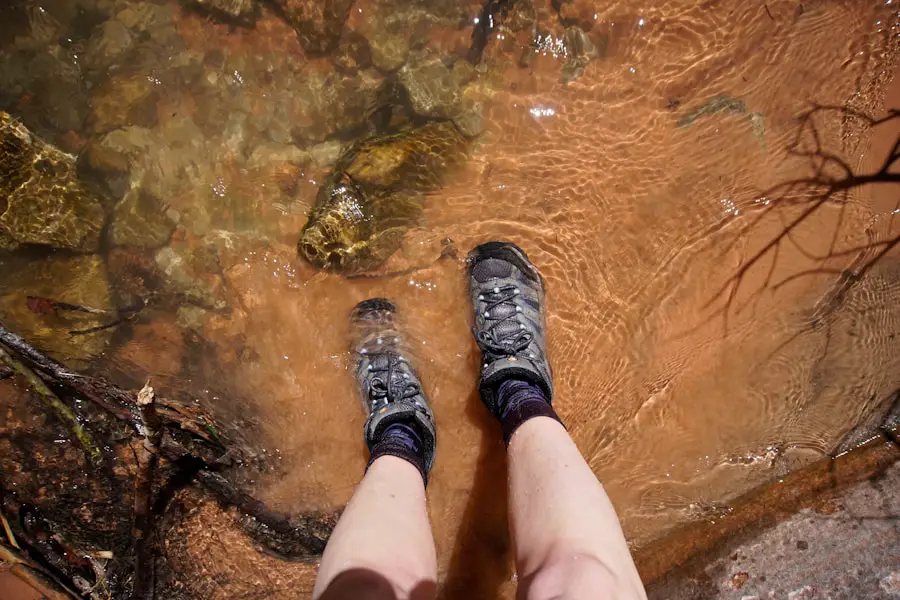
You can make post-hike cleaning easier by removing heavy mud before it dries. Carrying a small brush or cloth is useful on especially muddy trips, and gaiters can keep some mud, grit, and water away from the boot opening and lower legs.
Plan around trail conditions when possible, especially during prolonged wet periods. However, once you are on an established trail, do not step onto fragile vegetation simply to keep your footwear clean. The National Park Service’s Leave No Trace guidance explains that hikers should generally remain on the established tread rather than widening a trail by walking around ordinary mud or puddles.
If an entire trail is saturated enough that use will damage it, follow local closures or land-manager guidance and consider turning back or hiking somewhere drier.
Before traveling to another trail system, campground, park, or natural area, brush soil, seeds, and plant material from your boots and gear. The National Park Service specifically recommends this practice to help limit the accidental movement of invasive species.
Common Mistakes to Avoid
Using a Washing Machine
The tumbling, soaking, detergents, and mechanical action of a washing machine can harm hiking-footwear materials or construction. GORE-TEX, Salomon, REI, and Oboz all publish general footwear guidance against machine washing hiking footwear.
Drying Boots With High Heat
High heat may damage leather, adhesives, internal reinforcements, or the shape of a boot. Air drying at moderate temperature is slower but safer.
Using the Same Cleaner on Every Material
A product suited to smooth leather may be wrong for nubuck, suede, synthetic mesh, or a waterproof-breathable boot. Always check compatibility first.
Over-Conditioning Leather
More conditioner is not necessarily better. REI notes that excessive conditioning can soften hiking-boot leather and reduce the support it provides. Treat leather only as required.
Automatically Waterproofing After Every Wash
Instead of applying another coating every time you clean the boots, check whether the upper still beads water. Reproof when performance indicates it is needed and use a treatment compatible with the material.
Ignoring the Soles
Clean mud and stones out of the tread. This makes wear easier to inspect and reduces the chance that soil and biological material will hitch a ride to another hiking area.
When to Replace Your Hiking Boots
Cleaning cannot repair worn-out footwear. Inspect your boots periodically, especially before a long or remote hike.
Replacement or professional repair may be due when outsole lugs are worn smooth enough to noticeably reduce traction, the sole begins separating from the upper, seams split, the upper develops structural damage, or a waterproof boot develops a persistent leak that cannot be traced to surface wetting or poor maintenance.
Also pay attention to the midsole and fit. A boot can look acceptable outside while its cushioning and support have noticeably deteriorated. New, unexplained pressure points or loss of stability deserve investigation rather than simply adding conditioner or waterproofing treatment.
Some premium hiking boots can be resoled or repaired, so check with the original manufacturer before discarding an otherwise serviceable pair.
If you’re planning a hiking trip, caring for footwear is only one part of keeping trail gear ready. This guide to compact binoculars for hiking covers another piece of equipment hikers may choose to carry on outdoor trips.
Love travel? Join Our Facebook Community
Frequently Asked Questions
What is the best way to wash hiking boots?
Remove the laces and removable insoles, brush away loose mud and grit, then clean the boots by hand with lukewarm water and a soft brush or cloth. Use a manufacturer-approved footwear cleaner when water alone is not enough. Rinse away residue and air dry the boots away from high heat.
Can I put my hiking boots in the washing machine?
Generally, no. Major hiking-footwear care guides from GORE-TEX, Salomon, REI, and Oboz advise against machine washing hiking footwear. The mechanical action and unsuitable detergents can damage materials, adhesives, or fit. Follow the instructions supplied with your exact boot model.
How do I dry hiking boots after washing them?
Remove the insoles, open the tongues, and air dry the boots at moderate room temperature with good ventilation. A fan can improve airflow, and absorbent paper can help with very wet boots. Avoid clothes dryers, radiators, hair dryers, campfires, and other direct heat sources.
Should I waterproof hiking boots after every wash?
Not automatically. Check the manufacturer’s instructions and watch how the outer material handles water. When water stops beading and begins soaking into the surface, it may be time for a compatible DWR or waterproofing treatment. Different leather and textile uppers require different products.
How often should I wash my hiking boots?
There is no single schedule for every hiker. Brush off heavy mud and dirt after dirty hikes and let damp footwear dry after each use. Give the boots a more thorough hand cleaning whenever dirt has built up or before long-term storage. Manufacturer instructions should control any material-specific care interval.
Can I use dish soap on hiking boots?
Only when the boot manufacturer’s instructions permit an appropriate mild liquid cleaner. Household detergents can contain additives that are unsuitable for some leather finishes or waterproof footwear. A dedicated cleaner approved for your boot’s upper material is the safer choice when you are unsure.
Why should I clean mud from my hiking-boot soles?
Removing packed mud exposes the tread so you can inspect it and keeps grit from remaining on the footwear. Cleaning soil and seeds before traveling between outdoor areas can also help reduce the spread of invasive species, a practice recommended by the National Park Service.
Sources
- GORE-TEX — Footwear Care Instructions — hand washing, drying, prohibited cleaners, and DWR renewal.
- REI Co-op — How to Clean Hiking Boots — cleaning, drying, storage, outsole care, and leather conditioning.
- Salomon — Product Care — cleaning dirt, avoiding washing machines, room-temperature drying, and leather care.
- Oboz Footwear — Product Care — cleaning, proofing, drying, heat risks, and storage.
- National Park Service — Invasive Species Prevention — cleaning boots to reduce transport of invasive species.
- National Park Service — Leave No Trace: Travel on Durable Surfaces — staying on established trails around mud and avoiding trail widening.

