

Last Updated on July 27, 2026 by Daniel Globe
New York City can be a rewarding destination for women traveling alone, but confidence comes from planning rather than assuming every place is equally safe. This guide explains the latest crime context, safer ways to use the subway and taxis, how to choose legal lodging, what to do if you feel followed, and which emergency resources to save before your trip.
Quick Answer
Yes. New York City is generally manageable for solo female travelers who use normal big-city precautions. NYPD data reported record-low shootings and murders in the first half of 2026, although risk still varies by block, time, and situation. Choose well-reviewed lodging, plan late-night transportation, secure valuables, and trust your instincts.
Key Takeaways
- Citywide crime trends have improved, but no neighborhood, station, or street is risk-free.
- Choose lodging near a busy transit stop and check the exact route between the station and the entrance.
- On the subway, use populated cars and platforms, check service changes, and use an MTA Help Point when you need assistance.
- For taxis and rideshares, match the driver, vehicle, and plate to the app and avoid anyone soliciting rides.
- Call 911 for emergencies. Use 311 for non-emergency city information and services.
Disclosure: As an Amazon Associate I earn from qualifying purchases. Some links on this page are affiliate links, at no extra cost to you.
Is New York City Safe for Solo Female Travelers?
New York City is generally a practical destination for solo female travel, especially in busy visitor areas with good transit and late-night activity. The latest official data also provides useful context. On July 2, 2026, the NYPD reported the fewest shooting incidents, shooting victims, and murders ever recorded for the first half of a year. Major crime was down 5.8% citywide compared with the same period in 2025. The NYPD also reported that 2025 was the safest year on the subway since 2009, excluding pandemic years.
NYPD data shows a strong citywide improvement, but citywide averages cannot predict the safety of a specific block, station, building, or late-night route.
Crime is also much lower than it was during the early 1990s, although the original claim that “overall crime has decreased by over 80%” is too broad without naming the exact crime categories and comparison years. A more useful approach is to check current, location-specific information through NYPD CompStat 2.0, read recent accommodation reviews, and examine the route from your transit stop to the property.
Note: Avoid treating entire neighborhoods as simply “safe” or “unsafe.” Conditions can change within a few blocks and by time of day. Evaluate the exact address, nearby station, street lighting, foot traffic, and your return route.
Safety Tips for Solo Female Travelers
Stay Aware Without Feeling Alarmed
Keep your attention on the people and traffic around you, especially near curb edges, station stairs, ATMs, and crowded attractions. Avoid walking while fully absorbed in your phone or wearing noise-canceling headphones at a volume that blocks nearby sounds. You do not need to look nervous; the goal is simply to notice changes around you.
Trust your instincts. If a person, vehicle, train car, or street feels wrong, move toward a staffed business, hotel lobby, station employee, security desk, or group of other travelers. You do not owe a stranger politeness when you are trying to leave an uncomfortable situation.
Plan Your Route Before Leaving
Save your hotel address, the nearest subway entrance, and one backup route. Download an offline map and take a screenshot of your return directions before going out. Check the MTA website or app for overnight and weekend service changes, because a familiar line may skip stops or use a different platform during planned work.
Share your basic itinerary with a trusted person and agree on a realistic check-in schedule. Keep your phone charged, carry a compact power bank, and store your accommodation address somewhere besides your phone in case the battery dies or the device is lost.
Protect Your Phone, Cards, and Bag
- Use a crossbody bag with a secure closure and keep it in front of you in crowded places.
- Do not leave a phone on an outdoor café table or hold it loosely near an open train door.
- Use bank ATMs inside branches or other well-trafficked locations when possible.
- Keep one payment card and a small amount of cash separate from your main wallet.
- Do not hand your phone, wallet, or card to a stranger offering unsolicited help.
Pro Tip: Before leaving your accommodation, set your phone’s emergency contacts, enable device tracking, and save a screenshot showing the property name, address, and front-desk number.
What to Do If Someone Follows or Harasses You
Do not lead the person back to your accommodation. Cross the street, change direction, enter a staffed business, or approach an employee or security officer. Clearly tell someone nearby, “I think I am being followed. Can I stay here while I call for help?” If you are in immediate danger, call 911. If speaking could put you at greater risk, New York City also supports Text-to-911.
Warning: Do not confront, photograph, or argue with someone who is threatening you when a safe exit is available. Create distance, move toward other people, and contact emergency services.
Transportation Safety in New York
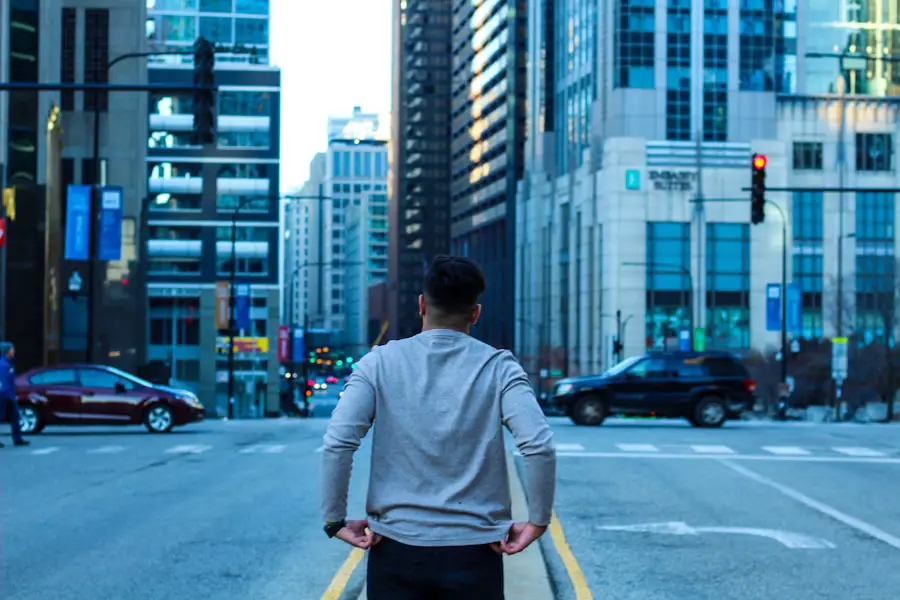
New York’s subway, buses, yellow taxis, and licensed rideshare vehicles make it possible to explore without renting a car. The best option depends on the hour, service conditions, your comfort level, and how far you must walk at each end of the trip.
Subway Safety
- Check real-time service information before entering, especially late at night or on weekends.
- Wait in a well-lit, populated part of the platform and stay behind the platform edge.
- Choose a train car with several riders rather than an empty car.
- If someone’s behavior makes you uncomfortable, move to another car at the next station or exit and wait for the following train.
- Keep your bag closed and avoid displaying cash or expensive items.
- Use an MTA Help Point or speak with an employee when you need information or urgent assistance. The green button is for information; the red button is for emergencies.
Subway service operates around the clock, but not every route runs at every hour and overnight waits can be longer. For a very late return, compare the subway route with a licensed taxi or rideshare, including the walk from the final station to your door.
Bus Safety
Buses can be easier than the subway when you want to remain at street level or reduce walking. Wait at a visible stop, confirm the route number and direction, and sit near the driver if that feels more comfortable. At night, use the MTA’s real-time arrival information so you are not waiting outside longer than necessary.
Taxi and Rideshare Safety
New York City’s Taxi and Limousine Commission licenses taxis, rideshare vehicles, drivers, and dispatch bases. For app-based trips, compare the driver’s name, vehicle, and license plate with the information in the app before entering. The TLC warns travelers not to accept rides from drivers who approach them at airports, train stations, hotels, attractions, concerts, or Broadway venues.
- Order the ride yourself through a licensed app or use an official taxi line.
- Do not get into a different vehicle because a driver claims the assigned car changed.
- Share the trip status with a trusted contact when the app provides that feature.
- Sit in the rear seat and wear the seat belt.
- End the ride in a busy public place if the route or driver makes you uncomfortable.
- Take the taxi receipt because it contains information that can help identify the trip.
Safe Accommodation Options for Solo Female Travelers
The safest accommodation is not defined only by the neighborhood name. Look for a staffed entrance, strong recent reviews, reliable locks, an easy route from public transportation, and a building you can enter without waiting alone outside.
| Accommodation | What to Check | Useful Security Features |
| Hotel | Recent reviews, staffed entrance, distance from transit, and the late-night walk to the door | 24-hour front desk, controlled elevator access, room safe, and interior room locks |
| Hostel | Female-only dorm availability, locker size, quiet hours, reception hours, and current guest reviews | Key-card access, individual lockers, staffed reception, and secure luggage storage |
| Short-Term Rental | Valid NYC registration, matching address, host presence for stays under 30 days, and no more than two paying guests | Verified listing, clear check-in process, working smoke and carbon-monoxide alarms, and unobstructed exits |
Important Short-Term Rental Rules
New York City’s short-term rental rules are stricter than many visitors expect. For a stay of fewer than 30 days in a home or apartment, the host generally must be present, the host must be registered with the city, and no more than two paying guests may stay. Renting an entire apartment or home for fewer than 30 days is generally not allowed in permanent residential buildings. Before booking, review the city’s short-term rental rules and verify that the listing details match the legal arrangement.
Warning: A platform listing, positive review, or secure payment system does not by itself prove that a New York City short-term rental is legal. Be cautious if the host changes the address, asks you to hide from building staff, or offers an unhosted entire apartment for fewer than 30 days.
Accommodation Checklist
- Read the newest reviews, not only the highest-rated reviews.
- Search reviews for “security,” “street noise,” “late night,” “locks,” “elevator,” and “front desk.”
- Check the walking route in street view and note businesses that remain open late.
- Ask whether reception is staffed when you expect to arrive.
- Avoid posting your room number or exact accommodation location publicly.
- Use the deadbolt or secondary lock whenever you are inside.
Recommended Areas for Solo Female Travelers to Visit
No neighborhood comes with a safety guarantee, but first-time solo travelers often prefer areas with frequent transit, steady foot traffic, hotels, restaurants, and attractions close together. Consider the exact property and route rather than choosing by neighborhood reputation alone.
Midtown Manhattan
Midtown offers major attractions, many hotels, several subway lines, and activity late into the evening. Times Square and the theater district can feel easy to navigate because they are busy, but crowds also require extra attention to phones, wallets, and bags.
Upper West Side
The Upper West Side is convenient for Central Park, Lincoln Center, museums, cafés, and multiple subway routes. Choose a property near the route you expect to use and review the walk after dark, especially if the entrance is on a quieter side street.
Greenwich Village and the West Village
These areas offer cafés, music venues, bookstores, restaurants, and lively streets. Washington Square Park and nearby entertainment areas can remain active into the evening, but quieter residential blocks may feel very different late at night.
Williamsburg
Williamsburg has restaurants, shops, waterfront areas, and subway access to Manhattan. Check how far the accommodation is from the station and whether late-night service changes affect the line you plan to use.
Lower East Side
The Lower East Side is popular for nightlife, galleries, food, and cultural sites such as the Tenement Museum. Nightlife crowds can be useful for foot traffic, but they can also bring intoxicated behavior, noise, and more opportunities for phone or bag theft. Plan your trip home before going out.
For daytime culture, museums such as the Museum at the Fashion Institute of Technology and the Whitney Museum of American Art can be comfortable solo activities because they have staffed entrances, clear visitor procedures, and easy access to busy surrounding areas.
Cultural Considerations for Solo Female Travelers in New York

New York is highly diverse, fast-paced, and direct. Brief communication is common and is not necessarily unfriendly. On sidewalks and station stairs, keep moving with the flow, step aside before stopping to check directions, and allow passengers to exit a train before boarding.
Respect personal space and avoid blocking doors, escalators, or narrow sidewalks. In restaurants, table service usually includes a tip; review the bill first because some venues may already include a service charge for certain groups or situations.
There is no special citywide rule that solo women must dress modestly. Dress for the weather, walking, and the venue. Comfortable shoes, secure pockets, and layers are more useful safety choices than trying to “blend in.” For practical clothing ideas, see this guide to traveler pants.
Emergency Contacts and Resources for Solo Female Travelers
Save these resources before your trip. A written copy is useful if your phone is lost or has no power.
| Resource | When to Use It | Contact |
| Emergency Services | Immediate danger, crime in progress, fire, serious injury, or urgent medical need | Call 911 |
| Text-to-911 | An emergency when you cannot safely make a voice call | Text 911 with the emergency and exact location |
| NYC 311 | Non-emergency city services, information, complaints, and referrals | Call 311; from outside NYC call 212-639-9675 |
| Safe Horizon Crime Victims Hotline | Support, information, and referrals for victims of crime and their families | 866-689-4357 |
| Embassy or Consulate | Lost passport, emergency travel documents, or consular assistance | Save your country’s official New York contact before departure |
If you call 911, state whether you need police, fire, or medical help and give the exact address, cross streets, and borough if known. In a subway station, the red button on an MTA Help Point connects you for urgent assistance and allows transit staff to identify the device’s location.
Common Solo-Travel Scenarios
You Miss Your Stop or Take the Wrong Train
Stay on the platform or inside the paid area while you check the route. Use an MTA Help Point, ask an employee, or speak to a family or another traveler who appears comfortable helping. Avoid following a stranger to an isolated exit or accepting an unsolicited car ride.
Your Phone Battery Is Almost Empty
Switch on low-power mode, stop streaming, screenshot essential directions, and return while you still have enough battery to navigate or contact your accommodation. A small power bank is worth carrying on long sightseeing days.
You Feel Uncomfortable at a Bar or Event
Tell a bartender, server, usher, or security employee that you need help leaving safely. Order your own ride and confirm the vehicle before entering. Do not leave a drink unattended, and do not accept an open drink from someone you do not trust.
You Lose a Wallet or Phone
Move to a safe place, lock or track the device, contact your bank, and report theft to police when appropriate. Ask your accommodation for help contacting your insurer, consulate, or transportation provider. Keep digital copies of essential travel documents in a secure account that you can access from another device.
Solo travel can feel empowering because you control your schedule, choose your own activities, and respond quickly when a situation changes. The aim is not to avoid the city after dark or assume danger everywhere. It is to make simple decisions that reduce avoidable risk while leaving room to enjoy the trip.
Frequently Asked Questions
Is New York safe for solo female travelers?
Generally, yes. Current NYPD data shows improving citywide crime trends, but safety still depends on the exact location, time, transportation plan, and situation. Use normal big-city precautions, choose well-reviewed lodging, and avoid isolated routes when you have a safer alternative.
Is it safe to walk alone at night in New York?
Busy, well-lit areas may feel comfortable, but conditions vary by block. Plan the route, limit phone distractions, and use a licensed taxi or rideshare when the walk is isolated, unfamiliar, or longer than you are comfortable with.
Is the New York subway safe for a woman traveling alone?
The subway is a practical way to travel, and the NYPD reported that 2025 was its safest year since 2009 outside the pandemic period. Stay in populated cars and platform areas, check late-night service changes, keep belongings secure, and move away from any situation that makes you uncomfortable.
Are taxis and rideshares safe for solo female travelers?
Use an official taxi line or a licensed app. Confirm the driver, vehicle, and plate before entering, wear the seat belt, and reject unsolicited rides. New York City requires taxis and for-hire vehicles that begin trips in the city to be licensed by the TLC.
Are Airbnb and other short-term rentals legal in New York City?
Rules are strict. For stays under 30 days in a permanent residence, the host generally must be present and registered, and the booking is limited to no more than two paying guests. An unhosted entire apartment or home is generally not legal for a stay shorter than 30 days.
Which areas should solo female travelers avoid?
Avoid making decisions from old neighborhood lists. Instead, avoid isolated or poorly lit routes, empty train cars, unlicensed rides, and accommodations with weak recent reviews. Check the exact address and current NYPD CompStat information because conditions vary within neighborhoods.
What should I do if I feel followed?
Do not return to your accommodation. Change direction, enter a staffed public place, tell an employee or nearby person what is happening, and call 911 if you are in immediate danger. Text 911 if you cannot safely speak.
Are there special dress rules for women in New York?
There is no citywide modest-dress rule. Wear clothing suited to the weather, walking, and the venue. Comfortable shoes, layers, and secure pockets are more practical than dressing to avoid attention.
Sources
- NYPD: First-Half 2026 Crime Report — current citywide and transit crime context.
- NYPD: 2025 Annual Public-Safety Report — 2025 subway and citywide crime trends.
- MTA Track-Safety and Help Point Report — Help Point functions and emergency assistance.
- NYC Taxi and Limousine Commission: Illegal Rides — how to identify and avoid unlicensed rides.
- NYC Office of Special Enforcement: Short-Term Rental Rules — legal requirements for stays under 30 days.
- NYC Emergency Management: 911 and 311 Guidance — emergency and non-emergency contact information.
