
Last Updated on July 28, 2026 by Daniel Globe
Booking a low-cost transatlantic flight naturally raises questions about safety, maintenance, and oversight. LEVEL offers long-haul service from Barcelona at fares that can undercut traditional airlines, but ticket price alone does not show whether an airline is safe. The more useful evidence is its operating certificate, regulator, audit status, fleet, training requirements, and accident record.
Quick Answer
LEVEL is a reasonable airline to fly based on the available evidence. It holds Spanish AOC ES.AOC.166, operates under AESA oversight and EU aviation rules, and has IOSA registration. No fatal accident or hull loss appears in the reviewed LEVEL record, although a June 2026 Airbus A330 technical return should be disclosed.
Key Takeaways
- LEVEL began in 2017 as a commercial brand operated by Iberia and obtained its own Air Operator Certificate in December 2024.
- Spain’s aviation authority, AESA, lists Fly Level Barcelona LH, S.L. under AOC ES.AOC.166 for Airbus A330 operations.
- LEVEL obtained IOSA registration in June 2025 and began operating with its own IATA code, “LL,” on December 1, 2025.
- The reviewed public record shows no LEVEL fatal accident or hull loss, but an A330 returned safely to Barcelona after an undercarriage-related issue on June 8, 2026.
- LEVEL uses Airbus A330-200 aircraft. Its low fares come from unbundled services, not exemption from European operating, training, or airworthiness requirements.
Disclosure: As an Amazon Associate I earn from qualifying purchases. Some links on this page are affiliate links, at no extra cost to you.
Safety Record of LEVEL Airlines
LEVEL launched in 2017, but its operating history needs context. It began as a commercial brand whose flights were operated by Iberia. According to LEVEL’s official operating-history announcement, the airline obtained its own Air Operator Certificate in December 2024, achieved IOSA registration in June 2025, and began operating with its own “LL” IATA code on December 1, 2025.
Spain’s official list of Air Operator Certificates identifies the current operator as Fly Level Barcelona LH, S.L. It holds certificate ES.AOC.166 and is approved for Airbus A330 operations.
The reviewed public safety record does not show a fatal accident or hull loss attributed to LEVEL since the brand launched. However, describing the airline as completely incident-free would be inaccurate. On June 8, 2026, an Airbus A330-202 registered EC-ODA returned to Barcelona after an undercarriage-related issue. The aircraft landed without a fatal outcome, and the occurrence is listed as an incident by the Aviation Safety Network.
Note: An incident, diversion, or precautionary return is not automatically a crash or hull loss. Such events still matter when evaluating transparency and operational history, but they should be described according to their actual severity and outcome.
The strongest airline-safety signals are regulatory approval, continuing oversight, operational audits, training requirements, and occurrence history—not the price of the ticket.
Who Regulates LEVEL Airlines?
LEVEL is subject to several layers of oversight, but those organizations do not all perform the same job.
| Organization | Role |
|---|---|
| AESA | Spain’s State Aviation Safety Agency issues and continuously oversees LEVEL’s Spanish AOC. |
| EASA and EU rules | EASA develops the common European aviation framework covering operations, licensing, airworthiness, training, and other safety requirements. |
| IATA IOSA | IOSA is an internationally recognized audit system for evaluating an airline’s operational management and control systems. |
| IAG | LEVEL is part of International Airlines Group, alongside airlines such as Iberia and British Airways. Group membership can provide governance and resources, but LEVEL remains responsible for its own certified operation. |
The distinction matters. LEVEL does not receive its AOC directly from EASA. Spain’s AESA issues the certificate under requirements established through EU aviation law and EASA rules. AESA explains that an AOC confirms the operator has the professional capability and resources needed to conduct the approved operation safely and that the approval remains subject to continuous supervision.
LEVEL’s IOSA registration adds another useful signal. The IATA Operational Safety Audit examines operational management and control systems using standardized criteria. IOSA registration is meaningful, but it is not a government operating certificate or a promise that an airline will never experience a technical problem.
Maintenance and Inspection Procedures

Public sources do not provide enough detail to confirm a LEVEL-specific schedule of “daily and weekly” checks or a particular real-time monitoring arrangement. What can be verified is that a European commercial operator must manage each aircraft under an approved continuing-airworthiness system.
The current EASA continuing-airworthiness framework requires an aircraft maintenance program, technical records, management of mandatory airworthiness instructions, correction of defects, and maintenance by appropriately approved organizations. Continuing-airworthiness management organizations and Part-145 maintenance organizations have defined responsibilities within that system.
Maintenance intervals are not simply chosen according to an airline’s ticket price. They are developed from the approved aircraft program, manufacturer instructions, mandatory airworthiness directives, aircraft use, and regulator-approved procedures. Aircraft cannot legally remain in commercial service if required airworthiness conditions are not met.
LEVEL’s Airbus A330 Fleet
LEVEL operates the Airbus A330-200. LEVEL’s current fleet page lists a 314-seat configuration, GE CF6-80E1A4 engines, a 60.3-meter wingspan, and a maximum listed range of 15,094 kilometers. Cabin layouts can change, so travelers should check the seat map attached to their individual booking.
The A330-200 is an established twin-aisle, long-range aircraft used in commercial service around the world. Airbus highlights the model’s range, operational flexibility, and commonality with other members of the A330 family.
An aircraft model’s reputation is relevant, but it does not independently prove that a particular airline is safe. Operator procedures, crew performance, maintenance, regulator oversight, weather, airport conditions, and safety management all matter.
Where LEVEL Flies
LEVEL focuses on nonstop long-haul service between Barcelona and the Americas. Its current airports and terminals page lists Barcelona, Boston, Buenos Aires, Los Angeles, Miami, New York, San Francisco, Santiago de Chile, and Lima.
Not every route operates every day or throughout the year. Seasonal schedules, airport terminals, flight numbers, and operating arrangements can change, so passengers should verify their itinerary and operating carrier directly before departure.
Pilot Training and Experience
LEVEL flight crews must hold the licences, medical certificates, ratings, type qualifications, and operator approvals required by European rules. It is not accurate to state that every LEVEL pilot must have at least 1,500 flight hours simply because 1,500 hours is associated with the Airline Transport Pilot Licence.
| Category | What It Means |
|---|---|
| Pilot licensing | Each crewmember needs the appropriate Part-FCL licence and privileges for the assigned cockpit role. |
| ATPL experience | A full ATPL(A) requires at least 1,500 hours under FCL.510.A. This is an ATPL issuance threshold, not a universal minimum for every first officer. |
| Aircraft qualification | Pilots need the applicable Airbus A330 type rating, instrument privileges, recent experience, and operator conversion training. |
| Recurrent training | Flight crewmembers complete recurrent flight and ground training relevant to the aircraft type, including emergency and safety equipment. |
| Periodic checking | Operator proficiency checks, line checks, and other required assessments confirm continued competence. |
The current EASA Air Operations rules require annual recurrent flight and ground training for relevant aircraft and equipment. Training covers normal, abnormal, and emergency procedures and may use a qualified flight simulation training device when required by the operator’s approved program.
Simulator scenarios can include engine failures, rejected takeoffs, decompression, smoke, system failures, difficult weather, and other events crews may rarely encounter during normal operations.
Emergency Procedures and Safety Measures
LEVEL must maintain approved procedures for abnormal and emergency situations. Flight and cabin crews receive initial and recurrent training appropriate to their roles, including the use of emergency and safety equipment carried on the aircraft.
Commercial aircraft also carry safety equipment required for the type of operation and route. Depending on the aircraft and flight, this can include emergency oxygen, fire-detection and suppression equipment, flotation equipment, emergency lighting, evacuation equipment, first-aid supplies, and communication systems.
Before departure, passengers receive a safety demonstration or briefing covering seat belts, exits, oxygen masks, life vests when applicable, and brace or evacuation instructions. Passengers should review the safety card because exit locations and procedures differ among aircraft configurations.
Customer Reviews and Passenger Experience
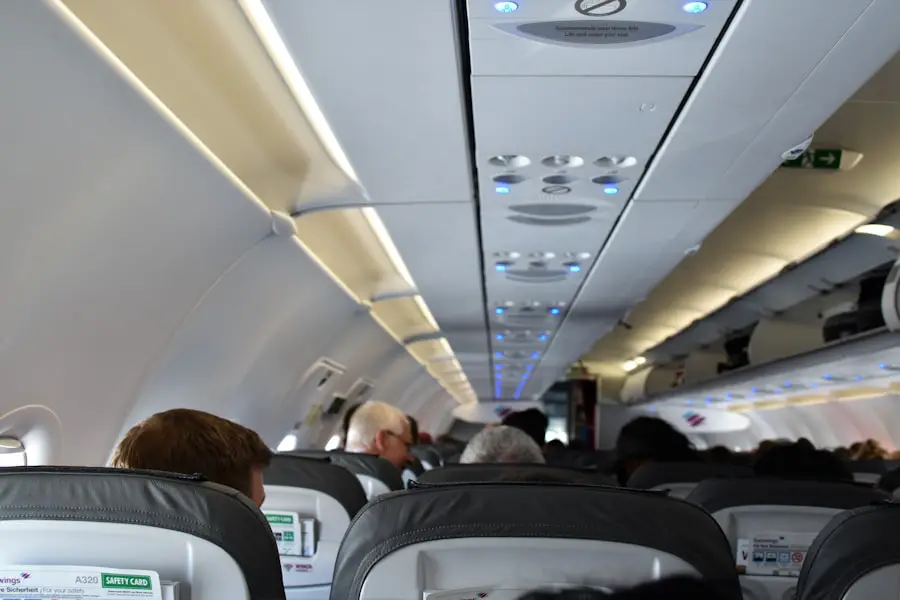
Passenger reviews can help set expectations about seat comfort, meals, customer support, delays, and fee transparency. They are not a substitute for regulatory or accident-record evidence when judging operational safety.
LEVEL uses an unbundled fare model, but not every fare excludes every service. Its official fare overview describes several options:
- Light: The lowest-priced fare, designed for travelers who want to add only selected services.
- Comfort: Includes checked baggage and an onboard menu.
- Extra: Includes baggage, meals, and additional flexibility.
- Premium fares: Offer the Premium cabin with inclusions that depend on the selected Premium fare family.
Seat selection, additional baggage, meals, flexibility, and comfort items may be included or sold separately depending on the fare. Conditions can also vary by market and booking channel.
Pro Tip: Compare the final checkout price after adding baggage, meals, seat selection, and change flexibility. Also compare the number of weekly flights, because an airline with fewer departures may offer fewer same-day recovery options after a cancellation.
For eligible disruptions, passengers may have rights under the European Union’s air-passenger rules. Eligibility depends on factors such as the route, delay length, notice provided, cause of the disruption, and operating carrier.
The Council of the EU gave final approval to an updated passenger-rights framework on July 13, 2026. According to the Council’s announcement, the new rules enter into force 12 months and 20 days after publication in the Official Journal. Travelers should therefore consult the current official EU guidance for the rules applying on their travel date.
How to Check an Airline’s Safety Before Booking
- Identify the operating carrier. The airline selling the ticket may not be the company operating the aircraft.
- Confirm its AOC and regulator. For LEVEL, Spain’s AESA lists Fly Level Barcelona LH, S.L. under ES.AOC.166.
- Check recent occurrences carefully. Separate fatal accidents and hull losses from precautionary returns, diversions, injuries, and minor technical events.
- Review recognized operational audits. IOSA registration is useful supporting evidence but does not replace government certification.
- Check the aircraft and operator together. A familiar aircraft model does not prove that every operator has identical performance.
- Keep service complaints separate from safety findings. Baggage fees, refunds, meals, and seat comfort can affect the trip without showing whether the aircraft was operated safely.
- Check recent regulator and airline notices. Safety records, schedules, operating certificates, and passenger-rights rules can change.
Note: No public database can prove that a future flight will be risk-free. A responsible review evaluates the evidence available at a specific date and avoids treating either a clean fatal-accident record or a single technical event as the whole story.
How LEVEL Airlines Compares to Competitors
LEVEL occupies a narrow market segment: low-cost, long-haul service centered on Barcelona. A useful comparison should consider the operating certificate, schedule, fare inclusions, aircraft, rebooking options, and total trip price rather than assuming that the cheapest or most expensive airline is automatically safer.
- LEVEL vs. Norse Atlantic Airways: Both use an unbundled long-haul model. LEVEL flies Airbus A330-200 aircraft, while Norse Atlantic reports a fleet of Boeing 787 Dreamliners. Aircraft type alone does not establish which carrier is safer. Travelers should compare route frequency, fare inclusions, operating carrier, and disruption options.
- LEVEL vs. British Airways or Iberia: Traditional carriers may include more services or offer broader networks and more recovery options. LEVEL is part of the same IAG group, but it holds its own AOC and remains responsible for its own operation.
- LEVEL vs. other low-cost carriers: Short-haul airlines such as Ryanair use a different route and aircraft model, so their fares and operations are not direct comparisons with a Barcelona-to-Americas flight.
Note: Norwegian Air Shuttle previously competed in the low-cost long-haul market. In January 2021, Norwegian announced that its long-haul operation would not continue as the company refocused on a European short-haul network.
Frequently Asked Questions
Is LEVEL Airlines safe to fly?
Available evidence supports viewing LEVEL as a reasonable airline to fly. It holds Spanish AOC ES.AOC.166, is subject to AESA oversight and European aviation rules, and obtained IOSA registration in June 2025. No airline can be guaranteed risk-free.
Has LEVEL Airlines had any crashes?
The reviewed public record does not show a fatal crash or hull loss attributed to LEVEL since the brand launched in 2017. That does not mean the airline has never experienced a technical issue, diversion, or incident.
What happened to the LEVEL flight on June 8, 2026?
An Airbus A330-202 registered EC-ODA returned to Barcelona after an undercarriage-related issue. Aviation Safety Network classifies the event as an incident, and its entry does not report a fatal outcome or hull loss.
Who regulates LEVEL Airlines?
Spain’s AESA issues and oversees LEVEL’s Air Operator Certificate. The airline must also comply with applicable EU aviation law and EASA rules covering operations, licensing, training, and continuing airworthiness.
What aircraft does LEVEL Airlines use?
LEVEL operates Airbus A330-200 wide-body aircraft on its long-haul routes. Its current fleet page lists a 314-seat configuration, although cabin layouts can change.
Why are LEVEL Airlines tickets so cheap?
LEVEL keeps its entry fares low by selling an unbundled product. The Light fare lets passengers pay for selected extras, while Comfort, Extra, and Premium fare families include different combinations of baggage, meals, flexibility, and cabin benefits.
Does LEVEL fly short-haul routes in Europe?
LEVEL’s current airline operation focuses on long-haul flights between Barcelona and the Americas. The former LEVEL Europe short-haul company ceased operations in 2020.
Is LEVEL operated by Iberia?
LEVEL launched as a commercial brand operated by Iberia. It obtained its own AOC in December 2024 and began using its own “LL” IATA code in December 2025. LEVEL and Iberia remain separate airlines within the IAG group.
Warning: This article provides general safety information, not a guarantee about any future flight. Airline operations, routes, certificates, incident records, travel advisories, and passenger-rights rules can change. Check current information from LEVEL, AESA, EASA, airport authorities, and your government before traveling.
The Bottom Line on LEVEL Airlines Safety
LEVEL has the core credentials expected of a European long-haul airline: a Spanish Air Operator Certificate, continuing regulator oversight, compliance with EU aviation rules, IOSA registration, qualified crews, and Airbus A330-200 aircraft maintained under European airworthiness requirements.
The reviewed record does not show a LEVEL fatal accident or hull loss. However, the June 8, 2026 undercarriage-related return means the airline should not be described as having experienced no incidents at all. The accurate conclusion is that the available evidence does not reveal a pattern of serious accidents, while no airline or future flight can be declared completely risk-free.
For most travelers, the more noticeable trade-offs will involve fare inclusions, seat comfort, schedule frequency, customer support, and recovery options after disruption. Compare the final price after adding the services you need, confirm the operating carrier, and check current official notices before booking.
Sources
- AESA List of Air Operator Certificates — confirms Fly Level Barcelona LH, S.L., AOC ES.AOC.166, and Airbus A330 authorization.
- AESA Air Operator Certificate Guidance — explains Spanish AOC issuance and continuous oversight.
- LEVEL Operating History and IATA Code Announcement — supports the AOC, IOSA, Iberia-brand history, and “LL” code timeline.
- IATA Operational Safety Audit — explains the purpose and scope of IOSA.
- EASA Easy Access Rules for Air Operations — supports flight-crew training, checking, emergency procedures, and commercial operating requirements.
- EASA Continuing-Airworthiness Rules — supports approved maintenance programs, airworthiness management, records, and maintenance-organization requirements.

