

Last Updated on September 10, 2026 by Daniel Globe
Low fares can make travelers wonder whether an airline has also cut corners on safety. Price alone does not answer that question. French bee’s current operating authority, audit status, fleet, and public incident record provide more useful evidence. Those records support a favorable safety assessment, although no airline or aircraft can be considered risk-free.
Quick Answer
French bee appears to be a safe airline based on its current regulatory status and public record. It holds a valid French air operator certificate, remains an IATA member and therefore IOSA-registered, operates six Airbus A350s, and has no fatal accident in the records reviewed through July 29, 2026.
Key Takeaways
- France’s official operator list identifies French bee’s air operator certificate as FR.AOC.0097 and places it under DSAC-N technical oversight.
- The listed fleet contains four Airbus A350-900s and two A350-1000s.
- French bee is a current IATA member. IATA requires every member airline to maintain IOSA registration.
- No fatal accident appears in the public records reviewed through July 29, 2026.
- A serious Paris-Orly incident occurred on February 4, 2020, but the BEA reported no injuries or aircraft damage.
- IOSA registration and an accident-free record are positive indicators, but neither makes future travel risk-free.
What’s in This Article
- How to Evaluate an Airline’s Safety
- Safety Measures and Regulatory Oversight
- Pilot Training and Experience
- Aircraft Maintenance and Inspections
- Safety Ratings and IOSA Registration
- Incident and Accident History
- What Passenger Reviews Can Tell You
- How French Bee Compares With Other Low-Cost Carriers
- What to Check Before Booking
- Frequently Asked Questions
- Sources
Disclosure: As an Amazon Associate I earn from qualifying purchases. Some links on this page are affiliate links, at no extra cost to you.
How to Evaluate an Airline’s Safety
No single score can prove that an airline is safe. A stronger review considers several independent signals together:
- Operating authority: Does the airline hold a valid air operator certificate from its national aviation authority?
- Government oversight: Which authority supervises the airline, and which operating rules apply?
- Accident and incident history: What do official investigation reports and established aviation databases show?
- Operational audits: Does the airline maintain IOSA registration or another recognized audit status?
- Fleet and airworthiness: What aircraft does the airline operate, and which continuing-airworthiness rules apply?
- Transparency: Can travelers verify important claims through official sources rather than promotional rankings?
Ticket price and customer-service ratings are weak safety measures. A low fare may reflect a denser cabin, optional meals, baggage fees, direct sales, or a smaller route network. It does not exempt an airline from the operating and airworthiness requirements that apply in its jurisdiction.
Note: A valid operating certificate, IOSA registration, and a favorable accident record are meaningful indicators. They are not guarantees that a future flight will be free from turbulence, technical problems, diversions, or accidents.
Safety Measures and Regulatory Oversight
French bee operates under French air operator certificate FR.AOC.0097. France’s official list of valid aircraft operators assigns the airline’s technical supervision to DSAC-N, part of the French civil aviation oversight system. The same list identifies four A350-900s and two A350-1000s on the certificate.
As a French commercial airline, French bee must follow the applicable European air-operations framework. The EASA Air Operations rules cover areas such as operator responsibilities, commercial air transport, crew requirements, training, operational procedures, and flight-time limitations.
EASA develops and maintains the common European framework, while the responsible French authority oversees the operator and its certificate. This distinction matters: EASA rules do not replace day-to-day national supervision of the airline.
Pilot Training and Experience
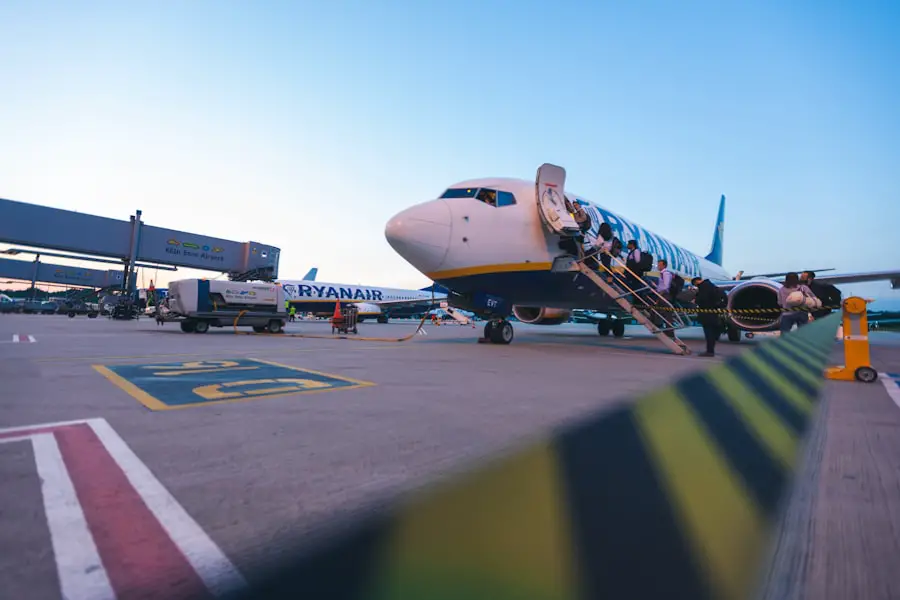
French bee states that it selects and trains its pilots and cabin crew for operational and emergency duties. Public sources do not provide a complete breakdown of each pilot’s previous employers, total flight hours, or individual simulator results, so claims about those details should be treated cautiously.
What can be verified is the regulatory framework. Commercial operators must maintain approved training and checking programs. These include initial and recurrent training, aircraft-type qualifications, emergency procedures, crew coordination, and checks designed to confirm continued proficiency.
Simulator training is especially useful for events that crews should not reproduce in normal service, such as engine failures, windshear warnings, rejected takeoffs, system failures, and difficult go-arounds. The 2020 French bee incident also shows why training for surprise, workload, communication, and subtle pilot incapacitation matters.
Aircraft Maintenance and Inspections
French bee’s fleet consists entirely of Airbus A350 aircraft. An all-A350 fleet can simplify parts of training, maintenance planning, spare-parts management, and technical procedures, but fleet uniformity alone does not prove that maintenance is effective.
The airline must keep each aircraft airworthy under the applicable European continuing-airworthiness system. These requirements cover maintenance programs, records, mandatory airworthiness instructions, defect handling, approved maintenance organizations, and return-to-service documentation. EASA provides further information through its Part-CAMO and Part-CAO continuing-airworthiness guidance.
| Maintenance Metric | What Can Be Verified | What Is Not Publicly Disclosed |
| Number of Aircraft Inspections | French bee operates under a valid AOC and applicable continuing-airworthiness requirements. | The airline does not publish a yearly total for routine, line, base, or regulatory inspections. |
| Average Maintenance Downtime | Aircraft must be released to service through approved maintenance and documentation processes. | No reliable public average is available for maintenance downtime in hours. |
| Scheduled Maintenance Completion | Operating rules require an approved maintenance program and control of mandatory maintenance actions. | French bee does not publish an annual percentage-completion figure. |
The lack of public inspection counts does not by itself show poor maintenance. Airlines rarely publish detailed internal maintenance performance data. It does mean that readers should avoid repeating precise inspection, downtime, or completion claims unless an official report supports them.
Safety Ratings and IOSA Registration
French bee is listed in IATA’s current airline directory as an IATA member with airline designator BF. IATA states that all member airlines must maintain registration with the IATA Operational Safety Audit, commonly called IOSA. IATA previously reported that French bee had held IOSA registration since 2019.
IOSA assesses an airline’s operational management and control systems against standardized requirements. Its scope includes organization, flight operations, operational control, aircraft engineering and maintenance, cabin operations, ground handling, cargo, and security management.
Note: IOSA is an audit-registration program, not a government operating certificate and not an accident-free guarantee. French bee must maintain both its regulatory authority to operate and the audit status required for IATA membership.
Pro Tip: Verify current status rather than relying on an old badge or article. Check French bee in IATA’s airline directory, then review IATA’s current IOSA requirements.
Incident and Accident History
No fatal French bee accident appears in the public records reviewed through July 29, 2026. That is a favorable part of the airline’s history, but it should be read alongside the airline’s operating history, fleet size, number of flights, and known incidents.
The most significant published event occurred on February 4, 2020, when Airbus A350-900 F-HREV was approaching Paris-Orly after a long-haul flight. A predictive windshear warning prompted a go-around. The aircraft then deviated vertically and laterally from the expected flight path, triggered a low-energy alert, and came into conflict with a departing aircraft.
The French BEA final report found that the copilot experienced a subtle cognitive incapacitation during the high-workload sequence. The captain eventually took control, stabilized the aircraft, and completed another approach. The BEA recorded no injuries or aircraft damage.
The investigation focused on more than the individual crew. It examined surprise, workload, communication, control transfer, automation use, and the low published missed-approach altitude at Orly. The report encouraged operators to use the event as a training scenario and recommended studying a higher missed-approach altitude at the airport.
The 2020 event was serious because several hazards developed during the go-around, not because it caused injury or aircraft damage. The flight landed without further incident.
What Passenger Reviews Can Tell You About French Bee
Passenger reviews can help you judge cabin comfort, staff communication, boarding, delays, baggage handling, and how clearly the crew delivers safety briefings. They may also show whether travelers felt calm and informed during turbulence, a diversion, or a technical delay.
Reviews cannot verify an airline’s maintenance records, pilot-check results, safety-management system, or compliance with every regulatory requirement. Passengers normally see only a small part of the operation, and service complaints can be mistaken for evidence about technical safety.
For that reason, a review saying the aircraft felt modern or the crew seemed professional may be reassuring, but it should remain secondary to official operating records, investigation reports, and audit status.
How French Bee Compares With Other Low-Cost Carriers
French bee follows a long-haul, low-cost business model. Low-cost airlines commonly reduce fares through choices such as high seat density, paid extras, limited fare flexibility, direct online sales, and a focused fleet or route network.
Those commercial choices do not remove the airline from the safety rules that apply to its operating certificate. A French low-cost airline and a French full-service airline must both meet the applicable regulatory requirements for operations, training, airworthiness, and oversight.
French bee’s useful distinguishing points are its all-A350 fleet, current French AOC, current IATA membership, IOSA registration, and absence of a fatal accident in the records reviewed. Those factors allow a fair comparison. Claims that it is automatically safer because its aircraft are newer—or less safe because its fares are lower—go beyond the available evidence.
What to Check Before Booking
- Confirm current operating status. Check that the airline still appears in the responsible authority’s operator records.
- Verify current IATA and IOSA status. Do not rely only on an article that says the airline passed an audit several years ago.
- Read the official incident report. Focus on the event, outcome, findings, and safety actions rather than dramatic summaries.
- Separate service from safety. Delays, fees, seat comfort, and customer support may affect your trip without proving that flight operations are unsafe.
- Check your specific flight. Confirm the operating carrier, aircraft information when available, airport, baggage rules, and current flight status.
Warning: “No fatal accidents on record” describes past records found during this review. It does not predict the outcome of a future flight or eliminate the normal risks of commercial aviation.
Frequently Asked Questions
Is French bee a safe airline?
French bee appears to be a safe airline based on the evidence reviewed. It holds a valid French AOC, is a current IATA member, must maintain IOSA registration, operates an all-A350 fleet, and has no fatal accident in the public records reviewed through July 29, 2026. No airline is risk-free.
What safety measures does French bee have in place?
French bee operates under French civil aviation oversight and the applicable European Air Operations framework. These systems require approved operational procedures, crew training and checking, maintenance control, continuing airworthiness, safety management, and regulatory supervision.
Has French bee had any major safety incidents?
A serious incident occurred at Paris-Orly on February 4, 2020. During a go-around, the aircraft deviated from its intended flight path and triggered a low-energy alert. The flight later landed without further incident, and the BEA reported no injuries or aircraft damage.
Does an aviation authority regulate French bee?
Yes. French bee holds French air operator certificate FR.AOC.0097. France’s official operator list assigns its technical supervision to DSAC-N, and the airline must comply with the applicable European Air Operations and continuing-airworthiness rules.
Is French bee IOSA-certified?
The more accurate term is IOSA-registered. French bee is listed as a current IATA member, and IATA requires member airlines to maintain IOSA registration. IOSA is an operational audit program, not a government certificate or a guarantee against accidents.
Does French bee use old aircraft?
French bee operates an all-Airbus A350 fleet. France’s official operator list identifies four A350-900s and two A350-1000s. Aircraft age alone does not determine safety because airworthiness depends on approved maintenance, inspections, records, and regulatory compliance.
Does a low fare mean French bee is less safe?
No direct link can be assumed. Low-cost airlines generally reduce fares through cabin density, optional services, distribution, fleet, and network decisions. They still must meet the operating and airworthiness requirements attached to their regulatory jurisdiction and air operator certificate.
French bee’s public record supports a favorable assessment: it holds a valid operating certificate, remains subject to French and European oversight, maintains the IOSA status required for IATA membership, and has no fatal accident in the records reviewed. Its 2020 serious incident deserves honest coverage, but the event ended without injury or aircraft damage and produced useful safety findings. Check the current official records before booking rather than relying on price, promotional ratings, or passenger reviews alone.
Sources
- French Ministry valid air operator certificate list — French bee’s AOC, technical oversight, and listed A350 fleet.
- EASA Air Operations regulations and continuing-airworthiness guidance — European operating, training, and airworthiness framework.
- French bee safety commitments — the airline’s published statements on audits, maintenance, and crew preparation.
- IATA French Bee member listing, IOSA program, and French bee’s IATA membership announcement — current membership, IOSA requirements, and registration history.
- BEA final report on the February 4, 2020 Paris-Orly incident — event sequence, outcome, findings, safety lessons, and recommendations.
- Aviation Safety Network French bee occurrence record — independent database entry for the 2020 nonfatal incident.

