
Last Updated on September 10, 2026 by Daniel Globe
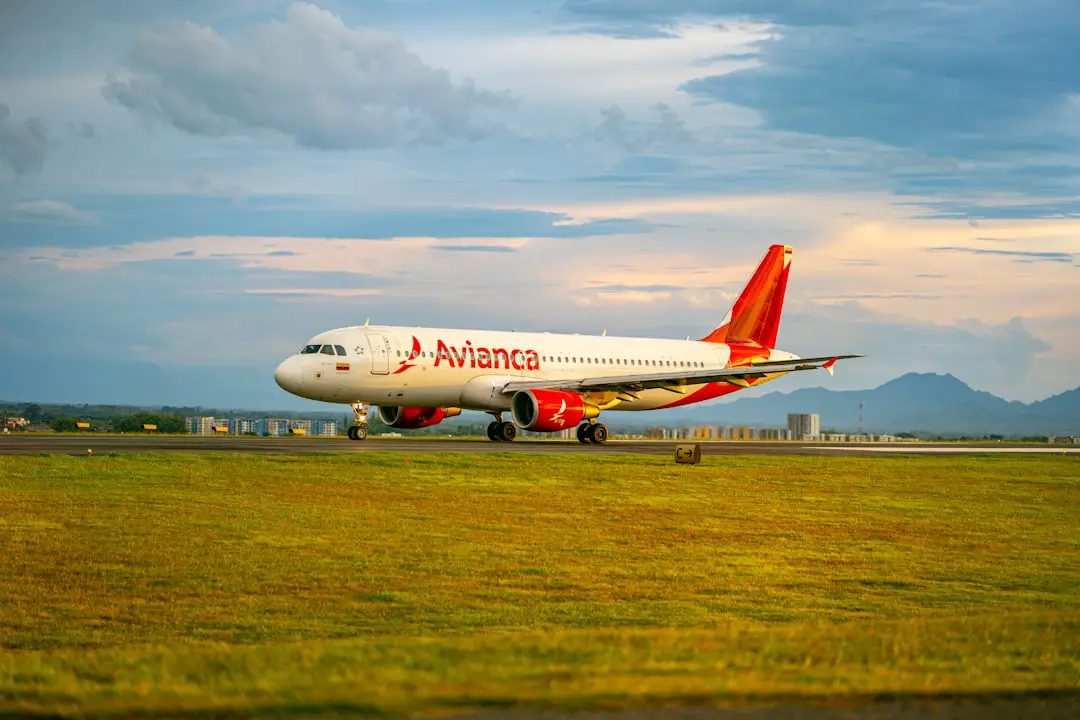
Avianca is generally considered a safe airline based on its current regulatory standing, IOSA registration, safety-management systems, and modern operating record. Its history includes several serious accidents and the 1989 bombing of Flight 203, but Avianca’s mainline public accident record shows no fatal passenger accident since Flight 052 in January 1990.
Quick Answer
Yes, Avianca is generally safe to fly. It is an IATA member that must remain IOSA registered, follows Colombian aviation rules enforced by Aerocivil, and currently holds a 7/7 independent safety score from AirlineRatings. That score supports the verdict, but it is not a guarantee that technical incidents cannot occur.
Key Takeaways
- Current verdict: Avianca’s regulatory standing, IOSA registration, operating systems, and recent mainline record support classifying it as a generally safe airline.
- Independent rating: AirlineRatings currently gives Avianca 7/7, its highest standard safety score, but this is an independent rating rather than government certification.
- Safety systems: Avianca’s published policy includes a Safety Management System, Fatigue Risk Management System, Security Management System, quality assurance, emergency planning, training, and confidential reporting.
- Historical record: Major fatal events include Flights 011 in 1983, 410 in 1988, 203 in 1989, and 052 in 1990.
- Recent events: Selected technical diversions in 2024, 2025, and July 2026 ended in safe landings. A diversion alone does not prove that an airline is unsafe.
What’s in This Article
- Avianca at a Glance
- Avianca’s Safety Measures and Protocols
- What IOSA Registration Means
- How to Read Avianca’s Safety Record
- Incident and Accident History
- Avianca’s Fleet and Maintenance Practices
- Pilot Training and Experience
- Safety Ratings and Certifications
- Regulatory Compliance and Oversight
- How Passengers Can Stay Safer
- Check the Operating Airline
- Comparison with Other Airlines
- Is Avianca a Safe Airline?
- Frequently Asked Questions
- Sources
Disclosure: As an Amazon Associate I earn from qualifying purchases. Some links on this page are affiliate links, at no extra cost to you.
Avianca at a Glance
Avianca began in Colombia in 1919 under the name SCADTA, giving it more than a century of operating history. It is now a Star Alliance member and part of Abra Group, which includes several passenger, cargo, and loyalty businesses.
According to Avianca’s current corporate information, the group operates more than 155 routes and 700 daily flights. Its approximately 140 Airbus A320-family and Boeing 787 aircraft connect more than 80 destinations in over 25 countries across the Americas and Europe.
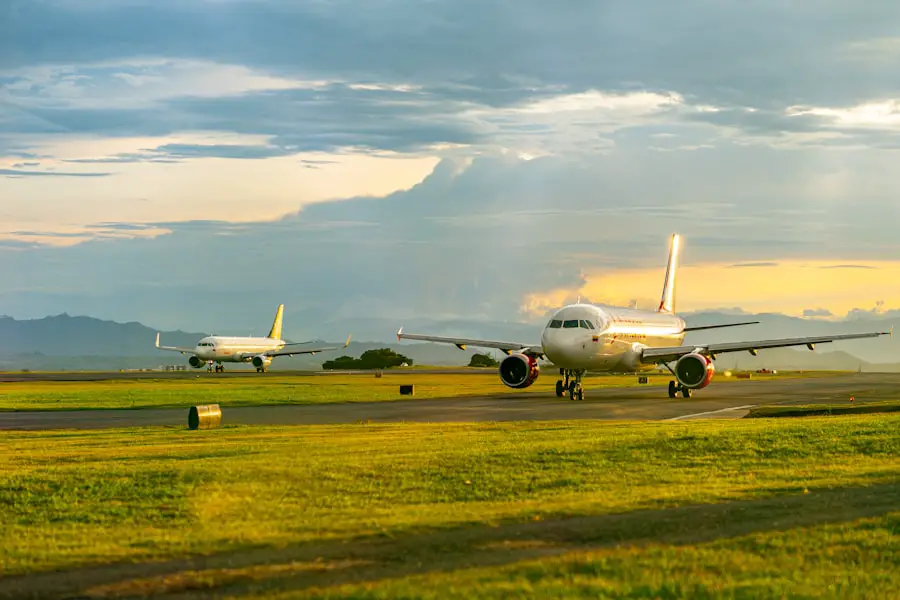
Avianca uses A320-family aircraft mainly for short- and medium-haul services and Boeing 787 Dreamliners for long-haul routes. Its network size, alliance membership, or age does not prove safety by itself, but these details show the scale of the operation that its safety systems must support.
Avianca’s Safety Measures and Protocols
Avianca operates under Colombian aviation regulations enforced by Aerocivil. Those national regulations are developed in line with international standards and recommended practices from the International Civil Aviation Organization.
The airline’s published Integral Security Policy identifies several systems and programs used across the organization:
- Safety Management System (SMS): identifies hazards, evaluates risk, and supports corrective action.
- Fatigue Risk Management System (FRMS): addresses fatigue as an operational safety risk.
- Security Management System (SeMS): manages civil-aviation security threats and responsibilities.
- Quality Assurance program: checks whether procedures and management systems work as intended.
- Emergency Response Plan: defines responsibilities and coordination during serious events.
- Reporting system: allows confidential or anonymous reporting of hazards, errors, fatigue, and organizational problems.
The policy also states that safety standards take priority over commercial needs and that personnel should not perform duties without the required skills and training.
Note: A published safety policy does not prove that every flight will be incident-free. Its value is that it establishes accountable systems for identifying hazards, reporting problems, training personnel, and improving procedures.
What IOSA Registration Means
Avianca is an IATA member. IATA requires its airline members to obtain and maintain registration with the IATA Operational Safety Audit program.
IOSA is an internationally recognized audit framework for an airline’s operational management and control systems. It is not an aircraft airworthiness certificate, a government operating licence, or a promise that no incident will occur.
What Does the IOSA Audit Check?
The IOSA Standards Manual covers eight main operational areas:
- Organization and management systems
- Flight operations
- Operational control and flight dispatch
- Aircraft engineering and maintenance
- Cabin operations
- Ground handling
- Cargo operations
- Security management
In 2024, IOSA moved to a risk-based model. The audit scope now gives more attention to risks specific to the airline and includes an assessment of the maturity of safety-critical systems.
How to Read Avianca’s Safety Record
An airline’s safety record should not be judged from one diversion, one old accident, or one rating. A useful review considers several factors together:
- Current regulatory and operating status
- IOSA or equivalent operational audits
- Fatal and serious accident history
- The number and severity of recent incidents
- How crews and the airline responded
- Fleet maintenance and approved training systems
- The airline’s total flight volume
Avianca reported operating more than 262,000 flights and carrying nearly 37 million customers in 2025. Incident reports are more meaningful when viewed against the scale of the airline’s operation.
Avianca’s most serious historical events occurred in the 1980s and 1990. The selected recent events reviewed below were non-fatal and ended in safe landings, but the list is not an exhaustive record of every delay, bird strike, rejected takeoff, warning indication, or maintenance event.
Note: A precautionary diversion often shows that pilots are following procedures rather than taking an unnecessary risk. The event still deserves investigation, especially when maintenance, training, or equipment problems may have contributed.
Incident and Accident History
| Date | Event | What Happened | Outcome |
|---|---|---|---|
| November 27, 1983 | Flight 011 | A Boeing 747 struck terrain during its approach to Madrid. The investigation identified an incorrect approach path, descent below safe altitude, crew coordination problems, and other contributing factors. | 181 fatalities; 11 survivors |
| March 17, 1988 | Flight 410 | A Boeing 727 struck mountainous terrain after departing Cúcuta. Historical records describe it as a controlled-flight-into-terrain accident. | 143 fatalities |
| November 27, 1989 | Flight 203 | The aircraft was destroyed by an explosive device shortly after departing Bogotá. This was an act of unlawful interference rather than an operational accident. | 107 people aboard and 3 people on the ground died |
| January 25, 1990 | Flight 052 | A Boeing 707 crashed at Cove Neck, New York, after fuel exhaustion. The investigation identified inadequate fuel management, communication failures, dispatch issues, weather, fatigue, and air-traffic factors. | 73 fatalities; 85 survivors |
| October 31, 2024 | Flight AV46 | A Boeing 787 operating from Bogotá to Madrid experienced a cabin-pressurization problem and diverted to Ponta Delgada in the Azores. | Safe landing; no reported injuries |
| April 23, 2025 | Flight AV17 | A Boeing 787 returned to Madrid after the crew received an engine-related indication shortly after departure. | Safe landing; no reported injuries |
| July 1, 2026 | Flight AV55 | A Boeing 787 flying from Paris to Bogotá diverted to Madrid after a reported technical indication involving the left engine. | Safe landing; passengers continued on another aircraft |
The historical accidents were severe and should not be minimized. They also occurred under older aircraft, navigation, crew-training, communication, security, and regulatory environments. Modern safety assessments should consider that history while giving appropriate weight to the airline’s present systems and recent record.
Avianca’s Fleet and Maintenance Practices
Avianca’s current passenger fleet is centered on the Airbus A320 family for short- and medium-haul routes and the Boeing 787 Dreamliner for long-haul flying. The airline’s official fleet page reports more than 140 aircraft.
Aircraft maintenance must follow approved programs based on manufacturer instructions, airworthiness requirements, the operator’s manuals, and Aerocivil regulations. This includes routine line inspections, scheduled checks, defect tracking, component replacement, and heavier maintenance at approved intervals.
Third-party fleet trackers placed Avianca’s average fleet age at roughly nine years in late 2025. That estimate changes whenever aircraft enter or leave service. More importantly, aircraft age alone does not determine safety. Older aircraft can operate safely when maintained correctly, while a newer aircraft still requires effective inspections, trained personnel, and defect control.
Avianca has also reconfigured A320 cabins with newer Recaro seats and offers flatbed Business Class seating on selected long-haul Boeing 787 flights. Those cabin products may affect comfort and efficiency, but they are not direct measures of operational safety.
Pilot Training and Experience
Licensing and Aircraft Qualification
Pilots must hold the licences, medical certification, language proficiency, and aircraft qualifications required by Aerocivil. A pilot assigned to a particular aircraft type must hold the appropriate type rating or complete approved training before conducting unsupervised line operations.
Initial and Recurrent Training
Airline pilot training normally combines ground instruction, simulator sessions, supervised line flying, proficiency checks, and recurrent training. The program covers normal operations, abnormal situations, emergency procedures, aircraft systems, decision-making, and threat-and-error management.
Crew Resource Management
Crew Resource Management training focuses on communication, workload, leadership, monitoring, situational awareness, and joint decision-making. These skills are especially important because communication and crew coordination contributed to some of Avianca’s historical accidents.
Safety Reporting and Fatigue Management
Avianca’s policy supports continuous training, fatigue reporting, confidential hazard reporting, and a non-punitive approach to unintentional human error. Intentional violations, criminal conduct, recklessness, and deliberate unsafe behavior are excluded from those protections.
Safety Ratings and Certifications
As of July 24, 2026, AirlineRatings gives Avianca a 7/7 safety score and lists it as IOSA registered. The rating considers areas such as operational audits, recent fatal-accident history, pilot-related events, operating standards, and regulatory restrictions.
A 7/7 score is reassuring, but it should be understood correctly:
- It is an independent rating, not a government certificate.
- It does not mean the airline has never had an accident or technical incident.
- It does not rank customer service, legroom, baggage handling, food, or refund performance.
- The score can change when the rating organization updates its criteria or receives new information.
Pro Tip: When checking an airline, look at the operating carrier, current regulator status, IOSA registration, serious accident history, and recent incident response together. Do not rely on a single star score or social-media video.
Regulatory Compliance and Oversight
Colombia’s Civil Aviation Authority, Aerocivil, is the primary national authority overseeing Avianca’s Colombian operations. Its Reglamentos Aeronáuticos de Colombia cover areas such as commercial operations, airworthiness, maintenance, personnel licensing, training organizations, civil-aviation security, and safety management.
ICAO does not directly operate Avianca’s routine oversight program. Instead, ICAO establishes international standards and recommended practices that member states use when creating and enforcing national aviation regulations.
IATA is an airline trade association rather than a government regulator. Its IOSA program supplements regulatory oversight by auditing operational management and control systems against a common industry standard.
How Avianca Keeps Passengers and Crew Safe
Operational safety depends mainly on the airline, crew, maintenance providers, airports, air-traffic services, manufacturers, and regulators. Passengers can still reduce their chance of injury by following a few simple practices:
- Keep your seat belt fastened whenever you are seated, even when the sign is off.
- Listen to the safety briefing and locate the nearest usable exits.
- Place baggage fully under the seat or in the overhead bin so it cannot block an aisle.
- Follow cabin-crew instructions immediately during turbulence, smoke, unusual odors, or an evacuation.
- Tell a crew member about damaged seats, loose panels, smoke, burning smells, leaking batteries, or other immediate concerns.
- Do not open, move, or charge a device that is overheating, smoking, swelling, or damaged.
The FAA’s passenger-safety guidance recommends that passengers remain belted while seated because unexpected turbulence can occur even when the seat-belt sign is off.
Warning: Never ignore smoke, a burning smell, a hot battery, or a damaged electronic device. Alert a crew member immediately instead of placing the item in a bag or overhead bin.
Check the Operating Airline
A ticket sold under the Avianca brand may sometimes involve a different Avianca Group company, a regional operator, a codeshare partner, or a wet-leased aircraft and crew. Your booking confirmation should identify the airline that actually operates each flight.
This distinction matters because accident records, regulator oversight, aircraft types, and audit registrations may be recorded under the operating airline’s legal name rather than the marketing name shown most prominently during booking.
Before an important trip, check the “operated by” line on your itinerary. You can then confirm the operating carrier’s current regulator status and safety information instead of assuming that every partner has an identical record.
Comparison with Other Airlines
LATAM and Copa are other large Latin American airline groups with extensive international networks. Comparing them with Avianca requires more than asking which airline has experienced the fewest publicly reported diversions.
| Comparison Factor | What to Check |
|---|---|
| Operating carrier | The legal airline operating your specific flight, not only the marketing brand. |
| Regulatory standing | Whether the operator holds a valid certificate and faces any current restrictions. |
| Operational audits | Current IOSA registration or another recognized operational audit where applicable. |
| Serious-event history | Fatal accidents, serious incidents, investigation findings, and corrective actions. |
| Flight volume | The number of incidents relative to the size and frequency of the operation. |
| Service quality | Evaluate comfort, baggage rules, support, punctuality, and refunds separately from safety. |
Avianca, LATAM, and Copa operate under national regulatory systems informed by global aviation standards. A traveler should avoid declaring one categorically safer based only on online reviews or the number of technical returns reported during a short period.
Products Worth Considering


Is Avianca a Safe Airline?
Yes. Based on its current regulatory standing, mandatory IOSA registration as an IATA member, published safety-management systems, 7/7 independent rating, and modern mainline accident record, Avianca is generally a safe airline to fly.
The balanced answer should still acknowledge its history. Avianca suffered major fatal accidents in 1983, 1988, and 1990, and Flight 203 was destroyed by a bomb in 1989. Those events remain an important part of its record.
More recent technical events in 2024, 2025, and July 2026 ended in safe landings. They show that Avianca is not incident-free, but they do not by themselves overturn the broader safety verdict. The crew response, investigation findings, maintenance corrections, regulator action, and frequency of serious events matter more than the existence of a diversion alone.
Safety and service quality should also be judged separately. A passenger may dislike a fare rule, baggage fee, seat, delay, or customer-service response without that experience proving that the airline’s flight operation is unsafe.
Frequently Asked Questions
Is Avianca a safe airline?
Yes. Avianca is an IATA member that must remain IOSA registered, operates under Aerocivil oversight, maintains formal safety-management systems, and currently has a 7/7 independent safety rating. Its mainline public accident record shows no fatal passenger accident since January 1990.
What is Avianca’s safety rating?
As of July 24, 2026, AirlineRatings displays a 7/7 safety score for Avianca and lists it as IOSA registered. The score is an independent assessment, not government certification or a guarantee against future incidents.
What safety systems does Avianca use?
Avianca’s published policy includes a Safety Management System, Fatigue Risk Management System, Security Management System, quality assurance, emergency planning, personnel training, risk assessment, and confidential or anonymous hazard reporting.
Has Avianca had fatal accidents?
Yes. Major fatal events include Flight 011 in 1983, Flight 410 in 1988, the bombing of Flight 203 in 1989, and Flight 052 in 1990. The bombing was an act of unlawful interference rather than an operational accident.
Has Avianca had a fatal passenger accident since 1990?
The reviewed public record shows no fatal passenger accident involving Avianca’s mainline operation since Flight 052 on January 25, 1990. Travelers should check the operating carrier when a flight is provided by a subsidiary or partner.
Does a technical diversion mean Avianca is unsafe?
Not necessarily. Pilots may divert because continuing the flight would reduce the available safety margin. The important questions are what triggered the event, how the crew responded, what investigators found, and whether the airline corrected any maintenance or procedural problem.
Who regulates Avianca?
Aerocivil is the primary national authority for Avianca’s Colombian operations. ICAO creates international standards used by national authorities, while IATA operates the IOSA industry audit program.
Are Avianca customer reviews a reliable safety measure?
Customer reviews can help you judge service, baggage handling, comfort, communication, and refund experiences. They are not a reliable substitute for regulator status, operational audits, investigation reports, or serious-accident data.
Safety Disclaimer: This article is for general informational purposes. Airline ratings, fleets, routes, incidents, and regulatory conditions can change. Check the operating carrier, Aerocivil notices, airline updates, and your government’s current travel guidance before flying.
Sources
- Avianca Corporate News Center and Avianca Fleet — current network, group, flight-volume, destination, and aircraft information.
- Avianca Integral Security Policy — SMS, FRMS, SeMS, quality assurance, emergency planning, training, risk management, and reporting commitments.
- IATA Operational Safety Audit and IOSA Standards Manual — registration requirements, audit purpose, risk-based approach, and operational areas.
- Aerocivil Regulations — Colombian operating, licensing, maintenance, security, and safety-management framework.
- NTSB Flight 052 Investigation, U.S. Department of Justice Flight 203 Record, Flight 011 Record, and Flight 410 Record — selected historical event details.
- AirlineRatings Avianca Safety Page and FAA Passenger Safety Information Guidance — current independent rating and passenger seat-belt guidance.
