
Last Updated on August 26, 2026 by Daniel Globe
American Airlines is one of the largest U.S. carriers, but whether it is a good airline for your trip depends on more than its size. Its biggest advantages are an enormous route network, useful oneworld connections, a strong loyalty ecosystem, and increasingly broad free Wi-Fi. Its main drawbacks include checked-bag costs, restrictive Basic Economy rules, variable aircraft experiences, and inconsistent punctuality.
Quick Answer
American Airlines is a solid choice for travelers who value a huge U.S. network, oneworld connections, AAdvantage benefits, and increasingly broad free Wi-Fi access. Its weaker points are uneven on-time performance, checked-bag costs, and restrictive Basic Economy rules. Whether it is “good” depends heavily on your route, fare type, aircraft, and tolerance for disruptions.
Key Takeaways
- American serves more than 350 destinations and operates one of the largest airline networks in the world.
- The U.S. DOT reported a 70.7% on-time arrival rate for the American Airlines marketing network in June 2026, so punctuality is a meaningful weakness to consider.
- AAdvantage members now get free high-speed Wi-Fi on most domestic flights and select international flights where eligible connectivity is installed.
- Basic Economy tickets bought on or after December 17, 2025 do not earn AAdvantage miles or Loyalty Points, and they carry additional restrictions.
- American can be especially attractive if you live near one of its major hubs, value oneworld partners, or can use AAdvantage elite or credit-card baggage benefits.
Disclosure: As an Amazon Associate I earn from qualifying purchases. Some links on this page are affiliate links, at no extra cost to you.
Safety and Reliability
Safety should be separated from customer-service ratings, delays, and comfort. American Airlines operates as a U.S. Part 121 carrier under Federal Aviation Administration oversight. The FAA’s American Certificate Management Office has specific certificate-management responsibility for American Airlines Inc., while the FAA’s broader air-carrier safety organization oversees certification, surveillance, operating procedures, crew qualifications, and maintenance requirements for Part 121 airlines. You can review the FAA’s American Airlines oversight information.
That regulatory oversight should not be interpreted as meaning that American-branded operations have never experienced a serious accident. On January 29, 2025, a CRJ700 operated by PSA Airlines as American Airlines Flight 5342 collided with a U.S. Army Black Hawk helicopter near Ronald Reagan Washington National Airport. All 67 people aboard the two aircraft died. PSA Airlines was the regional operator; the flight was not operated by American Airlines mainline.
In January 2026, the National Transportation Safety Board said systemic failures involving airspace design, safety oversight, and risk management contributed to the collision and issued extensive recommendations. Travelers who want the official findings can read the NTSB’s 2026 summary of the investigation.
Note: Airline safety, service quality, and punctuality are different questions. A flight can be operated under strict regulatory safety requirements while an airline still receives mixed scores for delays, baggage handling, seating, or customer service.
Fleet and Route Network
American’s network is one of its clearest strengths. According to American Airlines Group’s 2025 annual filing, the carrier and its regional partners serve more than 350 destinations around the world through major hubs including Charlotte, Chicago, Dallas/Fort Worth, Los Angeles, Miami, New York, Philadelphia, Phoenix, and Washington, D.C.
As of December 31, 2025, American operated 1,013 mainline aircraft, while American Eagle regional operators collectively operated another 567 aircraft. The mainline fleet includes Airbus A319, A320, A321, A321neo and A321XLR aircraft along with Boeing 737, 777 and 787 families. The full fleet figures are available in American Airlines Group’s 2025 Form 10-K.
This scale can be especially useful for travelers near an American hub because there may be several departure times, nonstop options, or same-day alternatives. The network also extends far beyond American-operated aircraft through alliance and partner airlines.
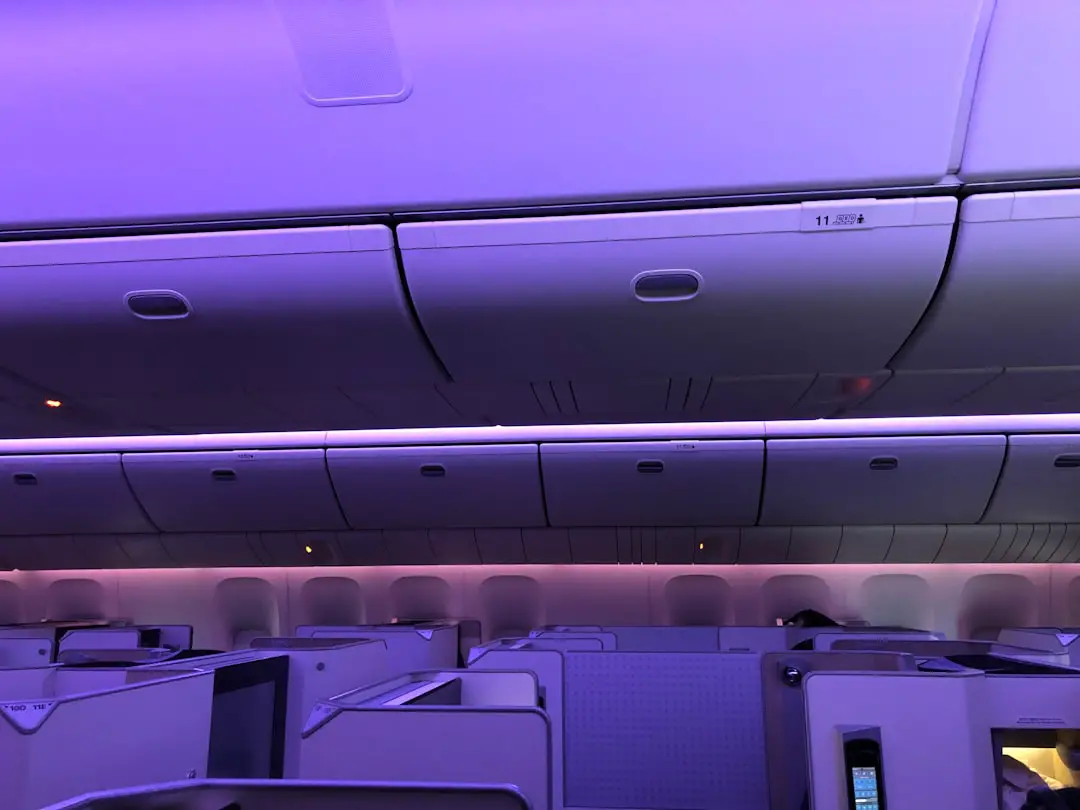
The aircraft matters, however. An older Airbus A319 on a short domestic flight can provide a very different experience from a Boeing 787 or the newer Airbus A321XLR. American’s A321XLR entered service with Flagship Suite lie-flat seats, Premium Economy, seatback entertainment, power, and high-speed connectivity. Before paying extra for a specific cabin, check the aircraft type and seat map rather than assuming every American flight offers the same product.
Customer Service and Satisfaction
Customer service is one of the hardest airline qualities to score because the experience can change by airport, crew, disruption, and fare type. A routine nonstop flight may require almost no staff assistance, while a cancellation or missed connection can turn rebooking support into the most important part of the trip.
American’s digital tools allow travelers to manage many routine needs through aa.com and its mobile app. The airline also publishes a customer service plan explaining what it provides during disruptions.
For significant delays or cancellations caused by American, the airline says it will rebook passengers on its next available flight at no additional cost. If no American flight is available until the next day, its plan provides for rebooking on a partner airline. For qualifying controllable disruptions, American also commits to meal vouchers after a long enough delay and hotel accommodation plus transportation when an overnight stay is required away from the passenger’s home city.
Those protections are different when the disruption is outside American’s control, such as severe weather. In those situations, American generally rebooks travelers but does not promise to cover meals or overnight accommodation. The U.S. Department of Transportation maintains a public airline customer-service dashboard for comparing these commitments.
Service expectations also depend on what you are comparing. Premium international airlines such as Singapore Airlines emphasize a different cabin-service model. American serves everything from low-priced Basic Economy trips to premium Flagship products, so the fare, route, aircraft, and cabin should be part of any fair comparison.
Pricing and Loyalty Programs
American uses dynamic pricing, so the cheapest airline can change from one route or travel date to another. The base fare alone is not enough to judge value. Compare the final cost after checked bags, seat selection, fare restrictions, change flexibility, airport choice, and connection time.
| 2026 factor | What travelers should know |
|---|---|
| Network | More than 350 destinations across American’s global network. |
| Mainline fleet | 1,013 aircraft as of December 31, 2025. |
| Basic Economy mileage earning | Tickets bought on or after December 17, 2025 do not earn AAdvantage miles or Loyalty Points. |
| Wi-Fi | Free high-speed service for AAdvantage members on most domestic flights and select international flights where supported. |
| Checked bag | Fees vary by route and fare. On many common U.S. and short-haul itineraries, current Main Cabin pricing is $45 online or $50 at the airport for the first checked bag. |
Is AAdvantage Worth Joining?
For most people who fly American, joining AAdvantage is useful even without elite status. Membership is central to American’s loyalty system and, in 2026, is also required to access the airline’s free high-speed Wi-Fi benefit where available.
AAdvantage members earn miles and Loyalty Points from eligible activities, while higher status levels can unlock baggage allowances, priority privileges, upgrades, and other benefits. American kept its published status and Loyalty Point Reward thresholds unchanged for the 2026 qualification year. The latest details are on American’s 2026 AAdvantage updates page.
One important 2026 change affects complimentary upgrades on select three-cabin Hawaii and transcontinental routes. Beginning August 25, 2026, eligible status members traveling in Main Cabin may first be upgraded to Premium Economy when seats are available rather than automatically moving directly from Main Cabin to Business. Upgrade rules remain dependent on aircraft, fare and availability.
What to Know About Basic Economy
Basic Economy can save money, but the restrictions deserve close attention. American allows a carry-on and personal item, but these fares generally do not include a free checked bag. Seat selection normally costs extra, and if you do not pay to choose a seat, one can be assigned at check-in.
Basic Economy passengers typically board in Group 9 unless another benefit changes their boarding priority. Most importantly for loyalty travelers, Basic Economy tickets bought on or after December 17, 2025 do not earn AAdvantage miles or Loyalty Points.
American also changed some elite-seat and upgrade treatment for Basic Economy tickets bought on or after May 18, 2026. Because the restrictions have become more significant, compare the Basic Economy price with Main Cabin before automatically buying the cheapest fare. American maintains the current rules on its Basic Economy page.
Pro Tip: Compare the total trip price, not just the first fare shown. A slightly more expensive Main Cabin ticket can be the better value if you care about mileage earning, seat selection, flexibility, or avoiding some Basic Economy restrictions.
In-Flight Amenities and Entertainment
American’s inflight experience varies substantially by aircraft. On many flights, entertainment is streamed to your own phone, tablet or laptop instead of appearing on a seatback screen. American says free movies, TV, music and other entertainment are available on most Wi-Fi-equipped flights.
A major improvement in 2026 is free high-speed Wi-Fi for AAdvantage members. American says the benefit is available on most domestic flights and select international flights across eligible narrowbody, widebody and regional aircraft. Some aircraft or routes can still have different connectivity arrangements, so free service should not be assumed on every flight.
Travelers can review American’s inflight entertainment information and its aircraft-specific seat and amenity charts before departure.
The difference is particularly noticeable on newer premium aircraft. American’s Airbus A321XLR, for example, includes seatback entertainment with Bluetooth connectivity, power options and its newer Flagship Suite cabin. Older domestic aircraft may rely more heavily on personal-device entertainment.
On-Time Performance
On-time performance is one of American’s weaker areas compared with the strongest U.S. performers, and it should be evaluated with real data rather than a general statement that the airline is reliable.
In June 2026, the U.S. Department of Transportation reported that the American Airlines marketing network had 70.7% on-time arrivals, placing fifth among the eight marketing carriers shown in that monthly table.
The American-operated portion of that network was listed at 67.7% for the same month. These statistics come from the DOT’s August 2026 Air Travel Consumer Report, which reports June 2026 performance.
A single monthly percentage should not be treated as a prediction for your flight. Reliability can differ significantly by airport, route, season, weather, departure time, aircraft rotation and congestion. A nonstop morning flight can present a very different disruption risk from the last connecting itinerary of the evening.
Note: If arriving on time is especially important, look beyond the airline-wide percentage. Check the historical performance of your specific flight and leave a larger connection buffer at weather- or congestion-prone hubs.
Baggage Policies and Handling
American’s baggage rules can materially change the final trip price. Every passenger can generally bring one carry-on bag and one personal item, including Basic Economy passengers. The personal item must fit under the seat and should not exceed 18 x 14 x 8 inches. The standard carry-on limit is 22 x 14 x 9 inches, including handles and wheels.
Checked-bag pricing varies by destination, ticket issue date, cabin, elite status and credit-card benefits. Under the current policy for many trips within or between the United States, Puerto Rico, U.S. Virgin Islands, Canada, Mexico, much of the Caribbean, most of Central America and Guyana, the published Main Cabin first checked-bag fee is $45 when paid online or $50 at the airport. The second bag is $55 online or $60 at the airport.
For qualifying Basic Economy tickets issued on or after May 18, 2026, American charges $5 more for the first and second checked bags on those itineraries. Different international routes have different allowances, and certain premium-cabin passengers, AAdvantage status members, oneworld status members, eligible credit-card holders and military travelers can receive free bags.
Because the exceptions are extensive, verify your exact itinerary using American’s current checked-bag policy rather than relying on an old general rule.
Efficient baggage handling also matters when connections are involved. Digital bag tracking and app notifications can make delayed-bag situations easier to follow, but no airline can guarantee that a checked bag will arrive without disruption. Keep medication, identification, valuables and irreplaceable essentials in your carry-on whenever regulations permit.
Environmental Responsibility
Air travel has a substantial climate impact, so broad sustainability claims should be backed by measurable actions. American says its approach includes fleet renewal, operational fuel efficiency, sustainable aviation fuel and investment in lower-carbon aviation technologies.
American’s 2025 annual filing states that fleet renewal and optimization improved mainline fuel efficiency by an estimated 6.7% from 2019 through 2025. During 2025, American accepted 40 latest-generation mainline aircraft, including Boeing 737 MAX, Boeing 787-9, Airbus A321XLR and A321neo aircraft.
The airline also reported that its flight-management system, which helps crews use real-time weather and other information to optimize flight paths, saved approximately 12.3 million gallons of fuel in 2025. American continues to identify sustainable aviation fuel as one of the tools needed to reduce aviation emissions.
These efforts do not make flying emission-free. American itself acknowledges the environmental impact of aviation and the difficulty of reducing it. Its latest sustainability information is available through the American Airlines sustainability portal.
Business and First Class Offerings
American’s premium cabins are not one single product. Domestic First on many narrowbody aircraft typically means a wider recliner-style seat with additional space and priority services. Long-haul Flagship Business can provide a fully lie-flat seat, upgraded dining, bedding, lounge eligibility and other premium services on qualifying routes.
The newer Flagship Suite is an important upgrade to American’s premium offering. On the Airbus A321XLR, the suite includes a privacy door, direct aisle access, lie-flat seating, additional storage and wireless charging. Premium Economy on the same aircraft adds more space, enhanced headrests, calf and foot rests, and upgraded dining compared with Main Cabin.
American is also continuing to add and retrofit premium seating across parts of its widebody fleet. Because aircraft substitutions are possible, check the exact seat map before paying substantially more for a premium ticket. “Business,” “First,” and “Flagship” can represent very different seats depending on the route.
Travelers taking a long American flight may also want to compare comfort accessories before departure. Our guide to the 5 Best Travel Pillows for Long Flights covers options for travelers who want additional neck support in economy or premium cabins.
Partnerships and Alliances
American is a founding member of the oneworld alliance, one of the airline’s strongest advantages for international travelers. Alliance relationships can extend route access, mileage earning and redemption opportunities, elite-status recognition, baggage benefits and lounge access when the applicable ticket and status rules are met.
American’s major oneworld relationships include airlines such as British Airways, Cathay Pacific, Japan Airlines and Qantas. The broader alliance serves more than 900 destinations globally. American also works with other airline and travel partners outside traditional alliance arrangements.
AAdvantage extends beyond flights. Eligible members can earn miles or Loyalty Points through selected hotels, rental cars, dining, shopping, vacation packages and other partners. The value depends on how often you use the program and whether the activity qualifies for miles, Loyalty Points, or both.
Partnerships are especially useful when American does not operate the entire itinerary itself, but always check which airline is actually operating each segment. Seat selection, baggage rules, upgrade eligibility and onboard service can differ on partner-operated flights even when the ticket carries an American flight number.
Overall Reputation and Reviews
American’s reputation is best described as mixed rather than universally good or bad. Its scale, schedule choices, hub strength, oneworld access and AAdvantage ecosystem are major advantages. At the same time, travelers frequently care about variables that can change from one itinerary to another: punctuality, irregular-operation handling, aircraft configuration, seat comfort and baggage cost.
American Airlines Pros
- Huge route network: American can be especially convenient from Dallas/Fort Worth, Charlotte, Miami, Philadelphia, Phoenix, Chicago and its other major markets.
- Strong partner reach: oneworld makes international connections and loyalty benefits more useful.
- Useful AAdvantage ecosystem: members have many ways to earn rewards, and elite benefits can reduce some travel costs.
- Free Wi-Fi expansion: AAdvantage members can now use free high-speed connectivity on most domestic and select international flights where supported.
- Improving premium cabins: A321XLR and newer Flagship Suite products offer a much more competitive long-haul experience.
- Multiple daily flights on major routes: a large schedule can provide more alternatives when plans change.
American Airlines Cons
- On-time performance can lag stronger competitors: the June 2026 DOT figures were not top-tier.
- Checked bags can materially increase the fare: especially for travelers without elite, premium-cabin or credit-card benefits.
- Basic Economy is restrictive: new tickets no longer earn AAdvantage miles or Loyalty Points and can limit other benefits.
- Cabin experience varies: newer aircraft can feel significantly better than older configurations.
- Disruption experiences are inconsistent: weather, hub congestion and full flights can make rebooking difficult even when the airline provides the required assistance.
Who Is American Airlines Best For?
American is particularly compelling for travelers based near one of its hubs, passengers who regularly fly routes where American offers the best nonstop schedule, people invested in AAdvantage, and international travelers who can benefit from oneworld partners.
It may be less attractive when another carrier offers a similarly priced nonstop with materially better historical reliability, when you need to check several bags without status benefits, or when the cheapest option is Basic Economy and you care about seat choice, loyalty earning or flexibility.
Overall, American Airlines can be a good airline when its network and schedule fit your trip, but it is not automatically the best choice simply because it is one of the largest. Compare the exact fare, aircraft, baggage cost, flight history and alternatives on your route before booking.
Frequently Asked Questions
What is American Airlines known for?
American Airlines is known for its very large domestic and international network, major U.S. hubs, AAdvantage loyalty program and founding membership in the oneworld alliance. It serves more than 350 destinations through American and its broader network.
What is the quality of service like on American Airlines?
Service quality varies by route, crew, airport, cabin and disruption. American offers digital trip management, free entertainment on many flights and an expanding premium-cabin product, but customer experiences can be less positive when flights are heavily delayed or rebooking options are limited.
Is American Airlines safe?
American Airlines is a U.S. Part 121 carrier subject to FAA certification and continuing safety oversight. Safety should not be described as risk-free, however. A PSA Airlines regional aircraft operating as American Airlines Flight 5342 was involved in the fatal January 2025 DCA midair collision, which the NTSB investigated and addressed with extensive 2026 safety findings and recommendations.
Does American Airlines have a loyalty program?
Yes. American’s loyalty program is AAdvantage. Members can earn and redeem miles through eligible flights and partners, while Loyalty Points determine progress toward elite status and selected rewards.
Does American Airlines have free Wi-Fi?
Free high-speed Wi-Fi is available to AAdvantage members on most domestic American Airlines flights and select international flights equipped with supported connectivity. Availability still varies by aircraft and route.
Does American Airlines allow a free carry-on?
Yes. American generally allows one carry-on bag up to 22 x 14 x 9 inches and one personal item up to 18 x 14 x 8 inches, including for Basic Economy passengers. Checked baggage is subject to separate allowances and fees.
Is American Airlines Basic Economy worth it?
It can be worthwhile when the savings are substantial and you do not care about loyalty earning, seat selection or additional flexibility. For tickets bought on or after December 17, 2025, Basic Economy does not earn AAdvantage miles or Loyalty Points, so frequent American flyers should compare the price with Main Cabin carefully.
What is the overall reputation of American Airlines?
American has a mixed reputation. Its network, loyalty program and partner access are major strengths, while on-time performance, baggage costs and uneven aircraft experiences can be drawbacks. The best choice depends on the specific route, fare and competing airlines available for your trip.
Sources
- American Airlines Group 2025 Form 10-K — fleet size, network, passenger operations and fuel-efficiency information.
- U.S. Department of Transportation Air Travel Consumer Report, August 2026 — June 2026 on-time performance.
- American Airlines Checked Bag Policy — current checked-bag allowances, fees and exceptions.
- American Airlines Basic Economy Rules — seating, baggage, mileage earning and fare restrictions.
- American Airlines AAdvantage 2026 Updates — free Wi-Fi, Loyalty Point rewards and current upgrade changes.
- National Transportation Safety Board — final findings and safety recommendations related to the January 2025 DCA midair collision.
