

Last Updated on July 25, 2026 by Caleb Warren
Using a travel pillow as a passenger in a car requires proper placement to keep your spine aligned and prevent painful neck strain. Positioning the pillow so it fills the gap between your neck and the headrest—without forcing your head forward—helps prevent head-bobbing and muscle fatigue during long drives. Whether you are leaning against a car window or resting upright in the passenger seat, selecting the right pillow type and securing it safely with your seatbelt ensures a comfortable, restful trip.
Quick Answer
To use a travel pillow in the car as a passenger, position it around your neck with the opening facing backward if your head tends to fall forward, or secure it directly against the headrest. Ensure the pillow fills the neck gap without pushing your head forward, and verify that your 3-point seatbelt sits flat against your chest over your shoulder.
Key Takeaways
- Reverse for Chin Support: Turning a U-shaped pillow 180 degrees (gap in the back) supports your chin and stops forward head drops.
- Maintain Spinal Alignment: Adjust pillow height and thickness so your head stays in a neutral upright position relative to the seat back.
- Seatbelt Safety First: Never route seatbelt straps beneath or over bulky pillow padding in a way that lifts the belt away from your collarbone.
- Select Breathable Materials: High-density memory foam with a removable bamboo or cotton cover offers supportive, cool comfort.
At a Glance
| Setup Time | 1–2 minutes |
| Difficulty | Very Easy |
| Key Tools Needed | Travel Pillow (Memory Foam, U-Shape, or Wrap) & Attachment Straps |
| Primary Safety Goal | Flush Seatbelt Routing & Unobstructed Visibility |
Disclosure: As an Amazon Associate I earn from qualifying purchases. Some links on this page are affiliate links, at no extra cost to you.
Understanding the Purpose of a Travel Pillow in the Car
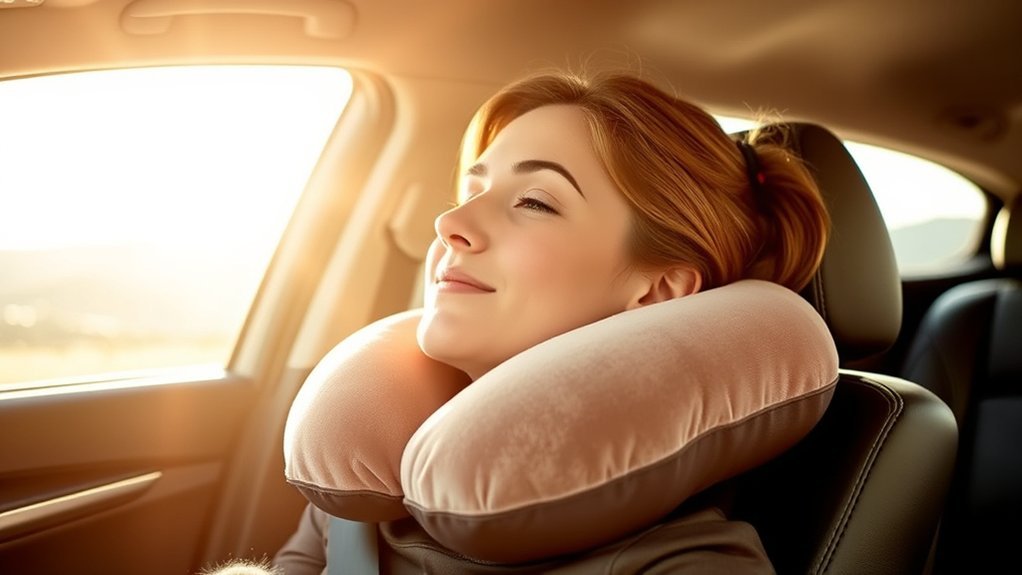
When traveling as a vehicle passenger on long journeys, a high-quality travel pillow provides support for your cervical spine. Car seats are primarily engineered for crash safety rather than prolonged sleeping comfort. Consequently, sleeping upright often leads to lateral neck bending or sudden forward head drops when muscles relax during deep sleep cycles.
According to Spine-health ergonomic studies, supporting the neck’s natural lordotic curve reduces strain on the levator scapulae and trapezius muscles. A well-designed pillow fills the space between your cervical spine and the car headrest, keeping your head in a neutral position. While travel pillows increase passenger comfort and prevent muscle stiffness, it is important to remember that they are comfort accessories—primary crash protection comes from the vehicle’s safety belt and factory head restraint system.
Note: Vehicle headrests are designed to restrict rearward movement of the head during a rear-impact collision. Your travel pillow should complement this position without pushing your head forward away from the headrest.
How to Properly Position a Travel Pillow for Maximum Support
Achieving proper support requires adjusting the travel pillow to fit your specific height, seat angle, and body posture. Follow these guidelines to position your pillow correctly:
Optimal Pillow Height Adjustment
Start by evaluating the thickness of your pillow relative to your neck length. Excessively thick padding behind the neck pushes the skull forward, placing unnatural tension on the upper spine. Adjust the pillow height so that it nestles directly into the curve behind your neck, filling the void without forcing your chin toward your chest. If your pillow features internal toggles or compression straps, adjust them until the cushion gently cradles your jawline.
Align With Headrest Position
Position the travel pillow so that its rear surface rests flush against the car seat headrest. Raise or lower your vehicle seat headrest so that its midpoint aligns with the top of your ears. Placing the pillow against a properly adjusted headrest stabilizes your head against lateral swaying when the car negotiates turns or decelerates.
Secure With Adjustable Straps
Many modern car travel pillows include adjustable retention straps. Wrap these straps around the seat headrest posts to anchor the cushion at the appropriate height. Securing the pillow prevents it from sliding down behind your back during mid-ride adjustments, ensuring continuous support while you nap.
Pro Tip — The Reverse U-Pillow Trick: If your head routinely snaps forward when you fall asleep in the car, turn your U-shaped pillow around 180 degrees so the thickest cushioned section rests beneath your chin. This creates a supportive shelf that prevents forward head drops entirely.
Benefits of Using a Travel Pillow While Riding as a Passenger
Using an ergonomic travel pillow as a car passenger provides several distinct physiological benefits:
- Maintains Cervical Spine Alignment: Keeps the head, neck, and shoulders in vertical harmony, minimizing joint pressure.
- Reduces Muscle Strain and Stiffness: Prevents overstretching of neck tendons during extended rest periods.
- Stabilizes Head Movement: Dampens subtle side-to-side oscillations caused by road vibrations and vehicle turning forces.
- Promotes Deeper Sleep Cycles: Eases physical tension, making it easier to achieve restful REM sleep while seated upright.
“Maintaining neutral posture while seated in a moving vehicle significantly reduces static muscle load and helps prevent acute neck pain.” — Ergonomic Research Principles
Types of Travel Pillows Suitable for Car Use
Selecting the right pillow type depends on your preferred sleeping style and seating position within the car:
- Classic U-Shaped Memory Foam Pillows: Ideal for passengers who stay upright; provides 360-degree lateral support around the neck collar.
- Neck Wrap and Scarf Supporters (e.g., Trtl): Uses an internal rib structure to hold the neck in a comfortable lateral position without bulky rear padding.
- Inflatable Travel Pillows: Lightweight and highly adjustable; allows users to customize firmness levels by altering air inflation.
- L-Shaped and Body Support Wedges: Designed for passengers sitting in window seats who prefer leaning sideways against the vehicle door or B-pillar.
Essential Features of a Travel Pillow for Car Comfort
To ensure long-term comfort during road trips, look for travel pillows that incorporate these features:
- Ergonomic Contour Modeling: Raised side lobes support the jawbone and prevent harsh lateral tilting.
- High-Density Memory Foam or Hybrid Gel: Delivers pressure-relieving support while absorbing high-frequency road vibration.
- Headrest Attachment Straps: Adjustable buckles or Velcro straps anchor the pillow firmly to the vehicle headrest.
- Breathable, Washable Fabric Cover: Fabrics like cotton, bamboo, or moisture-wicking mesh keep skin cool and facilitate easy hygiene maintenance.
Understanding the Risks of Using a Travel Pillow in a Vehicle
While travel pillows improve passenger comfort, using them improperly inside a moving automobile introduces safety risks. Understanding automotive safety principles ensures you remain protected on the road:
Warning: Never place a travel pillow behind your back or shoulder in a way that lifts your body away from the seatback or alters how the seatbelt lays across your collarbone. The 3-point seatbelt webbing must remain flush against your body at all times.
According to safety guidance from the National Highway Traffic Safety Administration (NHTSA), interior accessories must never interfere with the primary safety restraint system. Overly bulky pillows placed behind the head can push the head too far forward, increasing flexural neck torque in sudden braking maneuvers. Furthermore, front-seat passengers must ensure their travel pillow does not extend into the deployment zone of side-curtain or side-impact airbags.
Tips for Choosing the Best Travel Pillow for Your Car Needs
Selecting a travel pillow requires matching the pillow’s material and physical dimensions to your body structure and trip requirements.
Material Considerations
High-density viscoelastic memory foam is recommended for its ability to contour under body heat and weight according to Sleep Foundation research. However, if you tend to sleep hot during car rides, opt for gel-infused memory foam cores paired with breathable bamboo fabrics. Inflatable pillows are suitable for travelers seeking compact storage.
Fit and Adjustability
Check the neck circumference specifications before purchasing. A pillow that is too loose will fail to support your chin, leading to head dropping, while an overly tight fit can press uncomfortably against your throat. Look for models equipped with quick-release front toggles to customize tightness as needed.
Alternatives to Travel Pillows for Car Comfort
If you prefer not to carry a dedicated travel pillow, several alternative items and adjustments can enhance car passenger comfort:
- Lumbar Support Rolls: Placed at the small of your lower back to maintain natural lumbar curvature and relieve lower spine pressure.
- Rolled Microfiber Towels: A compact towel rolled into a cylinder can be tucked directly behind the neck gap for tailored support.
- Seat Angle Micro-Adjustments: Reclining the passenger seat slightly (between 100 to 110 degrees) reduces gravitational weight on the spine while keeping the seatbelt safely engaged.
Best Practices for a Comfortable Road Trip Experience
Maximize your road trip comfort by integrating these habits into your journey:
- Take Regular Movement Breaks: Stop every two hours to walk and stretch, restoring blood circulation to leg and back muscles as recommended by medical guidance from the Mayo Clinic.
- Verify Peripheral Field of Vision: Ensure your pillow placement does not obscure the driver’s sightlines or side-mirror visibility.
- Keep Hydrated: Maintain proper fluid intake during long rides to prevent muscle cramping and daytime fatigue.
Frequently Asked Questions
Can I use a travel pillow with a seatbelt?
Yes, you can safely use a travel pillow with a seatbelt provided the pillow does not interfere with the belt’s path. The 3-point seatbelt must lay flush across your shoulder, collarbone, and chest without being pushed aside or lifted by bulky padding.
What materials are best for a travel pillow?
High-density memory foam provides responsive, pressure-relieving support. Paired with breathable bamboo, velvet, or cotton covers, memory foam prevents heat buildup during long road trips. Inflatable options work well for those prioritizing compact storage.
How do I clean my travel pillow?
Unzip and remove the fabric outer cover, then machine-wash it in cold water on a delicate cycle. Spot-clean the internal memory foam core using a damp cloth and mild soap; never submerge memory foam cores directly in water.
Can children use travel pillows safely in the car?
Yes, provided child-sized travel pillows are used. The pillow must fit the child’s neck proportion properly without pushing their head forward or interfering with the proper fit of a booster seat or seatbelt harness.
How do I store my travel pillow when not in use?
Compress memory foam travel pillows into their provided cinch travel bags to reduce storage volume. Deflate inflatable travel pillows completely and fold them into their protective storage pouches.
Conclusion
Integrating a properly positioned travel pillow into your car setup converts long passenger rides into comfortable opportunities for rest. By selecting a pillow that supports your neck’s natural posture, adjusting it to match your headrest, and prioritizing seatbelt safety, you can prevent neck stiffness and arrive at your destination refreshed and ready to explore.
Sources
- National Highway Traffic Safety Administration (NHTSA) — Passenger Seatbelt Safety & Interior Vehicle Accessory Guidelines
- Sleep Foundation — Ergonomic Evaluation of Travel Pillow Materials & Cervical Posture
- Spine-health — Cervical Spine Alignment, Posture Mechanics, and Strain Prevention
- Mayo Clinic — Causes and Prevention of Acute Neck Strain During Prolonged Sitting

