
Last Updated on September 10, 2026 by Daniel Globe
Keeping your travel pillow clean and sanitized is vital for preventing skin breakouts, allergen buildup, and exposure to germs in high-traffic transit environments like airplanes, trains, and buses. Whether your pillow is made of memory foam, microbeads, or synthetic fiber, using the correct washing and disinfecting techniques will ensure long-lasting comfort and hygiene on every trip.
Quick Answer
To clean a travel pillow, remove and machine wash its cover in cold water with mild detergent. For synthetic or polyfill cores, machine wash on a delicate cycle. For memory foam or microbead cores, spot clean with a damp soapy cloth—never submerge them. Disinfect between trips using a fabric-safe sanitizing spray or antibacterial wipes, and air-dry thoroughly.
Key Takeaways
- Check Material First: Removable covers and polyester fillings are usually machine-washable, whereas memory foam requires spot cleaning.
- Never Submerge Memory Foam: Soaking memory foam breaks down its structural cell integrity and traps internal moisture, leading to mold growth.
- Sanitize Between Washes: Use fabric disinfectant sprays or baking soda to absorb odors and reduce surface bacteria during long flights.
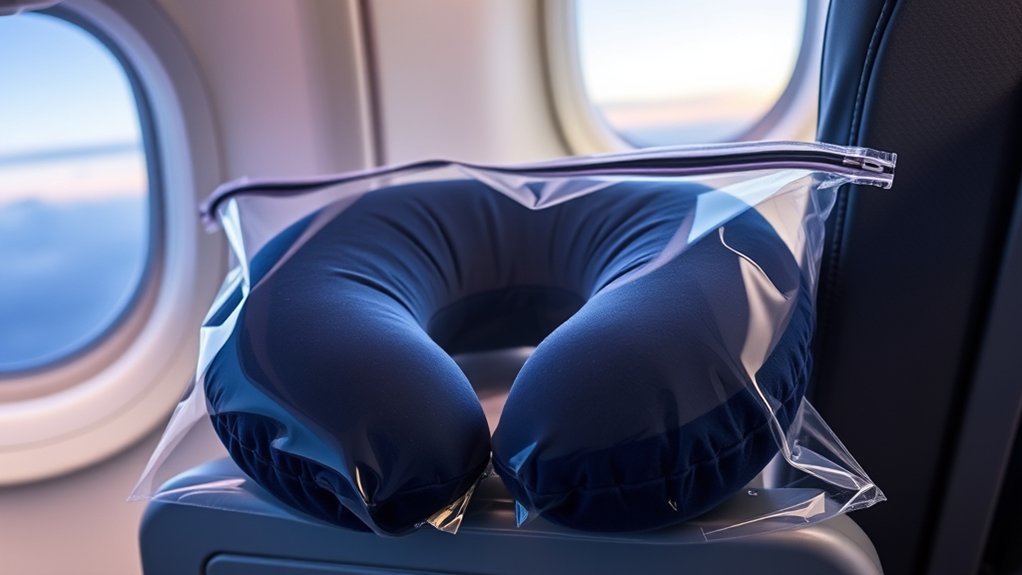
- Protective Barriers: Enclosing your pillow in a dedicated travel case or extra pillowcase shields it against airport transit surface germ contamination.
At a Glance
| Time Required | 15 mins active work (2–24 hrs drying time) |
| Difficulty | Beginner |
| Tools Needed | Mild detergent, microfiber cloth, baking soda, fabric disinfectant spray |
| Cost | $0 – $10 (using household items) |
Disclosure: As an Amazon Associate I earn from qualifying purchases. Some links on this page are affiliate links, at no extra cost to you.
Why Cleaning Your Travel Pillow Matters and How to Do It
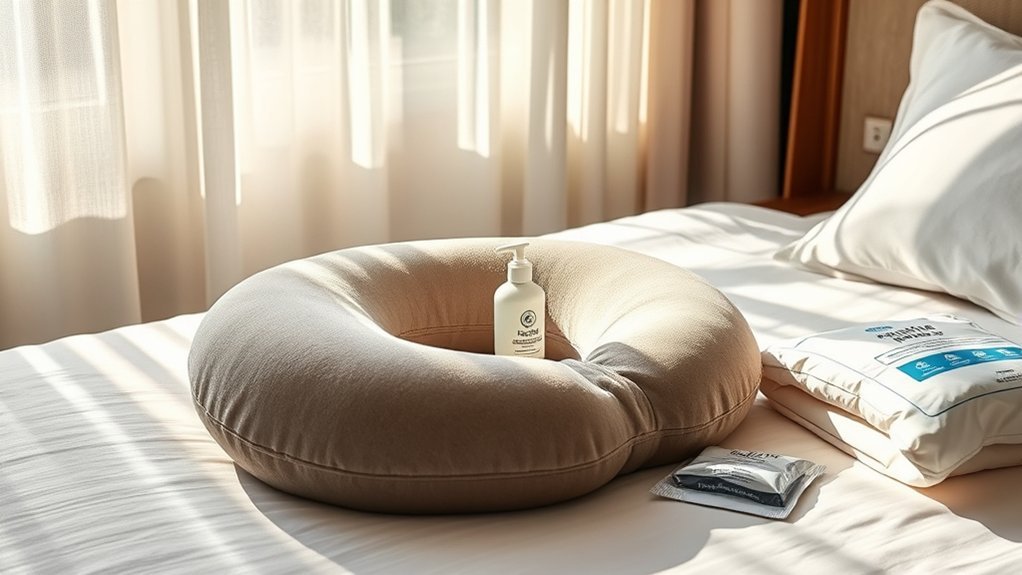
When traveling, it is easy to overlook the cleanliness of your travel pillow. However, neglecting it can lead to a rapid accumulation of facial oils, dead skin cells, sweat, and environmental pathogens encountered in airports and airplanes. According to public health studies on travel hygiene, transit surfaces harbour high levels of micro-organisms that easily transfer to soft fabrics.
Maintaining clean travel gear is essential for skin health and allergen management. Regular pillow care prevents bacterial growth and dust mite colonization. Many travel pillows feature machine-washable removable covers, simplifying routine maintenance. Disinfecting the pillow core with a fabric-safe solution between trips reduces dust mites and allergens, extending the product’s functional lifespan.
How to Clean Your Travel Pillow: Machine vs. Hand Wash
Cleaning methods depend entirely on your travel pillow’s interior fill material. Always review the manufacturer’s care tag before applying water or cleaning solutions.
Warning: Never submerge solid or shredded memory foam pillows in water, and never place them inside an automatic washing machine or dryer. Excess water causes foam cells to degrade and retain moisture internally, leading to hidden mold and mildew growth.
| Material / Component | Recommended Cleaning Method | Key Care Instructions |
|---|---|---|
| Removable Covers | Machine Washable | Use cold/warm water, mild detergent; line dry or low tumble dry. |
| Synthetic / Polyester Fill | Machine Washable (Gentle) | Wash on delicate cycle; air-dry thoroughly in a well-ventilated space. |
| Memory Foam Core | Spot Clean / Hand Surface Wash | Wipe with a damp, soapy cloth; blot dry with a towel; do not soak. |
| Microbead Fill | Hand Wash Surface | Hand wash in warm soapy water inside a laundry bag; gentle air dry. |
| Inflatable (PVC / TPU) | Wipe Down | Use disinfectant wipes or warm soapy water on outer casing. |
Easy Ways to Disinfect Your Travel Pillow
Disinfecting your travel pillow between thorough washings keeps it fresh and hygienic throughout multi-leg journeys:
- Fabric-Safe Sanitizing Sprays: Lightly mist your pillow with an EPA-registered fabric disinfectant spray or diluted isopropyl alcohol solution (70%), allowing it to air-dry completely before use.
- Antibacterial Wipes: Use alcohol-free or fabric-safe sanitizing wipes to wipe down the exterior surface after transit through public spaces.
- Baking Soda Odor Absorption: Generously sprinkle baking soda over the dry fabric surface, let it sit for 20–30 minutes to neutralize trapped moisture and odors, then thoroughly brush or vacuum it off.
- Sunlight Airing (UV Sanitization): Place the pillow in direct sunlight for 1–2 hours. Natural ultraviolet rays help eliminate residual surface bacteria and moisture.
Pro Tip: Always test sanitizing sprays or essential oil mixtures on a small, hidden corner of the pillow fabric to ensure it does not cause discoloration or fabric breakdown.
Protect Your Pillow While Traveling
Preventative steps drastically reduce how often you need to perform deep cleanings on the road:
- Use an Outer Travel Cover: Enclose your travel pillow in a removable, washable outer slipcover or clean extra pillowcase during transit to create a physical barrier against unsanitary surfaces.
- Store in Breathable Bags: When not in use, pack your pillow inside a breathable cotton or mesh storage sack rather than airtight plastic bags, which trap ambient humidity and foster odor-causing bacteria.
- Isolate from Luggage Items: Keep your travel pillow in an exterior bag pocket or dedicated clip rather than placing it alongside worn footwear or soiled clothes inside your main luggage compartment.
- Sanitize Storage Hooks: If clipping your pillow to the outside of your backpack via a carabiner, ensure it does not drag across floor surfaces during layovers.
Tips for Maintaining Your Pillow’s Freshness on the Road
Note: If you have sensitive skin, avoid using strongly scented fabric softeners or harsh chemical sprays, as residual chemicals can cause contact dermatitis when pressed against your face during long flights.
Routine daily maintenance while traveling ensures your pillow remains comfortable and odor-free:
- Air out your pillow in your hotel room or ventilated space immediately after arriving at your destination.
- Keep a small travel-sized container of baking soda or activated charcoal sachets in your travel gear to absorb ambient humidity.
- Wash removable covers as soon as you complete a major travel leg or return home.
Frequently Asked Questions
Can I use bleach to clean my travel pillow?
No, you should avoid using chlorine bleach on travel pillows. Bleach damages synthetic fibers, degrades memory foam structures, and can cause skin irritation upon facial contact. Instead, use mild liquid detergents, baking soda, or oxygen-based color-safe cleaners.
How often should I replace my travel pillow?
Most travel pillows should be replaced every 1 to 2 years, depending on frequency of use and material quality. If your pillow exhibits persistent odors, visible structural lumpiness, loss of neck support, or permanent staining, it is time for a replacement.
Are there specific fabrics I should avoid for travel pillows?
If you are prone to skin breakouts or allergies, avoid non-breathable synthetic fabrics that trap heat and sweat without adequate moisture-wicking capabilities. Opt for hypoallergenic, moisture-wicking covers like bamboo-derived rayon or natural cotton.
Can I wash my travel pillow with other laundry?
Removable fabric covers can generally be washed with normal laundry of similar colors. However, washable pillow cores should be laundered separately or placed inside a protective mesh laundry bag to prevent tearing or fiber deformation caused by heavy clothing zippers and buttons.
What are the signs that my travel pillow is dirty?
Common indicators include discolored grease/sweat stains, lingering stale odors, stiffness or altered texture in fabric, and skin breakouts occurring after travel use.
Conclusion
Maintaining a clean travel pillow requires minimal effort once you understand the care requirements of your specific pillow material. By separating removable covers for machine washing, spot-cleaning delicate foam cores, and implementing quick sanitizing routines with fabric sprays and protective covers, you can keep your gear completely fresh and free from travel germ accumulation. Apply these preventative hygiene steps before your next flight or road trip to enjoy sanitary, comfortable rest wherever you travel.
Sources
- Centers for Disease Control and Prevention (CDC) — Travel Hygiene and Environmental Surface Cleaning Guidelines
- Asthma and Allergy Foundation of America (AAFA) — Dust Mite Control and Bedding Maintenance Standards
- American Cleaning Institute (ACI) — Laundry and Fabric Sanitization Best Practices

