
Last Updated on July 28, 2026 by Daniel Globe
Getting around London doesn’t have to feel overwhelming. With a fast Tube network, iconic red buses, riverboats, bike hire, and contactless payment on almost everything, you can move through the city like a local from day one — you just need to know which option fits each trip.
Quick Answer
The easiest way to get around London is by Tube, Elizabeth line, or bus using a contactless debit/credit card or mobile payment device — tap in and out on train networks, and tap in only on buses. Automatic daily and weekly fare caps ensure you always pay the best fare without needing physical paper tickets.
Key Takeaways
- Use Contactless or Oyster: Tap in and out with the same payment card or device across Tube, DLR, Overground, and Elizabeth line services to benefit from automatic daily capping.
- London Underground & Elizabeth Line: Offer the fastest central and cross-city rail transit operating under identical zone fare rules.
- Bus Hopper Fare: Provides unlimited bus and tram journeys made within 60 minutes for a single £1.75 fare (daily bus cap is £5.25).
- Airport Connections: Connect directly from Heathrow via the Elizabeth Line or Piccadilly Line, and from Gatwick, Stansted, or Luton via national rail services.
- Scenic & Active Travel: Take Thames riverboats for sightseeing, rent Santander Cycles for quick rides, or enjoy dedicated walking routes like the South Bank Walk.
At a Glance
| Best Payment Method | Contactless card or phone (no deposit fee, same fares as Oyster) |
| Zone 1–2 Daily Cap (2026) | £8.90 (all-day capping limit) |
| Zones 1–6 Daily Cap (2026) | £16.30 (all-day capping limit) |
| Single Bus/Tram Fare | £1.75 (includes Hopper Fare within 1 hour; daily cap £5.25) |
Disclosure: As an Amazon Associate I earn from qualifying purchases. Some links on this page are affiliate links, at no extra cost to you.
Exploring the London Underground
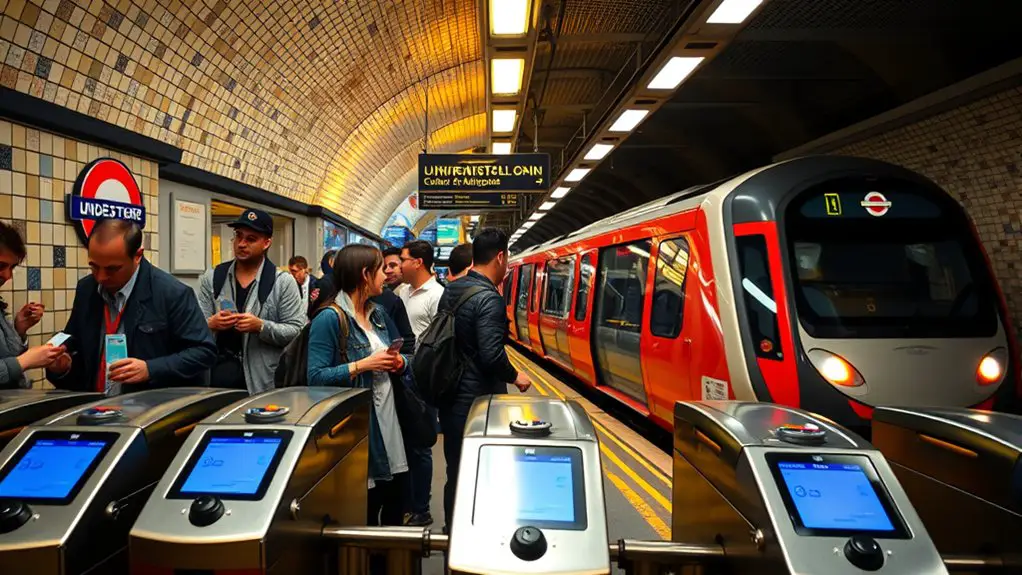
Finding your way through the London Underground, often called the Tube, offers one of the fastest and most efficient ways to get around the city.
When you step into the London Underground, you’ll notice clear signs guiding you to different lines and exits, making navigation straightforward.
To make your journey smooth, remember some key Tube Etiquette: stand on the right side of escalators to let others pass on the left, keep your voice down, and offer your seat to those who need it more.
Avoid blocking the doors and move inside quickly to let others board. Using an Oyster card or contactless payment speeds up your entry and exit.
The Tube’s extensive network connects major attractions, so you’ll save time hopping from station to station. Alongside the Tube, the Elizabeth line and London Overground add fast, frequent cross-city routes worth checking on your journey planner — both accept the same Oyster and contactless payment.
Note: The Elizabeth line and Overground use the same fares, caps, and ticketing as the Tube, so you don’t need a separate ticket or app to use them.
With a bit of respect for the local customs, you’ll find traveling the London Underground both convenient and enjoyable.
Navigating the London Bus System
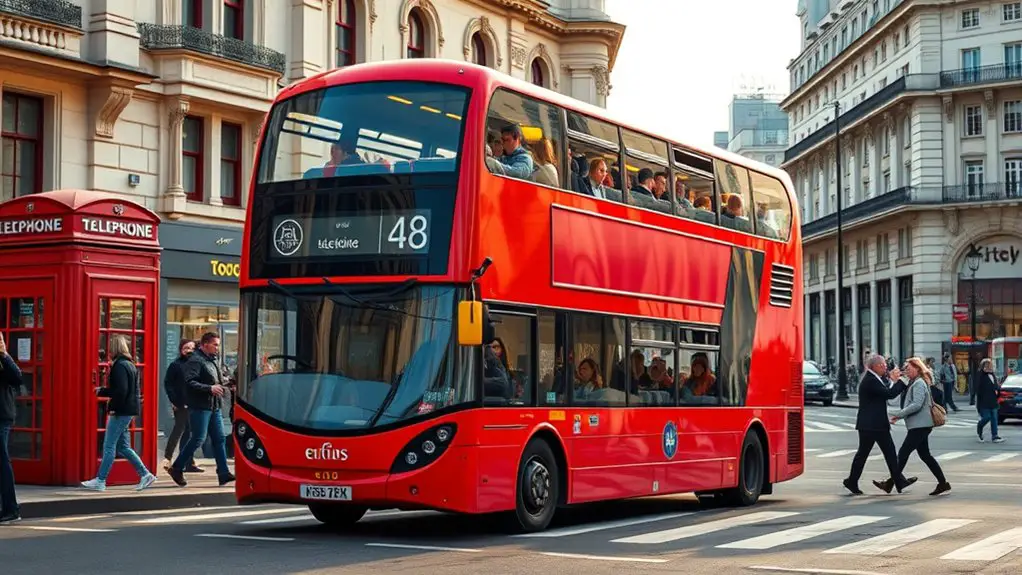
Although the London Underground may be faster for long distances, the London bus system offers a scenic and flexible way to explore the city at street level. When you hop on a bus, you get a unique view of London’s streets, landmarks, and neighborhoods that you’d miss underground.
To make the most of your trip, check bus routes in advance using Transport for London’s (TfL) Journey Planner. This helps you plan which buses to take and where to switch lines.
Plan your journey ahead with TfL’s website or apps to easily navigate bus routes and connections.
Bus schedules vary, but most London buses run frequently throughout the day and night, making it easy to travel anytime. Remember, buses don’t accept cash, so use an Oyster card or contactless payment for a hassle-free ride — a single bus or tram fare is £1.75, capped at £5.25 a day.
Pro Tip: Take advantage of TfL’s Hopper Fare: make unlimited bus and tram journeys within 60 minutes of your first tap-in for just £1.75 total, as long as you use the same contactless card or Oyster card.
As you travel, listen for announcements or watch digital displays to know your stops. Guiding through the London bus system not only saves money but lets you soak in the city’s vibrant atmosphere firsthand.
Using the Docklands Light Railway (DLR)

You’ll find the Docklands Light Railway (DLR) a convenient way to explore East London with its extensive network connecting key areas.
Make sure to use your Oyster card or contactless payment for easy ticketing and affordable fares.
Don’t miss stops like Greenwich, Canary Wharf, and the ExCeL Centre, perfect for sightseeing and events.
DLR Network Overview
The Docklands Light Railway (DLR) offers you a fast and convenient way to explore East and Southeast London, connecting key areas like Canary Wharf, Greenwich, and London City Airport.
Since its launch in 1987, the DLR has evolved considerably, reflecting its rich history as a driverless, automated rail system designed to serve the redeveloped Docklands area.
You’ll find over 45 DLR stations spread across multiple branches, making it easy to hop on and off to discover vibrant neighborhoods or catch stunning riverside views.
The network’s frequent service and modern trains guarantee smooth rides, while its integration with other transport modes lets you seamlessly continue your London adventure.
Using the DLR is a smart choice for seeing a unique side of the city beyond the usual tourist spots.
Ticketing and Fares
Maneuvering the Docklands Light Railway (DLR) ticketing system is straightforward and designed to suit both occasional travelers and daily commuters.
You’ll find several ticket types available, from single journeys to daily and weekly passes, all priced according to fare zones. The DLR spans multiple fare zones, so your ticket cost depends on how far you travel.
Using an Oyster card or contactless payment makes things even easier — just tap in and out, and the system calculates the fare automatically, applying whichever daily or weekly cap gives you the best price.
If you prefer paper tickets, you can buy them at stations, but they usually cost more.
Keep in mind that understanding fare zones helps you avoid overpaying and guarantees a smoother trip across London’s east and southeast areas.
Key Tourist Stops
Traveling through London’s vast transit network might seem intimidating, but the Docklands Light Railway (DLR) offers a convenient route to some of the city’s most iconic tourist spots.
By hopping on the DLR, you’ll easily access must see attractions and local landmarks that showcase London’s unique charm.
Here are three key tourist stops you shouldn’t miss:
- Canary Wharf – Explore modern skyscrapers alongside art installations and waterfront dining.
- Greenwich – Visit the Royal Observatory and stand on the Prime Meridian line while enjoying stunning river views.
- Cutty Sark – Step aboard the historic tea clipper and discover maritime history in an interactive museum.
Using the DLR simplifies your journey to these highlights, letting you soak in London’s rich culture without hassle.
Airport Transfers and Express Connections
Navigating from London’s major international airports into the city center is straightforward once you know which transit option matches your destination and budget.
- London Heathrow (LHR): The Elizabeth line offers a direct, frequent connection into Central London (Zone 1) in under 45 minutes using standard contactless or Oyster payment. Alternatively, the Piccadilly line Tube offers the most budget-friendly route (~50–60 minutes), while the Heathrow Express provides a non-stop 15-minute train directly into Paddington Station.
- London Gatwick (LGW): National Rail services, including Thameslink and Southern Railway, connect Gatwick to London Bridge, Blackfriars, and Victoria stations. You can tap in and out using contactless payments. The non-stop Gatwick Express also runs to Victoria Station.
- London Stansted (STN) & Luton (LTN): The Stansted Express connects Stansted directly to London Liverpool Street in around 47 minutes. For Luton, Thameslink trains connect Luton Airport Parkway to Central London stations in under 40 minutes, with a fast shuttle bus linking the terminal to the train station.
- London City Airport (LCY): Located directly on the DLR network (Zone 3), London City Airport allows passengers to step straight onto the train using standard contactless or Oyster cards for quick transfers into Bank and Canary Wharf.
Cycling Around the City
Cycling around London is a fantastic way to explore the city at your own pace, with popular bike rental options like Santander Cycles making it easy to grab a ride.
Before you set off, make sure you follow essential safety tips, such as wearing a helmet and staying aware of traffic signals.
With the right preparation, you’ll enjoy a smooth and enjoyable journey through London’s vibrant streets.
Popular Bike Rental Options
If you’re enthusiastic to explore London on two wheels, you’ll find plenty of bike rental options that make cycling around the city easy and accessible.
Thanks to convenient bike sharing schemes and user-friendly rental apps, renting a bike for a quick trip or a full day is straightforward.
Here are three popular choices:
- Santander Cycles: London’s iconic bike sharing system, perfect for short trips with docking stations scattered across the city.
- Lime Bikes: Electric bikes available via rental apps, letting you cover longer distances with less effort.
- Jump by Uber: Rent electric bikes using the Uber app, ideal for seamless integration with rideshare services.
Each option offers flexible pricing, making it simple to pick the best fit for your London adventure.
Safety Tips for Cyclists
Anyone exploring London by bike should prioritize safety to enjoy a smooth and worry-free ride.
First, always wear a helmet; while helmets aren’t legally required for adults, they greatly reduce injury risk.
Next, stick to designated bike lanes whenever possible — they provide a safer space separated from traffic, making your journey less stressful.
Stay visible by wearing bright clothing and using front and rear lights, especially during dusk or rain.
Obey traffic signals and be cautious at junctions, where most accidents happen.
Use hand signals to communicate your intentions clearly to drivers and pedestrians.
Finally, keep your bike well-maintained — check brakes and tires before heading out.
Pro Tip: Plan routes using TfL’s Cycleways map to stick to protected lanes wherever possible, especially around busy junctions like those in central London.
Following these tips helps you navigate London’s streets confidently and safely, making your cycling adventure truly enjoyable.
Walking Tours and Pedestrian Routes
While exploring London, walking tours and pedestrian routes offer an immersive way to experience the city’s rich history and vibrant culture up close.
You can uncover hidden gems and admire iconic sites at your own pace, making every step memorable.
Here are three scenic routes to consider:
- The South Bank Walk – Stroll along the Thames, passing historic landmarks like the Globe Theatre and Tate Modern, while enjoying riverside views.
- The Royal Parks Loop – Wander through Hyde Park, Green Park, and St. James’s Park, soaking in nature’s beauty amid the city bustle.
- The City of London Heritage Trail – Explore narrow streets filled with medieval architecture, ancient churches, and Roman ruins, tracing the city’s origins.
These pedestrian routes not only highlight London’s iconic landmarks but also invite you to experience the city’s vibrant atmosphere and rich storytelling.
These routes reveal London’s iconic sights while immersing you in its lively spirit and captivating stories.
Walking lets you connect deeply with London’s past and present, making your visit truly unforgettable.
Taking Riverboat Services on the Thames
Although walking offers an intimate way to see London, riverboat services on the Thames let you glide past iconic landmarks from a different perspective. You’ll find multiple riverboat routes connecting key points like Westminster, the Tower of London, and Greenwich. Each journey delivers stunning, ever-changing scenic views of the city’s skyline, bridges, and historic buildings. The gentle sway of the boat adds a peaceful rhythm to your sightseeing, making it a relaxing break from busy streets.
Here’s what you can expect on a riverboat ride:
| Emotion | Experience | Landmark Highlight |
|---|---|---|
| Awe | Passing under Tower Bridge | Tower of London |
| Serenity | Calm waters, open decks | Houses of Parliament |
| Excitement | Speedy hop-on, hop-off stops | The Shard and London Eye |
Utilizing Taxi and Ride-Sharing Options
When you need a quick and convenient way to navigate London’s bustling streets, taxis and ride-sharing services offer flexible options that fit your schedule.
Black cabs, known for their iconic design, provide a traditional and reliable choice. Remember taxi etiquette: greet your driver politely and have your destination ready.
Alternatively, ride sharing apps like Uber and Bolt let you book rides swiftly from your phone, often at competitive rates.
Here’s what to expect:
- Black cabs can be hailed on the street or found at designated ranks, offering knowledgeable drivers who often know shortcuts.
- Ride sharing apps provide upfront pricing and cashless payment, making budgeting easier.
- Both options allow door-to-door service, perfect when you’re carrying luggage or traveling late at night.
Using these services smartly guarantees smooth, comfortable travel while exploring London’s vibrant neighborhoods efficiently.
Understanding Oyster Cards and Contactless Payments
Two essential tools will simplify your travel across London’s public transport system: Oyster cards and contactless payments.
An Oyster card offers many benefits, including cheaper fares compared to buying single paper tickets and daily fare capping, ensuring you never pay more than a set limit each day. As of 2026, the Zone 1–2 daily cap is £8.90, and the Zones 1–6 daily cap is £16.30, the same for peak and off-peak travel on TfL rail services. You can easily top up your card at stations, on the TfL website, or online, making it a convenient option for multiple journeys.
If you prefer not to carry an Oyster card, contactless payments provide a seamless alternative with identical fares and caps. Simply tap your contactless debit or credit card, or your smartphone, on the reader each time you travel.
Warning: Never tap two cards (or a card and a phone) on the reader at once — the system can pick the wrong one at random, charging you two incomplete-journey maximum fares instead of one capped fare.
For contactless payment tips, remember to use the same card or device throughout the day to benefit from automatic daily fare capping. Both methods work across buses, tubes, trams, and trains, giving you flexibility and cost savings.
Understanding these options will help you get the most out of London’s transport network.
Tips for Traveling During Peak Hours
Since London’s public transport can get extremely crowded during peak hours, planning your journey thoughtfully can make all the difference. Peak fare hours apply on rail services Monday through Friday from 06:30 to 09:30 and 16:00 to 19:00.
To navigate the bustling crowds with ease, adopt these peak hour strategies and crowd avoidance tips that help you save time and stay comfortable:
- Travel Outside Peak Times: Aim for off-peak hours (between 09:30 and 16:00, or after 19:00 on weekdays, and all day on weekends) to avoid heavy commuter crowds and lower single fares.
- Choose Less Popular Routes: Instead of main line Tube connections, use parallel bus routes or the Elizabeth Line, which features wider trains and modern air conditioning.
- Use Night Transit Services: Take advantage of 24-hour bus routes and the Night Tube (operating on Friday and Saturday nights across Victoria, Central, Jubilee, Northern, and Piccadilly lines) for overnight travel.
- Use Station Exits Wisely: Familiarize yourself with station layouts and exit signs at your destination to escape platform bottlenecks quickly.
Using these crowd avoidance tips will transform your London travel experience, letting you enjoy the city without the stress of squeezing through packed carriages or long queues.
Frequently Asked Questions
Are there any discounts for seniors or students on public transport?
Yes. London residents aged 60+ can apply for a 60+ London Oyster photocard for free off-peak travel on the Tube, buses, and most rail services within London. Students aged 18+ studying in London can get an 18+ Student Oyster photocard for discounted travel, while under-18s and 16-17-year-olds can use the Zip Oyster photocard for reduced fares. Visitors from outside London aren’t eligible for these London-specific concessions, but National Rail Senior and Young Person’s Railcards can still be linked to a contactless card or Oyster for discounts on PAYG fares.
Can I use my phone GPS offline to navigate London?
Yes, you can use your phone GPS offline to navigate London by downloading offline maps before your trip. Apps like Google Maps let you save detailed maps, so you don’t need an active cellular data connection while exploring. GPS tracking remains functional offline to help guide you through London’s streets and station locations.
What are the best apps for real-time transport updates in London?
Citymapper and TfL Go are the top choices for real-time tracking and journey guidance in London. Citymapper offers live updates on buses, tubes, and trains, helping you avoid delays, while TfL Go provides official Transport for London data with accurate step-free access routing and real-time train arrivals.
Is it safe to leave luggage at stations or on boats?
You can leave luggage safely at major London railway stations using official left-luggage facilities (such as Excess Baggage Co or Bounce), which feature CCTV and staff monitoring. On riverboats, storage space is unsecured, so keep your personal belongings and valuables with you during the trip.
Where can I find accessible transport options for disabled tourists?
You can find accessible transport options through Transport for London’s (TfL) website and the TfL Go app, which include filters for step-free access routes. All London red buses are low-floor and wheelchair accessible, and licensed black cabs feature wheelchair ramps and assistance steps.
Conclusion
Getting around London is easier than you might think. Whether you’re hopping on the Tube, cruising along the Thames by riverboat, or cycling through scenic streets, you’ve got plenty of options to explore the city. Don’t forget to grab an Oyster card or use contactless payments for smooth, hassle-free travel — the daily and weekly caps mean you’ll always pay a fair price. With a bit of planning, you’ll navigate London’s vibrant neighborhoods like a local and make the most of every moment in this incredible city.
Sources
- Transport for London – Fares & Daily Caps — Official TfL fare caps and zone pricing breakdown
- TfL Journey Planner — Route guidance and accessibility tools
- TfL Media – Contactless Payments Information — Guidance on automatic capping and payment processing
- Greater London Authority – Mayoral Decision MD1318 — Official record on public transport fare structures
