Last Updated on July 30, 2026 by Caleb Warren
A packable daypack gives you a lightweight second bag for sightseeing, shopping, short hikes, and day trips. The best choice is not always the smallest or lightest model. You need enough capacity for your gear, straps that remain comfortable under your normal load, and the right level of weather protection for where you travel.
Quick Answer
Choose a packable daypack by matching its capacity, packed size, comfort, organization, and weather protection to your activities. A 16- to 22-liter pack suits many travel and light-hiking needs, but there is no universal ideal. Check the exact model’s load guidance and test it while carrying your usual gear.
Key Takeaways
- Choose capacity according to what you will carry, not a single “ideal” liter rating.
- Compare the pack’s own weight and packed dimensions as well as its expanded capacity.
- Treat manufacturer load guidance as model-specific; ultralight straps may become uncomfortable before the fabric fails.
- Waterproof fabric does not make the whole pack waterproof. Check the seams, zipper, and closure.
- Load the pack with your real gear and wear it for at least 10 minutes before deciding.
At a Glance
| Time Required | 10–20 minutes to compare specifications and complete a loaded fit test |
| Difficulty | Easy |
| Tools Needed | Your normal day-trip gear, a scale if available, and the product specifications |
| Cost | No cost to evaluate; purchase prices vary by materials, features, warranty, and brand |
Disclosure: As an Amazon Associate I earn from qualifying purchases. Some links on this page are affiliate links, at no extra cost to you.
Assessing Your Activity Needs
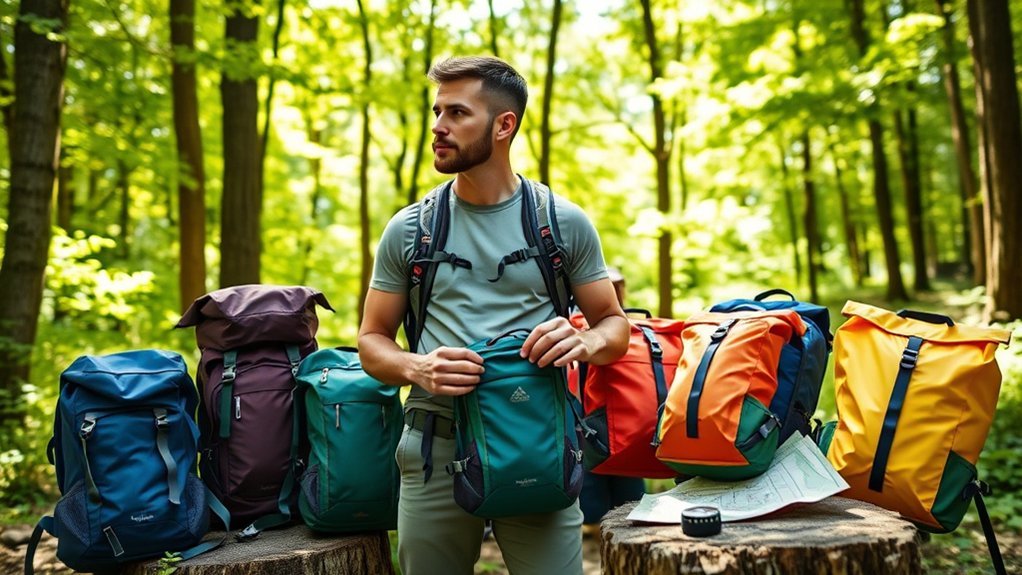
Start by deciding what the pack must do. A bag used for city sightseeing has different requirements from one used for a full day on a trail. Write down the items you expect to carry rather than estimating capacity from memory.
For Sightseeing and Urban Travel
Prioritize a compact packed size, secure zipper, comfortable straps, and at least one pocket for small essentials. A key clip, internal security pocket, or hidden passport pocket can prevent valuables from settling at the bottom of the bag. Side bottle pockets are useful, but they should be deep enough to hold the bottle when you bend down or climb stairs.
For Shopping and Errands
Look for a wide opening, reinforced bottom, dependable zipper, and enough depth for irregular items. Thin ultralight straps may be fine for clothing or souvenirs but uncomfortable when the bag contains bottles, canned food, or other dense items.
For Hiking
Prioritize load stability, bottle access, a sternum strap, abrasion resistance, and enough room for water, food, a rain layer, insulation, navigation, a light, first aid, and emergency supplies. A basic packable bag can work for a short, easy outing, but a structured hiking daypack is usually more comfortable for long distances, technical terrain, or heavy water loads.
For Beach, Boating, and Wet Destinations
Decide whether you need light-rain resistance or a genuinely waterproof, non-submersible dry pack. A water-resistant zippered pack may handle a brief shower, but electronics and documents still need a dry pouch or waterproof liner. For paddling, repeated soaking, or possible submersion, use equipment specifically rated for that activity.
Pro Tip: Place everything you normally carry on a table before shopping. Include the largest water bottle, jacket, camera, guidebook, and any items shared with a child or travel partner. This gives you a more reliable capacity target than choosing by liters alone.
Packable or Structured Daypack: Which Do You Need?
A packable daypack saves space by removing much of the foam, frame material, and back-panel structure found in a regular hiking pack. That creates a clear trade-off: the smaller the bag becomes when stored, the less support it may provide when loaded.
- Choose a highly packable model for occasional use, light loads, backup storage, sightseeing, and short errands.
- Choose a lightly padded packable model when you expect to carry water and a jacket for several hours.
- Choose a structured daypack for heavier loads, long hikes, camera equipment, a laptop without its own protective sleeve, or repeated daily use.
The lightest daypack is not automatically the best travel daypack. A few extra ounces of strap padding, reinforcement, or back structure may greatly improve comfort during several hours of use.
Understanding Size and Capacity
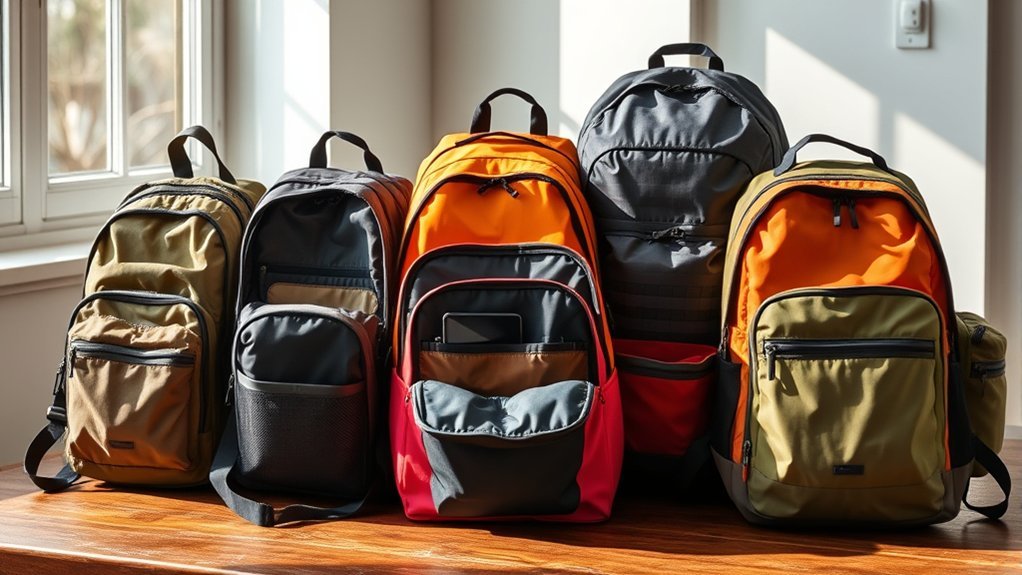
Packable daypacks commonly fall within a broad range of capacities. Instead of treating 18 or 20 liters as a rule, match the volume to your clothing, climate, water needs, and activity.
- 10–15 liters: Best for a wallet, phone, compact layer, snacks, and a small bottle. This size is easy to store but can feel cramped when carrying cold-weather clothing.
- 16–22 liters: A versatile range for sightseeing, warm-weather hiking, a rain jacket, food, and one or two bottles. Many mainstream packable models fall in this range.
- 23–30 liters: Better for bulky layers, family supplies, larger shopping loads, or long days, but the pack will usually weigh more and occupy more luggage space.
Current products show why exact model names matter. The Osprey Ultralight Stuff Pack is listed at 18 liters, while the company’s separate Ultralight Dry Stuff Pack is listed at 20 liters. Sea to Summit lists its standard Ultra-Sil Daypack at 20 liters and its seam-sealed Ultra-Sil Dry Daypack at 22 liters.
Check the Pack’s Own Weight
A larger capacity does not always mean a heavy pack, but additional pockets, padded straps, stronger zippers, and reinforcement add weight. Decide whether saving a few ounces is more important than comfort and organization during use.
Compare Packed Dimensions
“Packable” can mean anything from folding almost flat to stuffing into a pouch small enough for a coat pocket. Check the published packed dimensions when available. Also confirm that you can repack the bag without forcing the zipper or spending several minutes compressing it.
Measure Bulky Items
Liter ratings describe internal volume, but the pack’s shape matters. A narrow bag may hold a jacket yet struggle with a wide lunch container or camera cube. Compare the pack’s height, width, and depth with your largest item.
Note: Airline personal-item rules vary by carrier and fare. Compare the daypack’s expanded outside dimensions with your airline’s current limit rather than assuming that every packable bag qualifies.
Checking Load Capacity and Comfort
Do not assume that every packable daypack can comfortably carry the same weight. A manufacturer may discuss seam strength, structural capacity, or recommended comfort load, and those measurements are not interchangeable.
For example, Sea to Summit says its Ultra-Sil Dry Daypack’s seams and fabric can support substantial weight but advises against carrying more than 15 pounds for more than a short period because the pack and straps are not padded. Other ultralight models may have lower comfort recommendations. Always follow the guidance for the exact model you are considering.
Complete a Loaded 10-Minute Test
- Load the pack with the water, clothing, electronics, and other items you normally carry.
- Tighten both shoulder straps evenly.
- Fasten the sternum strap if the pack has one. It should stabilize the shoulder straps without restricting breathing.
- Walk, climb stairs, bend down, and reach forward for at least 10 minutes.
- Check for shoulder pressure, rubbing near the neck, a zipper pulling apart, sagging, bouncing, or hard objects pressing into your back.
- Confirm that you can reach your bottle and frequently used pockets without removing the pack.
If the straps dig into your shoulders or your load swings from side to side, choose a pack with wider straps, more structure, compression, or a supportive hip belt. A thin waist strap may reduce bouncing, but it usually cannot transfer weight as effectively as a padded hip belt on a structured hiking pack.
Exploring Material Options
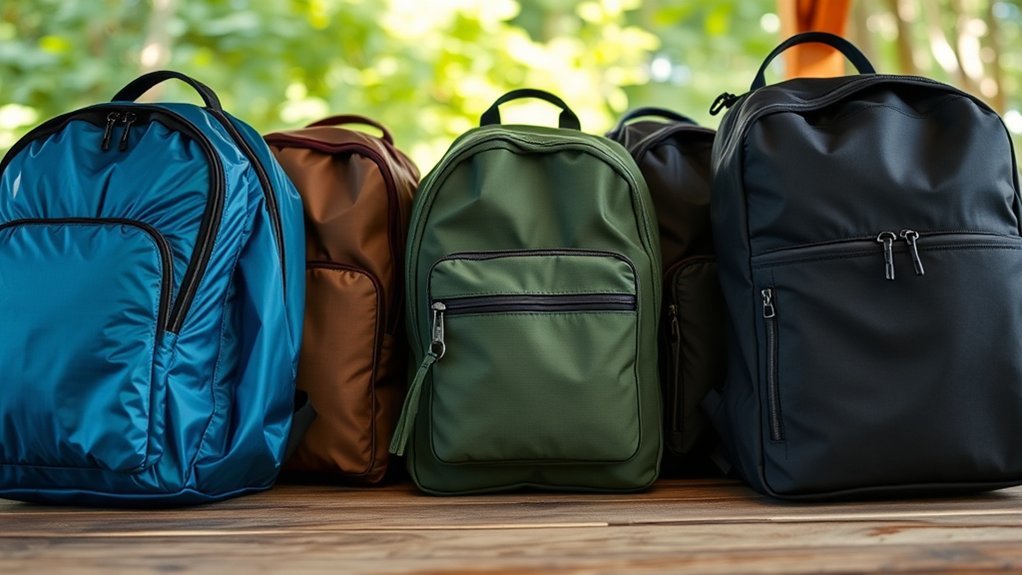
Most lightweight packable daypacks use nylon or polyester because these materials can be made thin, strong, quick-drying, and easy to compress. The fabric name alone does not tell you how the complete pack will perform.
Understanding Denier
Denier describes the linear density of the yarn. A 40D fabric uses a heavier yarn than a 15D or 30D fabric of the same general type, but a higher number does not guarantee a stronger finished backpack. Yarn quality, weave, ripstop reinforcement, coating, seam construction, and abrasion exposure also affect durability.
CORDURA UltraLite fabric, for example, uses high-tenacity nylon yarn and is available in plain, ripstop, and other constructions. The fabric can also receive coatings or laminates for water repellency. This shows why two packs with similar denier ratings can perform differently.
Nylon Ripstop
Ripstop fabric contains a reinforcing grid intended to limit the spread of a small tear. It is a practical choice for travel and light outdoor use, but it can still be punctured or worn through by sharp rocks, branches, or exposed tools.
Polyester
Polyester is common in affordable and recycled-fabric packs. Performance varies by yarn, coating, and construction, so compare the finished product rather than choosing by fiber name alone.
Siliconized and Coated Fabrics
A silicone or polyurethane treatment can improve water resistance and reduce fabric weight. However, coatings can wear, crease, peel, or lose performance over time. Check whether the manufacturer offers specific cleaning or reproofing instructions.
Reinforced High-Wear Areas
Inspect the bottom panel, shoulder-strap attachment points, zipper ends, and corners. These areas often fail before the main fabric. Bar-tacking, double stitching, stronger panels, and protected seams can be more valuable than a higher denier number printed in the product description.
Evaluating Comfort Features
A packable daypack cannot provide the same suspension as a full hiking pack, but several features can make it much more comfortable.
- Wide shoulder straps: Spread pressure across a larger area.
- Light padding or spacer mesh: Reduces edge pressure without making the bag excessively bulky.
- Adjustable sternum strap: Helps control movement and keeps the shoulder straps in place.
- Shaped back panel: Improves fit and reduces bunching.
- Compression straps or elastic cord: Keep a partially filled bag from sagging.
- Hip or waist strap: Adds stability, although an unpadded strap offers limited weight transfer.
Pack Hard Items Carefully
Frameless bags allow bottles, books, cameras, and chargers to press against your back. Place a folded jacket or flat pouch against the back panel, keep sharp edges away from the fabric, and position dense items close to your body. A laptop should have its own padded sleeve unless the pack includes a protective compartment.
Check Strap Adjustment Range
Make sure the straps can be shortened and lengthened enough for your body and clothing. Test the bag over the jacket you expect to wear. A comfortable summer fit may feel restrictive over a thick winter layer.
Warning: Stop using the pack if a shoulder attachment, seam, buckle, or zipper begins to separate. Do not exceed the manufacturer’s guidance or use an ultralight daypack to carry sharp, hazardous, or unusually dense objects without suitable protection.
Considering Waterproofing and Durability
Water protection depends on the whole pack, not just its fabric. Look at the seams, closure, zipper, coating, and manufacturer rating.
Water-Resistant Zippered Packs
These packs can shed light rain for a limited time but may leak through stitching and zipper tape. Sea to Summit states that its standard Ultra-Sil Daypack uses waterproof material but is only water-resistant because the seams and zipper are not sealed.
Waterproof Roll-Top Packs
A dry-style pack normally combines coated fabric, protected or taped seams, and a roll-top closure. Osprey describes its 20-liter Ultralight Dry Stuff Pack as IPX5 and non-submersible. Sea to Summit’s 22-liter Ultra-Sil Dry Daypack uses taped seams and a roll-top but is also not intended for submersion or paddle-sport use.
Protecting Sensitive Gear
Even with a waterproof pack, place a phone, passport, medication, camera, or other critical item in a separate waterproof pouch. Closures can be rolled incorrectly, coatings can be damaged, and water may enter when the bag is opened.
Inspecting Durability Before Buying
- Pull gently at the shoulder-strap attachment points and check for loose stitching.
- Run the zipper around corners to see whether it catches or distorts the fabric.
- Check that bottle pockets retain a full bottle when the bag tilts.
- Look for reinforcement where the bottom meets the side panels.
- Confirm that the storage pouch does not place excessive strain on its zipper.
- Review the repair policy and warranty before relying on the pack for frequent travel.
Comparing Organization and Security
Every added pocket increases convenience but also adds weight and bulk. Choose enough organization to keep important items secure without turning a lightweight bag into a complicated organizer.
- Main compartment: A wide opening makes clothing and groceries easier to load.
- Internal pocket: Useful for a passport, wallet, or small electronics.
- Key clip: Prevents keys from disappearing beneath clothing.
- Side bottle pockets: Keep moisture away from electronics and improve access.
- External stretch pocket: Holds a wet rain jacket or quickly needed layer.
- Hydration compatibility: Helpful for hiking, but check whether the pack provides a sleeve, hose port, and stable reservoir support.
For crowded transportation or city streets, prefer zippers that close fully and do not leave large gaps. Keep valuables in an internal pocket rather than an exposed front compartment.
Choosing a More Sustainable Option
“Eco-friendly” is too broad to judge a pack. Look for specific, verifiable features instead:
- Recycled nylon or polyester with a stated percentage
- Third-party verification such as the Global Recycled Standard
- Replaceable buckles or repair service
- A useful warranty
- PFAS-free water-repellent treatment when disclosed
- Durable construction that reduces the need for early replacement
Organic cotton may appear in some casual bags, but it is less common in highly packable outdoor models because fabric weight, drying time, and compressed size also matter. Compare the entire product rather than assuming that one fiber makes a bag sustainable.
Packable Daypack Buying Checklist
- List your normal contents. Include water, layers, electronics, food, and emergency items.
- Choose a capacity band. Allow space for the bulkiest likely load without buying far more volume than needed.
- Check the pack’s weight and stored dimensions. Confirm that it fits where you plan to carry it.
- Verify the exact model. Similar product names may refer to different capacities, materials, and waterproof ratings.
- Read the load guidance. Do not substitute a generic internet range for the manufacturer’s recommendation.
- Inspect straps, seams, zippers, and reinforcement. Focus on high-stress areas.
- Choose the necessary weather protection. Light rain, prolonged rain, and submersion require different designs.
- Test the pocket layout. Load your bottle, jacket, keys, and valuables.
- Wear the loaded pack for 10 minutes. Walk, bend, and climb stairs.
- Review care, repair, return, and warranty policies. These affect long-term value.
Cleaning and Storing a Packable Daypack
Follow the care label for your exact model because detergents, washing machines, heat, and aggressive scrubbing can damage lightweight fabric and waterproof coatings.
- Empty every pocket and shake out dirt or sand.
- Wipe or hand wash the pack with lukewarm water and a mild product approved by the manufacturer.
- Use a soft sponge or brush on dirty areas.
- Rinse away all cleaning residue.
- Air dry the pack completely in a ventilated area away from direct heat and strong sunlight.
- Store it only when fully dry.
Osprey’s pack-care guidance, for example, recommends mild soap, thorough rinsing, air drying, and avoiding machine washing.
If the pack is designed to stow in an attached pocket or sack, use that system without forcing the zipper. For long-term storage, keeping the pack clean, dry, and loosely folded can reduce prolonged stress on coatings and creases.
Frequently Asked Questions
Can I use a packable daypack for hiking and travel?
Yes. A packable daypack works well for sightseeing, short hikes, and light day-trip loads. For long hikes, rough terrain, heavy water, or technical gear, a structured daypack with more support may be safer and more comfortable.
How do I clean and maintain my packable daypack?
Check the care label first. In most cases, empty the bag, hand wash or spot clean it with lukewarm water and an approved mild cleaner, rinse it thoroughly, and air dry it away from direct heat. Avoid machine washing unless the manufacturer specifically permits it.
Are there eco-friendly options available for packable daypacks?
Yes. Look for a stated percentage of recycled nylon or polyester, third-party verification such as GRS, repair support, replaceable components, and a useful warranty. Specific verified claims are more meaningful than a general “eco-friendly” label.
What is the weight limit for a packable daypack?
There is no universal limit. Check the exact model’s instructions because structural strength and comfortable carrying load can differ. Thin, unpadded straps may become uncomfortable well before the fabric or seams fail.
How do I properly fold and store a packable daypack?
Use the built-in storage pocket or stuff sack when the pack includes one. Do not force the zipper or follow a universal rolling method if the manufacturer shows a different process. For long-term storage, clean and dry the pack fully and keep it in a cool, dry place.
What makes a packable daypack waterproof?
A waterproof pack needs more than waterproof fabric. It normally requires sealed or taped seams and a closure that limits water entry, such as a properly rolled roll top. Standard zippers and unsealed stitching can allow water inside.
Can I carry a laptop or camera in a packable daypack?
You can, but most ultralight packable bags provide little impact protection or structure. Use a padded sleeve or camera insert, protect the equipment from rain, and make sure hard edges do not press directly against your back or the thin outer fabric.
Conclusion
The right packable daypack balances stored size with real-world carrying comfort. Start with the items and activities you need to support, choose an appropriate capacity, and then compare the pack’s weight, straps, organization, material, closure, seams, and weather protection. Before buying, load it with your normal gear and wear it for at least 10 minutes. If the load feels unstable or painful, choose a more supportive daypack rather than sacrificing comfort simply to save a few ounces.
Sources
- Osprey Ultralight Stuff Pack and Osprey Ultralight Dry Stuff Pack — current capacities, materials, harness features, and waterproof rating.
- Sea to Summit Ultra-Sil Daypack — capacity, weight, material, packed design, and water-resistance limitations.
- Sea to Summit Ultra-Sil Dry Daypack — taped seams, roll-top construction, volume, weight, and load-comfort guidance.
- CORDURA UltraLite Fabric — high-tenacity yarn, ripstop construction, strength-to-weight considerations, and coating options.
- Osprey Backpack Cleaning Guide — hand cleaning, rinsing, drying, and machine-washing precautions.
- Textile Exchange: Global Recycled Standard — verification of recycled materials and supply-chain tracking.