
Last Updated on July 30, 2026 by Daniel Globe
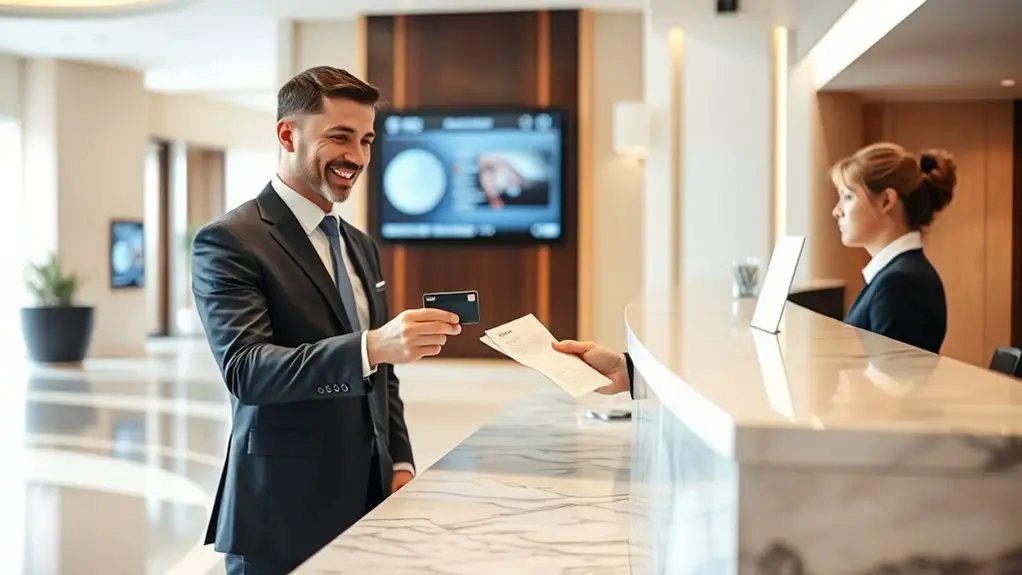
Checking out of a hotel is usually simple, but a rushed departure can lead to forgotten belongings, billing questions, missed transportation, or a card hold that lasts longer than expected. A reliable hotel checkout routine is to confirm the deadline, review the final folio, settle payment, sweep the room, follow the property’s key-return instructions, and save an itemized receipt before you leave.
Quick Answer
To check out of a hotel, leave by the posted checkout time, review the itemized bill, confirm payment and any card hold, pack carefully, return physical keys as instructed, and report your departure through the front desk, app, or express-checkout process. Save the receipt and arrange luggage storage or transportation before leaving.
Key Takeaways
- Confirm the hotel’s checkout time and request late checkout before the deadline if you need it.
- Compare the final folio with your booking confirmation, deposits, credits, and purchases.
- Ask when any credit- or debit-card authorization hold will be released.
- Check the safe, outlets, bedding, bathroom, drawers, closet, and space under the bed before leaving.
- Use the hotel’s approved checkout method and save an itemized, zero-balance receipt.
At a Glance
| Time Required | About 10–20 minutes |
| Difficulty | Easy |
| Tools Needed | Phone, booking confirmation, payment card, and a quick room checklist |
| Cost | Usually free; late checkout, early departure, missing keys, parking, or added services may cost extra under the hotel’s policy |
Disclosure: As an Amazon Associate I earn from qualifying purchases. Some links on this page are affiliate links, at no extra cost to you.
Confirm the Checkout Time and Your Options
Start by checking the departure time in your reservation, hotel app, welcome message, or room information. Checkout times vary by property. If you need extra time, contact the front desk as early as possible rather than assuming the room is available.
A late checkout may be free, available for a fee, included with loyalty status, or unavailable when the hotel is full. Marriott’s official guidance, for example, says early and late checkout policies vary by hotel and recommends speaking with the front desk. If you are leaving earlier than the departure date on your reservation, notify the hotel because an early-departure charge may apply under the property’s policy.
Also confirm how the hotel wants you to check out. Common options include the front desk, a mobile app, a television prompt, a key-drop box, an emailed folio, or express checkout. Some brands support online checkout; for example, the Hilton Honors app offers digital checkout for eligible stays.
Note: You may not need to stand in line at the front desk, but you should still complete the hotel’s approved checkout process so the property knows you have left and can finalize your folio.
Review Your Bill for Accuracy
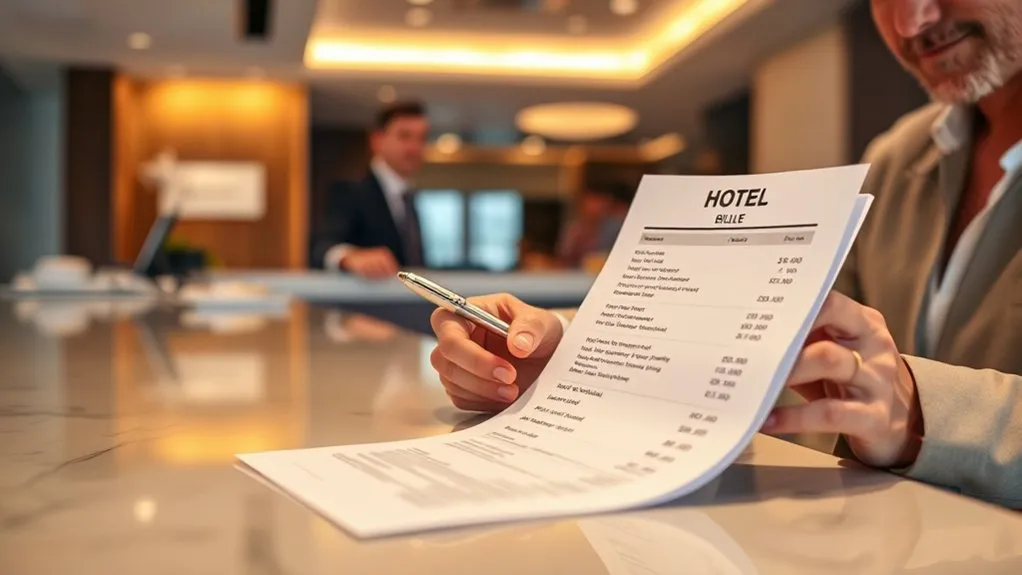
Before paying, review the final folio line by line. Confirm the guest name, room number, arrival and departure dates, number of nights, nightly rate, taxes, deposits, credits, and total balance.
Check optional purchases such as parking, valet service, room service, restaurant charges, spa treatments, minibar items, movies, pet fees, or transportation. Compare the folio with your booking confirmation and any receipts you kept during the stay. Look for duplicate charges, missing prepayments, incorrect dates, or items you did not buy.
In the United States, the FTC’s Rule on Unfair or Deceptive Fees, effective May 12, 2025, requires sellers of short-term lodging to display the total price with mandatory fees upfront, while taxes and optional add-ons may be disclosed separately before payment. A mandatory resort fee should not first appear as a surprise at checkout, although optional or usage-based charges can still be added to the final bill.
If anything looks wrong, ask the front desk to explain the charge and correct the folio before you approve payment. Keep your tone calm and show the relevant confirmation, receipt, or message.
A two-minute folio review is easier than trying to reconstruct the stay after you have left the property.
Settle Outstanding Charges
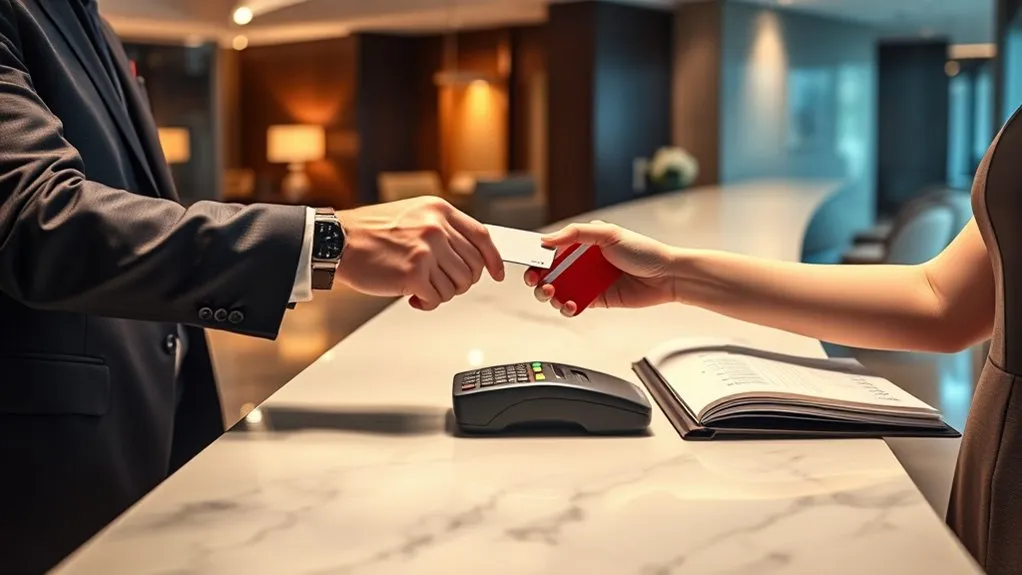
Once the bill is correct, settle any remaining balance and confirm which payment method the hotel will use. This is especially important if a card was placed on file at check-in or if another traveler, employer, or booking service prepaid part of the stay.
Review the Final Bill
Check the room rate, taxes, service charges, restaurant or minibar purchases, parking, credits, and deposits one last time. Ask the hotel to correct double billing, an omitted credit, or a charge you do not recognize before the folio is closed.
If the reservation was split between guests, a company account, points, a voucher, or more than one card, confirm exactly which charges go to each payment source.
Confirm the Payment Method
Tell the staff whether you want to use the card on file, a different credit or debit card, cash, or another accepted method. Do not assume every property accepts every form of payment or can split a folio after it has been finalized.
After payment is processed, compare the approved amount with the corrected final bill. Ask for an itemized receipt that shows the balance is paid or identifies any amount that will be charged later.
Warning: A hotel may place a temporary authorization hold on your credit or debit card. The FTC advises asking how much was blocked and when the hold will be removed. If you pay with a different card or with cash, ask the hotel to release the original hold promptly.
Pack and Double-Check Your Belongings
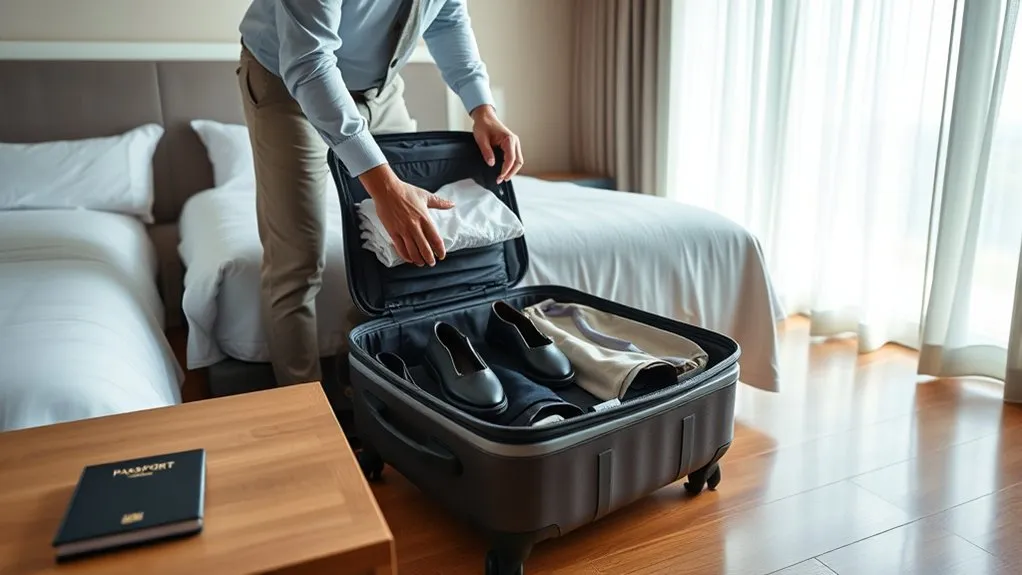
Pack before you start the final payment or transportation steps whenever possible. Gather clothing, toiletries, chargers, medications, jewelry, sunglasses, documents, children’s items, and anything stored in the refrigerator.
Then complete a slow room sweep. Check:
- Every drawer, shelf, closet, hanger, luggage rack, and bathroom counter
- The safe, including the back corners and any documents inside
- Power outlets, USB ports, lamps, and the area behind the bedside table
- Under the bed, beneath chairs, between sofa cushions, and behind curtains
- Sheets, blankets, pillows, and towels where small items can hide
- The shower, vanity, refrigerator, balcony, and entryway
- Passports, wallets, tickets, keys, parking stubs, and prescription medicine
Remove everything from the safe before closing it. Once your bags are packed, scan the room again from the doorway so you see the space from a different angle.
Pro Tip: Use the same sweep order every trip—safe, outlets, bed, bathroom, drawers, closet, refrigerator, floor. A repeatable route is less likely to miss a charger, passport, medication, or piece of jewelry.
Leave the Room Ready for Housekeeping
You do not need to deep-clean the room or make the bed. A few courteous steps can help: place trash in the bins, group used towels in the bathroom, return moved furniture to its original position, and remove food that belongs to you.
Report spills, broken items, or damage rather than hiding them. If you choose to tip housekeeping and tipping is customary at the destination, use the hotel’s labeled envelope, hand the tip to the intended staff member, or leave a clear note so loose cash is not mistaken for forgotten money.
Keep the “Do Not Disturb” sign inside the room when you leave unless the property instructs otherwise. Do not strip the bed or pile linens in an unusual place unless the hotel specifically asks guests to do so.
Return Room Keys or Key Cards
Follow the hotel’s instructions for physical keys, plastic key cards, wristbands, parking passes, or digital keys. Some properties want key cards returned at the desk or in a drop box. Others allow guests to leave cards in the room after completing mobile or express checkout.
If you are unsure, ask before leaving. Do not slide a physical key under the door or leave it in an unsecured public area.
Key Return Locations
Common return locations include the front desk, a labeled box in the lobby, a slot near the exit, or a designated container for after-hours checkout. Read the instructions in your booking message, hotel app, room folder, or departure email.
A collection slot does not necessarily deactivate a card instantly; the hotel’s property system controls access. Complete the required checkout process rather than assuming that dropping a card alone closes the account.
Handling Lost Keys
If a physical key, key card, wristband, or parking credential is missing, tell the hotel as soon as possible. Staff can deactivate electronic access and explain the replacement process. A replacement fee may apply, but that depends on the property and the type of credential.
Be ready to verify your identity and room details. Never write your room number on a loose key card because that could create a security risk if the card is lost.
Return Process Tips
Gather every key or card issued to your room, including extras held by other guests. Use the approved desk, box, app, or express-checkout method. If you leave before the front desk opens, confirm the after-hours procedure the night before.
Returning or disposing of a key card is separate from reviewing your bill, settling payment, and confirming departure. Complete all required steps, especially when the stay has unresolved charges.
Notify Hotel Staff of Your Departure
Tell the hotel you have left by using the method the property provides. You can speak with the front desk, call from the room, use the hotel app, follow an express-checkout form, or use another documented process.
State your room number and actual departure time if staff asks. Confirm that the account is closed, the correct email address is on file for the receipt, and there are no unresolved charges.
Not every hotel requires an in-person stop. However, notifying the property is especially useful when you depart early, leave outside normal hours, have luggage stored, need a corrected bill, or want housekeeping to know the room is vacant.
Arrange Transportation and Luggage Storage if Needed
Book a taxi, shuttle, rideshare, rental-car return, or public-transit connection early enough to allow for elevator waits, valet retrieval, traffic, and final billing. Confirm the pickup time and exact location because large hotels may have separate entrances for taxis, rideshare vehicles, buses, and private cars.
If the hotel offers a complimentary shuttle, ask about its schedule, capacity, reservation rules, and pickup point. For public transit, confirm the correct stop and allow time to buy or activate tickets.
If your flight, train, meeting, or attraction starts well after checkout, ask whether the hotel can store luggage. Get a claim ticket or digital record, confirm the collection deadline, and keep passports, medicine, cash, electronics, and other valuables with you unless the hotel specifically accepts them.
Request and Save an Itemized Receipt
An itemized receipt is proof of the charges the hotel finalized. Ask for a paper or emailed copy and check that it shows the property name, guest name, stay dates, room charges, taxes, extras, payments, credits, and remaining balance.
Receipts are especially useful for employer reimbursement, tax records, travel insurance claims, and later billing questions. The IRS Publication 463 explains recordkeeping requirements for qualifying business travel expenses, including lodging documentation.
The following is an illustrative receipt example only; your hotel, currency, taxes, and charges will differ:
| Description | Example Amount | What to Verify |
|---|---|---|
| Room Charge | $150.00 | Nightly rate, dates, and number of nights |
| Minibar | $25.00 | Items actually used and any taxes or service fees |
| Taxi Service | $30.00 | Whether transportation was billed through the hotel |
Save the receipt until the final charge and any temporary hold have cleared from your account. For business travel, follow your employer’s documentation rules as well.
Handle Problems After Checkout
Unexpected or Incorrect Charge
Contact the hotel first and ask for a corrected folio. Record the date, time, name of the person you spoke with, and any case number. Send supporting documents by email and keep copies.
If a U.S. credit-card billing error is not resolved, the Consumer Financial Protection Bureau advises contacting the card issuer promptly and sending a written billing-error notice within 60 calendar days after the charge appeared on the statement to preserve federal billing-error rights. Debit-card procedures and protections can differ, and rules outside the United States vary.
Authorization Hold Still Pending
Check whether the transaction is a pending authorization or a posted charge. Ask the hotel when it released the hold, then contact your card issuer for its processing timeline. A receipt showing the final payment can help explain the situation.
Item Left in the Room
Call the hotel as soon as possible. Give your name, room number, stay dates, a detailed item description, and the likely location. Ask for the lost-and-found process, storage period, identification requirements, and shipping costs. Do not assume the hotel can mail restricted, hazardous, perishable, or high-value items.
Hotel Checkout Checklist
- Confirm the checkout deadline and request extra time if needed.
- Pack your bags and complete a full room sweep.
- Review the itemized folio against your reservation and receipts.
- Correct errors and confirm deposits, credits, and optional charges.
- Choose the payment method and ask about any authorization hold.
- Leave the room reasonably tidy and report damage or spills.
- Complete front-desk, mobile, television, or express checkout.
- Return physical keys, cards, or passes as instructed.
- Save the itemized receipt and hotel contact details.
- Collect stored luggage, retrieve your vehicle, and meet transportation.
- Check the final posted charge after the trip.
Frequently Asked Questions
Can I check out late without an extra charge?
Possibly. Late checkout depends on the hotel, occupancy, your rate, and any loyalty benefits. Ask as early as possible and get the approved time and fee, if any, in writing or in the app. Staying past the deadline without approval may lead to a charge.
What happens if I lose my room key?
Notify the front desk promptly. Staff can verify your identity, deactivate an electronic key, and explain replacement options. A fee may apply depending on the hotel and whether the missing item is a disposable card, physical key, wristband, or parking credential.
Is express checkout available at every hotel?
No. Express and mobile checkout depend on the property, brand, reservation, and technology available. Check the hotel app, departure email, television menu, room information, or front desk instructions.
Can someone else check out on my behalf?
The hotel may allow it, but authorization rules vary. Contact the property before departure. The other person may need to be listed on the reservation, show identification, or have written permission, especially if payment changes or billing details are discussed.
How do I handle a dispute over my hotel bill?
Ask the hotel for an itemized folio and identify the exact charge you dispute. Provide your confirmation, receipts, and messages, then request a corrected bill. If the issue remains, contact the card issuer promptly and follow the dispute process that applies to your payment method and country.
Do I have to visit the front desk to check out?
Not always. Many hotels allow app, television, email, phone, key-drop, or express checkout. Visit or contact the desk when the bill needs correction, payment must change, the hotel requires key return, or you need help with luggage or transportation.
How long does a hotel card hold take to clear?
The timing depends on the hotel, payment method, card network, and issuing bank. Ask the hotel when it released the authorization and ask your bank when available funds or credit should return. Keep the final receipt until the hold disappears.
Can the hotel store my luggage after checkout?
Many hotels offer luggage storage, but availability, hours, fees, liability limits, and accepted items vary. Ask the front desk, keep the claim ticket, and carry essential documents, medicine, cash, and valuable electronics with you.
Conclusion
A smooth hotel checkout comes down to a short, repeatable routine: confirm the deadline, review the bill, settle payment, ask about card holds, sweep the room, follow the key-return instructions, and save the receipt. Complete the hotel’s approved checkout method, arrange transportation or luggage storage, and keep your documents until the final charge clears. These steps reduce billing surprises, forgotten items, and last-minute delays.
Sources
- Federal Trade Commission — Rule on Unfair or Deceptive Fees FAQ — mandatory fee and total-price disclosure rules for short-term lodging.
- Federal Trade Commission — Credit and debit card blocks — hotel authorization holds and questions to ask at checkout.
- Consumer Financial Protection Bureau — Disputing a credit-card charge — U.S. billing-error steps and deadlines.
- Marriott Bonvoy — Early check-in and late checkout guidance — property-specific timing and policy considerations.
- Hilton — Hilton Honors app — digital key and online checkout features for eligible stays.
- Internal Revenue Service — Publication 463 — recordkeeping guidance for qualifying business travel expenses.
