

Last Updated on July 30, 2026 by Caleb Warren
Backpack theft on trains is usually a crime of opportunity: a bag is left out of sight, a zipper is easy to reach, or a traveler is distracted near a platform, doorway, café, or luggage rack. You do not need expensive equipment to lower the risk. A few packing choices, smart bag placement, and steady awareness provide the strongest protection.
Quick Answer
Keep your backpack closed, within sight, and in physical contact with you whenever possible. Put passports, payment cards, phones, and other essentials in an interior pocket or small personal bag. Watch your luggage closely at stops, carry the bag in front in dense crowds, and report a theft immediately.
Key Takeaways
- Keep high-value and hard-to-replace items on your body or in a small bag that stays with you.
- Place your backpack on your lap, between your feet, under the seat when permitted, or on a rack you can see.
- Pay extra attention while boarding, leaving, sleeping, using a phone, and when the train stops.
- Locks, zipper clips, slash-resistant materials, and trackers can deter theft, but none make a bag theft-proof.
- If a bag is stolen, tell rail staff and police, protect financial accounts and devices, and document the loss for insurance.
At a Glance
| Time Required | 5–10 minutes before boarding, plus normal awareness during the trip |
| Difficulty | Easy |
| Tools Needed | None required; optional zipper clip, small luggage lock, identification tag, and device or bag tracker |
| Cost | $0 with existing gear; commonly $5–$40 for optional deterrents |
Disclosure: As an Amazon Associate I earn from qualifying purchases. Some links on this page are affiliate links, at no extra cost to you.
Understanding the Risks of Backpack Theft on Trains
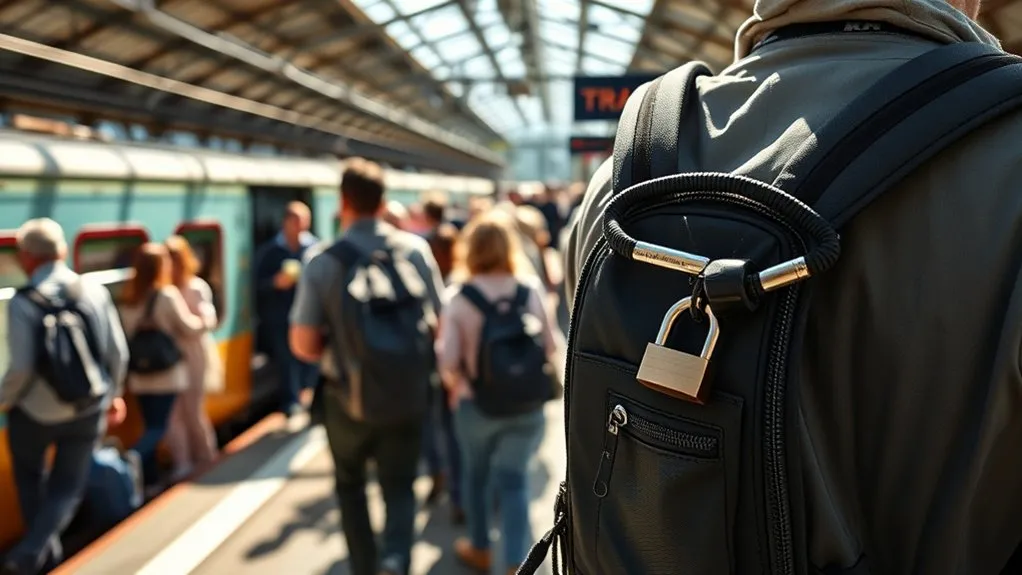
Busy stations and train cars give thieves cover because people are moving, looking at departure boards, handling tickets, or squeezing through doors. The British Transport Police describes common tactics that include stealing from sleeping passengers, taking bags before departure, snatching devices near closing doors, and using one person to distract a traveler while another steals.
The highest-risk moments are often transitions: boarding, leaving, standing near an exit, buying food, changing trains, or waiting while doors are open. A thief may take a whole bag, open an outer pocket, or grab a phone that is lying on a table. Keep valuables out of obvious pockets and check any bag stored away from your seat each time the train stops.
“Keep luggage with you whenever possible and regularly check on your stored bags at stops.” — British Transport Police
Prepare Before You Board
A secure trip starts before you reach the platform. Pack so that losing one bag would not also remove every document, payment method, and way to ask for help.
- Separate essentials: Keep your passport or ID, primary phone, payment cards, medication, and keys in a zipped interior pocket, money belt, or small personal bag.
- Limit what you carry: Leave unnecessary valuables at home and avoid displaying expensive electronics, watches, or large amounts of cash.
- Record important details: Save photos of the bag and valuable items, plus serial numbers and purchase records, in secure cloud storage.
- Enable device recovery: Turn on Apple Find My, Google Find Hub, or Microsoft Find My Device before the trip. These services must usually be enabled before a device goes missing.
- Use a privacy-safe luggage tag: Add a phone number or email address, but avoid displaying your home address, full itinerary, or other unnecessary personal details.
- Know the operator’s rules: Check where bags may be stored and whether locks or cables are allowed. Rail policies vary by operator, route, and equipment.
Pro Tip: Keep a separate list of bank, insurer, rail operator, and emergency contact details somewhere other than inside the backpack or the phone stored in it.
Essential Anti-Theft Gear for Train Travel
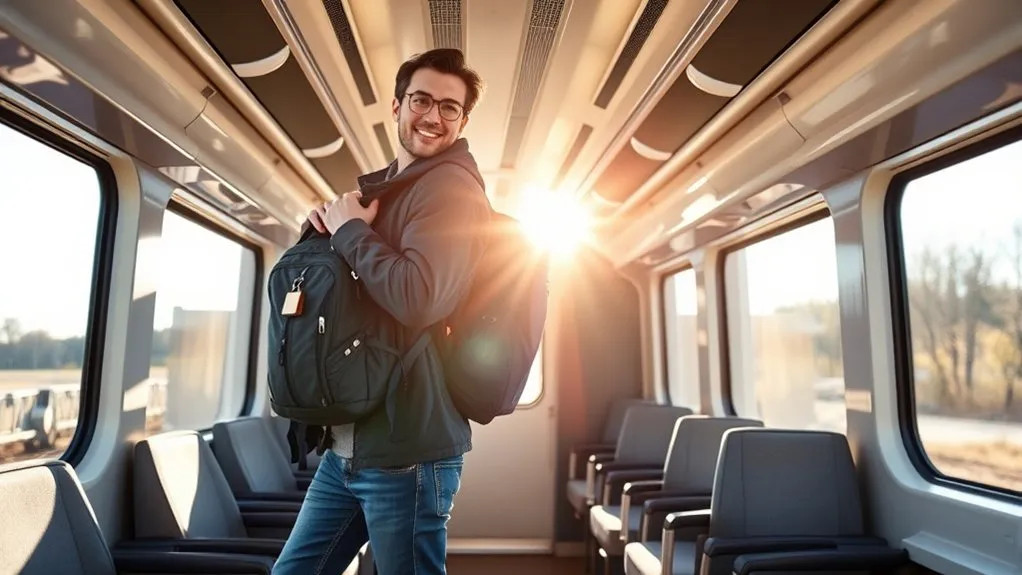
Anti-theft gear can slow down an opportunistic thief or make another bag look easier to target. It does not replace careful placement and awareness. Choose equipment that is simple enough to use every time rather than a complicated system you will stop using.
Secure Luggage Options
Look for strong fabric, reinforced seams, covered or lockable zipper pulls, and straps that resist quick cutting. Steel mesh panels and slash-resistant straps may add protection, but performance varies by product. A hard-shell case can resist casual cutting, yet it can still be carried away if left unattended.
A small zipper lock or locking clip can prevent a quick hand from opening a compartment. It will not stop someone from taking the entire backpack. Use locks only where permitted, and never let a cable, strap, or bag block an aisle, door, emergency device, or another passenger’s access.
Portable Safe Solutions
A compact portable safe or locking pouch may help protect a passport, backup card, or cash in a sleeper compartment or other private space. Choose a model that fits your needs and follow the train operator’s rules before attaching it to any fixture. Keep emergency documents accessible enough that you can take them with you quickly.
Do not treat a portable safe as a substitute for keeping valuables nearby. A thief may take the safe with the bag, and a visible cable can advertise that the contents are valuable.
Anti-Theft Backpack Features
Useful features include lockable zipper pulls, concealed openings, an interior valuables pocket, reinforced straps, and a design that keeps the main zipper against your body. Use precise terms such as puncture-resistant or slash-resistant; no ordinary travel backpack is puncture-proof or theft-proof.
RFID-blocking pockets are optional and address contactless-card scanning concerns, not physical backpack theft. They should not be the main reason you choose a bag. A closed interior pocket and strong control of the backpack are more relevant on a train.
Note: A tracker may help locate a missing bag, but location data is not permission to confront a suspected thief. Give the information to police or rail security.
Strategic Placement of Valuables
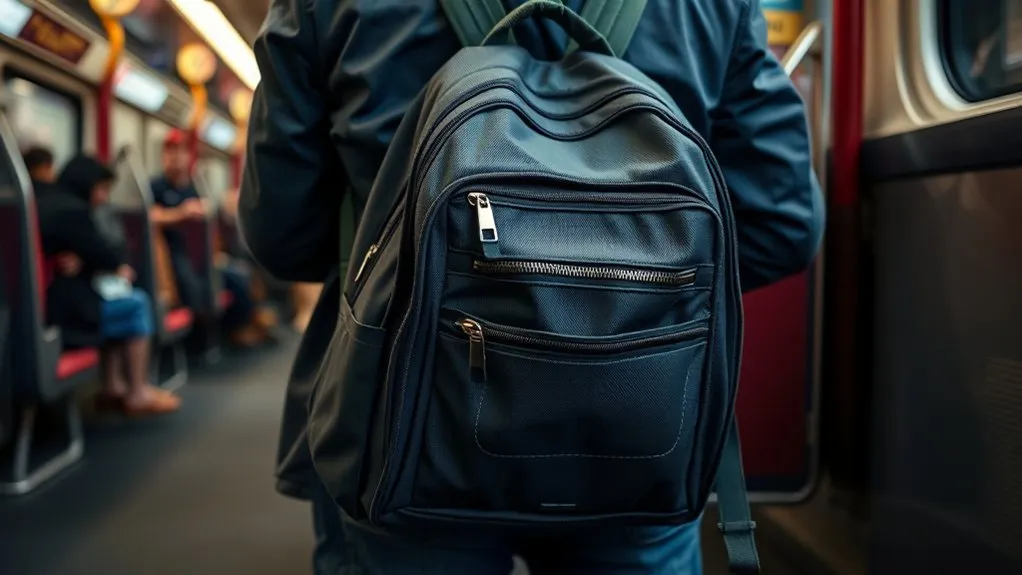
Where you place valuables matters more than how many locks you buy. Divide items by importance and access. Keep documents, payment methods, and devices closest to your body, while clothing and replaceable items can go in the larger backpack.
Concealed Clothing Pockets
Zipped interior pockets, a money belt, or travel clothing with secure pockets can reduce easy access. Avoid loose rear pockets, open jacket pockets, or the top pocket of a backpack in a crowd. Do not repeatedly reveal the location of your cash or passport in public; retrieve items discreetly and close the pocket immediately.
Keep at least one backup payment method separate from your main wallet. Do not place all identification, cards, and cash in one pouch that could be lost at once.
Front-Facing Backpack Position
Carry your backpack in front when a platform, escalator, doorway, or train car becomes tightly packed. This keeps the zippers in view and makes unnoticed access harder. British Transport Police also recommends carrying bags in front or diagonally across the chest in pickpocket-prone settings.
Return the bag to a normal, balanced carrying position once the crowd clears, especially on stairs or while walking a long distance. A front-facing backpack can affect balance and visibility if it is large.
Safe Luggage Rack Placement
Choose an overhead rack, between-seat space, or luggage area that you can see from your seat whenever possible. Put distinctive but non-valuable identification on the bag so you can recognize it quickly. Avoid storing passports, wallets, phones, medication, or keys in a large backpack placed near a door or at the far end of the car.
If your bag must be out of sight, check it before departure and at every stop. When practical, choose a seat with a clear view of the storage area.
Maintaining Situational Awareness
Situational awareness means noticing what is happening without treating every nearby passenger as suspicious. The goal is to recognize moments when your attention and belongings are vulnerable.
- Keep your backpack on your lap, between your feet, or otherwise in contact with you while seated, as long as it does not block the aisle.
- Close every zipper after use. Do not leave a phone, wallet, or ticket case on an empty seat or table.
- Lower headphone volume or remove one earbud in stations, during boarding, and near your stop.
- Be alert when someone crowds, bumps, blocks, spills something, asks for urgent help, or creates a commotion near you.
- Check the bag immediately if you feel pressure, movement, or a zipper being touched.
- Stay especially attentive as doors open and close, because a thief can leave before you can react.
Techniques for Securing Your Backpack
Use a layered approach that fits the type of train and the length of the journey:
- While seated: Keep the bag on your lap, between your feet, or under the seat when the operator permits it. Looping a shoulder strap around your leg can add contact without attaching the bag to train equipment.
- In a crowd: Move the backpack to your front, close the zippers, and keep one hand on the bag.
- On a luggage rack: Position the bag where you can see it, with the zipper pulls facing inward. Check it at every station.
- When leaving your seat: Take valuables and travel documents with you. Avoid leaving the bag unattended, especially near a stop.
- When sleeping: Keep the small valuables bag on your body or directly beside you. In a sleeper compartment, lock the compartment door when the operator provides a lock and advises its use.
- With an optional lock: Use a zipper lock or clip as a delay, not a guarantee. Ask staff before fastening a cable to a rack or seat.
Warning: Never attach luggage to emergency equipment, doors, handrails needed by passengers, or anything that could obstruct evacuation. Follow crew instructions and the operator’s baggage rules.
Using a Decoy Wallet Safely
A decoy wallet is optional. It may reduce the amount lost in a simple pickpocketing incident, but it is not a proven defense and should never encourage confrontation. The safer strategy is to carry fewer valuables and divide them between secure locations.
- Use only a small amount of cash you can afford to lose.
- Do not include a real, expired, or copied ID containing personal information.
- Do not include active payment cards, account numbers, passwords, or documents.
- Keep your real wallet in a zipped interior pocket or money belt.
- If someone threatens you with a weapon, prioritize personal safety, avoid resistance, and follow local emergency guidance. Property is replaceable.
Monitoring Your Surroundings for Hidden Threats
Scan the area during natural pauses instead of staring at people. Notice who is near your bag, whether someone is repeatedly changing position around you, and whether a distraction draws attention away from belongings. Pickpockets may work in teams, but an accidental bump or request for help is not proof of a crime.
Position yourself where you can see your bag and, when practical, the door area. Avoid becoming fully absorbed in a phone, laptop, game, or conversation during boarding and stops. If behavior concerns you, move closer to rail staff or other passengers and report the situation rather than confronting anyone.
What to Do if Your Backpack Is Stolen on a Train
- Tell rail staff immediately: Give the train number, car, seat, direction of travel, last place you saw the bag, and a clear description. Ask how to contact the rail operator’s police, security, or lost-property team.
- Report the theft to police: Get an incident or report number. This may be required for insurance and can help authorities request video before it is overwritten.
- Do not chase or confront a suspect: Share descriptions and tracker information with police or rail security.
- Protect devices: Use the manufacturer’s locate or lost-device service to mark devices as lost, lock them, or erase them when appropriate. Contact the mobile carrier if a phone or SIM is missing.
- Protect money and identity: Freeze or cancel payment cards, review transactions, and change important passwords. If sensitive information was inside, follow the recovery steps at IdentityTheft.gov.
- Report a stolen passport: U.S. travelers should report it to the State Department right away and contact the nearest U.S. embassy or consulate when abroad, following USAGov guidance. Travelers from other countries should contact their issuing authority or embassy.
- Document the loss: List stolen items, approximate values, serial numbers, receipts, photos, and all report numbers.
- Contact insurers: Travel insurance may cover stolen baggage or personal effects, often with limits, exclusions, proof requirements, and secondary-coverage rules. Read the policy before assuming an item is covered.
Frequently Asked Questions
What should I do first if my backpack is stolen on a train?
Tell rail staff immediately and report the theft to the appropriate police or transit-security service. Give the train, car, seat, time, direction, bag description, and last known location. Ask for a report number, then protect cards, devices, accounts, and identity documents.
Are specific train routes known for higher theft rates?
Risk changes by city, station, time, crowd level, and current crime patterns, so a permanent worldwide list of “worst routes” would be unreliable. Check the rail operator, local police, and official destination advisory before travel, and use the same precautions on every busy service.
Can travel insurance cover a stolen backpack on a train?
It can, but coverage depends on the policy. Baggage or personal-effects coverage may be secondary and may limit electronics, cash, jewelry, unattended property, or items without receipts. Report the theft promptly and keep the police report, rail report, receipts, and ownership records.
How do I report theft to train authorities?
Approach the conductor, train manager, station officer, or transit police as soon as possible. Use the operator’s emergency or non-emergency contact method as directed. Provide exact trip details and ask where to submit a formal lost-property or theft report.
What items are commonly targeted in train theft?
Portable, valuable, and easy-to-resell items deserve the most protection, including phones, laptops, cameras, wallets, payment cards, cash, passports, and small electronics. Keep these on your body or in a personal bag rather than in luggage stored near a door.
Should I lock my backpack to a train luggage rack?
Only when the rail operator allows it and the lock cannot obstruct passengers, crew, doors, or emergency access. A small zipper lock is usually less disruptive. When unsure, ask staff and rely on visible placement and keeping valuables with you.
Is an anti-theft backpack enough to prevent theft?
No. Lockable zippers, concealed openings, reinforced fabric, and resistant straps can slow access, but a thief can still take an unattended bag. Placement, attention, and keeping essentials on your body remain more important than any single product feature.
Conclusion
The best way to avoid backpack theft on trains is to remove easy opportunities. Keep valuables close, close every compartment, watch stored luggage at stops, and stay attentive during crowded transitions. Use locks, resistant materials, and trackers as extra layers rather than guarantees. If theft occurs, protect yourself first, report it quickly, and secure your money, devices, documents, and accounts.
Sources
- British Transport Police — Be Aware — common rail-theft tactics and advice to keep luggage nearby and check it at stops.
- British Transport Police — Travel Safely by Rail — station, onboard, night-travel, reporting, and belongings guidance.
- British Transport Police — Pickpocketing Prevention — distraction tactics, secure pockets, and front-facing bag advice.
- National Association of Insurance Commissioners — Travel Insurance — baggage and personal-effects coverage, limitations, and exclusions.
- USAGov — Lost or Stolen Passports — official reporting and replacement steps for U.S. passports.
- IdentityTheft.gov — Information Lost or Stolen — steps to protect accounts and identity information after a theft.

