
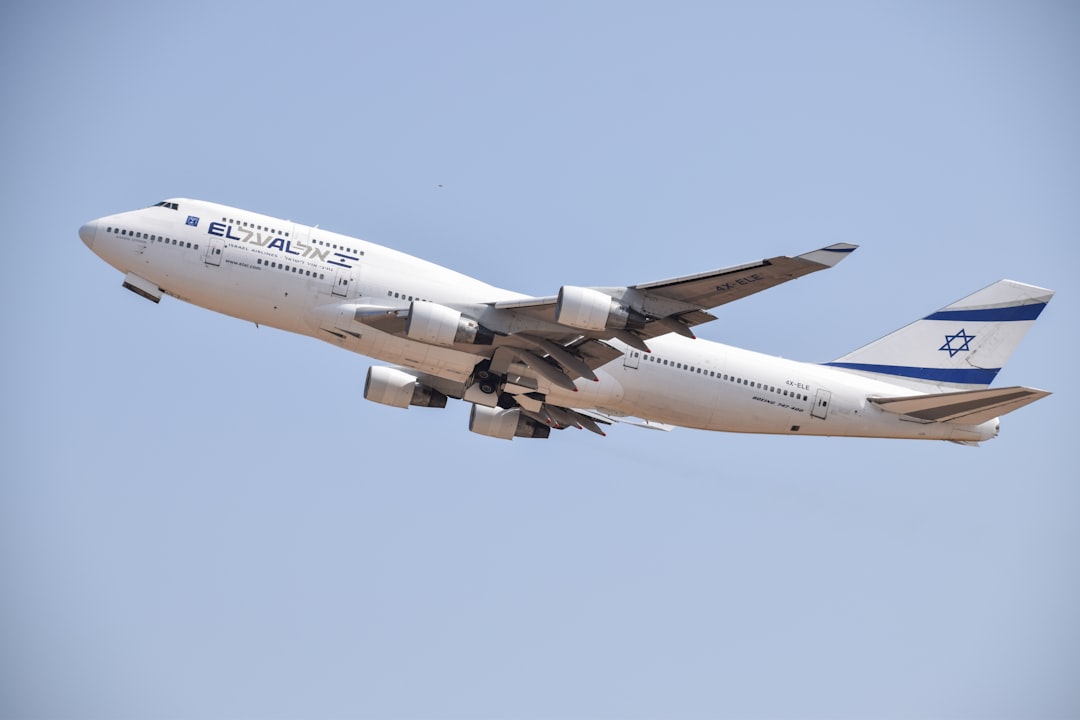
Last Updated on July 24, 2026 by Daniel Globe
Crossing an ocean once took weeks by ship. A modern commercial jet can complete the same journey in hours. Most airliners are not flown at their maximum possible speed, however. Airlines balance journey time with fuel use, weather, traffic, passenger comfort, and safety. Understanding the numbers also requires knowing the difference between airspeed, ground speed, and Mach number.
Quick Answer
Most commercial jet airliners cruise at Mach 0.78 to 0.85, roughly 520 to 580 mph (840 to 930 km/h) through the surrounding air at altitude. Ground speed may be much higher or lower because of wind. Concorde cruised near Mach 2, while the Tu-144 reached a slightly higher Mach number.
Key Takeaways
- Modern commercial jets normally cruise at about Mach 0.78 to Mach 0.85 rather than at their maximum certified speed.
- Airspeed measures movement through the surrounding air, while ground speed includes the effect of headwinds and tailwinds.
- The Tu-144 had a higher published Mach number, but Concorde became the more successful supersonic passenger airliner and still holds the commercial transatlantic crossing record.
- Aircraft weight, altitude, temperature, weather, air traffic, routing, and fuel strategy all affect the speed used on a flight.
- New supersonic projects have reached important test milestones, but no next-generation supersonic airliner is carrying scheduled passengers as of July 2026.
What’s in This Article
- How Airliner Speed Is Measured
- Typical Airliner Speeds During Each Flight Phase
- The Fastest Commercial Airliners and Their Cruise Speeds
- What Affects Airliner Speed
- How Aircraft Design and Technology Drive Speed
- Why Airlines Balance Speed with Fuel Efficiency
- The Future of Airliner Speed
- The History of Supersonic Passenger Flight
- Aviation Speed Records Worth Knowing
- How Faster Airliners Change Travel
- How Airlines Manage Speed Safely
- What Flying at High Speed Feels Like
- Frequently Asked Questions
Disclosure: As an Amazon Associate I earn from qualifying purchases. Some links on this page are affiliate links, at no extra cost to you.
How Airliner Speed Is Measured
An airliner can have several correct speed readings at the same time. Each one answers a different question, which is why a flight-tracking app may show a number that looks very different from the speed shown in the cockpit.
| Speed term | What it means | Why it matters |
| Indicated airspeed | The speed shown on the aircraft’s primary airspeed display before all corrections are applied. | Pilots use it for takeoff, approach, structural limits, and low-altitude speed control. |
| True airspeed | The aircraft’s actual speed through the surrounding mass of air. | It is useful when comparing cruise performance and calculating navigation. |
| Ground speed | The aircraft’s speed relative to the ground below it. | A tailwind raises it, while a headwind lowers it. This is usually the speed shown by flight-tracking apps. |
| Mach number | The aircraft’s speed divided by the local speed of sound. | High-altitude jets use Mach because the speed of sound changes with atmospheric temperature. |
Mach 1 means the aircraft is moving at the local speed of sound. Mach 0.85 means it is moving at 85% of that local speed. Because the speed of sound is lower in the cold air found near normal jet cruising altitudes, converting Mach into mph produces only an approximate number.
Note: A flight tracker showing 700 or even 800 mph does not necessarily mean the aircraft has gone supersonic. A strong tailwind can push a subsonic aircraft to a very high ground speed while its speed through the surrounding air remains below Mach 1.
Typical Airliner Speeds During Each Flight Phase
A commercial aircraft does not maintain one speed from the gate to the destination. The crew and flight-management system use different speeds for taxiing, takeoff, climb, cruise, descent, and landing.
| Flight phase | Typical range | What affects it |
| Taxi | About 10–30 knots | Airport rules, turns, congestion, surface conditions, and proximity to buildings or other aircraft. |
| Takeoff rotation | Often about 130–170 knots | Aircraft type, weight, runway length, elevation, temperature, wind, and flap setting. |
| Climb below 10,000 feet | Usually no more than 250 knots in U.S. airspace unless authorized or otherwise permitted | Airspace rules, traffic, aircraft performance, noise procedures, and controller instructions. |
| High-altitude cruise | About Mach 0.78–0.85 for most modern jets | Aircraft model, weight, altitude, temperature, cost index, turbulence, and schedule requirements. |
| Final approach | Often about 120–160 knots | Landing weight, flap setting, wind, runway conditions, and the aircraft’s calculated reference speed. |
These ranges are examples rather than operating instructions. Pilots calculate the required takeoff and landing speeds for each flight. A lightly loaded narrow-body jet on a long runway may use a different rotation speed from a fully loaded wide-body aircraft departing a hot, high-elevation airport.
The Fastest Commercial Airliners and Their Cruise Speeds
The fastest passenger aircraft depend on how “fastest” is defined. The Soviet Tupolev Tu-144 had a higher stated cruise Mach number than Concorde. Concorde, however, operated a much longer and more successful passenger service and still holds the record for the fastest commercial crossing from New York to London.
| Aircraft | Typical or stated cruise speed | Status and context |
| Tupolev Tu-144 | About Mach 2.15 | Retired. It flew before Concorde and had a higher stated Mach number, but its passenger career was brief. |
| Concorde | About Mach 2.04, roughly 1,350 mph | Retired in 2003 after 27 years of passenger service. It holds the commercial New York-to-London crossing record. |
| Boeing 747-8 | Around Mach 0.85 | A fast subsonic wide-body aircraft. Passenger and freighter versions remain in operation. |
| Boeing 787 Dreamliner | Mach 0.85 | A current long-haul twin-engine airliner designed to combine speed, range, and lower fuel use. |
| Airbus A350 | Mach 0.85 | A current composite-intensive long-haul airliner. Airbus lists Mach 0.85 as its cruise speed. |
| Boeing 777 | Mach 0.84 | A widely used long-haul aircraft. Boeing describes its cruise speed as close to that of the 787 and 747-8. |
| Airbus A380 | Around Mach 0.85 | The world’s largest passenger airliner. The final new A380 was delivered in 2021, but the type remains in airline service. |
Concorde could cruise at more than twice the speed of sound and complete a normal transatlantic journey in far less time than a subsonic airliner. On February 7, 1996, a British Airways Concorde flew from New York to London in 2 hours, 52 minutes, and 59 seconds.
Concorde’s 2-hour, 52-minute, 59-second New York-to-London crossing remains the fastest transatlantic flight by a commercial aircraft.
Note: Airbus delivered the final newly built A380 in December 2021. Ending production did not ground the existing fleet, and airlines continue to use the aircraft on selected high-demand routes.
What Affects Airliner Speed
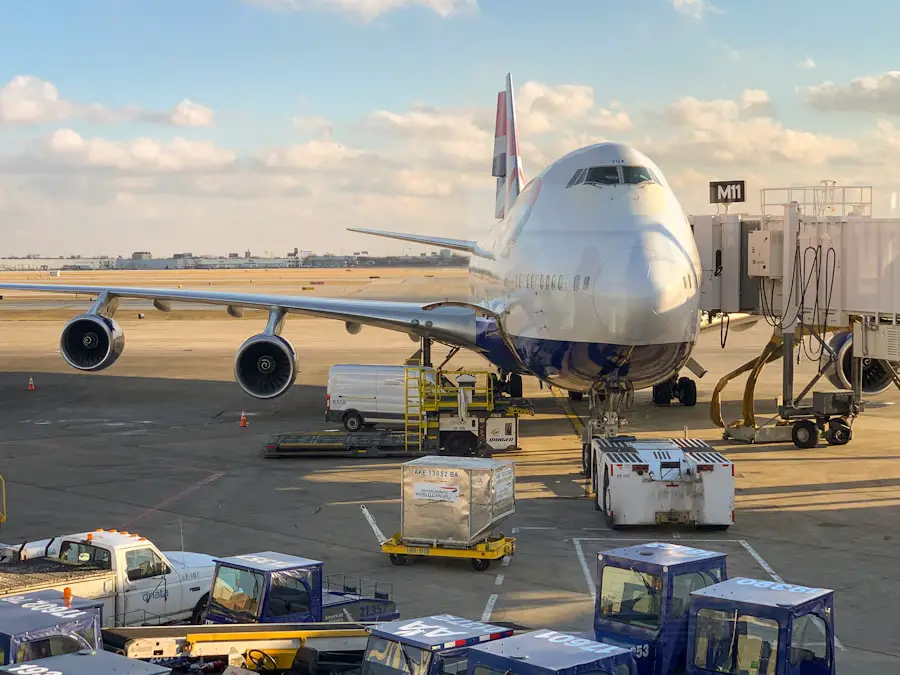
Air traffic control procedures influence the route, altitude, sequence, and sometimes the speed assigned to an aircraft. A capable jet may have to slow down, level off, follow a longer arrival path, or wait for traffic ahead. This changes the total journey time even when the aircraft is capable of cruising faster.
Wind and weather
A headwind lowers ground speed because the aircraft is flying into moving air. A tailwind raises ground speed by carrying the aircraft toward its destination. The aircraft may maintain almost the same Mach number and true airspeed in both situations.
Thunderstorms, strong turbulence, volcanic ash, icing conditions, and areas of intense wind may require a route or altitude change. Pilots can also reduce speed in turbulence to keep structural loads and passenger movement within safe limits.
Pro Tip: Eastbound flights across the North Atlantic are often shorter than westbound flights because prevailing upper-level winds generally flow from west to east. The exact difference changes daily and can be much larger or smaller than 30 minutes.
Aircraft weight
A heavily loaded aircraft may climb more slowly and remain at a lower altitude during the first part of a long flight. As fuel burns and the aircraft becomes lighter, the crew may request a higher cruising level where the jet can operate more efficiently.
Altitude and temperature
Jets normally cruise in thinner air because lower air density reduces drag. Many airline flights operate between about 30,000 and 42,000 feet, although the exact altitude depends on aircraft type, weight, route direction, weather, and traffic.
Temperature also affects engine performance, lift, true airspeed, and the local speed of sound. This is one reason high-altitude speed is normally expressed as a Mach number instead of a fixed mph value.
Routing and congestion
The shortest line on a map is not always the route an aircraft can use. Restricted airspace, military activity, storms, airport arrival procedures, and traffic congestion can all add distance. A faster cruise speed may save only a few minutes if the flight must follow a long reroute or wait in an arrival sequence.
How Aircraft Design and Technology Drive Speed
| Design factor | Effect on speed and efficiency |
| Fuselage and wing shape | A carefully streamlined shape reduces drag while producing enough lift for the aircraft’s weight and mission. |
| Wing sweep | Swept wings help delay the drag rise and airflow problems that occur as parts of the airflow approach the speed of sound. |
| Engine design | Modern turbofans provide the thrust needed for high-subsonic cruise while using less fuel and producing less noise than many older engines. |
| Lightweight materials | Composites and advanced alloys can lower structural weight, allowing more payload, range, or fuel efficiency. |
| Winglets and shaped wing tips | These reduce lift-induced drag, especially during climb and cruise, although the benefit depends on the complete wing design. |
| Flight-control and planning systems | These help crews remain within speed limits and select an efficient combination of route, altitude, and cruise speed. |
Aircraft design sets the practical speed range of an airliner. A streamlined fuselage and carefully designed wing reduce drag, but the aircraft must also carry passengers, cargo, fuel, landing gear, and safety systems. A shape designed only for maximum speed may perform poorly at low speed or consume too much fuel for airline use.
Modern commercial jets use high-bypass turbofan engines because airlines need a combination of thrust, efficiency, reliability, and acceptable noise. These engines are well suited to high-subsonic travel. Supersonic aircraft need a different balance because the engine and airframe must manage stronger shock waves, greater drag, and much higher temperatures.
Aircraft such as the Boeing 787 and Airbus A350 use large amounts of composite material. Lower structural weight does not automatically make an aircraft faster, but it can help the aircraft carry its required payload and fuel while operating efficiently at its planned cruise speed.
Why Airlines Balance Speed with Fuel Efficiency
Airlines rarely operate a passenger jet at its maximum permitted speed for an entire flight. Flying faster generally increases drag and fuel consumption. Near the speed of sound, compressibility effects and shock waves can cause drag to rise sharply, making each additional increase in speed expensive.
Instead, an airline chooses a cruise speed that balances several costs:
- fuel consumption;
- crew and aircraft operating time;
- maintenance requirements;
- passenger connections and schedule recovery;
- weather and air traffic conditions;
- the aircraft’s weight and most efficient altitude.
Flight-management systems can use an airline-selected cost index to help calculate an economical climb, cruise, and descent profile. A higher cost index may favor time savings, while a lower one may favor reduced fuel use. The selected speed still has to remain within the aircraft’s certified and operational limits.
The Boeing 787 family combines a Mach 0.85 cruise speed with fuel-use improvements that Boeing says can reach about 25% compared with aircraft it typically replaces. That is a better example of current airline priorities than simply increasing maximum speed.
Note: Sustainable aviation fuel can reduce lifecycle emissions depending on how it is produced, but it does not remove the need to improve aircraft efficiency. Burning fuel at a higher rate still increases the amount required for a flight.
The Future of Airliner Speed
Supersonic passenger travel is receiving renewed attention, but current test aircraft should not be confused with certified commercial airliners. As of July 2026, no next-generation supersonic aircraft is carrying passengers on scheduled airline routes.
Boom Supersonic and Overture
Boom Supersonic’s XB-1 demonstrator completed its first supersonic flight on January 28, 2025. XB-1 is a small technology demonstrator rather than the passenger aircraft that Boom intends to place in airline service.
Boom describes Overture as a planned Mach 1.7 airliner. Its Symphony engine is also under development, with operational engine-core testing identified as a 2026 program milestone. These are development targets. Overture still must complete design, manufacturing, flight testing, certification, and airline-entry requirements before carrying scheduled passengers.
NASA’s X-59 quiet-supersonic research
NASA’s X-59 reached supersonic speed for the first time on June 5, 2026, reaching approximately Mach 1.1. On June 12, it reached Mach 1.4 at about 55,000 feet, the planned speed and altitude for later quiet-supersonic research flights.
The X-59 program is not developing an airline cabin or commercial service. Its purpose is to test an aircraft shape designed to produce a quieter sonic “thump” and provide data that regulators can use when considering future noise standards.
Changing U.S. supersonic rules
The United States has generally prohibited civil flight above Mach 1 over land except through special authorization. In July 2026, the FAA published a proposed path toward replacing the broad prohibition with noise-based operating standards. The FAA says it aims to finalize related rules by the middle of 2027.
This means overland supersonic airline service is not yet generally permitted. Aircraft manufacturers will need to satisfy future noise requirements as well as the normal safety, environmental, and certification rules applied to passenger aircraft.
Electric and hybrid aircraft
Electric and hybrid-electric propulsion may improve the efficiency of smaller aircraft and shorter routes, but current battery weight limits make all-electric, high-speed, long-haul airliners impractical. Near-term electric and hybrid programs are more likely to focus on regional travel, reduced fuel use, and lower local emissions than on beating current long-haul cruise speeds.
Better routing and flight planning
Airlines already use flight-planning software, updated winds, weather forecasts, aircraft-performance data, and air traffic information to select routes and altitudes. More advanced optimization can reduce journey time or fuel use without increasing an aircraft’s maximum speed. The best solution may be a shorter route or better altitude rather than a faster Mach number.
The History of Supersonic Passenger Flight
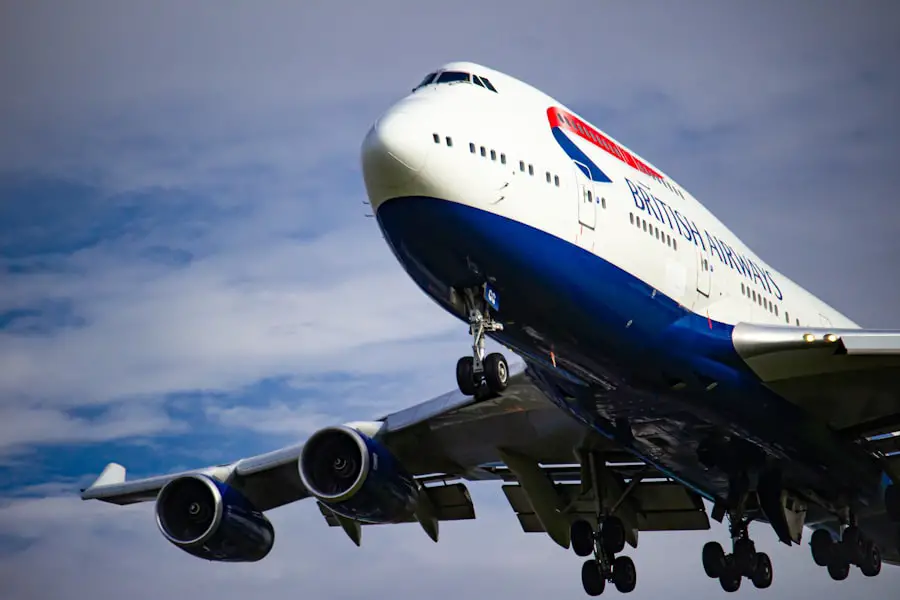
The first piloted aircraft to exceed the speed of sound was the Bell X-1. On October 14, 1947, Chuck Yeager flew the rocket-powered research aircraft to Mach 1.06 at about 43,000 feet. The flight proved that a properly designed aircraft could pass safely through the transonic region.
The Soviet Tupolev Tu-144 made its first flight in December 1968, before Concorde’s first flight in March 1969. The Tu-144 also reached a higher published Mach number. However, its airline career was short, and it did not establish a long-running international passenger network.
Concorde entered scheduled passenger service with British Airways and Air France on January 21, 1976. It later became closely associated with transatlantic travel between Europe and New York. At cruise, its delta wing, slender fuselage, engine intakes, and turbojet engines allowed it to maintain roughly Mach 2.
Supersonic travel came with serious trade-offs. Concorde carried fewer passengers than a large subsonic wide-body, consumed substantial fuel, produced high airport noise, generated sonic booms, and required specialized maintenance. Restrictions on routine supersonic operation over land limited the routes on which its full speed offered a useful advantage.
British Airways and Air France ended Concorde service in 2003. The decision followed rising operating costs, limited demand, maintenance considerations, the effects of the 2000 Air France Flight 4590 accident, and a difficult aviation market after 2001.
Warning: A sonic boom affects people and structures along the aircraft’s flight path. Supersonic operation over populated land requires regulatory approval and compliance with applicable noise limits; it is not simply a matter of an aircraft being technically capable of exceeding Mach 1.
Aviation Speed Records Worth Knowing
Fastest commercial transatlantic crossing
A British Airways Concorde completed the flight from New York’s JFK Airport to London Heathrow in 2 hours, 52 minutes, and 59 seconds on February 7, 1996. It covered approximately 3,750 miles and averaged about 1,250 mph over the route.
Fastest crewed air-breathing aircraft
The Lockheed SR-71 Blackbird was a military reconnaissance aircraft rather than a passenger jet. NASA states that the Blackbird was designed to cruise around Mach 3.2, or more than 2,200 mph, at altitudes reaching approximately 85,000 feet.
The SR-71 demonstrates what a specialized aircraft can achieve when speed and altitude are central to its mission. It does not provide a direct model for airline service because it carried a tiny crew, required specialized fuel and maintenance, operated at extreme temperatures, and did not need to carry an airline-sized cabin or commercial payload.
Fastest does not always mean shortest journey
Aircraft speed is only one part of total travel time. Taxi delays, runway queues, indirect routing, holding patterns, connections, and airport processing may take longer than the minutes saved by a modest increase in cruise speed. That is why airlines often gain more from reliable schedules and efficient routing than from operating every flight close to its maximum permitted Mach number.
How Faster Airliners Change Travel
Faster flights can increase the number of destinations that fit into a practical business or leisure schedule. Concorde showed that a journey between New York and London could take less than three hours under record conditions and roughly three and a half hours in normal service.
For business travelers, several hours saved on a long route can make a same-day meeting or a shorter overnight trip more practical. For leisure travelers, shorter flights can mean more usable time at the destination and less time spent adjusting plans around a long journey.
The most valuable speed improvement is not always a higher maximum Mach number. A direct route, favorable wind, efficient airport operation, and reliable departure can save more time than a small increase in cruise speed.
Faster aircraft can also expand tourism and business links, but only when fares, range, airport access, noise, reliability, and operating costs make the service practical. Concorde proved the technical appeal of supersonic travel while also showing why speed alone does not guarantee commercial success.
How Airlines Manage Speed Safely
Every certified airliner has defined operating limits. Pilots and aircraft systems monitor indicated airspeed, Mach number, configuration, structural limits, and engine performance throughout the flight.
At high altitude, crews must remain below the aircraft’s maximum operating Mach number. At lower altitude, indicated airspeed and configuration limits become more important. Flaps, landing gear, and other movable components each have maximum permitted operating speeds.
Takeoff and landing speeds are calculated for the specific flight rather than selected from one universal number. The calculation may include:
- aircraft weight;
- runway length and slope;
- airport elevation;
- air temperature and pressure;
- wind direction and strength;
- runway contamination;
- flap configuration;
- obstacles and required climb performance.
Modern aircraft also provide overspeed warnings, flight-envelope protections on applicable models, autopilot and autothrottle functions, weather information, and performance monitoring. These systems support the crew, but pilots remain responsible for managing the flight and responding to changing conditions.
Speed and safety are not opposing goals. Manufacturers must demonstrate that a new aircraft meets structural, control, performance, evacuation, engine, system, and operational requirements before regulators approve it for passenger service. Airlines then operate the aircraft within those approved limits.
What Flying at High Speed Feels Like
You normally do not feel the steady speed of an aircraft in smooth cruise. Your body senses acceleration and changes in motion, not constant velocity. At 550 mph in calm air, the cabin can feel almost motionless because you, your seat, and everything around you are moving together.
The strongest sensations usually occur during:
- acceleration along the runway;
- rotation and the initial climb;
- banking turns;
- turbulence;
- changes in climb or descent rate;
- braking and reverse thrust after landing.
Supersonic passengers did not experience a dramatic physical jolt when Concorde passed through Mach 1. The transition occurred at altitude, and the aircraft continued accelerating through the surrounding air. Passengers were more likely to notice the flight information display, the aircraft’s high cruising altitude, or the unusually short journey time.
Cabin comfort also depends on far more than speed. Seat design, cabin pressure, humidity, noise, vibration, lighting, service, and available space shape the passenger experience. Concorde was exceptionally fast but had a narrower cabin than modern wide-body aircraft.
If you travel frequently and want to remain productive during a long flight, you may also find this guide to the best lightweight laptop for travel useful.
Frequently Asked Questions
What is the average cruising speed of a commercial jet?
Most modern commercial jets cruise at about Mach 0.78 to Mach 0.85. That is roughly 520 to 580 mph, or 840 to 930 km/h, through the surrounding air at altitude. The exact conversion depends on atmospheric temperature, aircraft model, weight, and cruising level.
Why does my flight tracker show more than 700 mph?
Flight trackers normally show ground speed. A strong tailwind can carry the aircraft over the ground at more than 700 mph even though the jet remains below Mach 1 relative to the air around it. The same aircraft may show a much lower ground speed when flying into a headwind.
How fast does an airliner travel during takeoff?
Many passenger jets rotate for takeoff at roughly 130 to 170 knots, or about 150 to 195 mph. The actual speed is calculated for that flight and depends on aircraft type, weight, runway, elevation, temperature, wind, and flap configuration.
What was the fastest commercial passenger aircraft?
The answer depends on the record being compared. The Tupolev Tu-144 had a higher published Mach number than Concorde. Concorde had the longer and more successful passenger career and holds the commercial New York-to-London record of 2 hours, 52 minutes, and 59 seconds.
Why are eastbound flights often faster than westbound flights?
Upper-level winds across many mid-latitude routes generally move from west to east. An eastbound aircraft may receive a strong tailwind, while the westbound return flight faces a headwind. The difference changes with the route, season, altitude, and daily weather pattern.
Why do airlines not fly at maximum speed?
Flying faster usually increases drag and fuel use, especially as an aircraft approaches the transonic region. Airlines therefore select a cruise speed that balances fuel cost, flight time, maintenance, weather, traffic, aircraft weight, and schedule requirements while staying within certified limits.
Will supersonic passenger flights return?
They may return, but no next-generation supersonic airliner is operating scheduled passenger service as of July 2026. Boom is developing Overture, NASA is testing quiet-supersonic technology with the X-59, and the FAA is developing noise-based regulations. Certification, operating economics, noise, emissions, and airline demand will determine whether regular service becomes practical.
Sources
- Federal Aviation Administration: Supersonic Flight — current commercial-airliner speed guidance and the 2026 regulatory path for supersonic flight.
- Boeing 777 Design Highlights — Boeing 777 cruise speed and aerodynamic design information.
- Airbus A350-1000 Specifications — official Mach 0.85 cruise-speed specification.
- British Airways: Celebrating Concorde — Concorde cruise speed, service history, and transatlantic record.
- Smithsonian National Air and Space Museum: What Happened to the Concordes? — comparison of Concorde and the Tupolev Tu-144.
- NASA: X-59 Flies Supersonic for the First Time — June 2026 quiet-supersonic flight milestone and mission purpose.

