
Last Updated on July 24, 2026 by Daniel Globe
Most commercial passenger jets spend the cruise portion of a flight moving through the air at roughly 520 to 560 mph, although the number on your seatback map may be much higher or lower because that display shows speed over the ground. Aircraft type, altitude, temperature, wind, weight, routing, and airline fuel strategy all affect the speed you see.
Quick Answer
Most commercial jet airliners cruise at Mach 0.78 to Mach 0.85, equal to roughly 520–560 mph at a typical cruising altitude. Ground speed may exceed 600 or even 700 mph with a strong tailwind. Modern passenger jets remain subsonic, while Concorde cruised at about Mach 2.04.
Key Takeaways
- Most passenger jets cruise between Mach 0.78 and Mach 0.85 rather than at their maximum permitted speed.
- Mach is not a fixed mph figure because the speed of sound changes with air temperature.
- A seatback map normally shows ground speed, which includes the effect of headwinds or tailwinds.
- The Boeing 747-8 Intercontinental has a published long-range cruise speed of Mach 0.855, slightly above the Mach 0.85 cruise figure published for the Airbus A350 and A380.
- The Tupolev Tu-144 briefly carried passengers, but Concorde was the only supersonic airliner to sustain scheduled passenger service for decades.
- NASA and the FAA made important quiet-supersonic progress in 2026, but no new supersonic passenger jet has entered airline service.
What’s in This Article
- How Fast Do Commercial Jets Fly?
- Airspeed, Ground Speed, and Mach Explained
- Why Speed Matters to Airlines and Passengers
- How Jet Airliner Speed Has Changed Over Time
- Which Passenger Airliners Fly the Fastest?
- What Determines How Fast a Jet Can Fly?
- How Speed Affects Airline Operations and Costs
- What’s Next for Commercial Jet Speed?
- Frequently Asked Questions
- Conclusion
Disclosure: As an Amazon Associate I earn from qualifying purchases. Some links on this page are affiliate links, at no extra cost to you.
How Fast Do Commercial Jets Fly?
A modern passenger jet normally cruises between Mach 0.78 and Mach 0.85. Under standard atmospheric conditions near 35,000 feet, that works out to approximately 520 to 560 mph, or about 450 to 490 knots of true airspeed.
There is no single speed that applies to every commercial jet. A narrowbody aircraft flying a short route may cruise near the lower end of the range. A long-haul widebody such as an Airbus A350 may cruise at Mach 0.85, while the Boeing 747-8 Intercontinental has a published long-range cruise speed of Mach 0.855.
| Speed measurement | Typical figure | What it tells you |
|---|---|---|
| Normal cruise Mach | Mach 0.78–0.85 | The aircraft’s speed compared with the local speed of sound. |
| Approximate true airspeed | About 520–560 mph | How fast the aircraft moves through the surrounding air at cruise. |
| Ground speed | Often 450–650+ mph | How fast the aircraft moves across the Earth’s surface after wind is included. |
| Maximum operating speed | Varies by aircraft | A certified operating limit, not the speed airlines normally use throughout a flight. |
Aircraft are also slower during climb and descent than they are during the main cruise segment. The speed shown for an entire trip therefore cannot be calculated by dividing route distance by the aircraft’s published cruise speed alone.
Mach 0.85 is not one permanent mph value. The conversion changes with atmospheric temperature, which is why pilots and aircraft manuals use Mach at high altitude.
Airspeed, Ground Speed, and Mach Explained
What Is Mach Number?
Mach number compares an aircraft’s speed with the local speed of sound. Mach 1 means the aircraft is moving at the speed of sound, Mach 0.85 means it is moving at 85% of that speed, and Mach 2 means it is moving at twice the speed of sound.
The local speed of sound changes mainly with temperature. It is lower in the cold air found near normal jet cruising altitudes than it is near sea level. This is why multiplying a Mach number by the commonly quoted sea-level speed of sound can produce an incorrect airliner speed.
What Is True Airspeed?
True airspeed describes how quickly the aircraft is moving through the air mass around it. Airbus gives an example of approximately 490 knots of aerodynamic speed when flying at Mach 0.85 and flight level 350 under standard conditions. That equals about 564 mph.
What Is Ground Speed?
Ground speed measures the aircraft’s movement over the Earth’s surface. A tailwind increases ground speed, while a headwind reduces it.
For example, a jet moving through the air at 550 mph with a 120-mph tailwind would have a ground speed near 670 mph. The same jet facing a 120-mph headwind would cross the ground at about 430 mph even though its airspeed remained unchanged.
Note: The speed displayed on an in-flight entertainment map is usually ground speed. A reading above 700 mph does not automatically mean the aircraft is flying close to Mach 1.
Why Speed Matters to Airlines and Passengers
Passengers care most about total journey time, not only the aircraft’s cruise speed. A nonstop flight, a convenient departure time, reliable operations, and a shorter connection can save more time than a small difference in cruise Mach.
Airlines still benefit when they can reduce scheduled block time without using much more fuel. A shorter block time may improve aircraft and crew scheduling, especially on routes where several daily flights operate. However, a small cruise-speed increase does not automatically create enough time for another roundtrip. Taxi delays, air traffic restrictions, airport slots, maintenance, and ground servicing remain part of the schedule.
Speed is also important for urgent freight. Air transport can move medicine, replacement parts, documents, and high-value goods between continents much faster than sea or surface transport. The total shipping time still includes pickup, airport handling, customs processing, transfers, and final delivery.
How Jet Airliner Speed Has Changed Over Time
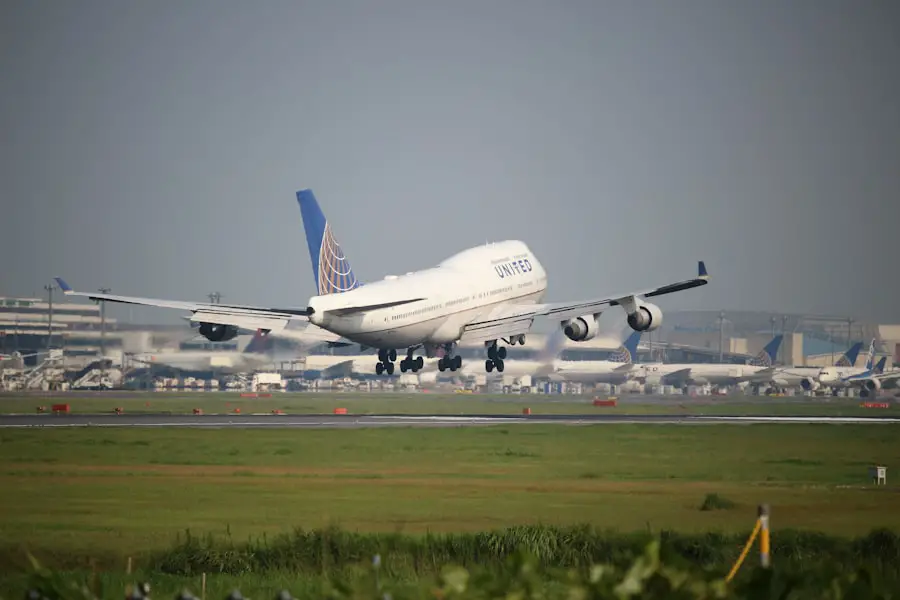
The first generation of commercial jet airliners transformed long-distance travel. The de Havilland Comet began scheduled jet service in the early 1950s, while Boeing’s 707 entered airline service later in that decade. Jet aircraft raised normal long-distance speeds from roughly 350 mph in many piston airliners to around 500 mph or more.
Commercial turbofan engines became increasingly important during the 1960s. Later high-bypass turbofans produced thrust more efficiently and with less noise than early turbojets. Aircraft such as the Boeing 747 used that technology to carry far more passengers across long distances while maintaining cruise speeds close to those used by today’s widebody jets.
The Supersonic Era
The Soviet Tupolev Tu-144 was the first supersonic airliner to fly and briefly carried passengers beginning in 1977. Its passenger-service career ended in 1978.
Concorde began scheduled service with British Airways and Air France in 1976. It normally cruised at about Mach 2.04 between approximately 55,000 and 60,000 feet and could cross the Atlantic in fewer than four hours. High operating costs, expensive fares, limited routes, noise restrictions, a shrinking market, and support considerations contributed to its retirement in 2003.
Concorde was therefore not the only supersonic aircraft ever used for passenger service. It was the only one to maintain scheduled supersonic passenger operations for more than two decades.
Which Passenger Airliners Fly the Fastest?
Comparing airliners by one fixed mph figure is misleading because temperature affects the Mach-to-mph conversion. Published cruise Mach is a more useful comparison.
| Aircraft | Published cruise Mach | Approximate speed at a standard FL350 example | Context |
|---|---|---|---|
| Boeing 747-8 Intercontinental | Mach 0.855 | About 567 mph | One of the highest published long-range cruise speeds among large passenger airliners. |
| Airbus A350-1000 | Mach 0.85 | About 564 mph | A current long-haul twin-engine airliner designed around range and efficiency. |
| Airbus A380 | Mach 0.85 | About 564 mph | The largest passenger airliner, optimized more for capacity than record speed. |
The difference between Mach 0.85 and Mach 0.855 is only a few miles per hour under the same atmospheric conditions. Route length, wind, air traffic, and airport delays can easily have a greater effect on arrival time.
The Boeing 777-200LR is notable for range rather than being the fastest airliner. In November 2005, a 777-200LR flew 11,664 nautical miles from Hong Kong to London in 22 hours and 42 minutes. Guinness recognizes it as the farthest flight by an unmodified commercial aircraft. It was a special record flight rather than a normal scheduled passenger service.
Note: This comparison covers airline passenger jets. Some private business jets have different operating limits and should not be mixed into an airliner ranking.
What Determines How Fast a Jet Can Fly?
Aerodynamic Drag
Drag rises as an aircraft moves faster. As a subsonic jet approaches the speed of sound, local airflow over parts of the wing can become supersonic even while the aircraft itself remains below Mach 1. Shock waves form and drag rises sharply. Airliners use swept wings and carefully shaped surfaces to delay these effects, but the transonic region still creates an efficiency barrier.
Engine Design
Modern high-bypass turbofan engines are optimized for efficient subsonic cruise. They move a large mass of air while using less fuel and producing less noise than early turbojets. An engine designed for economical Mach 0.85 cruise is not automatically suitable for sustained supersonic flight.
Altitude and Temperature
Higher altitude usually means lower air density, which reduces drag. It also means less oxygen is available to the engines, and the aircraft must remain within safe lift, thrust, and pressurization limits. Temperature affects the speed of sound, engine performance, and the Mach number corresponding to a given true airspeed.
Aircraft Weight
A heavily loaded aircraft requires more lift and usually burns more fuel. As fuel is consumed and the aircraft becomes lighter, it may be able to climb to a more efficient altitude. Airlines sometimes use step climbs on long flights for this reason.
Weather and Wind
Headwinds and tailwinds change ground speed but do not directly change the aircraft’s speed through the surrounding air. Pilots and dispatchers may alter the route or altitude to find more favorable winds while avoiding turbulence and severe weather.
Certified Operating Limits
Every aircraft has maximum operating airspeed and Mach limits. These provide margins below structural and design limits. Pilots do not treat the red-line limit as a normal cruise target.
Air Traffic Control
Controllers may assign a particular speed, altitude, or route to maintain safe spacing between aircraft. Congestion, weather deviations, and arrival sequencing can all prevent a jet from following its fastest theoretical path.
How Speed Affects Airline Operations and Costs
Airlines normally select an economical cruise setting rather than the fastest permitted speed. Flight-management and dispatch systems use a value known as a cost index to balance fuel cost against time-related costs such as crew time, aircraft utilization, and schedule disruption.
A low cost index generally favors lower fuel use. A higher cost index places more value on saving time and may command a faster cruise within the aircraft’s approved operating envelope. The chosen value can change by route, aircraft, airline policy, fuel price, delay conditions, and operational priorities.
Pro Tip: When comparing two flights, look at scheduled arrival time, nonstop service, connection length, and reliability. A slightly faster aircraft type may not produce the shorter total trip.
Flying faster usually increases drag and fuel consumption, especially near the upper end of the aircraft’s speed envelope. The time saved may be small on a short flight, so maximum speed is rarely the cheapest choice.
Cruise speed can affect airborne block time, but it does not shorten the physical work required during airport turnaround. Passengers must still leave and board the aircraft, baggage must be moved, the cabin must be serviced, fuel may need to be loaded, and maintenance checks must be completed.
What’s Next for Commercial Jet Speed?
Proposed Supersonic Airliners
Boom Supersonic describes Overture as a proposed Mach 1.7 passenger airliner intended to cruise supersonically over water. Its published specifications and journey times remain manufacturer targets until the aircraft is built, tested, certified, delivered, and placed into airline service.
Boom’s smaller XB-1 demonstrator exceeded the speed of sound in January 2025. That milestone demonstrated technology and flight-test progress, but XB-1 is not a passenger airliner and does not prove that Overture has completed certification.
NASA’s Quiet-Supersonic Research
NASA’s X-59 completed its first flight in October 2025 and its first supersonic flight on June 5, 2026. On June 12, it reached Mach 1.4 at 55,000 feet, the target speed and altitude for later community-response testing.
The X-59 is designed to shape its pressure waves into a quieter sonic “thump” rather than the loud boom associated with conventional supersonic aircraft. NASA plans to provide community-response data to regulators considering future noise standards.
Changing U.S. Regulations
Normal civil flight above Mach 1 over U.S. land remains generally prohibited while new rules are developed. In June 2026, the FAA proposed a noise-based certification pathway intended to replace the blanket prohibition with operating standards. The FAA has said it is working toward key rulemaking milestones by 2027, but proposed rules do not guarantee immediate passenger service.
Caution: Development schedules for new aircraft frequently change. A concept image, airline purchase agreement, factory, demonstrator flight, or target certification date does not mean passenger flights are available.
Electric and Hybrid Aircraft
Electric and hybrid-electric projects mainly focus on reducing fuel use, emissions, and noise on shorter routes. Battery weight and energy density remain major limits. These systems are not currently expected to make mainstream passenger airliners faster than today’s long-haul turbofan aircraft.
Smarter Routing
Airlines and air-navigation organizations increasingly use advanced software to compare route length, wind, congestion, fuel use, charges, and delays. The goal is not simply to fly as close as possible to maximum speed. It is to find the safest and most cost-effective trajectory for that flight.
Frequently Asked Questions
What is the average cruising speed of a commercial jet?
Most passenger jets cruise between Mach 0.78 and Mach 0.85. At a typical cruising altitude, that is roughly 520 to 560 mph through the air. The exact speed depends on the aircraft, altitude, temperature, weight, and airline operating plan.
Why does my flight map sometimes show more than 700 mph?
The map normally shows ground speed. A strong tailwind can add more than 100 mph to the aircraft’s movement across the ground even though its speed through the air remains within a normal subsonic cruise range.
Is Mach 1 always 767 mph?
No. The speed of sound changes with air temperature. The often-quoted figure near 767 mph applies to particular sea-level conditions. At the cold altitudes used by jet airliners, Mach 1 corresponds to a lower mph figure.
Why don’t airlines fly at maximum speed all the time?
Higher speed normally increases drag and fuel use. Airlines use cost-index calculations to balance fuel expense against the value of saving time. Air traffic instructions, turbulence, weather, aircraft weight, and operating limits also affect the selected speed.
Does a jet fly faster at a higher altitude?
Higher altitude reduces air density and can make cruise more efficient, but the relationship is not as simple as climbing higher to gain speed. Available engine thrust, aircraft weight, lift margins, temperature, turbulence, and air traffic restrictions determine the safe and efficient altitude.
What was the fastest commercial passenger jet?
Concorde was the fastest passenger airliner to sustain scheduled commercial service. It cruised at about Mach 2.04 and commonly crossed the Atlantic in fewer than four hours. The Tu-144 was slightly faster on paper and briefly carried passengers, but it did not maintain a comparable long-term passenger operation.
Will supersonic passenger jets return?
They may, but no new supersonic passenger jet has entered airline service. NASA has demonstrated major quiet-supersonic research milestones, the FAA is developing new noise-based rules, and Boom is developing Overture. Certification, engine development, noise, emissions, cost, and airline economics remain important hurdles.
Conclusion
Most commercial jet airliners cruise at approximately Mach 0.78 to Mach 0.85, or roughly 520 to 560 mph through the air at normal cruising altitudes. The number passengers see on a flight map is ground speed, so wind can push the displayed figure well above or below that range.
Modern airliners could sometimes fly closer to their operating limits, but airlines must balance time against fuel, weather, air traffic, structural margins, noise, and cost. Concorde proved that sustained Mach 2 passenger travel was technically possible. Whether supersonic service returns now depends on quieter aircraft, certifiable engines, workable regulations, and an operating model airlines and passengers can afford.
Sources
- Boeing 747-8 Airplane Characteristics for Airport Planning — published cruise information for the 747-8 Intercontinental.
- Airbus A350-1000 Technical Information — cruise Mach, capacity, range, and aircraft specifications.
- Airbus A380 Facts and Figures — A380 cruise Mach, range, capacity, and operating data.
- Smithsonian National Air and Space Museum: Concorde — Concorde speed, service history, transatlantic performance, and retirement.
- NASA: X-59 Reaches Mach 1.4 and 55,000 Feet — June 2026 quiet-supersonic flight milestone.
- Federal Aviation Administration: Supersonic Flight — current U.S. regulatory pathway and proposed noise-based standards.
