

Last Updated on September 11, 2026 by Tyler Morgan
Garuda Indonesia is generally a reasonable airline choice from a safety standpoint. Its last fatal accident occurred in 2007, it is an IATA member subject to IOSA registration requirements, and AirlineRatings currently gives it a 7/7 safety score. However, travelers should understand what each rating measures instead of relying on one badge or ranking.
Quick Answer
Garuda Indonesia is generally considered safe to fly. Its last fatal accident was in 2007, it participates in the IOSA audit system, and it currently has a 7/7 AirlineRatings safety score. Indonesia is not currently shown as FAA Category 2; it is absent from the FAA’s public IASA list.
Key Takeaways
- Garuda Indonesia’s last fatal accident was Flight 200 at Yogyakarta on March 7, 2007.
- Garuda is an IATA member, and IATA members must maintain registration under the IOSA operational-audit program.
- Indonesia is not listed in the FAA’s currently published IASA category results. That is not the same as holding Category 2 status.
- The EU banned Indonesian airlines in 2007, but Garuda was removed from the list in 2009. The remaining Indonesian carriers were cleared in 2018.
- AirlineRatings currently gives Garuda a 7/7 safety score, although the airline was not included in its separate 2026 top-25 safest-airlines ranking.
- Skytrax stars and OAG punctuality results measure service quality and reliability, not operational flight safety.
How Safe Is Garuda Indonesia?
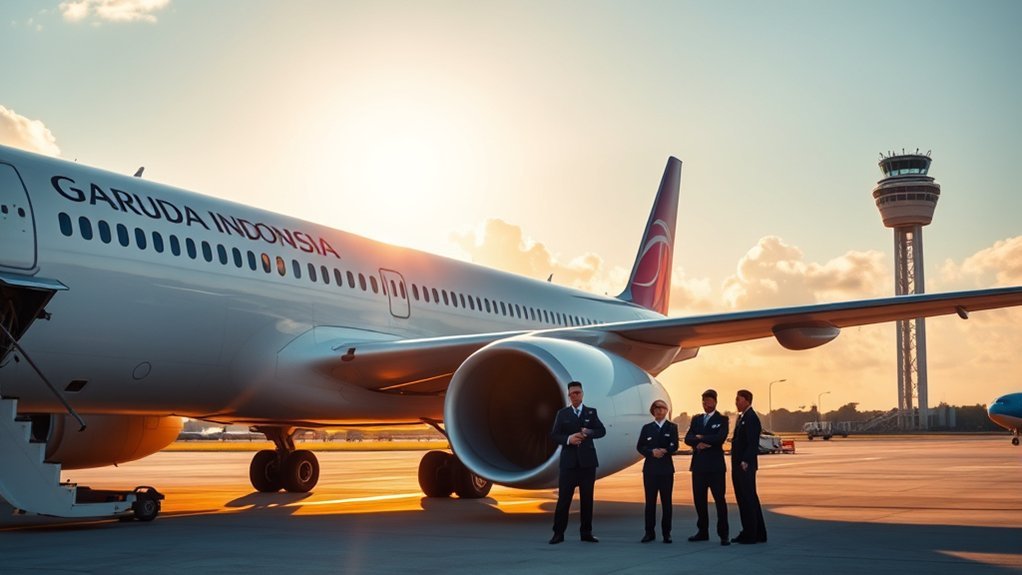
Current evidence supports flying Garuda Indonesia with reasonable confidence. The airline has not had a fatal accident since 2007, remains an IATA member, and is covered by IATA’s requirement that member airlines remain registered under the IATA Operational Safety Audit program.
AirlineRatings also currently assigns Garuda a 7/7 safety score. At the same time, Garuda was not included in that organization’s separate list of the 25 safest full-service airlines for 2026. Those findings are not contradictory: one is an individual safety score, while the other is a selective ranking of the highest-scoring carriers.
Safety Evidence at a Glance
| Last Fatal Accident | March 7, 2007 |
| IOSA Status | Covered by the IOSA-registration requirement for IATA members |
| EU Air Safety List | Garuda is not banned; it was removed from the list in 2009 |
| FAA IASA Status | Indonesia is not shown on the currently published public category list |
| AirlineRatings Score | 7/7 for safety |
| Skytrax Rating | 4-Star for products and service; this is not a flight-safety score |
Note: The FAA’s IASA program evaluates a country’s regulatory oversight, not an individual airline’s safety record. IOSA and independent airline ratings provide different pieces of evidence, but no audit or rating guarantees that an incident can never occur.
What Is Indonesia’s Current FAA Safety Rating?
Indonesia should not currently be described as an FAA Category 2 country. The FAA’s currently published IASA results file, dated April 18, 2025, does not list Indonesia in either category.
This omission does not mean the FAA silently downgraded Indonesia. The FAA upgraded Indonesia from Category 2 to Category 1 in 2016. Under a later IASA policy, countries can be removed from the public list after two years without qualifying direct U.S. service, a codeshare carrying a U.S. airline’s code, or significant interaction between the FAA and the country’s civil aviation authority.
Therefore, the most accurate current wording is that Indonesia has no published category in the FAA’s present public results. A new assessment would normally be required if an Indonesian operator sought qualifying U.S. service or a U.S.-coded partnership.
Garuda Indonesia’s Safety Record
Garuda’s historical accident record includes several serious events. The deadliest was Flight 152, an Airbus A300 that struck terrain near Medan on September 26, 1997. All 234 passengers and crew members were killed.
The airline’s most recent fatal accident was Garuda Indonesia Flight 200. On March 7, 2007, the Boeing 737 overran the runway while landing at Yogyakarta, crossed a road, hit an embankment, and caught fire. Twenty-one people died, while 119 survived.
Indonesia’s National Transportation Safety Committee found that the approach was unstable and that the crew’s compliance with procedures was not sufficient to ensure safe operation. The report recommended changes involving flight procedures, crew training, regulatory surveillance, flight recorders, and airport emergency planning.
Garuda issued new instructions after the accident reinforcing the monitoring pilot’s authority to take control and initiate a go-around during an unsafe or unstable approach. The airline has experienced nonfatal incidents since then, but no later fatal accident was found in the records reviewed for this article.
What Happened With the EU Ban?
The European Union placed all Indonesian-certified airlines on its Air Safety List in 2007 amid broader concerns about accidents, regulatory oversight, and compliance with international standards. Flight 200 was part of that wider safety crisis, but it was not the sole reason for the countrywide action.
Garuda did not remain banned until 2018. EU Regulation 619/2009 removed Garuda Indonesia, Airfast Indonesia, Mandala Airlines, and Premiair from the list in July 2009 after recertification and further oversight work.
Other Indonesian airlines remained listed for longer. The European Commission cleared the remaining Indonesian carriers in June 2018. Garuda is not currently subject to an EU operating ban.
Garuda’s most important safety fact is not its position on a yearly ranking; it is the combination of no fatal accident since 2007, continued operational auditing, and removal from the EU Air Safety List in 2009.
How Garuda Improves Safety Today
Garuda participates in international operational auditing through IATA. The IOSA program assesses an airline’s operational management and control systems. Areas covered include flight operations, maintenance, cabin operations, ground handling, cargo, dispatch, security, and organizational management.
IOSA is useful because it applies a standardized audit framework across participating airlines. However, it should not be described as a guarantee that an airline will never have an accident. It verifies systems and processes at the time of the audit and requires ongoing conformity for registration.
Garuda also reports using a Safety Management System to identify hazards, manage risk, and encourage safety reporting. These systems are important because modern aviation safety depends on identifying weak signals before they develop into serious events.
Maintenance and Fleet Availability
Garuda has faced a major maintenance and fleet-restoration backlog. In its official first-half 2025 corporate presentation, the company reported that 20 of Garuda Indonesia’s 72 aircraft were under maintenance. Across the wider Garuda Group, which includes Citilink, 51 of 135 aircraft were under maintenance.
Those figures represented a substantial capacity constraint rather than proof that aircraft were being dispatched in an unsafe condition. Aircraft that are not airworthy should remain out of service. For passengers, the more immediate effects can include reduced schedules, aircraft substitutions, delays, and limited recovery options after a cancellation.
Pro Tip: Before booking a tight connection, check the route’s recent operating history and whether Garuda offers another flight later that day. Maintenance-related capacity limits can make rebooking harder even when the original disruption is unrelated to safety.
How Garuda’s Safety Compares With Other Airlines

Garuda was not included in AirlineRatings’ top 25 safest full-service airlines for 2026. That list was led by Etihad Airways, Cathay Pacific, Qantas, Qatar Airways, Emirates, Air New Zealand, Singapore Airlines, and EVA Air.
However, AirlineRatings separately gives Garuda its maximum 7/7 safety score. The site awards points for IOSA participation, recent fatal-accident history, pilot-related incidents, operating standards, and EU-ban status. Garuda currently receives full points under that system.
The balanced conclusion is that Garuda has several strong current safety indicators but was not selected for one publisher’s highest comparative tier. A top-25 cutoff should not be treated as a dividing line between “safe” and “unsafe” airlines.
Is Garuda Safer Than Other Indonesian Airlines?
A fair comparison requires checking the specific operator rather than making a broad judgment about every Indonesian airline. Look at the operating carrier’s IOSA status, current EU Air Safety List status, fatal-accident history, recent serious incidents, regulator findings, and independent safety assessment.
Garuda and Citilink currently receive 7/7 safety scores from AirlineRatings. That does not automatically make every Garuda itinerary safer than every flight operated by another airline, but it gives travelers a consistent set of current evidence to review.
Service Quality and Punctuality Are Not Safety Ratings
Garuda has a strong cabin-service reputation. It has won Skytrax’s World’s Best Cabin Staff award six times and placed fourth in the cabin-crew category in 2025. However, Skytrax’s star system evaluates airport and onboard products and staff service, including seats, food, entertainment, cleanliness, and ground facilities.
Garuda is currently a Skytrax 4-Star Airline. Skytrax says it reduced Garuda from its former 5-Star level because parts of the onboard product and facilities at Jakarta and Denpasar had become dated. That is a service and product-quality judgment, not a finding that Garuda’s aircraft operations became less safe.
Punctuality is also separate from safety. Garuda led OAG’s June 2026 global monthly punctuality results with 97.13% of tracked flights arriving on time. That is useful evidence of recent operational reliability, but an airline can be punctual without being the safest, and a safe airline can experience delays.
Note: Treat safety audits, accident history, service ratings, and punctuality as separate measures. Combining them into one informal score can produce a misleading conclusion.
What to Know Before Flying Garuda Indonesia
Most travelers do not need to avoid Garuda Indonesia on safety grounds. Still, a few checks can reduce both safety uncertainty and ordinary travel disruption:
- Confirm the operating carrier. A Garuda flight number may be sold through a codeshare, or a multi-leg itinerary may include another airline.
- Check each flight segment. Do not assume that one carrier’s audit status applies to every airline on the ticket.
- Review the connection time. Leave more buffer when connecting from an infrequent domestic route or when no later same-day flight is available.
- Watch for aircraft or schedule changes. Fleet-restoration work can lead to substitutions and timetable adjustments.
- Use the correct safety sources. Check IATA’s IOSA information, the current EU Air Safety List, official accident reports, and the operating carrier’s recent record.
- Do not judge safety from aircraft age alone. Maintenance, regulatory compliance, crew training, and operational control matter more than a simple age number.
Warning: Do not assume every flight on a Garuda-branded itinerary is operated by Garuda. Check the “operated by” line for every segment, especially when traveling to a smaller regional airport or using a codeshare connection.
Frequently Asked Questions
Is Garuda a safe airline to fly?
Yes, based on the current evidence reviewed. Garuda’s last fatal accident occurred in 2007, it is an IATA member covered by IOSA-registration requirements, it is not on the EU Air Safety List, and AirlineRatings currently gives it a 7/7 safety score. No audit or rating can guarantee a risk-free flight.
Does Indonesia currently have an FAA Category 2 rating?
No current Category 2 rating is shown in the FAA’s published IASA results. Indonesia was upgraded to Category 1 in 2016 but is now absent from the public list. FAA policy permits inactive countries to be removed when they have no qualifying U.S. service, U.S.-coded partnership, or significant FAA interaction.
Is Garuda Indonesia banned in Europe?
No. The EU added Indonesian carriers to its Air Safety List in 2007, but Garuda was removed in July 2009. The remaining Indonesian airlines were cleared from the list in June 2018.
Is Garuda Airlines a good airline?
Garuda is generally well regarded for cabin service and recent punctuality. It is currently a Skytrax 4-Star Airline, and OAG ranked it first for on-time performance in June 2026. Some aircraft interiors and ground facilities may feel dated, and fleet-maintenance constraints can reduce schedule flexibility.
Does Garuda’s 4-Star Skytrax rating mean it is less safe?
No. Skytrax’s airline stars assess passenger products and service, such as seats, entertainment, food, cleanliness, airport facilities, and staff service. The 4-Star rating is not an operational flight-safety score.
What are the safest airlines in the world for 2026?
AirlineRatings placed Etihad Airways first in its 2026 full-service safety ranking, followed by Cathay Pacific, Qantas, Qatar Airways, Emirates, Air New Zealand, Singapore Airlines, and EVA Air. Garuda was not in that top 25, although the site separately gives Garuda a 7/7 safety score.
When was the last fatal Garuda plane accident?
Garuda Indonesia’s last fatal accident was Flight 200 on March 7, 2007. The Boeing 737 overran the runway at Yogyakarta, and 21 of the 140 people on board died.
Is Garuda safer than Lion Air or another Indonesian airline?
Garuda has strong current indicators, including IOSA participation, no fatal accident since 2007, no EU ban, and a 7/7 AirlineRatings score. A direct comparison should still use the other airline’s current audit status, recent incidents, operating standards, and actual operating carrier rather than brand reputation alone.
Conclusion
Garuda Indonesia is generally safe to fly based on the evidence available in July 2026. Its last fatal accident was in 2007, it participates in the IOSA system through its IATA membership, it is not banned by the European Union, and it currently holds a 7/7 AirlineRatings safety score.
The airline is not included in AirlineRatings’ 2026 top-25 safest full-service list, but that omission should not be interpreted as a finding that Garuda is unsafe. Indonesia also should not be described as holding a current FAA Category 2 rating; the country is absent from the FAA’s published IASA results under a system that removes inactive countries from the list.
For most passengers, the more practical concerns are aircraft availability, schedule changes, and confirming the operating carrier on every flight segment. Garuda’s current safety evidence supports booking with reasonable confidence, while still applying the same basic due diligence used for any international airline.
Sources
- Federal Aviation Administration — Current IASA Program Results — current public country-category list
- Federal Register — Changes to the IASA Program — category definitions and inactive-country removal policy
- International Air Transport Association — IOSA Program — scope and purpose of the operational safety audit
- Indonesia National Transportation Safety Committee — Flight 200 Final Report — accident facts, findings, and safety recommendations
- EUR-Lex — Commission Regulation 619/2009 — removal of Garuda Indonesia from the EU Air Safety List
- European Commission — Removal of All Remaining Indonesian Airlines — completion of the countrywide EU delisting in 2018
