

Last Updated on July 26, 2026 by Daniel Globe
Hotels and motels both give travelers a private place to sleep, but they were designed around different travel needs. The classic hotel centers on an indoor building with shared services, while the classic motel centers on convenient access for people arriving by car. Modern properties can blur those lines, so the name alone should never determine where you stay.
Quick Answer
A hotel typically has guest rooms reached through interior corridors and often offers more shared amenities and staff services. A motel—originally a “motor hotel”—is designed around car access, commonly with rooms reached from an outdoor parking area. These are common patterns, not guarantees: price, quality, safety, and amenities vary by property.
Key Takeaways
- Room access is the clearest traditional difference. Motel rooms commonly open toward an outdoor walkway or parking area, while hotel rooms commonly open into an interior corridor.
- Motels were built around motorists. Easy parking and quick room access are central to the traditional motel design.
- Hotels often provide more shared amenities, such as restaurants, gyms, meeting areas, lounges, and concierge services, but there are many exceptions.
- Do not assume a motel is always cheaper or a hotel is always better. Compare the individual property’s total price, location, reviews, condition, and included services.
- For longer stays, focus on practical features such as a kitchenette, laundry, workspace, housekeeping schedule, parking, and weekly rates rather than the hotel or motel label.
Hotel vs. Motel: Main Differences
| Feature | Hotel | Motel |
| Traditional room access | Interior hallway or lobby system | Exterior walkway or parking area |
| Typical location | Cities, airports, resorts, business districts, attractions, highways | Highways, major roads, suburbs, small towns, road-trip routes |
| Parking | May use a lot, garage, valet service, or off-site parking | Usually emphasizes easy on-site vehicle access |
| Amenities | Range from basic to full-service restaurants, gyms, pools, spas, and meeting facilities | Often more limited, although pools, breakfast, Wi-Fi, and upgraded amenities are common at some properties |
| Typical building | May be small or large and often has several floors | Traditionally low-rise and arranged around parking |
| Price | Can range from budget to luxury | Often positioned as value-oriented, but rates can overlap with hotels |
| Best fit | Travelers who value location, services, common areas, or broader amenities | Drivers who value simple lodging, convenient parking, and quick arrival and departure |
Note: These are traditional patterns, not strict rules. A property called a motel can have indoor corridors and substantial amenities, while a limited-service hotel may be simple and inexpensive. Judge the specific property rather than relying on its name.
What Is a Motel?
A motel is a form of lodging traditionally designed for people traveling by car. Merriam-Webster defines a motel as lodging with parking where rooms are usually accessible from an outdoor parking area. The word itself combines “motor” and “hotel.”
That car-oriented layout explains why many classic motels are low-rise buildings arranged along a parking lot or around a courtyard. A guest can often park close to the room, unload quickly, sleep, and get back on the road without walking through a large lobby or building.
“Motel” is a blend of “motor” and “hotel,” and Merriam-Webster dates its first known use to 1925.
Motels became strongly associated with American automobile travel. The National Park Service’s history of Route 66 describes how motels, restaurants, filling stations, and other roadside businesses grew alongside highway travel. Historic motor courts and motels were designed to serve motorists who needed convenient overnight lodging.
What Is a Hotel?
A hotel is a broader lodging category and can take many forms. A small budget hotel may offer little more than rooms, Wi-Fi, and a front desk, while a large full-service hotel may include restaurants, meeting rooms, a fitness center, a pool, a spa, concierge service, and hundreds of rooms.
Guest rooms in a traditional hotel are usually reached through interior corridors connected to a lobby, elevators, or stairways. Hotels are found almost everywhere travelers need accommodation, including downtown areas, airports, suburbs, resorts, business districts, tourist destinations, and along highways.
The word “hotel” does not automatically mean luxury. Economy hotels, extended-stay hotels, airport hotels, business hotels, boutique hotels, and luxury resorts can all operate very differently.
Location, Layout, and Size
Location can strongly affect the experience at either type of property. Hotels are common near attractions, downtown districts, convention centers, airports, and business areas where guests may value walkability or public transportation. They can also be found beside interstate exits and in small towns.
Motels have traditionally been positioned around motorists. Many are located beside highways, state roads, suburban commercial corridors, and road-trip routes where easy vehicle access matters more than a central lobby.
Building size follows a similar pattern. Hotels can range from a few rooms to very large multi-floor properties. Traditional motels are often smaller and lower to the ground, with rooms facing a parking area or exterior walkway. Modern properties do not always follow these conventions, so exterior versus interior access is a useful clue rather than an infallible test.
Amenities and Services: Hotel vs. Motel
Amenities are one of the most noticeable practical differences. Full-service hotels may provide restaurants, bars, conference rooms, fitness centers, swimming pools, spas, concierge desks, valet parking, room service, and extensive common areas.
Limited-service hotels offer fewer extras, however, and may look much closer to an upgraded motel in terms of what a guest actually receives.
Motels commonly focus on essentials: a private room, bathroom, parking, Wi-Fi, television, climate control, and basic toiletries. Depending on the property, a motel may also have a pool, breakfast area, laundry machines, refrigerator, microwave, or other conveniences.
Pro Tip: Compare the amenities you will actually use. Paying more for a gym, spa, restaurant, or valet service has little value if your only goal is a clean room and easy parking for one night.
Products Worth Considering
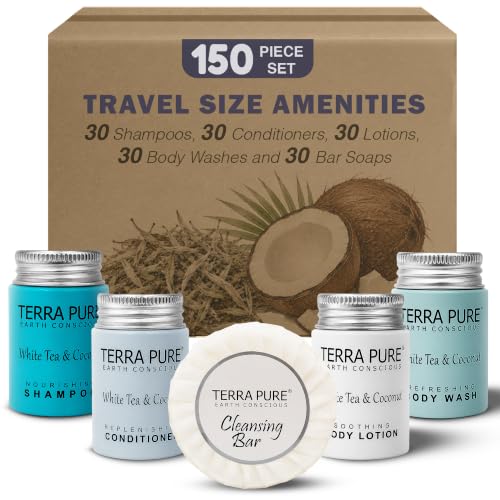
HOTEL AMENITIES: We offer luxury bulk travel size toiletries enriched with pure ingredients that are good for your skin. Each product is conveniently packaged for hotels, gyms, homeless care package supplies, vacation rentals, guest rooms, cruise ships, & more! Our bulk soap sets are Airbnb essentials!

Paper Structure: Toilet seat band - 1.5x16.5 inches, 500/case - is made of paper and is disposable

Sufficient and Considerate: the package includes 100 sets of hotel vanity sets, each set contains 4 pieces of cotton swabs, 2 pieces of cotton pads and an individually wrapped nail file, sufficient in quantity, considerate set, enough to use, replace or share; There is no traditional expiration date, but it needs to be stored in a dry place
Price and Affordability
Motels are often associated with lower-cost road-trip lodging because traditional properties have smaller buildings and fewer shared services. That does not mean every motel is cheaper than every hotel. A renovated boutique motel in a popular destination may cost more than a limited-service hotel nearby.
Hotel pricing also ranges widely. Budget chains, airport hotels, business properties, resorts, and luxury hotels operate at very different price points. Location, season, local demand, room type, parking charges, included breakfast, cancellation terms, and special events can matter more than whether the building calls itself a hotel or motel.

For U.S. bookings, compare the total displayed price rather than focusing only on a headline nightly rate. The Federal Trade Commission’s Rule on Unfair or Deceptive Fees, effective May 12, 2025, covers short-term lodging such as hotels and motels. When a business advertises a price, mandatory fees that it knows and can calculate upfront generally must be included in the displayed total price. Government charges such as taxes and genuinely optional extras can be treated differently under the rule.
Note: When comparing two properties, check parking, breakfast, Wi-Fi, resort or destination fees, pet charges, cancellation rules, and taxes. The lowest room rate is not always the lowest final trip cost.
Accessibility and Parking
Accessibility should be evaluated at the individual property level. In the United States, covered hotels and motels are both treated as places of lodging under the Americans with Disabilities Act. The U.S. Department of Justice Title III regulations include requirements concerning accessible lodging reservations and information about accessible guest-room features.
Travelers who need specific accommodations should check the exact room before booking rather than relying on a general “accessible” label. Useful details can include the route from parking to the room, doorway clearance, bed configuration, bathroom type, roll-in shower availability, grab bars, visual notification equipment, elevator access, and whether an accessible room is guaranteed or merely requested.
| What to Check | Why It Matters |
| Accessible route from parking or entrance | A room is not useful if the guest cannot reach it safely and independently. |
| Elevator or ground-floor access | Multi-floor layouts can create problems for guests with limited mobility. |
| Bathroom and shower configuration | Accessible bathing needs differ, so confirm the exact configuration offered. |
| Communication features | Guests who are deaf or hard of hearing may need visual notification and alarm features. |
Parking is often a major advantage of the traditional motel format because the building was designed around motorists. In some properties, guests can park close to their rooms. Hotels may offer surface parking, garages, valet parking, or off-site arrangements, and urban parking can add considerably to the trip cost.
Room Types and Layout
Hotels usually offer the widest range of room categories. Depending on the property, choices can include standard rooms, connecting rooms, family rooms, studios, executive rooms, and suites with separate living areas. Extended-stay hotels may include kitchenettes or full kitchens.
Motels traditionally focus on straightforward sleeping rooms, often with one or two beds and direct access from outside. Modern motels can be much more varied, though. Renovated roadside properties sometimes offer suites, patios, kitchenettes, themed rooms, or upscale interiors.
For a family or group, the number of beds, connecting-room availability, floor plan, refrigerator, microwave, and bathroom layout are usually more important than the word displayed on the property’s sign.
Atmosphere and Ambiance
Hotels can range from simple and functional to formal, luxurious, or highly themed. A downtown hotel might emphasize a polished lobby and business facilities, while a beachfront resort may focus on outdoor areas, pools, restaurants, and views.

Motels have traditionally offered a simpler roadside atmosphere, but that stereotype is no longer universal. Some historic motor courts have been restored as boutique properties with distinctive architecture, landscaping, pools, restaurants, and retro design. The motel format can therefore be either very basic or intentionally stylish.
When ambiance matters, look at current photographs, recent guest reviews, renovation dates, noise comments, common areas, and the immediate neighborhood rather than making a decision based on the lodging category alone.
Customer Service and Staff
Large full-service hotels usually employ more specialized staff. In addition to front-desk employees and housekeeping, a property might have concierge staff, bell services, restaurant teams, maintenance crews, meeting planners, security staff, and valet attendants.
A small motel may operate with a much leaner team. That can mean fewer on-site services, but it does not automatically mean worse service. An independently operated motel can provide very personal attention, while a large hotel can still deliver a poor experience if staffing or management is weak.
Recent reviews are more useful than the hotel or motel label when you want to judge staff responsiveness, housekeeping consistency, check-in efficiency, and how management handles problems.
Food and Dining Options
Full-service hotels are more likely to have substantial food and beverage operations. Depending on the property, that may include a restaurant, bar, cafe, breakfast buffet, banquet facilities, market, or room service.
Motels commonly provide fewer dining services. Some offer complimentary breakfast, coffee, vending machines, or a small breakfast room, while others provide no food service at all. Restaurants may instead be located nearby along the same highway or commercial corridor.
For a one-night road-trip stop, on-site dining may not matter. For a multi-day business trip or resort stay, having breakfast, dinner, or room service within the property can save time and make the higher room rate worthwhile.
Privacy, Security, and Fire Safety
Neither “hotel” nor “motel” is a safety rating. Hotels commonly funnel guests through interior entrances, while traditional motel rooms may open directly to outdoor walkways or parking areas. Those layouts create different experiences, but the actual security of a stay depends on the specific property, its condition, location, lighting, locks, access controls, staffing, and management practices.
Look for working door locks and deadbolts, well-lit entrances and parking areas, clearly marked exits, a functioning front desk or after-hours contact method, and recent reviews that mention property condition or security concerns.
Warning: Do not judge lodging safety from the hotel or motel label alone. The U.S. Fire Administration advises travelers to consider properties with hard-wired smoke alarms and automatic fire sprinklers, read the evacuation plan, and identify the two closest exits from the room.
Privacy also includes how booking and payment information is handled. Use reputable booking channels, review the property’s privacy practices when relevant, and avoid sending payment-card information through unsecured messages.
Long-Term Stay Options
A hotel is not automatically better for a long stay, and a motel is not automatically limited to one night. The best choice depends on the individual property’s setup.
For a stay lasting several days or weeks, look for practical features such as a kitchenette, full-size refrigerator, laundry facilities, workspace, reliable Wi-Fi, housekeeping frequency, parking, storage, and discounted weekly or extended-stay rates.
Extended-stay hotels are designed specifically around these needs, but some motels also offer weekly rates and kitchen-equipped rooms. Before committing to a long booking, check cancellation terms, deposit requirements, housekeeping arrangements, pet rules, and what is included in the quoted price.
Brand and Chain Affiliation
Both hotels and motels can be independently owned or associated with a chain. A recognizable brand can make certain standards, reservation systems, loyalty benefits, or service expectations easier to predict, but brand affiliation is not a guarantee that every property will be identical.
Independent hotels and motels can offer more local character and unusual designs. Historic roadside motels, boutique hotels, family-run inns, and converted buildings may provide experiences that standardized properties cannot.
Whether you choose a chain or an independent property, review the specific location rather than relying only on the brand name. Ownership, renovation history, management, staffing, and local conditions can produce meaningful differences between properties carrying the same flag.
How to Choose Between a Hotel and a Motel
Products Worth Considering

DURABLE & LAMINATED. Signs are made of 40 mil thick reflective aluminum. Signs outlast plastic signs, which can be torn off more easily. Signs are also laminated to resist chemicals, UV rays, water, and abrasion.

DURABLE ALUMINUM. Heavy-duty rustproof and reflective 40 mil thick 'No Overnight Parking' aluminum sign has a 7-year outdoor durability.

[Sturdy and Durable]: No Overnight Parking Sign is made of Rust-Free Aluminum material. This No Parking Sign can be easily used outdoors.
Choose a Motel When Car Convenience Matters Most
A motel can be a strong choice for a road trip, especially when you need a straightforward overnight stop, easy parking, quick luggage access, and a fast departure the next morning.
Choose a Hotel When You Want More On-Site Services
A hotel may suit you better when you want restaurants, a gym, meeting rooms, a large lobby, concierge help, valet service, room service, or other shared amenities.
Compare the Exact Location
A cheaper room can become less attractive if it adds a long drive, parking expense, or transportation cost. For city trips, a centrally located hotel may save time and money. On a highway trip, a motel directly beside your route may be more convenient.
Compare the Total Price
Look beyond the nightly rate. Account for mandatory fees, taxes, parking, breakfast, pet charges, transportation, and services you would otherwise buy separately.
Check Recent Property-Specific Reviews
Cleanliness, noise, maintenance, staff quality, and neighborhood conditions can change over time. Recent reviews and current photographs usually tell you more than the words “hotel” or “motel.”
Pro Tip: For a one-night road stop, prioritize parking, cleanliness, noise, and easy highway access. For a multi-night destination stay, give more weight to location, room layout, dining, laundry, workspace, and amenities you will use every day.
Hotel vs. Motel vs. Inn
An inn is another lodging term with flexible meaning. Inns are often smaller properties and may emphasize personal service, local character, or a quieter setting. Some have restaurants or historic buildings, while others operate much like small hotels.
The simplest way to think about the three terms is that a motel traditionally emphasizes motorists and direct vehicle access, a hotel is the broadest category and often uses interior common areas, and an inn is commonly smaller and more individual in character. None of those labels alone tells you the property’s price, cleanliness, quality, or safety.
Ultimately, the best accommodation depends on the trip. A motel’s parking and direct room access may be ideal during a long drive, while a hotel may be worth more for a central location, business facilities, dining, or a wider range of services. Compare what the individual property provides rather than assuming one lodging type is always better.
Additional Road-Trip Resource
If your trip also involves towing or staying in a travel trailer, this separate guide to travel trailer batteries for road trips covers battery options for trailer use. It is a different topic from hotel-versus-motel lodging, but it may be useful when planning vehicle-based travel.
Frequently Asked Questions
What is the main difference between a hotel and a motel?
The traditional difference is the building layout and relationship to cars. Motel rooms commonly open toward an outdoor walkway or parking area, while hotel rooms commonly open into interior hallways. Hotels also tend to offer a wider range of shared services, although modern properties often blur these distinctions.
What amenities are typically found in a hotel?
Depending on the property, hotels may offer restaurants, bars, pools, fitness centers, meeting rooms, business services, concierge assistance, valet parking, room service, and laundry services. Budget and limited-service hotels may offer far fewer amenities.
What amenities are typically found in a motel?
Motels commonly focus on essential lodging and convenient parking. Rooms may include Wi-Fi, television, climate control, toiletries, a refrigerator, or a microwave. Some motels also have pools, breakfast areas, laundry facilities, and other amenities.
Are hotels or motels better for long-term stays?
Neither category is automatically better. For an extended stay, compare kitchen facilities, laundry, workspace, Wi-Fi, housekeeping, storage, parking, weekly rates, and cancellation terms. Extended-stay hotels specialize in these features, but some motels also accommodate weekly or longer stays.
Are motels always cheaper than hotels?
No. Motels are often positioned as economical lodging, but prices overlap. A renovated motel in a popular destination can cost more than a limited-service hotel. Compare the total price for the dates and location you need.
Are motels less safe than hotels?
The lodging label alone does not determine safety. Check the individual property’s location, lighting, locks, access controls, staffing, maintenance, fire-safety features, and recent guest reviews.
Can a motel have indoor hallways?
Yes. Exterior room access is the classic motel design, but modern properties do not always follow that pattern. Some businesses keep a motel name even after renovations or design changes.
Why are motels called motels?
The word “motel” combines “motor” and “hotel.” The lodging format developed around automobile travelers who wanted convenient roadside accommodation and easy access between their vehicles and rooms.
Sources
- Merriam-Webster — Motel Definition & Meaning — motel definition, word origin, and first known use.
- U.S. National Park Service — Historic Route 66 — historical context for motels and automobile-based roadside travel.
- Federal Trade Commission — Rule on Unfair or Deceptive Fees FAQ — current U.S. requirements for displaying prices and mandatory fees for covered short-term lodging.
- U.S. Department of Justice — ADA Title III Regulations — lodging accessibility and reservation requirements for covered hotels, motels, and other places of lodging.
- U.S. Fire Administration — Hotel and Vacation Rental Fire Safety — hotel and motel fire-safety guidance for travelers.
