

Last Updated on July 27, 2026 by Daniel Globe
Hiking poles, also called trekking poles, can make rough trails, steep climbs, and long descents easier to manage. They provide extra points of contact with the ground and can be especially useful on loose rock, mud, snow, or uneven terrain. Flying with them is more complicated, though, because airport-security rules depend on the pole tip, the country where you are screened, and your airline’s baggage limits.
Quick Answer
As of July 27, 2026, U.S. TSA guidance allows blunt-tipped hiking poles in carry-on or checked bags, but sharp-tipped hiking poles are not allowed in carry-on baggage. International rules differ: UK airport-security guidance prohibits walking/hiking poles in hand luggage. Always check the security rules for every airport on your route plus your airline’s baggage limits.
Key Takeaways
- For flights screened by the U.S. TSA, blunt-tipped hiking poles may be accepted in carry-on baggage; sharp-tipped poles are not permitted in carry-on bags.
- A pole being collapsible does not automatically make it cabin-safe. Tip design and local security rules matter as much as packed length.
- International rules vary. UK guidance prohibits walking/hiking poles in hand luggage, while Canadian rules are more permissive with restrictions on certain pointed or sharp ends.
- Your airline can impose its own carry-on size, weight, and sporting-equipment rules even when airport security permits the item.
- When there is any doubt, checked baggage, renting poles, buying at the destination, or shipping them ahead can remove the risk of losing access to your poles at the checkpoint.
Travel Rules at a Glance
| U.S. TSA — Blunt Tip | May be carried in carry-on or checked baggage, subject to screening, airline rules, and the TSA officer’s final decision. |
| U.S. TSA — Sharp Tip | Not permitted as a carry-on item. Plan to place the poles in checked baggage. |
| United Kingdom | UK government guidance lists walking/hiking poles as prohibited in hand luggage but permitted in hold luggage. |
| Canada | CATSA allows hiking sticks, including collapsible and retractable types, through screening but restricts pointed or sharp ends longer than 6 cm. |
| Airline Rules | Check the airline separately for maximum carry-on dimensions, weight, and sporting-equipment restrictions. |
Disclosure: As an Amazon Associate I earn from qualifying purchases. Some links on this page are affiliate links, at no extra cost to you.
Benefits of Using Hiking Poles
Modern hiking poles have evolved from basic walking sticks into lightweight aluminum, carbon-fiber, and mixed-material designs. Depending on the model, they may use telescoping or folding shafts, adjustable locking systems, interchangeable baskets or tips, cork or foam grips, and optional shock absorption.
Their main purpose is simple: give the hiker additional contact points with the terrain. The exact benefit varies with technique, terrain, speed, pack weight, and the individual hiker.
Reduced Impact on Knees and Joints
The strongest evidence for reduced lower-body loading appears during downhill walking. In a small biomechanical study of eight men walking down a 25-degree ramp, hiking-pole use was associated with reductions of about 12% to 25% in several measures including ground-reaction force, knee-joint moment, and calculated tibiofemoral forces. You can review the study in PubMed.
That does not mean poles reduce knee loading in every situation. A later study of level walking found that increasing the force applied through hiking poles did not reduce calculated knee-joint compression. The evidence therefore supports a more careful conclusion: poles can help redistribute load in some conditions, particularly descents, but they are not a guaranteed solution for knee discomfort.
Note: Hiking poles are support equipment, not treatment for an injury or joint condition. Persistent pain, weakness, or instability deserves appropriate medical assessment rather than simply changing trekking-pole technique.
Improved Stability on Uneven Terrain
On loose rock, mud, roots, snow, stream crossings, or steep slopes, two poles can provide additional points of contact with the ground. This can make it easier to test a surface before putting your full weight on it and can improve confidence when footing is uncertain.
Poles do not eliminate fall risk. They still need to be planted on stable ground, adjusted correctly, and used without overreaching. A pole planted on a loose rock or slippery surface can move unexpectedly.
Upper-Body Involvement and Exercise Demand
Trekking poles also involve the arms, shoulders, and trunk more than ordinary hiking. A field study of recreational hikers found that trekking poles increased physiological responses to hiking without a matching increase in perceived exertion. That supports describing pole-assisted hiking as involving more of the body, but it does not prove that simply carrying poles automatically improves endurance. See the study in PubMed.
Airline Carry-On Regulations for Hiking Poles
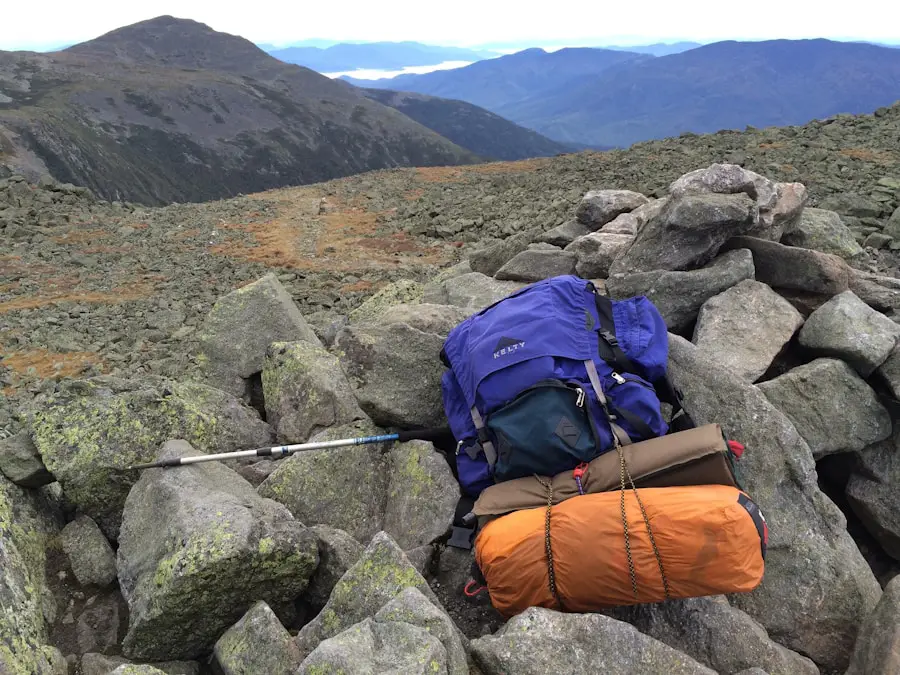
Air travel is where hiking-pole advice becomes more complicated. There are two separate questions to answer: Will airport security let the poles through the checkpoint? and will the airline accept them within its cabin-baggage rules? Passing one test does not guarantee passing the other.
Current U.S. TSA Rule
As of July 27, 2026, the Transportation Security Administration’s hiking-pole guidance says blunt-tipped hiking poles are allowed in carry-on or checked baggage and must be screened like other property. Sharp-tipped hiking poles are not allowed as carry-on items.
TSA also states that the final decision rests with the officer at the checkpoint and tells travelers to check with their airline to confirm whether hiking poles are accepted as carry-on items.
Warning: Do not assume that a collapsible pole is automatically permitted in the cabin. A sharp metal or carbide tip can change the answer even when the pole folds small enough to fit inside your bag.
International Flights Can Follow Different Rules
There is no single carry-on rule that applies worldwide. For example, UK government airport-security guidance lists walking/hiking poles as prohibited in hand luggage and allowed in hold luggage.
Canada differs again. The Canadian Air Transport Security Authority states that hiking sticks, including collapsible and retractable models, are permitted through security, but hiking sticks with pointed or sharp ends longer than 6 cm are not permitted.
Because rules can differ at connecting airports, check the official security authority for every airport where you expect to pass through security. A pole accepted at your first departure airport may not meet the rules at another checkpoint later in the trip.
A hiking pole can fit perfectly inside your carry-on bag and still be barred at security. Packed length, tip design, local security rules, and airline policy all matter.
Compact and Collapsible Hiking Poles
Compact hiking poles remain convenient for travel even though collapsibility by itself does not determine whether they are allowed through airport security. A folding or telescoping model is easier to fit inside luggage, protects the pole from snagging during handling, and gives travelers more packing options.
| Feature | What to Look For in Travel Hiking Poles |
| Material | Aluminum, carbon fiber, and aluminum/carbon combinations are common. Compare durability, weight, price, and intended terrain rather than choosing by material alone. |
| Weight | Varies significantly by model. Compare the stated weight per pair when pack weight matters. |
| Collapsed Length | Choose a folded or collapsed length that fits completely inside your planned luggage and complies with the airline’s baggage dimensions. |
| Extended Length | Select a usable length range that fits your height and hiking technique rather than relying on a universal maximum length. |
| Grip Material | Cork, EVA foam, and rubber are common. Comfort, moisture management, temperature, and personal preference matter. |
| Shock Absorption | Optional rather than universal. Some poles include an anti-shock system; many lightweight trekking poles do not. |
| Locking System | The lock should hold securely under normal hiking loads and be easy to inspect and tighten before a trip. |
Aluminum poles are widely used because they balance strength, durability, and cost. Carbon-fiber models can reduce weight and often feel less prone to vibration, although impact behavior, construction, price, and repairability vary by design.
Folding poles typically break down into several short sections connected by an internal cord, while telescoping poles slide into themselves. Some models combine folding construction with a short adjustable section. For airline travel, the most useful specification is the manufacturer’s actual collapsed length.
Tips for Traveling with Hiking Poles
A little planning can prevent an unpleasant decision at the security checkpoint. Use the following order before leaving for the airport.
1. Check the Security Authority for Your Departure Airport
Start with the government or official aviation-security authority, not a travel blog or an old forum post. For a U.S. departure, check TSA. For an overseas airport, use that country’s official security guidance.
2. Check Every Airport Where You May Be Rescreened
International connections can expose you to a second set of rules. If your itinerary requires you to collect luggage, change terminals, or pass through security again, verify the rules for that airport too.
3. Inspect Your Pole Tips
Look at the actual walking end of each pole. U.S. TSA guidance distinguishes blunt-tipped poles from sharp-tipped poles. If your pole has an exposed sharp metal or carbide point and you are unsure whether it qualifies, the lower-risk plan is to put it in checked baggage rather than depend on a favorable checkpoint interpretation.
Note: A rubber accessory tip can protect equipment and luggage, but do not assume that adding a removable cap automatically changes how a security officer will classify the underlying pole.
4. Check the Airline’s Carry-On Dimensions
Security permission does not override airline baggage rules. Measure the pole at its shortest packed length and confirm that the complete bag fits the carrier’s current cabin-baggage limits. Airlines can also have special sporting-equipment policies.
5. Pack the Poles So They Cannot Damage Other Gear
Collapse or fold the poles fully. Secure loose straps, baskets, and removable pieces. A padded sleeve, sturdy pole bag, or clothing wrapped around the shafts can help protect both the poles and surrounding luggage.
If you check the poles, keep sharp ends covered so they cannot puncture fabric or damage other items during handling. Avoid leaving baskets or small detachable pieces loose inside the bag where they are easy to lose.
Pro Tip: For a multi-country trip, packing trekking poles in checked baggage from the start is often simpler than planning around the most permissive airport on the itinerary. Base your plan on the strictest checkpoint you expect to encounter.
6. Have a Backup Plan
Even when published rules appear to permit an item, screening officers retain authority over what passes the checkpoint. Decide before the trip what you will do if the poles are refused: return them to a vehicle, move them to checked baggage if time allows, ship them, or travel without them.
Alternatives to Traditional Hiking Poles

If carrying a pair of conventional trekking poles complicates your travel plans, several alternatives can work depending on the trail.
Use a Single Trekking Pole
A single trekking pole reduces the amount of gear you need to pack while still giving you one extra point of support. It can work well for hikers who prefer a free hand or who do not need the rhythm and symmetrical support of two poles.
A single pole does not avoid airport-security rules, however. The same restrictions concerning the tip and local screening policy still apply.
Rent or Buy Poles at Your Destination
Renting can be one of the easiest options for carry-on-only trips. Outdoor stores, guide services, trekking companies, and some accommodations in major hiking destinations rent trekking equipment. Buying an inexpensive pair after arrival is another option when rental availability is limited.
Ship the Poles Ahead
For an expensive or specialized pair, shipping the poles to a hotel, outfitter, or other confirmed receiving address can avoid cabin-baggage uncertainty. Compare shipping cost, delivery timing, insurance, and the receiving property’s policy before choosing this method.
Use a Suitable Naturally Fallen Walking Stick Where Permitted
A sturdy fallen branch can sometimes provide temporary walking support on a casual hike. Do not cut live vegetation, damage protected areas, or take natural objects where local park rules prohibit it. An improvised stick also lacks the predictable grip, locking mechanism, tip, and adjustable length of a purpose-built trekking pole.
Understand the Limits of Nordic Walking Poles
Nordic walking poles are designed primarily for fitness walking and use a technique different from normal trekking-pole use. They can be useful on easy paths, but they are not automatically a substitute for trekking poles on steep or technical terrain.
Choosing the Right Hiking Poles for Travel
Travel-friendly poles need to satisfy two different jobs: they must work correctly on the trail and pack conveniently between hikes. Do not sacrifice fit or reliability simply to get the shortest possible folded length.
Choose the Correct Length
On level ground, a common starting point is a pole length that puts the elbow at about a 90-degree angle when the tip is on the ground. Manufacturer guidance may vary by activity and model. LEKI’s pole-length guide, for example, bases its recommendation on the user’s height and intended sport and notes that individual preference and technique can require adjustment.
Adjustable poles offer more flexibility for terrain. Many hikers shorten them somewhat for sustained climbs and lengthen them somewhat for descents, while returning to their normal setting on flatter ground.
Compare Aluminum and Carbon Fiber
Both materials can make good trekking poles. Aluminum is common in durable, reasonably priced models and can often tolerate dents or bending before complete failure. Carbon fiber is attractive when low weight and stiffness are priorities, but performance depends on the construction and the type of impact.
Instead of treating one material as automatically superior, compare total weight, collapsed length, locking system, warranty, replacement parts, price, and the kind of terrain you expect to hike.
Check the Locking and Folding Mechanism
Before a trip, extend the poles, set them to your normal length, and put moderate hiking pressure through them. A slipping telescoping lock or folding joint that does not seat completely should be corrected before you rely on it on a steep trail.
Choose Tips and Baskets for Your Terrain
Trekking poles may use carbide or metal trail tips, removable rubber walking tips, mud baskets, or larger snow baskets. Select accessories for the surface you actually expect to encounter, but remember that the trail tip can also affect whether a pole is accepted through airport security.
Are Hiking Poles Carry-On Friendly?
Hiking poles can be carry-on friendly in some places, but the answer is not simply “yes” or “no.” For U.S. TSA screening, blunt-tipped poles may be carried through the checkpoint, while sharp-tipped hiking poles are not allowed as carry-on items. The TSA officer still makes the final checkpoint decision, and the airline can impose separate baggage restrictions.
Outside the United States, do not assume the TSA rule follows you. UK airport-security guidance prohibits walking/hiking poles in hand luggage, while Canadian guidance permits many hiking poles with specific restrictions. For a trip involving several countries, check each relevant aviation-security authority before you pack.
Compact poles are still worthwhile for travelers because they fit luggage more easily, but folding length is only one part of the decision. Tip design, security jurisdiction, airline dimensions, and your backup plan matter just as much.
If you’re looking for more travel gear that can make your adventures easier, you might want to check out this article on a scarf with a hidden pocket for travel. This accessory gives you another way to organize small valuables while traveling. If you have questions or need further assistance with your travel plans, you can also contact us. And if you’re planning a backpacking trip, see our guide to the best sleeping bag for backpacking travel.
Frequently Asked Questions
What are hiking poles?
Hiking poles, also known as trekking poles, are poles designed to provide additional support and contact with the ground while hiking. Many are adjustable or foldable and use aluminum, carbon fiber, or a combination of materials.
Can hiking poles go in carry-on luggage?
Sometimes. Under current U.S. TSA guidance, blunt-tipped hiking poles may go in carry-on baggage, while sharp-tipped hiking poles are not allowed as carry-on items. Your airline can impose additional baggage restrictions, and the TSA officer has the final checkpoint decision.
Are there regulations for carrying hiking poles in carry-on luggage?
Yes. You must satisfy both airport-security rules and the airline’s cabin-baggage requirements. In the United States, tip design matters under TSA rules. The poles and your complete bag must also meet any size, weight, or sporting-equipment restrictions imposed by the airline.
Can hiking poles be taken on international flights in carry-on luggage?
It depends on where you pass through security. UK government guidance prohibits walking/hiking poles in hand luggage, while Canadian rules permit many hiking poles subject to restrictions. Check the official security authority for every departure or connecting airport where you may be screened.
Do rubber tip covers make sharp trekking poles safe for carry-on?
Do not rely on a removable rubber cover as a guaranteed way to change a sharp pole into a permitted carry-on item. TSA describes the rule in terms of blunt-tipped versus sharp-tipped hiking poles but leaves the final decision to the screening officer. When the classification is uncertain, checked baggage is the safer travel plan.
What happens if airport security refuses my hiking poles?
You may need to remove them from your carry-on plan. Depending on the airport, airline, and time available, your options can include returning them to a vehicle or companion, moving them to checked baggage, shipping them, or leaving them behind. Planning a backup before arriving at security reduces the chance of missing your flight.
Are there alternatives to carrying hiking poles in carry-on luggage?
Yes. You can place the poles in checked baggage, rent poles at your destination, buy an inexpensive pair after arrival, or ship your own poles ahead. These options are especially useful on trips through countries that prohibit hiking poles in cabin baggage.
Sources
- Transportation Security Administration — Hiking Poles — current U.S. rules for blunt-tipped and sharp-tipped hiking poles, carry-on eligibility, and officer discretion.
- GOV.UK — Hand Luggage Restrictions: Sports Equipment — UK hand- and hold-luggage rules for walking/hiking poles.
- Canadian Air Transport Security Authority — Hiking Stick/Poles — Canadian screening guidance for hiking sticks and pointed or sharp ends.
- PubMed — Knee Joint Forces During Downhill Walking With Hiking Poles — biomechanical evidence on knee loading during downhill walking.
- PubMed — Trekking Poles Increase Physiological Responses to Hiking Without Increased Perceived Exertion — evidence on exercise demand while hiking with poles.
- LEKI — Pole Length Guide — manufacturer guidance on selecting pole length according to height and activity.

