
Last Updated on July 27, 2026 by Daniel Globe
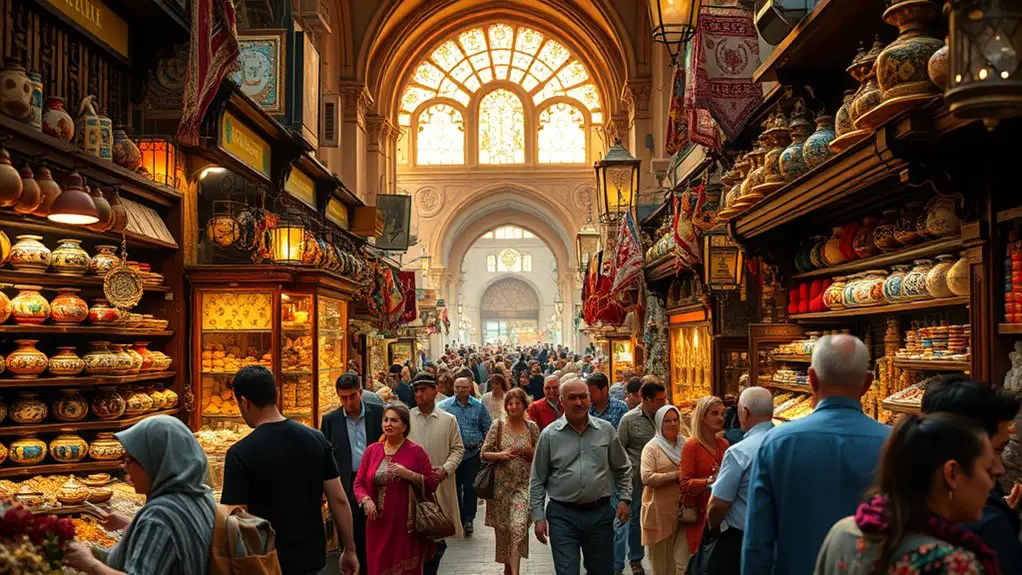
Walking into Istanbul’s Grand Bazaar (Kapalıçarşı) is part shopping trip, part history lesson. Beneath its vaulted passages, thousands of businesses sell jewelry, carpets, textiles, ceramics, leather goods, antiques and souvenirs. The market is easy to visit without buying anything, but knowing the hours, transport, bargaining customs and a few shopping safeguards will make your first visit far easier.
Quick Answer
The Grand Bazaar is free to enter and normally trades Monday through Saturday, roughly from 8:30 or 9:00 AM until 7:00 PM; it is generally closed on Sundays. Take the T1 tram to Beyazıt-Kapalıçarşı, allow at least 1–2 hours, compare several shops before buying, and bargain politely rather than treating the first price as final.
Key Takeaways
- The Grand Bazaar grew around Ottoman bedestens established after the conquest of Constantinople and is conventionally dated to the 15th century.
- Entry is free. Current visitor listings generally show Monday–Saturday operation and Sunday closure, but holiday schedules can change.
- The T1 tram’s Beyazıt-Kapalıçarşı stop is one of the simplest ways to reach the market.
- Bargaining is common for many souvenirs, carpets, leather goods and similar items, but compare quality and prices before negotiating.
- For expensive purchases, get a detailed receipt, confirm shipping terms and be cautious with anything represented as an antique.
Disclosure: As an Amazon Associate I earn from qualifying purchases. Some links on this page are affiliate links, at no extra cost to you.
History of the Grand Bazaar
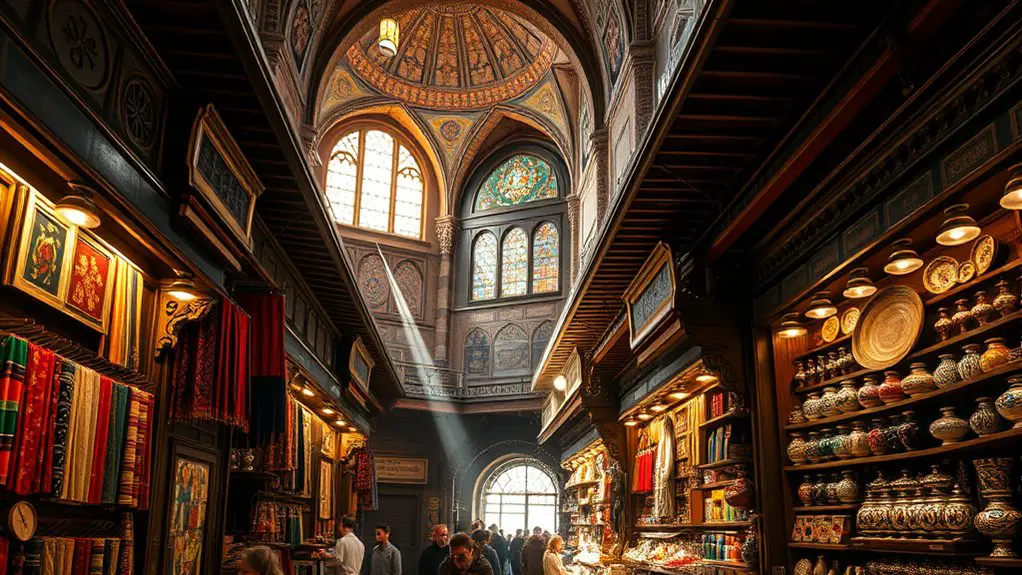
The Grand Bazaar developed into one of Istanbul’s most important trading centers during the Ottoman period. Its core grew around the Cevahir and Sandal bedestens, secure covered market buildings associated with the commercial development that followed Mehmed II’s conquest of Constantinople.
The bazaar’s own merchants’ association treats 1461 as its traditional founding year and says the market expanded around its bedestens over the following centuries. The complex survived repeated fires, earthquakes, rebuilding and alterations while continuing to function as a commercial district. You can read the association’s historical overview on the official Grand Bazaar website.
The Grand Bazaar association currently describes about 45,000 m² of covered space, 65 streets, roughly 3,600 shops and 14 hans within the historic commercial complex.
Published totals for shops, streets, gates and overall area vary because sources do not always define the bazaar’s boundaries in the same way. For example, GoTürkiye describes 22 gates. It is better to think of the Grand Bazaar as a large historic commercial district rather than fixating on a single shop count.
Plan Your Visit
| Admission | Free |
| Typical Opening Pattern | Monday–Saturday, roughly 8:30/9:00 AM–7:00 PM; normally closed Sunday |
| Time to Allow | 1–2 hours for a focused visit; 2–4 hours if you plan to shop seriously |
| Nearest Tram Stop | Beyazıt-Kapalıçarşı on the T1 Kabataş–Bağcılar tram line |
| Best Time | A weekday morning for lighter crowds and easier browsing |
Note: Opening times can change for religious or public holidays, and individual merchants may open or close at slightly different times. Verify shortly before your visit if your itinerary depends on a specific day or hour.
How to Get to the Grand Bazaar
Public transport is usually easier than driving into Istanbul’s Historic Peninsula. Metro Istanbul lists Beyazıt-Kapalıçarşı on the T1 Kabataş–Bağcılar tram line. The tram also serves Sultanahmet, Sirkeci, Eminönü, Karaköy and Kabataş, making it useful for combining the bazaar with other central sights.
The Beyazıt side is a convenient starting point for travelers arriving by T1. The Nuruosmaniye side is useful when approaching from the direction of Çemberlitaş and Sultanahmet.
Pro Tip: Photograph the name or number of the gate you use when entering. After an hour of turning through similar-looking lanes, knowing your original gate makes finding your way out much easier.
What to Expect When You Visit
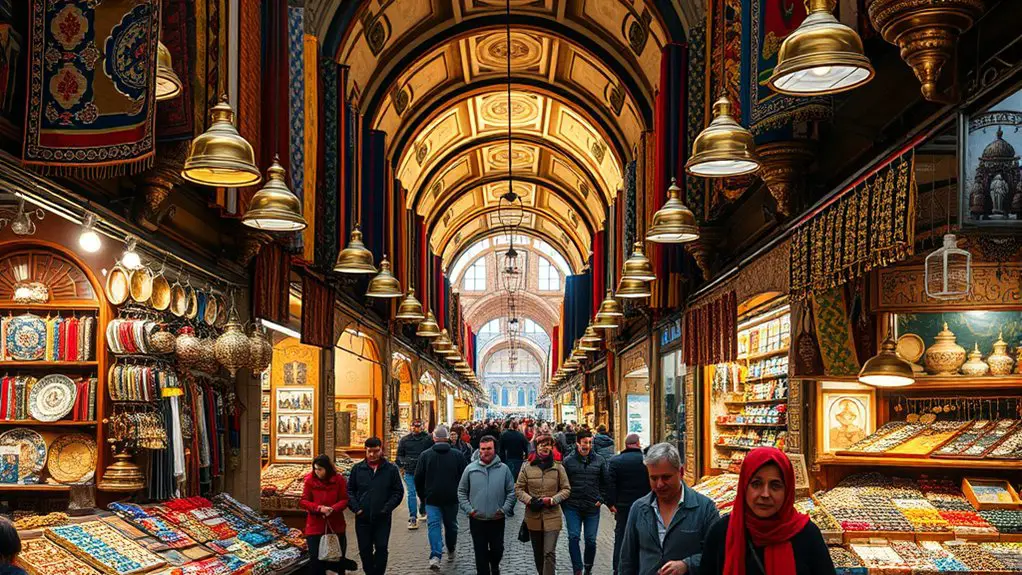
Expect a busy network of covered streets lined with jewelry, carpets, ceramics, lamps, leather goods, textiles, antiques and souvenirs. Vendors may greet you, invite you inside or offer tea while discussing a purchase. You are never required to enter a shop or buy simply because someone starts a conversation.
| Greet vendors politely | A simple greeting keeps the interaction friendly. |
| Bargain respectfully | Negotiation is common for many goods, but it should remain friendly. |
| Compare before buying | Similar-looking products can differ in material, workmanship and price. |
| Take your time | The market is easier to enjoy when you are not trying to see every lane. |
The Grand Bazaar is a working commercial district rather than a museum with a fixed visitor route. You can browse without shopping, stop for tea or coffee, study the architecture and then continue toward nearby Beyazıt, Nuruosmaniye or Eminönü.
Essential Tips for Shopping
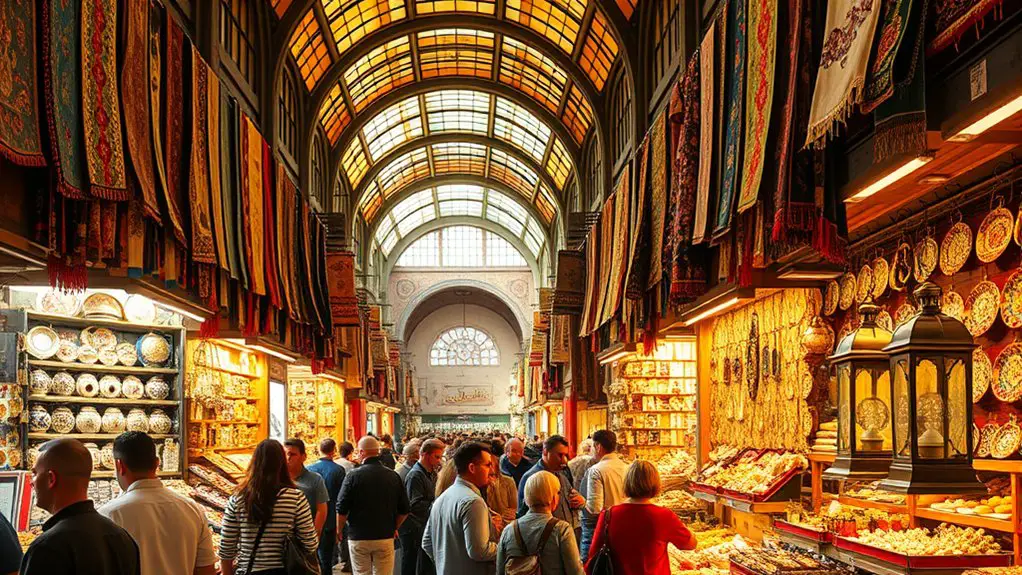
Shopping here is easier when you decide what you want before you begin negotiating. Browse several stores first, note differences in quality and ask questions about the material, origin, dimensions and workmanship.
Prices may be quoted in Turkish lira or another currency, particularly for expensive tourist purchases. Before paying, make sure you and the merchant agree on the currency and final total. If you use a card, check the amount displayed on the terminal before approving the payment.
Carry some Turkish lira for small purchases, food and incidentals, but do not assume cash automatically guarantees the lowest price. The useful comparison is the final amount you will actually pay.
For a significant purchase, ask for a written receipt or invoice describing the item and price. If a seller is shipping a carpet, ceramic set or another large purchase internationally, confirm the shipping company, insurance, tracking, delivery address and who is responsible for import duties before paying.
Warning: Be especially careful with objects sold as genuine antiques. Türkiye regulates protected movable cultural property, and an old item being offered for sale does not automatically mean it can legally be exported. For a potentially historic object, obtain proper documentation and verify export requirements before purchase.
Must-See Shops and Stalls
The Grand Bazaar changes constantly, so choosing by product type and workmanship is more reliable than building your visit around an unverified shop name. Its historic lanes traditionally grouped related trades together, and street names still preserve traces of those guild-era specialties.
Good categories to explore include jewelry, handwoven rugs and kilims, cotton hammam towels, ceramics, metalwork, leather goods, lamps and decorative pieces. The official Grand Bazaar map is useful when you want to locate particular streets or bedestens.
Each object has a different story and level of workmanship, so look closely instead of assuming that everything described as “handmade,” “silk,” “antique” or “İznik” is equivalent.
Unique Handcrafted Souvenirs
For smaller souvenirs, look for painted ceramics, copper or metalwork, decorative glass, tea sets, textiles, leather accessories and jewelry. Ask where the item was made and whether decoration is hand-painted or printed when craftsmanship matters to you.
With ceramics, compare several pieces side by side. Hand finishing can produce small variations, while inexpensive souvenir ware may be mechanically produced. Neither is inherently a bad purchase as long as the price and description match what you are getting.
For jewelry, ask what metal and stones are being sold, request the weight or specifications when relevant and keep the receipt for an expensive purchase.
Traditional Textiles and Carpets
Carpets, kilims and textiles are among the bazaar’s most famous products. Before negotiating, ask about the fiber, dimensions, weaving method, country or region of origin and whether the piece is new, vintage or antique.
Do not let tea, a long presentation or a dramatic “final offer” make you feel obligated to buy. For an expensive rug, take a photo of the piece and its label or specifications, compare another seller and return only if the price and quality still make sense.
For hammam towels, scarves and other textiles, inspect the weave, seams and fiber content rather than choosing only by pattern.
Local Delicacies and Refreshments
Food is part of the wider bazaar experience, but it helps to distinguish the Grand Bazaar from Istanbul’s separate Spice Bazaar (Mısır Çarşısı) in Eminönü. The Grand Bazaar is best known for goods such as jewelry, rugs, textiles, antiques and souvenirs, while the Spice Bazaar has a stronger concentration of spices, dried foods, teas and sweets.
You can still find cafés, snack stops and confectionery in and around the Grand Bazaar. For a longer food-focused browse, continue downhill toward Eminönü and the Spice Bazaar.
Traditional Turkish Snacks
Popular Turkish snacks available around Istanbul’s historic center include simit, the sesame-coated bread ring; börek, layers of pastry filled with ingredients such as cheese or spinach; and gözleme, thin filled flatbread cooked on a griddle.
Availability varies from one part of the bazaar district to another, so do not worry about finding every dish under the covered market itself. Beyazıt, Çemberlitaş and the streets toward Eminönü give you many more options.
Refreshing Beverage Options
Turkish tea is the classic pause during a shopping session and is often part of conversations between merchants and customers. Turkish coffee is another easy choice when you want a longer break.
Fresh fruit juices, including orange or pomegranate, are commonly available around busy tourist districts. Ayran, the chilled yogurt drink, is a good match for savory food.
Sweet Treats to Try
Baklava and lokum (Turkish delight) are easy sweets to add to a bazaar visit. Baklava commonly combines thin pastry, syrup and nuts such as pistachios or walnuts, while lokum comes in many flavors and fillings.
If you are buying sweets to take home, ask when they were made, how long they will keep and whether the packaging is suitable for your journey. The nearby Spice Bazaar and established confectioners elsewhere in Istanbul also offer extensive selections, so you do not need to make a rushed food purchase inside the Grand Bazaar.
Bargaining Techniques for Shoppers
Bargaining remains part of the Grand Bazaar experience for many goods, but there is no reliable rule saying every shopper should begin at a fixed percentage of the asking price. Products, margins and sellers differ too much for that.
The best bargaining advantage is knowing what comparable items cost before you make an offer.
Start by asking questions and comparing two or three sellers. Once you understand the product, decide what you are genuinely willing to pay. Make a reasonable counteroffer below that figure and negotiate from there.
Keep the exchange friendly. You can pause, decline or walk away when the price is not right. Walking away should be a genuine decision rather than an aggressive tactic; a seller may make another offer, or the conversation may simply end.
Never bargain yourself into buying something you no longer want. A “special price” is only a bargain when the product, quality and final amount work for you.
Payments, Receipts, Shipping and Authenticity
For inexpensive souvenirs, payment is straightforward. For carpets, jewelry, antiques, leather jackets and other expensive goods, slow the transaction down.
- Confirm the final price and currency before handing over cash or tapping a card.
- Read the card terminal yourself and keep the payment slip.
- Ask for an itemized invoice identifying the product, material and amount paid.
- Get shipping promises in writing, including insurance and tracking.
- Check return or exchange terms before buying rather than afterward.
- Be skeptical of vague authenticity claims that are not supported by documentation.
Counterfeit branded goods can also create customs or legal problems when you return home. Import rules differ by destination, so avoiding products presented as unauthorized copies is the safest approach.
Navigating the Bazaar: A Helpful Map
The Grand Bazaar is large enough that getting mildly lost is part of the experience. Instead of trying to memorize every lane, choose a few reference points: your entrance gate, a major street and the direction of Beyazıt or Nuruosmaniye.
The bazaar association publishes an official map. Save it on your phone before arriving so you are not dependent on mobile reception inside the covered lanes.
Street and directional signs inside the bazaar are also useful. When you discover a store you may want to revisit, photograph the storefront together with the nearest street sign rather than relying on memory alone.
Pro Tip: Do one browsing lap before making an expensive purchase. The extra 20–30 minutes gives you a much better sense of price, quality and how much bargaining room may exist.
Accessibility, Restrooms and Crowds
The Grand Bazaar is a centuries-old commercial complex, so accessibility is partial rather than uniform. Main corridors can be navigable by wheelchair, but uneven surfaces, slopes, crowded passages, thresholds and steps at individual shops can create problems.
If mobility is a concern, visit early on a weekday when foot traffic is lighter and concentrate on the wider central passages rather than trying to cover every side alley. A companion can also make the experience easier for visitors who need assistance over uneven surfaces.
Restrooms are available in and around the market, but facilities vary and accessible toilets can be limited. Planning a restroom stop at a nearby restaurant, hotel or modern public facility may be easier for visitors with specific accessibility needs.
The market can become extremely crowded. Keep your phone, wallet and passport secure, especially when stopping in narrow passages or looking at displays. Families should keep young children close because it is easy to become separated in the flow of shoppers.
Nearby Attractions to Explore
The Grand Bazaar sits in Istanbul’s Historic Peninsula, making it easy to combine with several major sights.
Süleymaniye Mosque is a rewarding addition for Ottoman architecture and elevated city views. The Süleymaniye quarter forms part of the UNESCO-listed Historic Areas of Istanbul.
The Spice Bazaar in Eminönü is a natural next stop if you want spices, teas, dried fruit, nuts and confectionery. It is a separate market from the Grand Bazaar, so allow time to walk downhill or use public transport rather than treating the two as one building.
Hagia Sophia, the Blue Mosque and the Sultanahmet area are also within the historic center. The T1 tram connects Beyazıt-Kapalıçarşı with Sultanahmet, making it easy to combine the locations without relying on a taxi.
If you prefer to walk, the route through the old-city streets lets you see smaller shops, cafés, hans and mosques between the headline attractions.
Frequently Asked Questions
What are the opening hours of the Grand Bazaar?
The covered Grand Bazaar normally operates Monday through Saturday, with current listings generally showing opening around 8:30 or 9:00 AM and closing around 7:00 PM. It is normally closed on Sundays. Holiday schedules can change, so verify shortly before visiting during a public or religious holiday.
Is there an entrance fee to visit the Grand Bazaar?
No. Entry to the Grand Bazaar itself is free. You can walk through the covered streets, admire the architecture and browse the shops without buying anything or purchasing an admission ticket.
Are there restrooms available inside the Grand Bazaar?
Restrooms are available in and around the bazaar, although facilities vary and some may charge a small fee. Travelers who require a reliably accessible restroom may find nearby restaurants, hotels or newer public facilities easier to use.
Can I access the Grand Bazaar with a wheelchair?
Parts of the Grand Bazaar can be explored by wheelchair, particularly wider main corridors, but the historic complex is not uniformly step-free. Uneven surfaces, slopes, crowded passages and steps or thresholds at some shops can be challenging. A weekday morning is usually easier for visitors with mobility needs.
What is the best time of year to visit the Grand Bazaar?
Spring and fall are comfortable seasons for exploring Istanbul as a whole because walking between attractions is usually more pleasant. Inside the covered bazaar, however, the time of day matters more than the season. Visit on a weekday morning for easier navigation and fewer crowds.
Is the Grand Bazaar open on Sunday?
The covered Grand Bazaar is normally closed on Sundays. Some shops and businesses in the surrounding streets may still operate, but do not plan a Sunday visit expecting the main covered market to be open.
How long should I spend at the Grand Bazaar?
Allow about 1–2 hours for sightseeing and casual browsing. If you plan to compare carpets, jewelry, leather goods or other expensive purchases, 2–4 hours is more realistic because you should visit several sellers before deciding.
Do you have to bargain at the Grand Bazaar?
No, but negotiation is common for many souvenirs, carpets, textiles, leather goods and decorative items. Compare prices first, decide what the item is worth to you and negotiate politely. There is no universal percentage that guarantees a fair price.
Conclusion
Exploring the Grand Bazaar is most enjoyable when you treat it as both a historic district and a working marketplace. Arrive with enough time to wander, use the official map when you need it, compare products before negotiating and slow down for expensive purchases. Pair the bazaar with Süleymaniye, Sultanahmet or the separate Spice Bazaar, and you can turn a shopping stop into a fuller look at Istanbul’s historic center.
Sources
- Grand Bazaar Merchants Association — About the Grand Bazaar — history, scale, streets, shops and hans.
- Grand Bazaar Merchants Association — Official Map — visitor navigation and bazaar layout.
- GoTürkiye — Grand Bazaar — official tourism background and visitor context.
- Metro Istanbul — T1 Kabataş-Bağcılar Tram Line — confirms the Beyazıt-Kapalıçarşı stop and tram connections.
- Republic of Türkiye Ministry of Culture and Tourism — Law on the Conservation of Cultural and Natural Property — rules relevant to protected movable cultural property and antiques.
- UNESCO World Heritage Centre — Historic Areas of Istanbul — heritage context for the nearby Süleymaniye quarter and Historic Peninsula.
